Custom Window Screens for Pets and Pool Views
Explore Our Services
Contact Us Today!
(239) 322-9295
Choose pet-resistant mesh for windows where claw contact is a daily concern, and consider high-visibility mesh for pool-facing openings beyond your pets' reach. For many households, room-by-room selection makes more sense than using one screen throughout.
The right custom window screens also need frames that fit, hardware that works, and a clear purpose for each opening. A kitchen ventilation window has different demands than a low bedroom window beside a cat's favorite perch.
Start with how your household uses each window, then balance pet access with the view you want to preserve.
Key Takeaways
- Put pet-resistant options on the shortlist where cats or dogs regularly reach the screen, but never rely on screening to contain an animal.
- Reserve view-oriented selections for important sightlines, especially where furniture and window height keep pets away.
- Treat mesh selection, ventilation, frame fit, pool safety, and hurricane protection as separate decisions that must work together.
Compare Custom Window Screens by Their Main Job
Pet-resistant and high-visibility mesh put different priorities at the center of the selection. The useful comparison begins with the problem at each opening: repeated pet contact, an important pool view, or frequent ventilation.
Neither category name settles the entire order. The frame, attachment hardware, window operation, and location also affect whether the finished screen suits the room.
Use this comparison to organize your selections.
| Decision | Pet-resistant option | High-visibility option |
|---|---|---|
| Main selection priority | Anticipated claw contact | Outward sightlines |
| Room to consider first | Pet-accessible bedroom or living area | Pool-facing room beyond pet reach |
| Durability concern | Claws, pushing, and repeated contact | Avoiding contact that could damage screening |
| Airflow decision | Consider the complete operable opening | Consider the complete operable opening |
| Important limit | Not an animal-containment system | Not a substitute for pool supervision |
The practical trade-off is which priority leads. A low window beside a cat perch deserves a different selection process than a protected opening above a kitchen counter.
For new construction, record the choice by opening rather than writing "screens throughout." Fixed windows don't need insect screens, while patio doors may require a separate screen package.
Plan Around Claws and Everyday Pet Contact

Identify where your pets actually reach
A cat resting on a windowsill creates a different selection problem than a dog sleeping several feet away. Look at furniture placement, sill height, and whether an animal paws at outdoor movement.
Where claw contact is predictable, make that the leading requirement. However, changing the layout can also reduce contact. Moving a chair away from an operable window may matter more than treating every screen in the house alike.
Our guidance on pet-friendly home planning connects these decisions with pet routes, doors, and usable lanai space.
Separate damage resistance from containment
A screen includes more than its mesh. The surrounding frame, corners, retaining hardware, and connection to the window all matter.
Even a screen selected with pets in mind shouldn't carry an animal's weight or prevent a fall. Keep pets away from open windows where a failed screen would expose them to danger.
A pet-oriented mesh selection doesn't turn a removable insect screen into a safety barrier.
Also consider behavior. A dog repeatedly pushing toward activity outside needs a secure physical boundary, not a screen upgrade alone.
Protect Pool Views With Better Sightline Planning
Choose the viewpoint before the screen
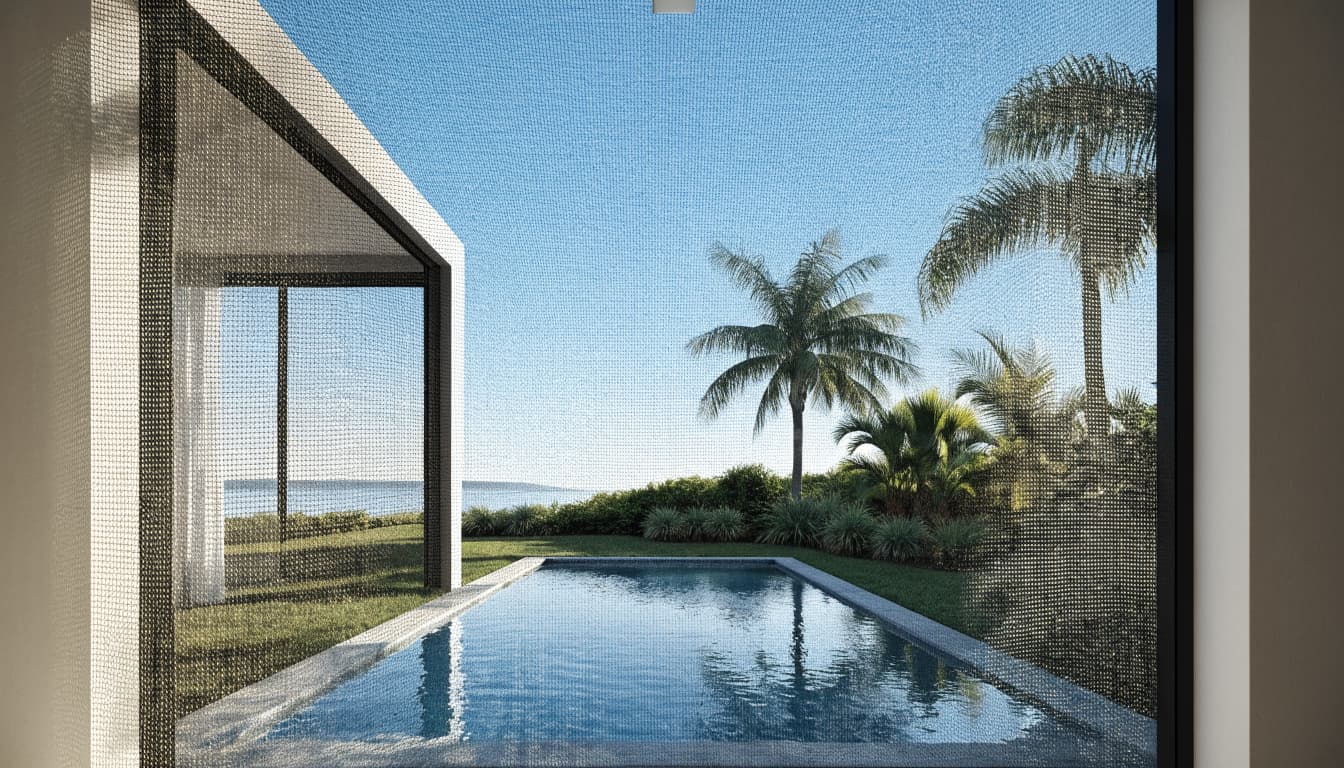
Judge the pool view where you'll actually enjoy it: seated at the dining table, standing at the sink, or relaxing in the great room. A sightline that works while standing beside the glass may disappear behind furniture or a lanai column.
High-visibility mesh belongs in this discussion, but it is one part of the view. Window divisions, enclosure posts, planting, and outdoor furniture remain visible regardless of the screen selection.
Our backyard and lanai design work considers how outdoor spaces connect with the rooms inside.
Keep glass, glare, and shade in the decision
Mesh can't resolve every viewing problem. Afternoon sun, reflections, glass tint, and interior lighting also affect what you see.
In Southwest Florida, west-facing openings deserve attention because low afternoon sun can create glare. A covered lanai or another planned shade element belongs in the window discussion before final selections.
Also separate views from solar performance. The window's solar heat gain coefficient, or SHGC, describes solar heat transmission; it doesn't describe glare. Our guidance on planning a pool with your home addresses the broader relationship between pool location and indoor sightlines.
Match Airflow Priorities to Window Use
A screen only supports useful ventilation when the window opens and outdoor conditions suit the household. Start with the opening's operation, how far it opens, and whether someone can reach the controls comfortably.
A kitchen window behind a deep counter may offer an attractive view but be awkward to operate. Meanwhile, furniture can discourage everyday use of an otherwise accessible bedroom window.
Don't use a mesh category name as an airflow rating. Keep ventilation as its own selection requirement, especially for openings you expect to use often.
For a kitchen, an open screened window also doesn't replace the range hood and its ductwork. Cooking ventilation belongs in the kitchen design regardless of screen choice.
Finally, distinguish an insect-screen selection from a solar-control strategy. If afternoon heat is the problem, address glass and exterior shade rather than assigning that job to the screen.
Match Each Room to Its Real Priorities
Living areas and kitchens
In a pool-facing great room, start with the principal seated view. If pets cannot reach the operable windows, a view-oriented selection can lead the discussion.
In kitchens, daily operation often deserves equal attention. Leave access to handles, locks, and screen-removal points without moving countertop appliances. Also consider how cooking residue and nearby landscaping affect cleaning access.
For a fixed picture window, focus on glass, shade, and placement. Adding an insect screen doesn't provide ventilation to glass that cannot open.
Bedrooms, bathrooms, and utility rooms
Bedrooms require a closer look at both pet habits and emergency escape. A cat perch beside the window changes the screen priority, but it mustn't compromise the opening's required operation.
Bathrooms may place more emphasis on privacy than outward views. High or obscured glass can address that need, although elevated windows still require cleaning access.
Laundry and utility rooms often connect with pet routines. Keep screen removal practical around cabinets, storage, and litter areas. A room's secondary status doesn't make an inaccessible screen easier to maintain.
Get Custom Sizing and Frame Fit Right
Keep screen dimensions separate from window dimensions
A window's rough opening, ordered unit size, and removable screen size are different measurements. The framing dimensions on construction drawings aren't a substitute for the screen's required dimensions.
When replacing an existing screen, record its outside frame width and height, frame profile, and hardware locations. An intact, correctly fitting screen can provide a useful reference. A bent or mismatched one cannot.
Label measurements by room and opening. Two windows that look identical may have different screen arrangements, so avoid grouping them by appearance alone.
Include hardware and removal access
A good fit allows the screen to seat correctly without forcing the frame. It should also allow the window to operate as intended.
The order needs to identify corner construction, retaining clips or springs, pull tabs, and their positions. These small details affect installation and removal.
During construction, include screen storage and installation timing in the plan so screens don't become obstacles or suffer damage before completion. For elevated windows, provide safe maintenance access.
Our window placement guidance addresses operation, access, and protection alongside the appearance of the opening.
Put These Questions Into the Screen Order
A useful screen order describes the finished assembly, not only the mesh category. Keep the questions tied to decisions the supplier and installer must resolve.
- Which operable windows receive pet-resistant selections, which receive high-visibility selections, and which receive no screen?
- Does the quoted size describe the outside screen frame, and who is responsible for the final measurements?
- Which frame profile, finish, retaining hardware, and pull-tab positions belong at each opening?
- Can the screen be removed for cleaning without damaging trim or disturbing adjacent finishes?
- Does the assembly preserve window operation, required emergency escape, and access to storm-protection hardware?
- When will screens arrive, where will they be stored, and who will install them?
Keep the answers with the window schedule. That makes room-specific choices easier to carry through purchasing and installation.
Also have the proposal distinguish rescreening an existing frame from supplying a complete replacement assembly. Those are different scopes, particularly when corners, clips, or frames already need attention.
Keep Insect Screens Separate From Safety Protection
Window screens, screened lanais, and pool enclosures have different roles from approved hurricane opening protection. A screened outdoor area doesn't replace the home's required impact glazing or approved shutters.
Bedroom emergency escape needs separate attention, too. Screen attachment and removal must work with the opening's required operation. A Florida-licensed architect or building professional should address project-specific egress requirements.
Pool safety also extends beyond the view through the window. Plan barriers, gates, alarms, and access controls as part of the pool project.
For pets, keep routes clear of furniture and equipment. A shaded resting area, drinking water, and suitable walking surfaces can make the lanai more usable without relying on screening as the sole boundary.
Frequently Asked Questions
Should every window have the same mesh?
No. Assign selections by pet access, viewing priority, and window use. Keep the frame finish coordinated where appearance matters, but record the screen choice separately for each opening.
Does a pool-facing window always need high-visibility mesh?
No. A fixed window doesn't need an insect screen. For an operable window, weigh the importance of the sightline against pet contact, ventilation needs, and maintenance access.
Can I replace mesh without replacing the frame?
Rescreening is a different scope from complete replacement. An existing frame needs sound corners, suitable retaining hardware, and the correct fit for the opening. Mesh replacement alone doesn't address a bent frame or missing clips.
Choose Screens Around Daily Life
The most useful custom window screens match the way each room works. Give pet contact priority where claws reach the opening, and give pool sightlines priority where the screen stays beyond that activity.
Then complete the selection with accurate sizing and compatible hardware . A room-by-room schedule keeps those decisions connected to window operation, maintenance, and the home's separate safety requirements.