Gunite Pool Inspection Checklist for Fort Myers Buyers
Explore Our Services
Contact Us Today!
(239) 322-9295
A gunite pool inspection should assess the visible shell, interior finish, surrounding deck, operating equipment, accessible plumbing, and safety features before you buy. It should also document inspection limits , because clear water and attractive tile don't reveal buried pipes or concrete beneath the finish.
For Fort Myers buyers, drainage, groundwater, and repair history also deserve attention. Use the following checklist to separate routine maintenance from concerns that need further evaluation before your inspection contingency expires.
Key takeaways for buyers
- Request a written pool-specific scope rather than assuming the home inspection covers every component.
- Treat recurring cracks, displacement, unexplained water loss, and exposed steel as reasons for further evaluation.
- Separate safety corrections, necessary repairs, and optional upgrades before negotiating a credit or requesting seller repairs.
Start your gunite pool inspection with scope and records
Define what the inspector will examine
Choose an inspector with experience evaluating existing concrete pools. Ask for a written scope covering accessible surfaces, normal equipment operation, visible plumbing, deck conditions, and safety components.
The report should identify anything the inspector couldn't examine and explain why. Cloudy water, inaccessible equipment, or a system that won't operate can leave important questions unanswered.
A visual inspection cannot establish the condition of buried piping, hidden reinforcing steel, or concrete beneath intact plaster. Specialized testing and engineering evaluations need separate scopes when symptoms justify them. Also, ask whether the quoted inspection includes attached spas, heaters, and water features.
Gather the pool's construction and repair history
Request available approved plans, permit closeout records, resurfacing invoices, leak-repair documentation, and equipment replacement records. These can help explain visible patches or differences between the original layout and existing pool.
A Fort Myers mailing address doesn't establish jurisdiction. Properties inside city limits follow City of Fort Myers procedures; unincorporated properties follow Lee County's process. Our guide to Fort Myers pool permit requirements explains the construction inspection sequence.
Missing records leave a documentation gap. They don't establish that the shell is defective.
Examine the shell and interior finish separately
Both gunite and shotcrete pool construction create concrete shells beneath the interior finish. That distinction matters when interpreting a visible crack.
Look for finish deterioration
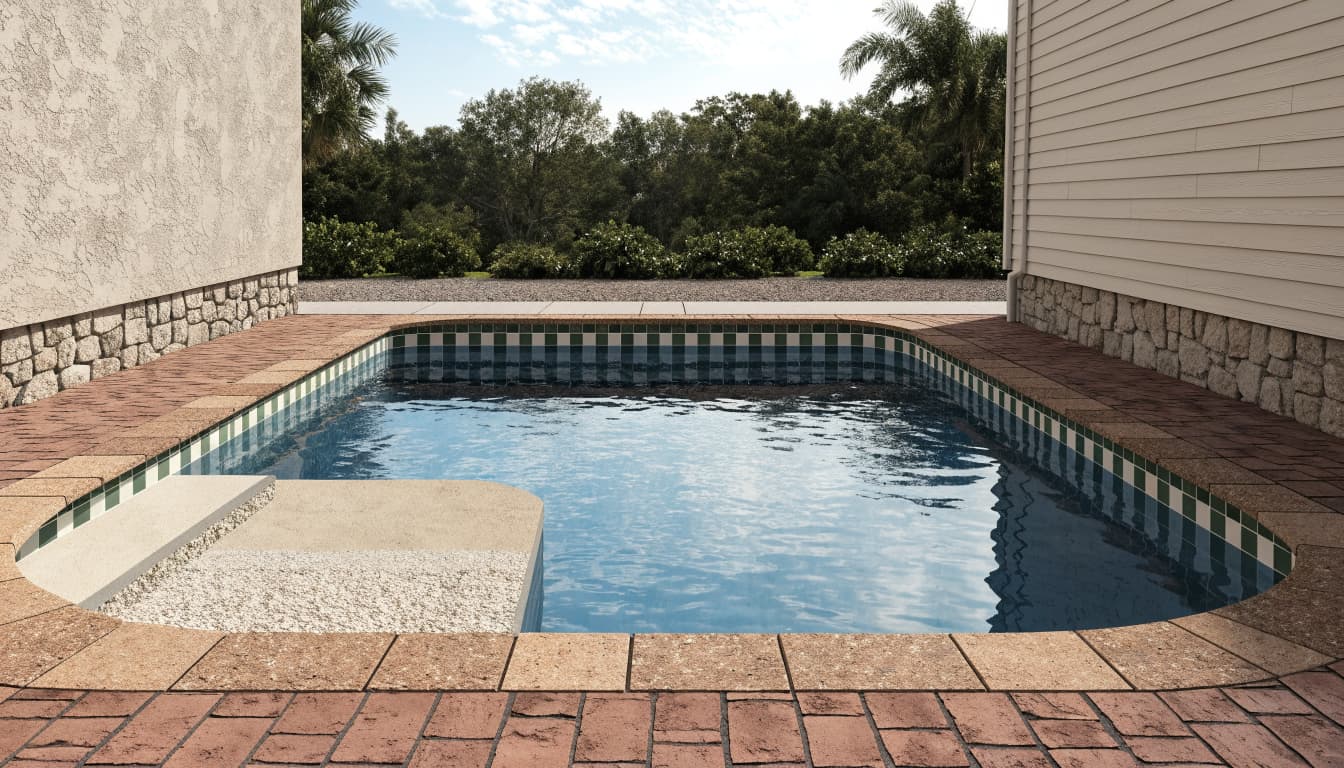
The inspector should describe visible etching, scaling, discoloration, rough areas, patches, and material loss. Plaster, quartz, and pebble finishes can develop different surface problems, so the report should identify the finish where possible.
Loose or hollow-sounding areas may indicate separation between layers. However, that finding doesn't establish shell failure.
Ask whether deterioration appears localized or widespread. That distinction helps a renovation contractor separate isolated repairs from broader surface preparation and refinishing work.
Recognize cracks that deserve closer review
A fine line in plaster doesn't automatically extend into the concrete. More concerning signs include offset edges, repeated repairs, widening cracks, and cracks continuing through tile or coping.
Damage near steps, benches, raised spas, and depth transitions also deserves attention. Rust-colored staining beside a crack, loose concrete, or exposed reinforcing steel adds concern.
The report should include close-up photographs and wider views showing location. When symptoms suggest shell movement or compromised support, a Florida-licensed professional engineer with relevant pool experience should evaluate the condition before cosmetic repairs proceed.
Inspect the waterline, coping, deck, and drainage
Review tile and coping connections
Waterline tile should receive more than a quick visual scan. Look for missing pieces, sharp edges, recurring grout failures, gaps around fittings, and separation beneath the coping.
Coping is the pool's perimeter cap. Loose sections create hazards, while repeated separation may relate to movement or deteriorated installation materials.
A crack crossing several materials deserves further review, but it doesn't prove one cause. Tile-bond failure, deck movement, and shell movement can produce overlapping symptoms.
Follow the path of rainwater
The surrounding deck should provide stable walking surfaces without pronounced settlement or trip hazards. The inspector should note cracked concrete, rocking pavers, damaged joints, and visible separation along the pool edge.
Drainage matters during Southwest Florida downpours. Look for blocked deck drains, staining from standing water, erosion, and grades that direct runoff toward the house or equipment.
Existing settlement or recurring separation can justify closer site evaluation. Our explanation of Fort Myers pool soil reports describes how fill, groundwater, and nearby structures can affect a pool project. A geotechnical report isn't automatically required for every pool.
Review circulation equipment and accessible plumbing
Observe normal equipment operation
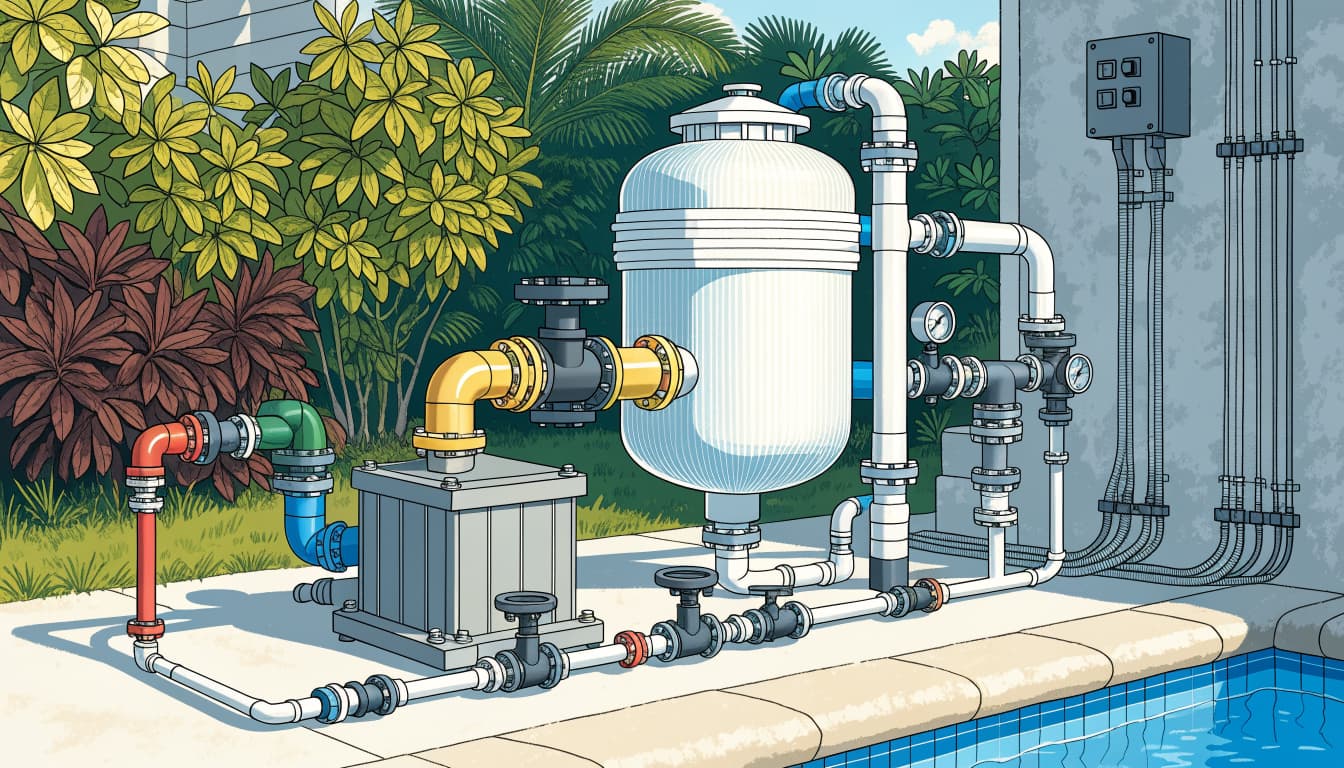
The written scope should address the circulation pump, filter, installed sanitation equipment, and any included heater, spa, or water features. The report should distinguish equipment that operated from equipment the inspector couldn't evaluate.
Warning signs include abnormal pump noise, persistent air bubbles, active drips, heavy corrosion, damaged housings, and error messages. Record equipment model information when readable so replacement estimates address the actual system.
A running pump alone doesn't establish adequate filtration. The inspector should also describe visible circulation concerns and equipment condition. Filter tanks must not be opened while pressurized.
Examine pipes, valves, and fittings
Accessible plumbing should receive attention at pump connections, unions, valves, filter connections, heater connections, and exposed pipe runs. Wet soil, mineral deposits, patched fittings, or persistent moisture can help identify areas needing investigation.
The inspector should also note visible deterioration around skimmers, returns, drains, and light niches. Buried piping remains outside a visual assessment.
Pressure testing during construction occurs before pipes disappear beneath soil or decking. Existing-pool leak testing is separate work. Our pool plumbing layout guide explains pipe routing and equipment access considerations that can affect future repairs.
Investigate water loss without assuming the source
Frequent refilling, unexplained water bills, persistent wet spots, and recurring waterline changes deserve investigation. An automatic fill system can also make ongoing water loss less obvious.
Ask the seller about refill frequency and whether water loss changes when equipment operates. That pattern can guide a leak specialist, but it doesn't identify the source by itself.
Depending on the symptoms, follow-up work may involve dye testing, plumbing pressure testing, or other leak-detection methods. The specialist should separate findings involving the shell, fittings, underground lines, and equipment.
Water loss doesn't prove the shell leaks. A finish repair won't resolve a leaking pipe or equipment connection.
Don't drain the pool for a buyer walkthrough. Southwest Florida groundwater can exert upward pressure on an empty shell. A qualified pool professional should determine whether draining is appropriate and how to manage it safely.
Treat safety features as purchase priorities
Florida Statutes Chapter 515 establishes the state's residential pool-safety framework. For a buyer, the practical task is documenting existing barriers and safety components without confusing a resale condition assessment with a municipal final inspection.
The inspector should address fences, gates, enclosure damage, accessible openings, and installed alarms. Gate operation deserves attention, including whether gates close and latch properly. Changes in soil, mulch, or paver height can reduce effective barrier height.
Also include visible drain-cover condition, handrails, ladders, and damaged or missing components. Suction-entrapment concerns require qualified evaluation.
Electrical safety belongs in the scope discussion as well. Damaged conduits, exposed wiring, corroded equipment, pool-light problems, and questions about bonding or ground-fault protection warrant an appropriately qualified professional.
Keep people away from suspected electrical hazards. Flood-exposed electrical equipment also needs professional assessment before use, even when its exterior appears dry.
Turn the report into follow-up work and negotiations
Ask questions that produce usable answers
Ask the inspector which findings are observations, which are suspected causes, and which require another specialist. Those distinctions prevent a stain or crack from becoming an unsupported diagnosis.
Other useful questions include: "What couldn't you inspect?" "Which conditions present an immediate safety concern?" and "Does this finding need leak detection, a pool contractor, an electrician, or an engineer?"
Request photographs, locations, operating observations, and clear limitations. A report that says only "pool needs repair" gives you little basis for obtaining comparable estimates.
Separate repairs from optional improvements
Organize findings into immediate safety corrections, investigation needed before closing, necessary repairs, and elective upgrades. A worn finish and a suspected moving shell carry different uncertainties.
Get written repair scopes before using estimates in negotiations. Include related work such as opening decking, repairing piping, restoring finishes, and obtaining permits where required.
Discuss contract options with your real estate agent. Depending on the agreement, those may include seller repairs, a credit, a price adjustment, or additional evaluation time. Avoid accepting a cosmetic patch as resolution when the underlying cause remains unknown.
Frequently asked questions
Does a recent resurfacing eliminate inspection concerns?
No. A new finish can improve appearance without revealing the condition of buried plumbing or hidden concrete. Request the resurfacing scope and any documentation of repairs completed beforehand. Fresh finishes deserve the same attention to cracks, fittings, water loss, and equipment operation as older surfaces.
Is a pre-purchase inspection the same as a construction final?
No. A municipal final addresses completion of permitted work and required safety features. A buyer's inspection evaluates accessible conditions under its agreed scope at the time of purchase. Earlier approvals provide useful history, but they don't describe every component's present condition.
Buy with a clear picture of the pool's condition
A useful gunite pool inspection separates visible wear from unresolved structural, plumbing, and safety concerns. Its strongest outcome is a documented repair scope that supports informed purchase decisions.
Before your contingency expires, resolve significant unknowns through the appropriate specialist. You'll have a firmer basis for negotiating repairs and planning ownership costs.