Door Hardware Schedule for a Fort Myers Custom Home
Explore Our Services
Contact Us Today!
(239) 322-9295
A beautiful door can become a daily frustration when its handle, latch, or swing doesn't fit how you use the room. A door hardware schedule helps you settle those details before your custom home's doors arrive.
In Fort Myers, site exposure also belongs in that conversation because humidity, salt air, and wind-driven rain affect exterior selections. Start with each opening's purpose, then coordinate hardware with the door type, privacy needs, accessibility, and your builder.
Start your door hardware schedule before ordering
A hardware schedule is the shared record of what belongs on each door. It keeps homeowners, designers, suppliers, and installers working from the same selections.
During custom home construction in Fort Myers, review this record alongside the floor plan. Cutting Edge Homes & Renovations designs and builds custom homes locally, where indoor-outdoor living creates several different hardware needs.
Give every opening an identifier that matches the plans. Include doors to guest suites, storage rooms, and the garage, rather than counting only the main living spaces.
These fields keep the schedule useful through installation:
| Schedule field | What to record |
|---|---|
| Opening | Plan identifier and rooms connected |
| Door configuration | Swinging, sliding, pocket, bifold, or paired |
| Operating function | Passage, privacy, keyed, or non-latching pull |
| Selected components | Lockset, hinges, strike, stops, and accessories |
| Appearance and exposure | Finish, material, and indoor or outdoor location |
| Coordination | Door preparation, approvals, and responsible installer |
The finished schedule should identify complete hardware sets, not handles alone. Keep revisions dated so an older selection doesn't reach the supplier.
Choose materials for humidity and coastal exposure
Match selections to the property's exposure
An inland Fort Myers home and a waterfront property need separate exposure reviews. Identify which doors sit under cover, face wind-driven rain, or connect to humid, unconditioned spaces.
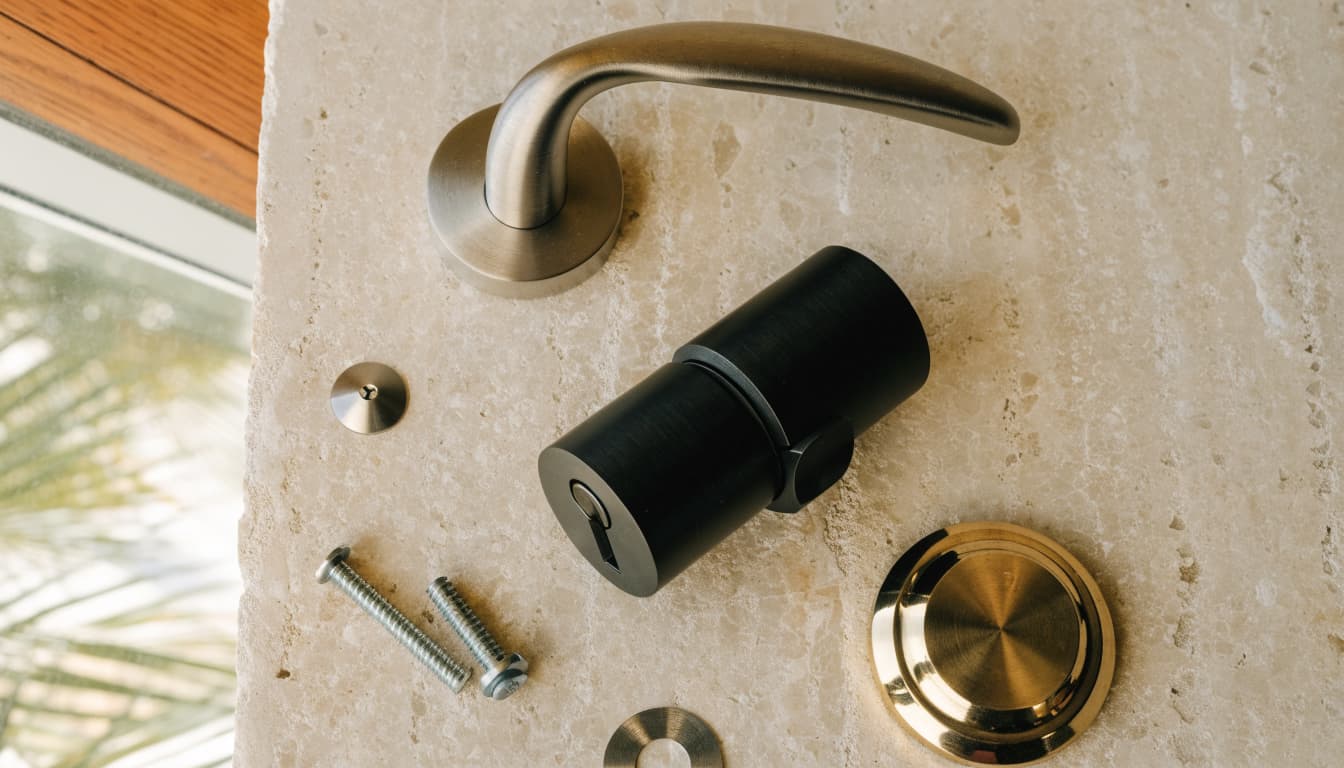
Ask the hardware professional to confirm material suitability, corrosion protection, and warranty coverage for each location. Include hinges and fasteners in that discussion. The project documents should identify compatible components and any required installation details, rather than leaving those choices to whatever screws arrive in a box.
Separate appearance from performance
Satin nickel, matte black, and polished brass describe appearance, but the finish name doesn't establish suitability for coastal conditions. Likewise, a stainless steel description needs product-specific confirmation before selection.
Request physical samples and review the manufacturer's care instructions. Ask whether the finish changes with age and whether replacement parts remain available. Also check cleaning restrictions before your household uses disinfectants or exterior cleaners.
Record the approved material and finish together. That gives the supplier a clearer instruction than "match the front door."
Entry doors: coordinate security with the door assembly
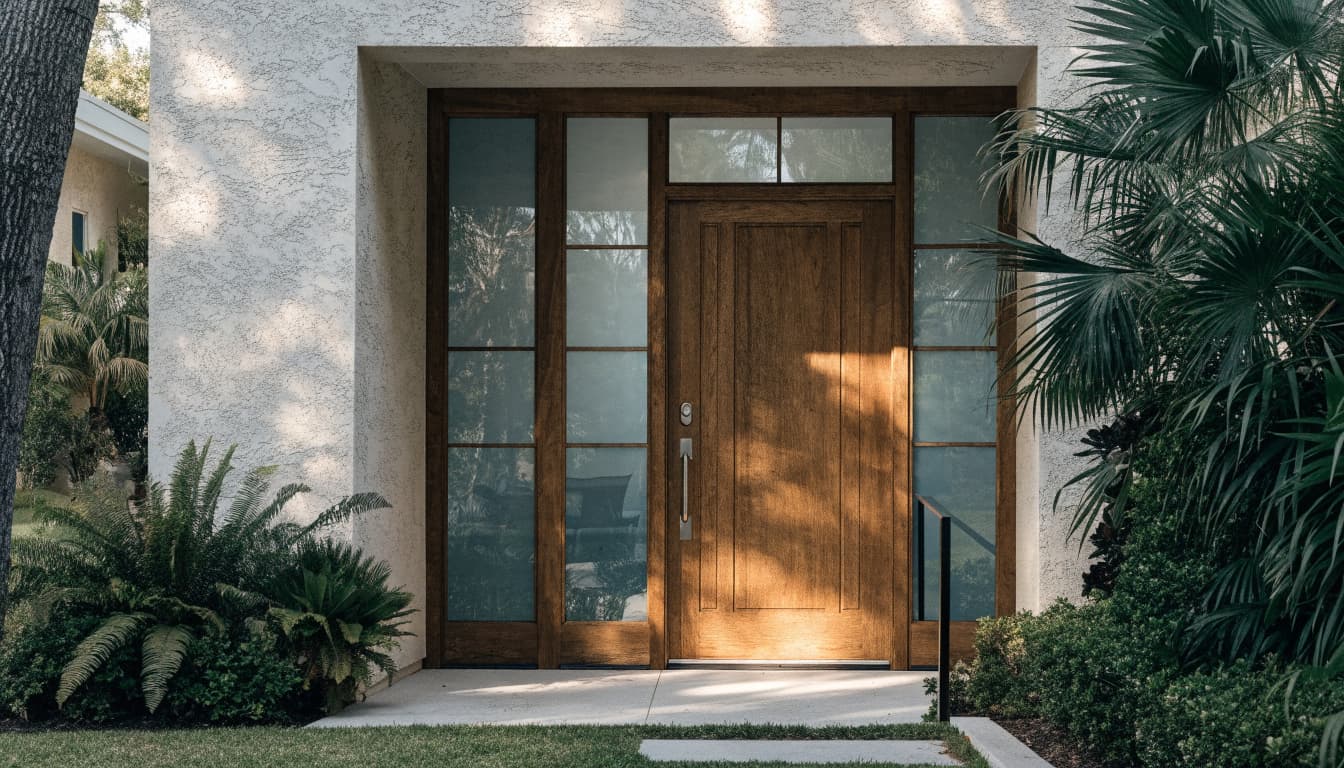
Your front entry needs coordinated decisions about locking, daily access, and the door manufacturer's hardware requirements. Choose the operating arrangement before selecting the decorative trim.
Confirm whether the door arrives prepared for a separate deadbolt, an integrated lock, or another system. For paired doors, have the supplier identify the active leaf and the hardware needed on the other leaf.
If you want a smart lock, review door compatibility, power needs, manual backup access, and exterior exposure limits. Also decide who manages access codes for family, guests, and service providers.
Ask your builder to verify the selected hardware against the approved exterior door assembly. A decorative substitution should receive review before anyone drills additional holes.
Finally, check the open door against sidelights, nearby walls, and furniture. Plan the stop location with the completed entry layout, not just the empty framing.
Interior doors: bedrooms, offices, and shared rooms
Assign privacy according to use
Bedrooms generally call for privacy hardware, while hallways and shared living spaces often need passage hardware. However, discuss each room's use before repeating one function throughout the house.
A home office may need a different locking arrangement when it contains sensitive records or equipment. Meanwhile, a guest suite should balance privacy with your household's access needs.
Record the function for every opening. Matching levers can have different operating functions, so appearance alone won't tell the installer where each set belongs.
Make everyday operation comfortable
Try the proposed lever or knob before approving it. Discuss dexterity, grip, and mobility needs with your builder or hardware professional, including anticipated changes as household members age.
Review operating effort and usable clearance rather than assuming a particular handle meets every accessibility need. Then check that the hardware doesn't interfere with nearby cabinetry or another door.
Pocket doors need their own review because their pulls, latches, and access clearances differ from swinging doors. Make that decision while the door configuration is still being planned.
Bathrooms: plan privacy and emergency access
Bathroom hardware should provide privacy without making assistance unnecessarily difficult. Ask the supplier to identify the privacy function and demonstrate its outside release method before you approve the set.
For children's bathrooms or spaces used by older family members, discuss emergency access directly. Keep the release tool, if one is required, somewhere household members can find it.
Humidity also deserves attention here. Confirm the selected hardware's suitability and cleaning instructions rather than automatically copying the bedroom specification.
During Fort Myers bathroom remodeling, coordinate the door swing with the vanity, toilet, and shower layout. Hardware placement and stops should protect finishes without creating an obstacle.
If the bathroom uses a pocket door, have the builder and hardware professional review privacy operation and access clearance together. Also confirm that someone needing assistance can reach and operate the selected hardware.
Closets and laundry rooms need different functions
Closets: match hardware to the door configuration
A swinging closet door, bifold pair, and sliding wardrobe need different hardware arrangements. Select the door configuration first, then confirm the appropriate pulls, hinges, tracks, guides, and catches.
For paired closet doors, ask whether both leaves operate regularly and how they stay closed. Don't assume a decorative pull includes a latch.
Check handle clearance against shelving, drawers, and nearby bedroom doors. Pantry doors deserve the same review, especially where a projecting handle could conflict with kitchen cabinetry or an appliance door. Review finished dimensions before approving the arrangement.
Laundry rooms: prioritize movement and convenience
Laundry doors must work when you're carrying a basket or moving appliances. Review the swing with the washer, dryer, counters, and cabinets shown on the completed plan.
Passage hardware may suit an ordinary laundry room, but discuss locking if the room also stores items that require restricted access. The door function should reflect that additional use.
If the laundry opens to the garage or outdoors, have the builder review that opening separately. It may need a different door assembly and hardware package than the home's other interior doors.
Exterior doors: lanai, pool, and garage connections
Treat each secondary exterior opening as its own selection. A lanai slider, hinged patio door, and garage-to-house door shouldn't automatically receive the front entry hardware.
For sliding or folding systems, coordinate handles, locks, rollers, and any auxiliary security devices with the door manufacturer. Check operating access when panels stack or slide past each other.
At pool-facing doors, ask the builder to confirm the approved barrier arrangement and any required alarms or operating restrictions. Keep those decisions tied to the permitted pool plan rather than treating them as optional hardware accessories.
For the garage connection, confirm the applicable door, closing, and latching requirements with the project team. Also check that the swing leaves a usable route around storage and parked vehicles.
Exterior hardware decisions belong with the opening's installation details. Ask the builder to coordinate compatible fasteners, required seals, and manufacturer instructions; decorative trim can't correct an incomplete weather-protection assembly.
Confirm costs and installation before purchasing
Turn the room-by-room selections into a purchasing record. Identify the manufacturer, product selection, finish, quantity, and included accessories for every set.
Ask for an itemized quote covering hinges, strikes, stops, pulls, and specialty components as well as locksets. Confirm whether installation, keying, delivery, and taxes appear separately. A handle allowance alone doesn't describe the complete scope.
Before ordering, review handing, door thickness, preparation, and compatibility with the builder and supplier. Have them flag custom preparations and longer-lead items early. Confirm replacement availability for frequently used exterior sets before approving them.
During installation, keep the latest door hardware schedule available to the crew. At the final walkthrough, operate every door and verify that it closes, latches, and locks as intended.
Collect keys, release tools, smart-lock access information, care instructions, and warranty documents. Then keep that information with the home's maintenance records so future repairs don't start with guesswork.
Key takeaways
- Assign hardware by each door's purpose and configuration, rather than repeating one set throughout the home.
- Confirm materials, finishes, and concealed components against the property's humidity and coastal exposure.
- Review privacy, emergency access, and accessibility before approving selections.
- Coordinate exterior and garage hardware with the approved door assemblies and project requirements.
- Price complete sets and test every opening before accepting installation.
Frequently asked questions
When should the hardware schedule be finalized?
Resolve functions and door configurations during design. Finalize exact selections before the supplier prepares doors or places hardware orders. Ask your builder which decisions affect fabrication or rough-in, then use those deadlines to organize approvals.
Does every door need the same finish?
No. A consistent interior finish can simplify selections, but exterior exposure or a specialty door system may call for a different product. Review samples together and record intentional differences so they don't look like ordering mistakes. Compare adjacent hinges, pulls, and locks before approving the combination.
Who should approve a substitution?
Bring substitutions to the builder and hardware professional before purchasing or installation. They should review fit, operating function, exposure suitability, and any affected door-assembly requirements. Update the schedule after approval so the installer receives the revised selection.
A better home starts with coordinated door details
Your door hardware schedule should capture how each opening works, who uses it, and what conditions it faces. That record gives your builder and hardware professional clear decisions to coordinate before installation.
Choose appearance alongside function and compatibility . When those details agree, the doors you've carefully selected can support comfortable daily use without avoidable surprises at move-in.