Flat Roof Ponding in Cape Coral: Causes and Repairs
Explore Our Services
Contact Us Today!
(239) 322-9295
Flat roof ponding after a Cape Coral rain can look like a shallow puddle, but it may point to a larger roofing problem. Water that repeatedly collects on a low-slope roof can involve drainage, slope, the roofing membrane, flashing, or the supporting structure.
Recurring flat roof ponding deserves more than surface cleanup. A qualified roofing professional can identify whether the issue needs maintenance, a targeted repair, temporary protection, or a complete roof replacement.
What flat roof ponding means for your Cape Coral home
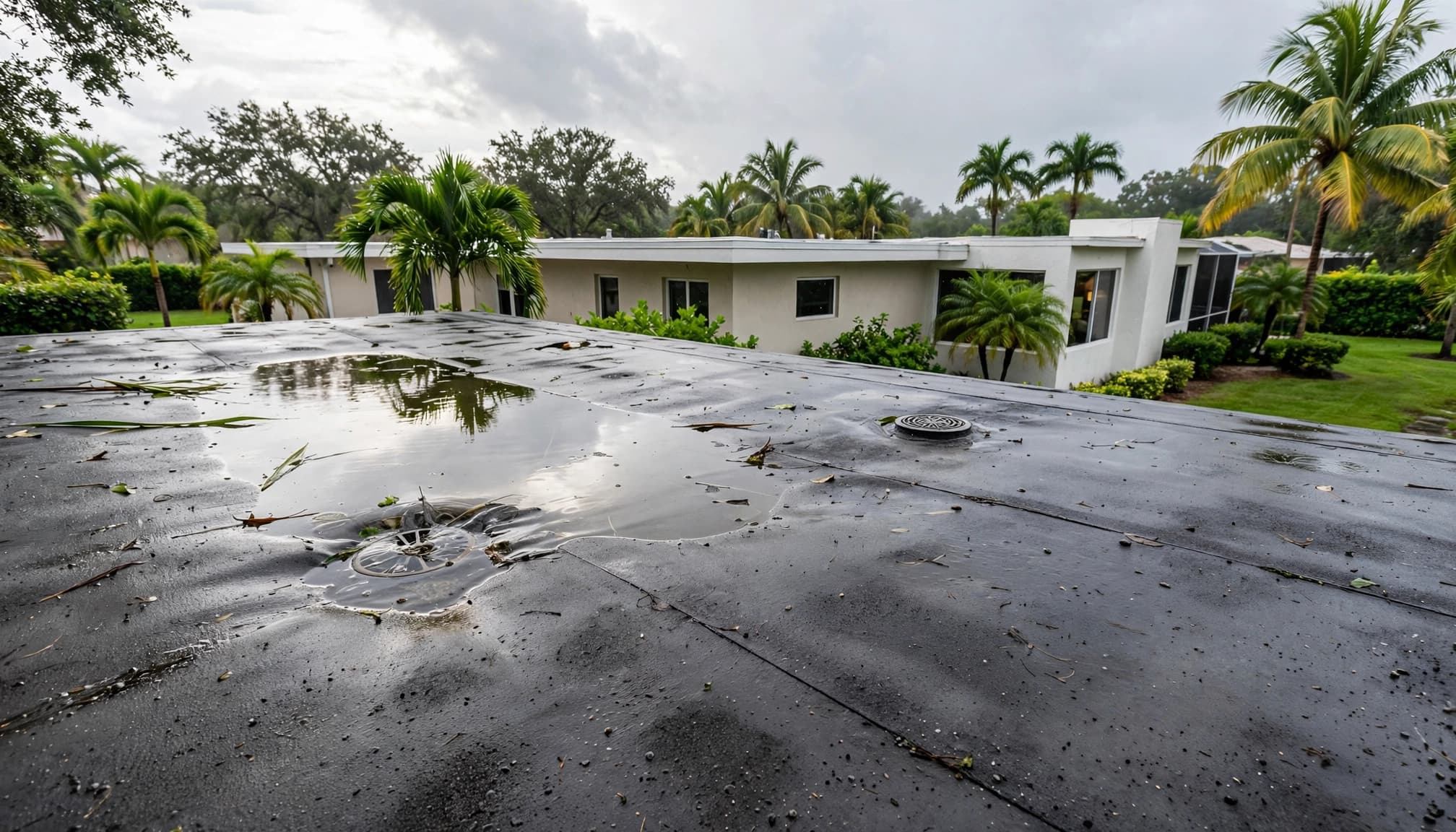
A flat roof is rarely perfectly level. It usually has a slight slope that directs water toward drains, scuppers, or another approved drainage point. When water remains in one area after the surrounding roof has dried, the roof may not be moving water as intended.
Cape Coral roofs face intense sunlight, heavy rain, humidity, strong winds, and hurricane seasons. Those conditions can expose weak points in a roofing system, especially when drainage problems allow water to remain against the roof surface.
Temporary rainwater or recurring ponding?
A small amount of water immediately after a storm doesn't automatically prove that the roof has failed. The more important question is whether the same area repeatedly collects water, whether the pool remains after the rest of the roof dries, and whether staining or leaks appear inside the home.
Take photographs from the ground or another safe location after significant rain. Record the date, the affected area, visible drains, and any interior symptoms. This information can help a contractor compare conditions over time.
Why standing water deserves attention
Ponded water can add weight to a roof and keep roofing materials wet for longer periods. If the roof surface has already weakened, that added load may increase stress on the membrane, flashing, insulation, or supporting materials.
Water can also find openings around penetrations, edges, seams, and transitions. A ceiling stain may appear far from the original entry point, so indoor damage alone may not identify the source.
Key takeaways for Cape Coral homeowners
- Ponding water is usually a symptom, not the complete diagnosis.
- Drainage, slope, membrane condition, flashing, and structural support all deserve review.
- Don't walk on a wet roof or try to push water toward an edge.
- A roof coating or patch may not correct the underlying drainage or structural problem.
- Tarps and other emergency measures provide temporary protection, not a permanent repair.
- Ask for photographs, written findings, and a clear explanation of the recommended work.
A professional evaluation is especially important before selling, remodeling, filing a claim, or replacing an older roofing system.
Common causes of ponding water on a flat roof
Several conditions can create the same visible symptom. A contractor should confirm the cause instead of assuming that a clogged drain or worn surface is responsible.
Drainage and slope problems
Blocked or restricted drains can prevent rainwater from leaving the roof. Leaves, dirt, debris, damaged drain components, or an obstruction in the drainage path may contribute to the problem.
The roof may also lack enough slope in a particular area. Construction changes, settled materials, or deflection can create a low spot where water collects. Even when the drain itself looks clear, the surrounding surface may not direct water toward it.
A professional may examine the location and condition of drains, scuppers, gutters, downspouts, and drainage paths. They can also check whether nearby construction, equipment, or later modifications affect the flow of water.
Membrane, flashing, and structural concerns
The roofing membrane protects the roof assembly from weather. Cracks, open seams, punctures, blistering, or deteriorated areas can allow water to move beneath the surface. A repair must address the actual damaged area and the condition of the surrounding material.
Flashing is another common inspection point. Flashing protects transitions around walls, edges, vents, skylights, and other penetrations. Loose, damaged, or poorly sealed flashing can allow water intrusion even when most of the roof appears intact.
Structural movement or sagging may also affect drainage. Because these conditions can involve materials below the visible roof surface, homeowners shouldn't treat a recurring puddle as a simple cleaning task.
What a professional roof inspection should check
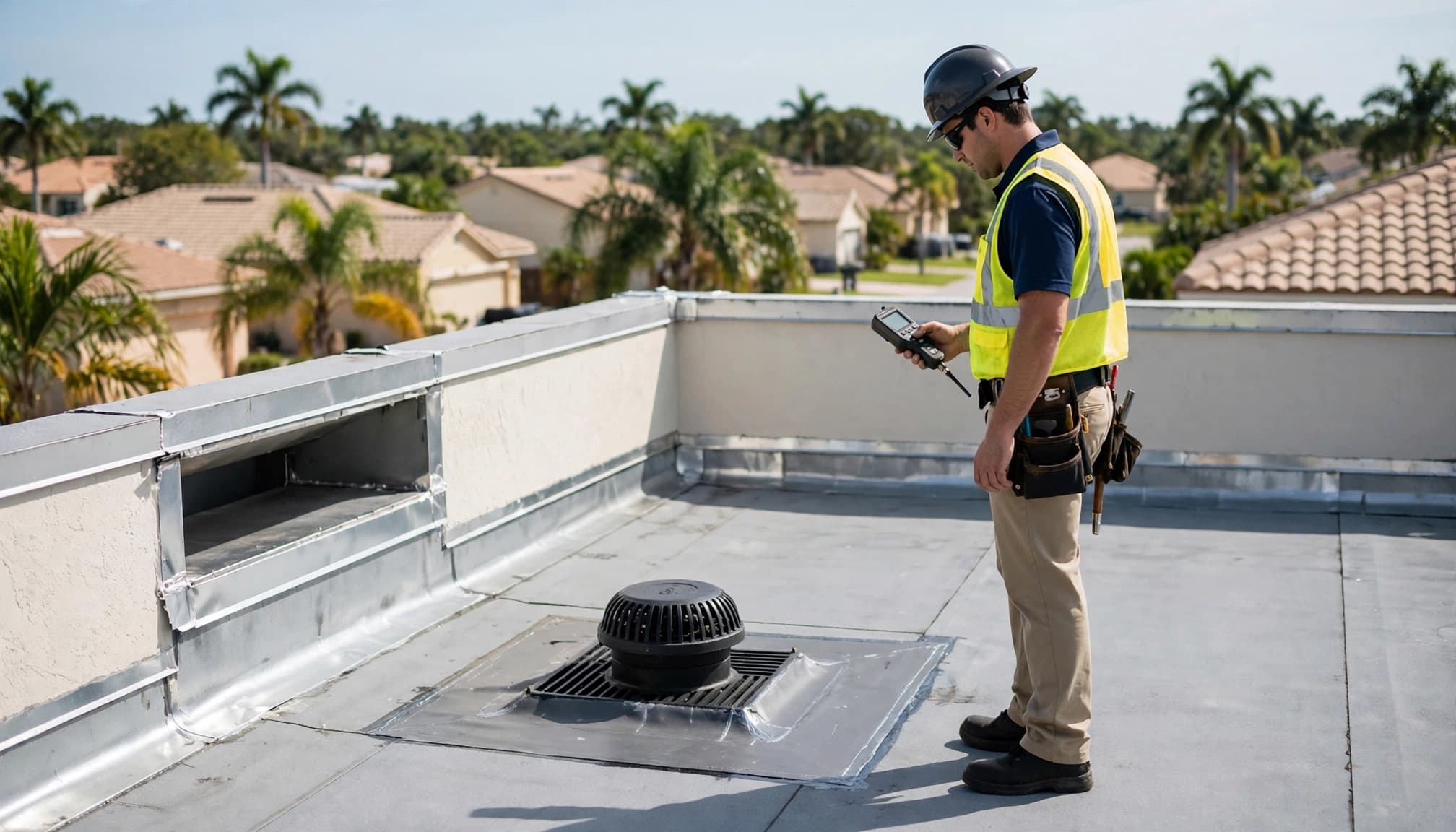
An inspection should connect the visible water to the condition of the complete roofing system. Cutting Edge Homes & Renovations describes its Cape Coral roof inspections as an evaluation of roofing materials, structure, integrity, possible leaks, weather or wear-related damage, and overall roof lifespan.
You can schedule a Cape Coral roof inspection when ponding first becomes noticeable, after storm damage, or before committing to major repair work.
What the contractor may document
The inspection should identify where water collects, how the roof drains, and whether the surface has visible damage. It may also include the membrane, seams, flashing, penetrations, edges, insulation, decking, and signs of movement.
Photographs matter because they show the condition before repairs begin. Ask the contractor to identify the suspected cause, explain how the proposed repair addresses it, and note any areas that require further investigation.
If the roof was installed recently, a separate installation inspection can provide a second opinion about the quality and correctness of the work. That can be useful when ponding appears soon after construction or replacement.
Why wet-roof DIY work is unsafe
Avoid walking on a wet roof. Moisture can make the surface slippery, and low-slope roofs may contain fragile areas that aren't obvious from above. Walking can also damage roofing materials or worsen a small defect.
Don't cut the membrane, remove flashing, drill drainage openings, or apply an unfamiliar coating without professional guidance. Those actions can hide the original condition and complicate later repairs.
Temporary mitigation after heavy rain or storm damage
Temporary mitigation can reduce additional water intrusion while you arrange an inspection. It doesn't correct the cause of flat roof ponding.
Safe steps homeowners can take
From the ground, look for ceiling stains, bubbling paint, wet insulation odors, or water near light fixtures. Move furniture and belongings away from affected areas, and use containers to catch interior drips when safe.
Photograph interior and exterior conditions without climbing onto the roof. Note when the water appeared and whether wind or heavy rain preceded it. If water reaches electrical fixtures, avoid the area and contact an appropriate professional.
When a roof tarp may help
A professionally installed tarp can provide temporary protection after storm damage or a serious roof breach. Cutting Edge Homes & Renovations describes emergency roof tarps as a short-term barrier while permanent repair or replacement is arranged.
You can request emergency roof tarp services when rain is entering through a damaged area and a permanent repair cannot happen immediately. A tarp should never be treated as a solution for a drainage defect, sagging roof, or deteriorated membrane.
Permanent repairs or full roof replacement?
The correct solution depends on the inspection findings, the age and condition of the roof, the size of the affected area, and whether the underlying assembly remains sound.
When a targeted repair may be appropriate
A targeted repair may make sense when the problem is limited and the surrounding roof remains in suitable condition. Possible work could involve correcting a localized flashing defect, repairing a membrane area, restoring a drainage component, or addressing a small damaged section.
The contractor should explain why the repair is expected to last and whether the drainage condition will change afterward. Patching a leak without correcting standing water may only postpone the next failure.
When replacement deserves consideration
Replacement may be more practical when ponding affects broad areas, the membrane has widespread deterioration, the roof assembly has repeated leaks, or structural concerns are present. A replacement project should address drainage and installation details rather than place new material over an unresolved problem.
A Florida roofing system also depends on correct underlayment, flashing, ventilation, and finishing details. Cutting Edge Homes & Renovations provides professional roof replacement and installation for homeowners replacing aging roofs or building new homes in Southwest Florida.
Ask for a written scope that separates repair work, removal, decking or structural work, drainage improvements, and finish installation. Don't accept a recommendation that lists only a new surface without explaining the conditions below it.
Questions to ask a roofing contractor
A clear conversation can help you compare recommendations and avoid paying for work that doesn't address the cause. Ask these questions during the inspection or estimate:
- Where is the water collecting, and what evidence identifies the cause?
- Did you inspect the drains, slope, membrane, flashing, decking, and supporting structure?
- Is the proposed work temporary, a localized repair, or a full replacement?
- Will the repair change how water leaves the roof?
- What interior areas should be checked for moisture damage?
- Which photographs and written findings will be included with the estimate?
- If replacement is recommended, what existing materials must be removed or evaluated?
- Does the project include the roof components needed for long-term performance, such as flashing and underlayment?
Homeowners with older properties may also need broader documentation. A four-point inspection reviews HVAC, electrical wiring and panels, plumbing connections and fixtures, and the roof. Cutting Edge Homes & Renovations notes that this type of inspection is especially relevant to homes more than 25 years old. A four-point inspection of roofing and home systems is different from a focused ponding diagnosis, but it may help document the condition of an older home.
FAQ about flat roof ponding in Cape Coral
Is any standing water on a flat roof an emergency?
Not every puddle requires emergency service, but recurring or extensive ponding deserves prompt inspection. Contact a professional sooner when water is entering the home, the ceiling is bulging, the roof appears damaged, or a storm has displaced roofing materials.
Can a homeowner sweep ponding water off the roof?
Walking onto a wet roof can cause falls and damage the roofing surface. A homeowner should not attempt to sweep, pump, cut, or drain the water without professional direction. Photograph the condition from a safe location and arrange an inspection.
Will a roof coating solve ponding water?
A coating may protect certain roof surfaces in appropriate circumstances, but it doesn't automatically correct poor drainage, structural movement, damaged flashing, or low areas. The roof should be evaluated before any coating is selected.
Should I repair or replace the roof?
A contractor should base that decision on the extent of damage and the condition of the roof assembly. A limited defect may support a repair, while widespread membrane failure, repeated leaks, or structural concerns may make replacement more appropriate.
Conclusion
Flat roof ponding in Cape Coral is a warning sign that deserves a cause-based inspection. Drainage, slope, membrane damage, flashing defects, and structural conditions can all contribute, so a surface patch may not solve the problem.
Stay off a wet roof, use temporary protection only when needed, and ask a qualified roofing professional for documented findings. The right repair begins with understanding why the water is collecting in the first place.