Florida 25% Roof Rule: When a Partial Repair May Be Allowed
Explore Our Services
Contact Us Today!
(239) 322-9295
A storm can damage one part of your roof while the rest looks untouched. If you've heard that the Florida 25% roof rule requires a full replacement, you may be facing a larger decision than the damage itself warrants.
Partial repair may be possible , even when the affected area is substantial. The answer depends on the roof's code history, work completed during the past 12 months, the proposed repair, and your local building department's review. Start with what the rule says, then look at how it applies to your roof.
What the Florida 25% roof rule actually says
The commonly cited rule comes from the Florida Building Code, Existing Building, Section 706.1.1. It addresses work affecting more than 25% of a building's total roof area or roof section within any 12-month period. Under its general requirement, exceeding that amount means the entire existing roofing system or roof section must be replaced to meet the code.
That is not the complete answer for every roof . Florida Statutes Section 553.844(5) provides an important exception for certain roofs that complied with the 2007 Florida Building Code or a later edition. For those roofs, only the portion being worked on must meet the code in effect, even when the work reaches 25% or more.
The threshold also doesn't approve every smaller repair. A contractor still has to assess the roof's condition, design a sound repair, and meet applicable code and permit requirements.
How the 12-month calculation affects your project
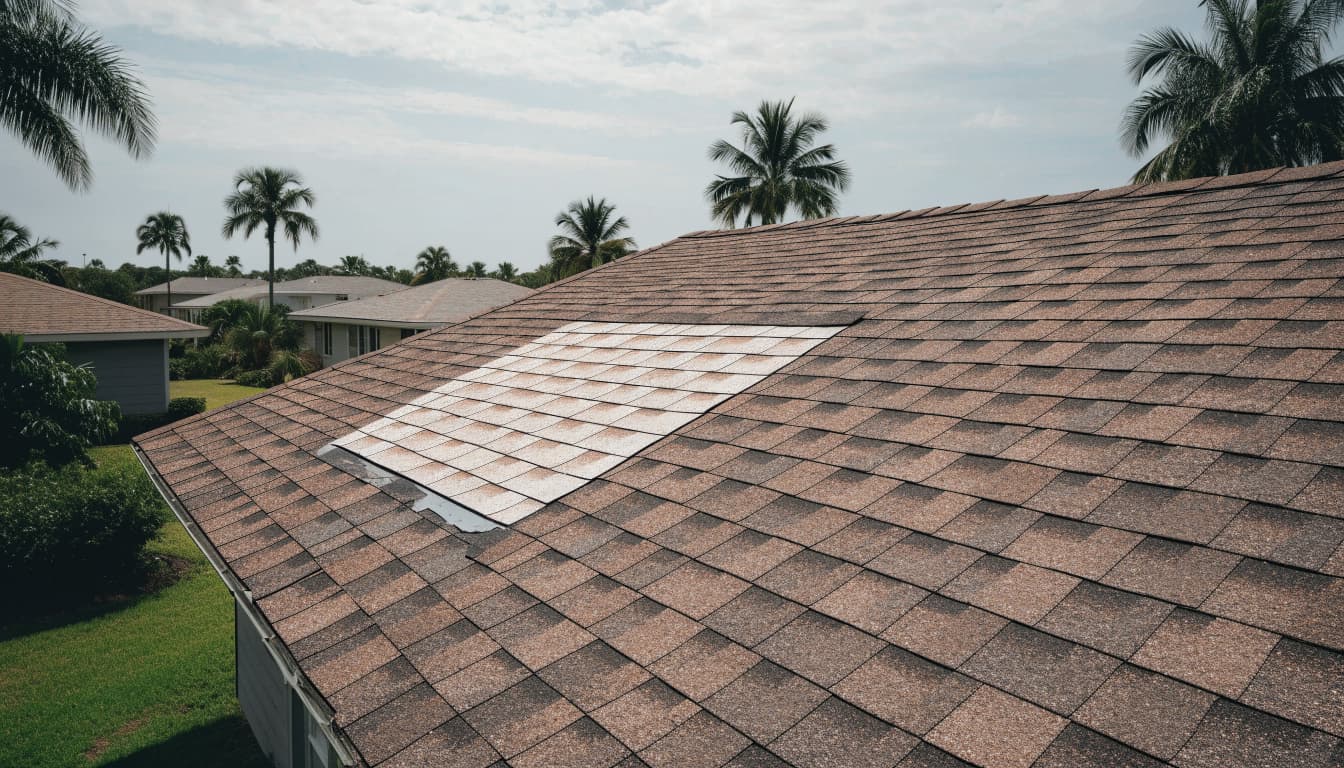
The percentage describes roof area worked on , not the share of shingles that blew into the yard. An accurate estimate starts with measurements and a defined scope.
Measure the applicable roof area or section
Section 706.1.1 refers to the building's total roof area or roof section. That distinction can matter on a home with separate roof sections, additions, or several roof planes. Don't assume each slope counts as its own section, or that the home's interior square footage equals its roof area.
For illustration, 25% of a 2,000-square-foot roof section is 500 square feet. A proposed 600-square-foot repair exceeds that threshold for the section. The calculation still won't tell you whether the statutory exception applies or whether the proposed repair is technically suitable.
Include earlier work in the 12-month period
A new storm doesn't necessarily reset the calculation. Roof work completed during the preceding 12 months may count alongside the proposed work. For example, 350 square feet of earlier work plus a new 200-square-foot repair totals 550 square feet. That exceeds 25% of a 2,000-square-foot section.
Keep invoices, permits, and dated photographs from previous repairs. They help the contractor and building department establish what work occurred and when. If repairs overlap, ask how the affected area will be measured rather than adding estimates without checking them.
Why the roof's code history matters
The Florida 25% roof rule is often described as an age test. The more useful question is whether the relevant roofing system or section was built, repaired, or replaced in compliance with the 2007 Florida Building Code or a later edition .
A qualifying roof may receive a larger partial repair
Under Florida Statutes Section 553.844(5), when 25% or more of a qualifying roofing system or section is repaired, replaced, or recovered, only that portion must comply with the current code. A project can therefore exceed the commonly quoted percentage without automatically requiring replacement of the entire roof.
The repaired area must still satisfy applicable requirements. The exception doesn't excuse poor installation, unsuitable materials, or an incomplete scope. It also doesn't guarantee that an older, worn roof can support a lasting patch.
A date alone doesn't prove compliance
You may hear March 1, 2009 used as a shorthand for roofs associated with the 2007 code edition. The statute's test, however, is code compliance , not simply the date shown on a permit or sales record.
Collect the roof permit, approved plans, inspection record, and contractor invoice if they're available. A roof may have been repaired in stages, so the history of the affected section matters. If records are incomplete, ask a qualified roofing professional and the local building official how they will evaluate the documentation.
When a partial roof repair makes sense
Code eligibility is one part of the decision. A localized repair also has to keep water out and hold up through Southwest Florida's heavy rain and high winds.
Damage is limited and surrounding materials remain sound
A repair may be reasonable when damage is confined to a defined area and the adjacent roof covering can support the work. Missing shingles, damaged flashing, or a small leak are reasons to arrange an inspection, not reasons to guess at the repair size from the driveway.
A professional Fort Myers roof inspection can examine the covering, flashing, and accessible decking. If opening the roof reveals deteriorated wood or wider damage, the scope may need to change. That discovery should prompt a fresh code and permit review before work expands.
The new work can connect properly to the old roof
The meeting point between repaired and existing material deserves close attention. Water can enter where underlayment, flashing, or roof covering fails to tie into the surrounding assembly. A replacement product also needs to suit the existing system and its installation requirements.
Florida Roofing and Sheet Metal Contractors Association guidance discusses how related work needed to connect repaired and unrepaired areas may be treated in the percentage calculation. Don't assume every tie-in area is excluded. Have the contractor describe it in the proposed scope and confirm the calculation with the local building department.
When the roof is otherwise sound, professional residential roof repair can address the affected area without replacing usable material.
What changes after hurricane or storm damage
Storm damage needs prompt attention, but a hurricane doesn't create a separate, automatic exemption from the 12-month test. Multiple repairs following the same storm can affect the total area worked on. Earlier repairs within the period may matter too.
First, keep people away from unstable areas and limit further water intrusion. Emergency roof tarping in Fort Myers can provide temporary protection while the permanent scope is assessed. Ask the building department how it treats any proposed emergency work and what permits the permanent repair needs.
Photograph visible damage before permanent work begins, and retain the roofer's findings. An insurer's estimate can be useful for a claim, but it doesn't replace a building official's code determination. Likewise, an insurance decision about payment doesn't establish whether a partial repair meets current construction requirements.
Permits and local review in Southwest Florida
The Florida Building Code provides the statewide framework, while the authority for your property's address reviews the proposed work. A home within Fort Myers city limits may follow a different permitting process from one in unincorporated Lee County. Nearby municipalities can have their own application and inspection procedures.
Confirm the scope before work starts
Ask the contractor to identify the governing jurisdiction, describe the work area, and check whether a permit is required. Don't assume a small repair is permit-free, or that a storm claim supplies permit approval. If the project grows after the roof is opened, ask whether the permit and area calculation must be updated.
For larger projects, a Fort Myers roof replacement checklist can help you track permit status, approved plans, and inspection stages. Association approval, if your neighborhood requires it, is separate from building department approval.
Ask what the official needs to verify
The reviewer may need measurements, prior permit records, and the roofing system's code history to assess the proposed work. Ask which roof area or section forms the calculation's basis and how earlier work affects it.
A qualified roofer should be able to explain the repair's materials and connections, not simply promise that the job is "under 25%." Written scope and records make it easier to resolve questions before materials come off the roof.
Keep code, roof condition, and insurance decisions separate
The Florida 25% roof rule answers a construction-code question. It doesn't measure how much useful life the roof has left, and it doesn't decide what an insurance policy will pay.
Roof age can affect insurance decisions under separate Florida rules. In general, an insurer cannot refuse to issue or renew a homeowners policy solely because a residential roof is under 15 years old. For a roof at least 15 years old, an authorized inspection showing at least five years of useful life can protect against a decision based solely on age. Other underwriting and policy considerations can still apply.
Keep your permit, final inspection record, invoices, product information, and photographs together after a repair or replacement. Those records can help explain the roof's history during a later storm claim, inspection, or permit review. If you plan to replace the roof, residential roof installation in Fort Myers should account for the complete approved assembly, including decking, underlayment, flashing, and covering.
Key takeaways
- The 25% figure applies to roof area worked on within a 12-month period, using the applicable total roof area or roof section.
- A roof compliant with the 2007 Florida Building Code or later may qualify for a larger partial repair under the statutory exception.
- A repair below 25% still needs a sound scope and must meet applicable code and local requirements.
- Confirm measurements, roof history, permits, and any expanded scope with a qualified roofer and the building department for your address.
Frequently asked questions
Does damage below 25% mean I can repair only that area?
No. The percentage doesn't establish that the surrounding roof is sound or that a limited repair will meet code. An inspection and local review may reveal additional work.
Does a repair above 25% always require a whole new roof?
No. Florida's statutory exception may allow work on only the affected portion of a qualifying roof. The roof's documented compliance with the 2007 code or later matters.
Is a roof installed after March 1, 2009 automatically covered by the exception?
No. That date is a common shorthand, but the legal test concerns compliance with the 2007 Florida Building Code or a later edition. Ask the local building official what records support the determination.
Do hurricane repairs get a different percentage?
The cited 25% provision doesn't set a separate hurricane threshold. Document storm-related work and any earlier repairs within the relevant 12-month period.
A sound decision starts with the roof you have
One damaged area doesn't always mean replacing an entire roof. The right scope depends on measured work area, documented code history, and whether the remaining roof can support a reliable repair.
Before approving permanent work, have a qualified roofing professional assess the damage and confirm the proposed scope with your local building department.