Florida Exterior Colors: Choosing a Sun-Smart Palette
Explore Our Services
Contact Us Today!
(239) 322-9295
Choose your Florida home's exterior palette by coordinating the roof and permanent materials first, then testing lighter wall colors outdoors. The most practical Florida exterior colors balance sunlight, maintenance, and architectural character , rather than looking good only on a sample card.
Southwest Florida's strong sun can wash out subtle colors, while shaded lanais make those same shades appear darker. Start with the materials you can't easily change, then build a coordinated scheme around them.
Key takeaways
- Begin with the roof, windows, pavers, and stone before choosing wall paint.
- Lighter surfaces generally reflect more sunlight, but visible color alone doesn't establish energy performance.
- Select body, trim, shutters, and doors together, using large outdoor samples.
- Treat humidity, salt exposure, and drainage as material and maintenance concerns.
- Obtain required neighborhood approval before ordering exterior finishes.
Start with the roof and fixed materials
Your roof occupies a large part of the exterior view and usually stays longer than the wall paint. Its undertones should guide the palette.
Terracotta tile pairs naturally with warm ivory, sand, and muted green. A cool gray roof generally connects more easily with soft white, blue-gray, or restrained greige. However, neither combination is automatic: individual materials can contain pink, yellow, green, or violet undertones.
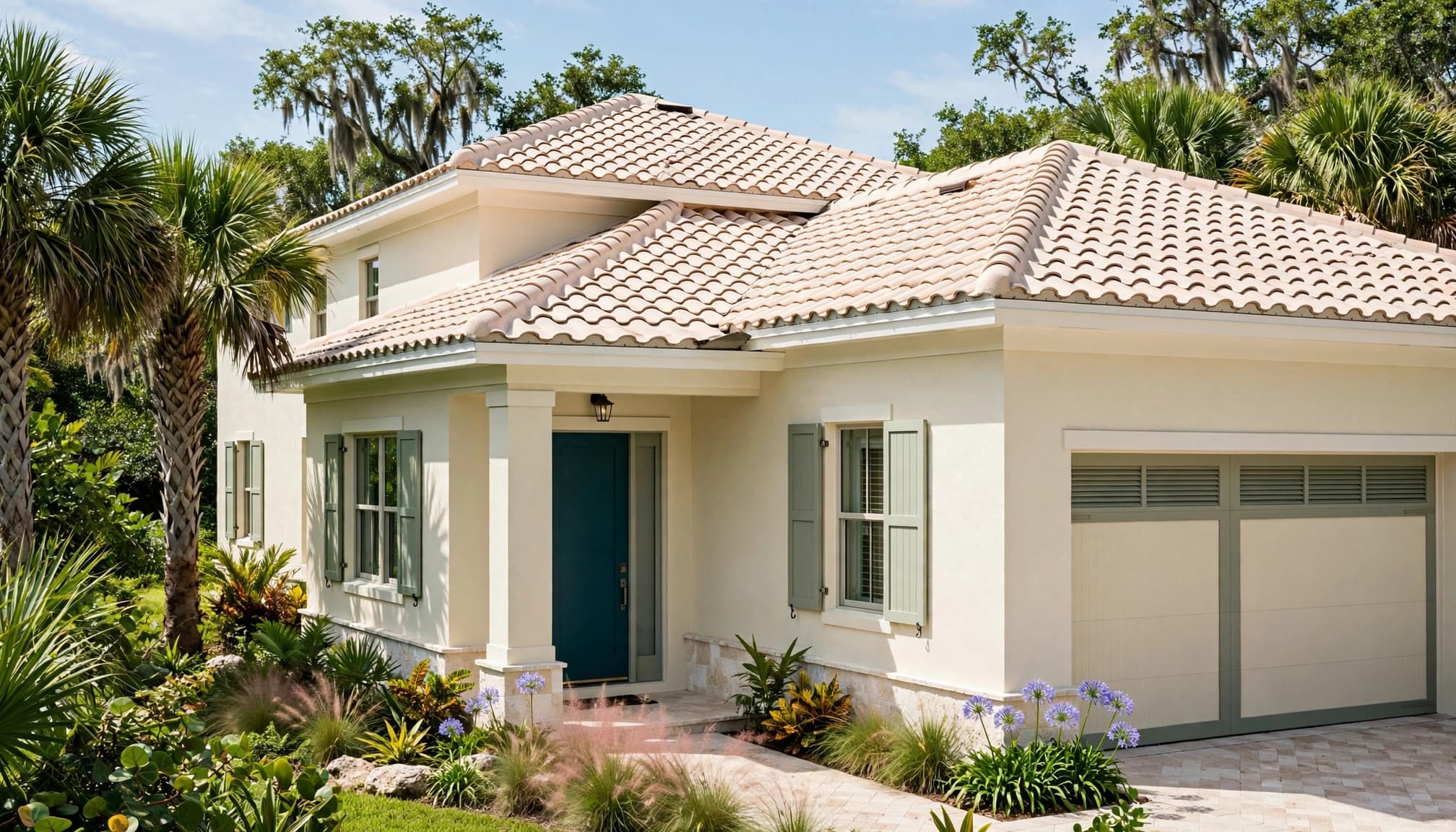
Place roofing samples beside the window frames, driveway pavers, stone accents, and pool enclosure finish. Bronze screens, for example, introduce a dark brown element that should relate to the door, shutters, or lighting.
If roof replacement is part of the project, select both packages together. Our guide to cool roof colors explains the tradeoffs between light, medium, and dark roofing.
Avoid choosing a wall color to correct one mismatched accent. A coordinated exterior starts with the largest, longest-lasting surfaces.
How Florida exterior colors respond to sun and heat
Understand light reflectance without overreading it
Light reflectance value, or LRV, describes how much visible light a surface reflects on a scale from 0 to 100. Higher values indicate greater visible-light reflection.
That helps explain why pale walls appear bright and dark walls look heavier. However, LRV isn't a complete heat-performance rating . Solar reflectance includes sunlight beyond the visible range, while thermal emittance describes how readily a surface releases absorbed heat.
For roofing, published product performance matters more than a color name such as "ivory" or "charcoal." Two similar-looking products can perform differently.
Balance brightness with comfortable contrast
Lighter surfaces generally reflect more sunlight, while darker surfaces absorb more. Still, exterior color alone doesn't determine indoor comfort. Insulation, air sealing, glazing, and the roof assembly also affect heat entering the home.
Bright white can look stark across a large sunlit facade. A softened white, pale sand, or light greige may create the appearance you want with less visual intensity.
Reserve stronger contrast for smaller areas, such as the entry door or shutters. This gives the house definition without covering every sun-exposed wall in a deep tone.
Plan for fading, humidity, and coastal exposure
Separate color choice from coating durability
Strong ultraviolet exposure can change a coating's appearance over time. Fading, chalking, peeling, and corrosion are different problems, so a long warranty doesn't necessarily cover them equally.
A color name doesn't establish durability. The coating formulation, substrate condition, preparation, and exposure all affect how the finish ages. Nor does a particular shade make paint suitable for humid conditions.
Choose an exterior coating intended for the actual surface. For stucco, that includes accounting for surface condition and moisture rather than applying a new color over unresolved damage.
Keep moisture and salt in the conversation
Humidity and frequent rain can leave shaded areas damp. Persistent staining near a window, roof intersection, or downspout deserves attention to the water source before repainting.
Coastal exposure also affects metal doors, fixtures, fasteners, and roof accessories. Salt deposits can retain moisture, while damaged coatings leave vulnerable areas exposed.
Our guidance on salt-resistant materials for coastal homes connects finish selection with drainage and compatible components. A beautiful palette lasts better when the construction details allow materials to dry and remain accessible for maintenance.
Coordinate body, trim, shutters, and doors
Give large surfaces a clear hierarchy
The body color should establish the overall impression. Trim then defines the roofline, openings, and architectural details.
For a quieter exterior, choose trim close to the body color. For stronger definition, introduce contrast where the architecture deserves attention, such as porch columns or substantial window surrounds.
Treat a large garage door carefully. Matching it closely to the body can keep it from dominating the front elevation. Conversely, a contrasting garage finish makes sense when its design is intended to be a feature.
Include gutters, fascia, and soffits in this decision. Leaving them unspecified can introduce an unintended extra color.
Make accents relate to each other
Shutters and the entry door don't have to match. They should, however, share a relationship with the roof, windows, or other accents.
Muted sage shutters and a deeper teal door can work with warm ivory walls. Bronze window frames can connect with a brown-stained door and restrained dark hardware.
Also distinguish decorative shutters from storm-protection systems. Hurricane shutter tracks and housings may remain visible, so include their finishes early. Decorative trim must leave the required installation and drainage details unobstructed.
Four exterior palettes suited to Southwest Florida
These combinations are starting points for coordinating Florida exterior colors with common roofing and architectural styles.
| Character | Body | Trim | Shutters and door | Roof pairing |
|---|---|---|---|---|
| Warm coastal | Soft ivory | Warm white | Sage shutters, teal door | Pale terracotta tile |
| Cool coastal | Pale blue-gray | Soft white | Slate-blue shutters, navy door | Light gray roofing |
| Mediterranean | Light sand | Cream | Muted olive shutters, brown door | Terracotta tile |
| Contemporary | Warm white | Matching white | Bronze accents, charcoal door | Medium gray roofing |
The strongest option is the one that suits your fixed materials, rather than the style label alone.
For Mediterranean architecture, cream usually creates a gentler transition to terracotta than a sharply cool white. Meanwhile, blue-gray walls need a roofing sample beside them because some grays reveal violet or green undertones.
Carry the palette around the entire house, including the lanai. Pool-deck pavers, outdoor kitchen finishes, and screen enclosures should feel connected to the front elevation.
You don't need to repeat every color outdoors. Repeating one neutral and one accent is often enough to establish continuity.
Test paint samples in changing sunlight
Small chips help narrow your choices, but they can't show how a color behaves across textured stucco. Use large sample panels with the proposed coating and finish.
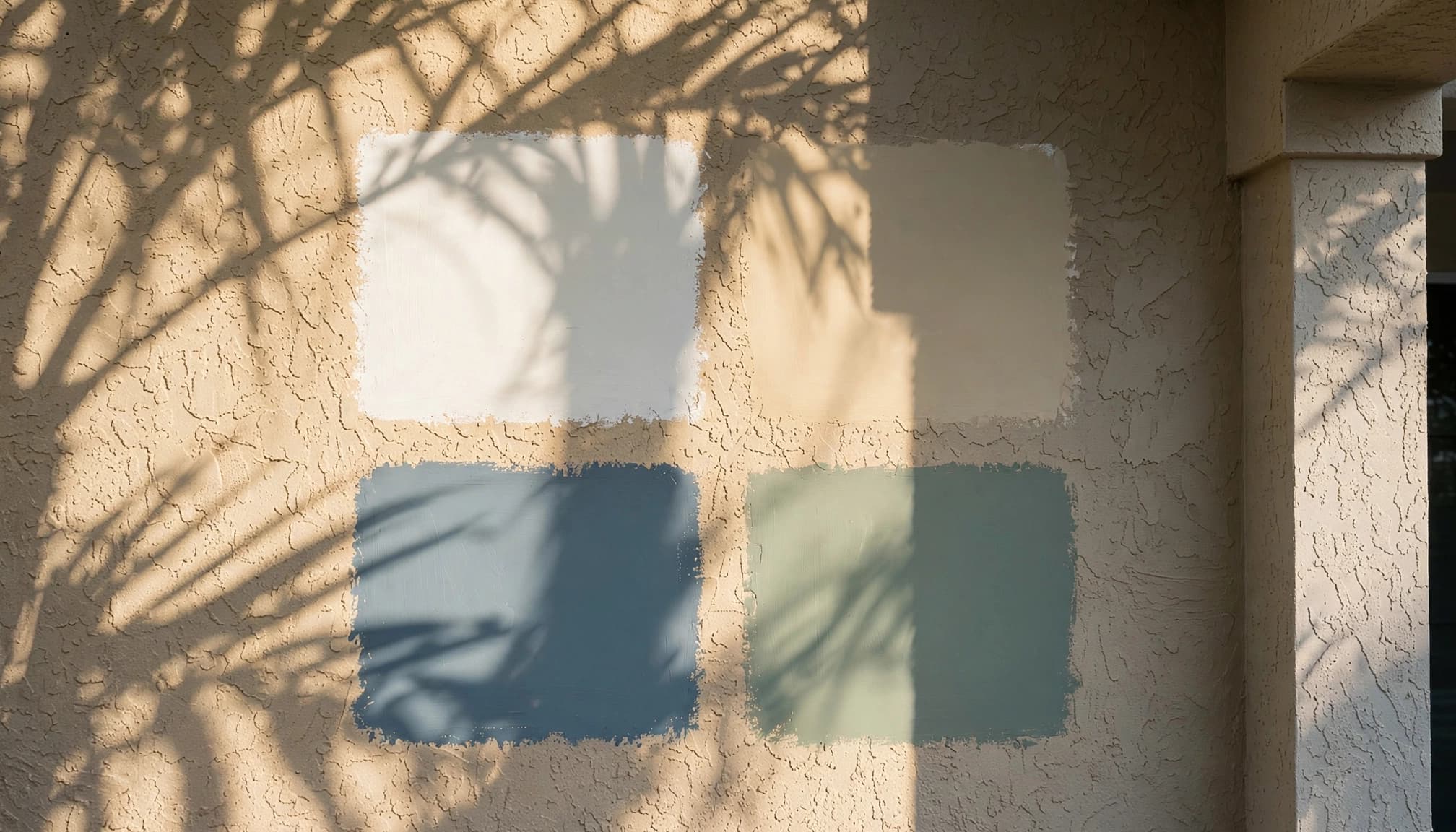
- Place samples beside roofing, window frames, and pavers so you can judge their undertones together.
- View them in morning light, afternoon sun, and deep porch shade.
- Move panels to different elevations, including the west-facing wall and covered lanai.
- Review the complete combination from the street and near the entry.
Let samples dry according to the product instructions before judging them. Also compare the intended sheen because reflections change the appearance of color and texture.
A color that works on the sunny front elevation can look substantially darker under a deep lanai. Approve both views before committing.
Keep the shortlist small enough to compare clearly. Once you've selected a combination, photograph it for reference, but make the final decision using the physical samples. Phone screens can alter both brightness and color.
Resolve neighborhood requirements before ordering
Some Southwest Florida communities regulate exterior paint schemes, roof materials, reflectance, and visible changes. An architectural review may require color samples, product information, or a completed selection form.
Obtain written approval before placing orders. If the neighborhood uses approved palettes, start within those options instead of developing an unavailable scheme.
HOA approval and construction approval address different matters. A community's acceptance of a roof color doesn't establish that the roofing assembly meets the project's wind or installation requirements.
Document each selected surface, color name, finish, and product in one schedule. Our custom home finish schedule helps organize those decisions before purchasing and installation.
Include existing finishes that will remain during remodeling. This prevents a painter from assuming that an older garage door, soffit, or lanai ceiling belongs in the new paint scope.
Frequently asked questions
Is white always the right exterior color for Florida?
White is a useful starting point, but it isn't mandatory. Warm ivory, pale gray, light sand, and muted pastels can also suit Florida architecture. Choose the undertone that works with the roof and permanent materials, then judge the brightness outdoors.
Can a Florida home have dark exterior accents?
Yes. A dark door, shutters, or selected trim can provide definition. However, dark surfaces generally absorb more sunlight, so placement matters. A shaded entrance presents different exposure conditions than a broad, unprotected west-facing wall.
Should the roof match the wall color?
The roof and walls should coordinate rather than match exactly. A medium gray roof can complement pale walls, while terracotta often pairs with warm neutrals. Compare actual samples because roof blends and surface texture can change the apparent undertone.
Bring the whole exterior together
A successful Florida palette begins with the roof and fixed materials. Test the complete combination outdoors , then account for moisture, coastal exposure, and maintenance before approving the finishes.
We can help coordinate your custom home's exterior, roofing, and outdoor living selections as part of a Southwest Florida construction or remodeling project. Resolving those choices together gives every visible surface a clear place in the finished home.