Construction Loan Draws: What Lenders Check
Explore Our Services
Contact Us Today!
(239) 322-9295
Before releasing construction loan draws, lenders typically review completed work, supporting paperwork, and whether the remaining funds can cover the unfinished home. The exact requirements depend on your loan agreement, but the central concern is documented progress .
For Southwest Florida homeowners, draw timing affects payments for site work, impact-rated windows, roofing, and other major expenses. Understanding how each request moves through review helps you coordinate construction payments without assuming that an invoice alone will release the money.
Key Takeaways
- Lenders generally compare each draw request with the approved budget and documented construction progress.
- A lender's progress inspection and a local building inspection have different purposes.
- Payment records, lien documents, and title updates may affect whether a request is ready for release.
- Borrower equity, approved changes, and remaining contingency can influence available funding.
- A complete draw packet helps prevent avoidable delays, although release procedures vary by loan.
How Construction Loan Draws Move Through Review
A construction draw releases part of the financing as the project advances. Rather than paying the entire construction budget upfront, the lender administers advances under the loan's agreed procedures.
The process generally begins when the builder or borrower submits a payment request. The lender then reviews the requested costs, obtains any required progress report, and evaluates supporting documents before authorizing eligible funds.
The approved amount can differ from the requested amount. A request might include unfinished work, an unsupported charge, or a change that hasn't entered the approved budget.
Payment arrangements also vary. Funds may go to the borrower, builder, or designated payees, depending on the loan's disbursement structure.
Our guide to Fort Myers construction-to-permanent loans explains how construction financing fits into the larger homebuilding plan. For draw purposes, the construction contract and loan procedures need compatible payment timing.
A scheduled contractor payment doesn't automatically create an approved loan advance.
Completed Work and Site Inspections
Progress needs to match the payment request
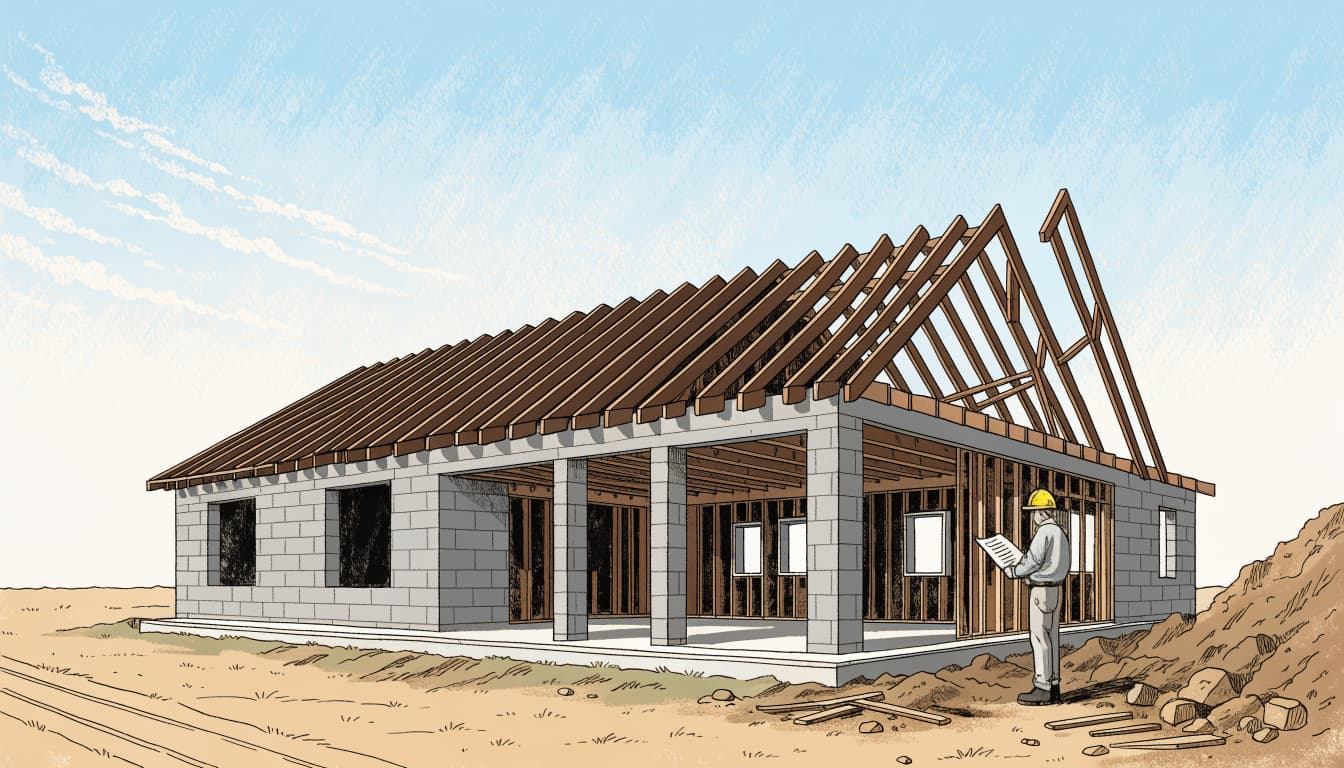
A lender may arrange a site inspection to document how much eligible work is complete. The reviewer compares visible progress with the draw request and approved construction scope.
Foundation work, framing, roofing, and interior finishes each represent different stages of completion. Materials delivered to the property aren't necessarily treated the same as installed work. Deposits and stored materials depend on the loan's funding provisions.
A new-home site visit schedule helps homeowners understand those milestones. However, a homeowner walkthrough doesn't replace a lender's required progress review.
Building inspections answer a different question
Local building inspections address applicable code requirements at designated stages. A lender's inspection primarily supports the financing decision and reported construction progress.
A passed framing inspection can support the project record, but it doesn't establish that every charge in a draw request is payable. Likewise, a lender's progress report doesn't replace required municipal inspections.
A passed building inspection doesn't, by itself, authorize the release of construction funds.
Keeping these records separate helps prevent confusion about which approval is still outstanding.
Draw Schedules, Budget Progress, and Contingency
The lender follows individual budget categories
Construction loan draws usually connect to an approved schedule or budget breakdown. The lender reviews progress against those categories rather than relying only on the home's overall appearance.
Site preparation, structural work, mechanical systems, and finishes can progress at different rates. A project can look advanced while substantial costs remain for electrical work, cabinetry, or exterior improvements.
For a Southwest Florida custom home, the approved scope should also account for any financed pool, outdoor living area, and substantial site work. Otherwise, the financing may not reflect the full project cost.
Changes affect the money left to finish
The lender also considers whether available funds remain sufficient for unfinished work. Cost increases and approved change orders can affect that calculation, even when the requested work is complete.
A contingency reserve provides room for eligible unexpected expenses under the financing arrangement. As that reserve declines, an unresolved overrun becomes more significant.
An owner-requested upgrade can also require additional borrower funds rather than a larger draw. Choosing premium cabinets doesn't automatically increase the loan amount.
Early decisions reduce uncertainty. Our guidance on planning finish selections before construction helps connect material choices with the approved scope before purchases create budget pressure.
Invoices, Proof of Payment, and Lien Protection
Invoices and payment records serve different purposes
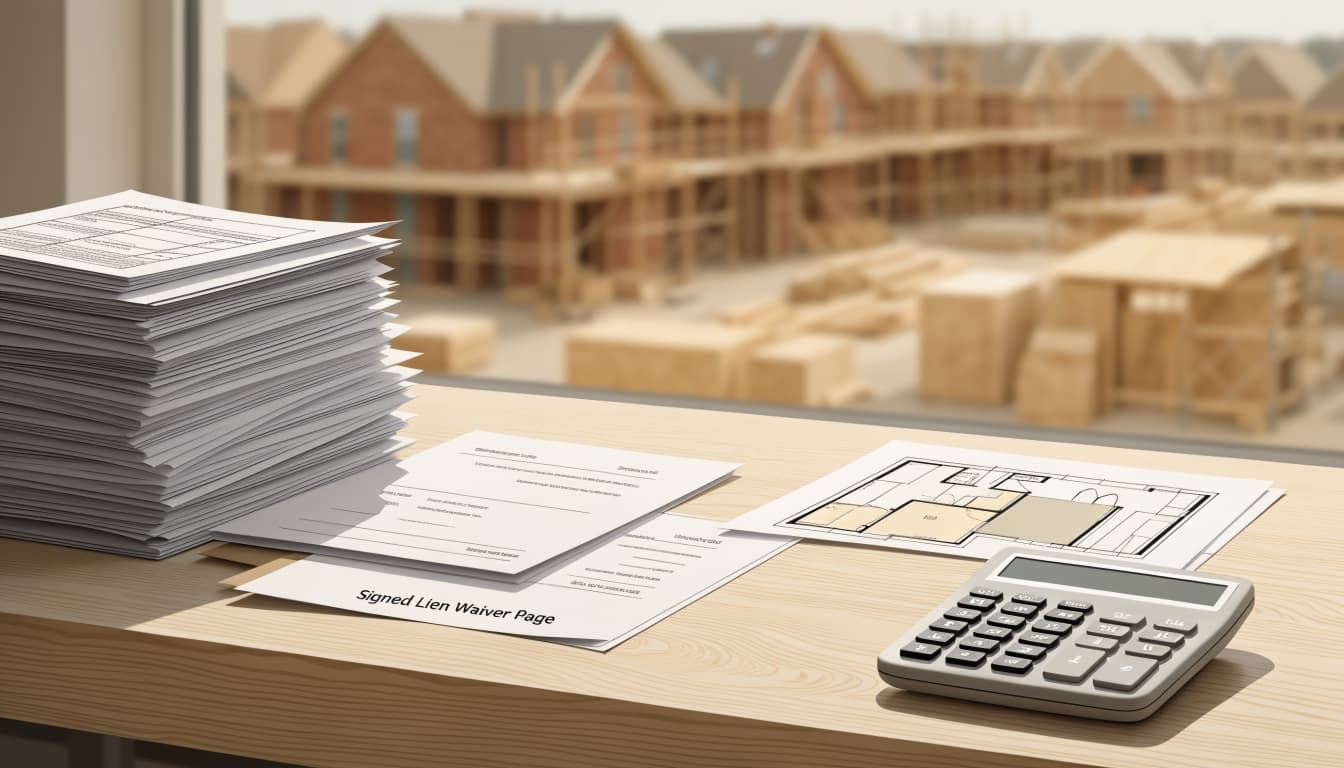
An invoice describes an amount billed. Proof of payment shows that money changed hands. Depending on the draw arrangement, a lender may request one or both.
Invoices should connect clearly to the property, trade, and requested budget category. Vague descriptions, duplicate charges, or amounts that don't match the draw summary create questions.
For reimbursement requests, receipts, canceled checks, or bank records may support the amount already paid. For unpaid invoices, the lender's approved payment procedure governs how money reaches the intended recipient.
Keeping previously paid amounts separate from newly requested amounts helps prevent accidental double billing.
Lien waivers and title updates address different risks
Lien waivers document the release of specified lien rights, subject to their terms. A conditional waiver depends on a stated condition, commonly payment. An unconditional waiver states a release without that payment condition.
The document's wording and payment status need to match. Signing an unconditional release before receiving payment can surrender rights prematurely.
A title update serves another purpose: it helps identify recorded matters affecting the property since the previous review. New liens or other exceptions can affect the lender's security.
Paying the general contractor doesn't necessarily prove that every subcontractor or supplier received payment. Therefore, lien documentation may extend beyond the builder's invoice. Draw procedures may require records for earlier payments as well as the current request.
Permits, Required Documents, and Borrower Equity
Project records need to stay consistent
Depending on the loan and construction stage, a draw package may include permit information, inspection records, updated insurance documents, approved change orders, or revised budget figures.
Names, property details, and amounts should agree across the package. An outdated contract total can conflict with a revised draw request even when the underlying work is legitimate.
Local jurisdiction also matters. A property within Fort Myers city limits follows the city's permitting process, while an unincorporated Lee County property follows county procedures. The lender's file needs the records applicable to that project.
Equity contributions affect available loan funds
Some construction loans require borrowers to contribute specified funds before loan advances begin. Others use a different contribution sequence. Land equity may count when the financing agreement recognizes it.
The lender may review evidence that required cash contributions have been made. Separately, owner-funded upgrades or cost overruns can create additional funding obligations during construction.
Keep those payments documented and connected to the project budget. Paying a supplier directly doesn't automatically establish that the lender has credited that payment toward your required contribution.
The timing matters because an incomplete equity contribution can hold up an otherwise supported draw.
Practical Steps That Help Prevent Draw Delays
Our advice is to treat payment documentation as part of the construction schedule. Waiting until a subcontractor's payment is due leaves little room to resolve missing records.
- Establish who prepares each draw request, gathers supporting documents, and responds to lender questions before construction begins.
- Use one current budget and draw log that separates prior payments, the new request, approved changes, and remaining balances.
- Submit a complete packet with clearly identified invoices, applicable payment records, and requested lien documents.
- Coordinate site access and progress documentation so the lender's reviewer can assess the work included in the request.
- Record change orders before their costs enter a draw, and identify how any amount outside the loan will be funded.
Build processing time into the contractor's payment plan rather than assuming same-day funding. Weather, material delivery, and site conditions can change the construction schedule, while inspection and document review add separate steps.
The custom home timeline after permits provides context for coordinating work and inspections. Connecting that schedule to draw preparation gives everyone a clearer picture of when payment requests can realistically move forward.
Frequently Asked Questions About Construction Draws
Can a lender approve only part of a draw?
Yes. A lender may release the supported portion while holding back costs that don't yet meet the loan's requirements. Unfinished work, missing documents, or an unapproved budget change can leave part of a request unresolved.
A partial approval doesn't necessarily mean the entire project has stopped qualifying for funding. The important distinction is between an eligible amount ready for release and an amount that still needs documentation or additional work.
Does finishing construction automatically release the final draw?
No. Physical completion and financial closeout are separate steps. Depending on the loan, the final release may involve a completion review, final lien documentation, occupancy approval, or other closeout records.
An agreement may also provide for retained funds until specified conditions are met. Keeping closeout paperwork organized throughout construction helps prevent the finished home from reaching the end of the schedule with an incomplete financing file.
Keep Progress and Paperwork Moving Together
Construction loan draws depend on a clear connection between completed work, supported costs, and the money remaining to finish. An invoice is only one part of that picture.
The most useful preparation is consistent documentation throughout the build. When the budget, payment records, and construction schedule agree, borrowers and builders have fewer avoidable gaps to resolve before funds can move.