Florida Roofing Product Approvals: A Naples Homeowner's Checklist
Explore Our Services
Contact Us Today!
(239) 322-9295
A roof can have the right material and still fail a permit review if the approval documents do not match the planned installation. Understanding Florida roofing product approvals helps Naples homeowners ask better questions before a replacement, remodel, or new home project begins.
Florida's sun, heavy rain, humidity, and hurricane winds place unusual demands on every roof. The paperwork matters because approval applies to specific products, assemblies, installation methods, and code conditions. Start with the approval number, then check how it applies to your home.
What Florida roofing product approvals mean
A Florida product approval is documentation for a building product or system that shows how it can be used under the Florida Building Code. Roofing materials may include shingles, tiles, metal panels, underlayment, roof coverings, fasteners, and related components.
The approval does not mean every contractor can install the product in every way. The approved installation method, roof slope, attachment schedule, wind criteria, and supporting materials still matter.
Florida approval versus a Miami-Dade NOA
The Florida Product Approval System is the statewide search system. Homeowners can search by Florida approval number, manufacturer, and code version. The database identifies the 2023 Florida Building Code as the applicable code version, which took effect on December 31, 2023.
Miami-Dade County also issues Notices of Acceptance, commonly called NOAs. NOAs are a separate approval pathway associated with products used in the High Velocity Hurricane Zone, or HVHZ. A Miami-Dade NOA and a Florida Product Approval are not interchangeable labels.
Naples homeowners should avoid assuming that an NOA is automatically required for every local roof. Instead, ask the building department and roofing professional which approval pathway applies to the property and project.
Approval is not a contractor license
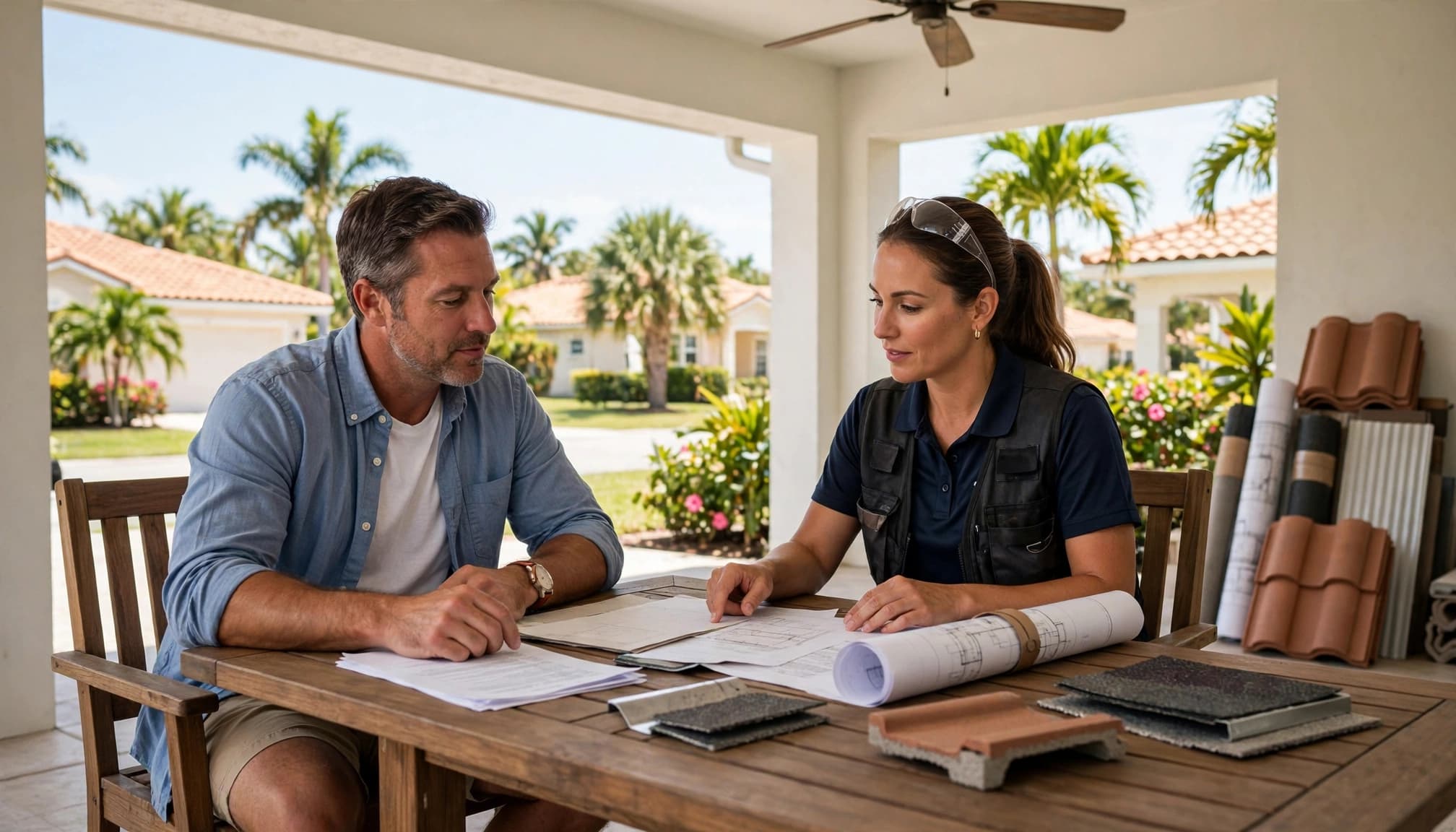
A product approval identifies an accepted product or assembly. It does not prove that the contractor holds the proper license, carries insurance, pulled the required permit, or installed the roof correctly.
Those responsibilities are separate. The contractor must follow the approved instructions and project plans. The local building department reviews permit documents and performs required inspections. The homeowner should keep copies of the product information, permit, inspection records, and final approval documents.
Why the 2023 Florida Building Code date matters
Collier County states that the Florida Building Code, 8th Edition (2023), became effective December 31, 2023. Roofing documents prepared under an older code version may not answer every question for a current project.
Requirements can also vary based on the property's location, roof design, scope of work, and local review process. That makes the code version an important first check, rather than a detail to leave for the end.
Confirm the code version and approval number
Ask for the exact Florida approval number or NOA being used for the roof. Then compare the document with the plans and estimate.
The paperwork should identify the manufacturer and product family. It should also show the relevant code version, approved installation options, limitations, and attachments. A product name alone is not enough because one product family may include multiple models or configurations.
Before ordering materials, confirm:
- The approval applies to the exact product or system.
- The document is tied to the code version used for the permit.
- The proposed roof slope and substrate are allowed.
- The wind design information matches the project.
- The installation instructions are available to the crew.
Check the documents for updates
Approval documents can be revised, replaced, or limited by later conditions. Ask the contractor to provide the current document being used for the permit package, not an old file saved from a previous job.
This is especially important when a roof design changes after pricing. Switching from tile to metal, changing underlayment, or using a different fastening method can require a different approval document or attachment.
For broader context on local wind and construction requirements, review these Florida hurricane-zone building requirements, then confirm the details with Collier County or the municipality handling your permit.
What Naples homeowners should check in Collier County
Naples projects generally go through the applicable Collier County or municipal building authority, depending on the property's jurisdiction. Requirements may differ between incorporated areas and unincorporated county locations.
The permit set should show the roof scope clearly. This may include the roof covering, underlayment, deck repairs, flashing, ventilation, penetrations, structural work, and connections to walls or other roof sections.
Review the permit set and inspection path
Collier County permit documents must be approved in writing or stamped "Reviewed for Code Compliance." One approved set stays with the building official, and another remains at the project site. Digital copies at the site may also be accepted.
Ask who is responsible for submitting the permit, responding to review comments, scheduling inspections, and securing final approval. Those tasks should not be confused with supplying product approval documents.
A proper roof installation also requires attention to details that may not appear in a material brochure. Underlayment, flashing, ventilation components, starter materials, ridge caps, valleys, vents, and roof-to-wall areas all need to follow the approved system and project plans. Southwest Florida roof installation should include those layers and details, not only the visible roof covering.
Understand the major reroofing threshold
Collier County roofing guidance states that when more than 50% of the roof diaphragm is removed, or when the building is in an area where the ultimate design wind speed, or Vult, is greater than 115 mph, the roof diaphragm, diaphragm-to-framing connections, and roof-to-wall connections must be evaluated for wind loads.
This does not mean 115 mph is the universal wind speed for every Naples property. It is a threshold used in Collier County guidance. The actual requirements depend on the building, location, roof geometry, and project scope.
If a contractor plans to remove large portions of the existing roof deck, ask whether the work triggers additional evaluation. A qualified Florida roofing professional or design professional can explain what the permitted plans require.
Check the approved assembly, not only the product
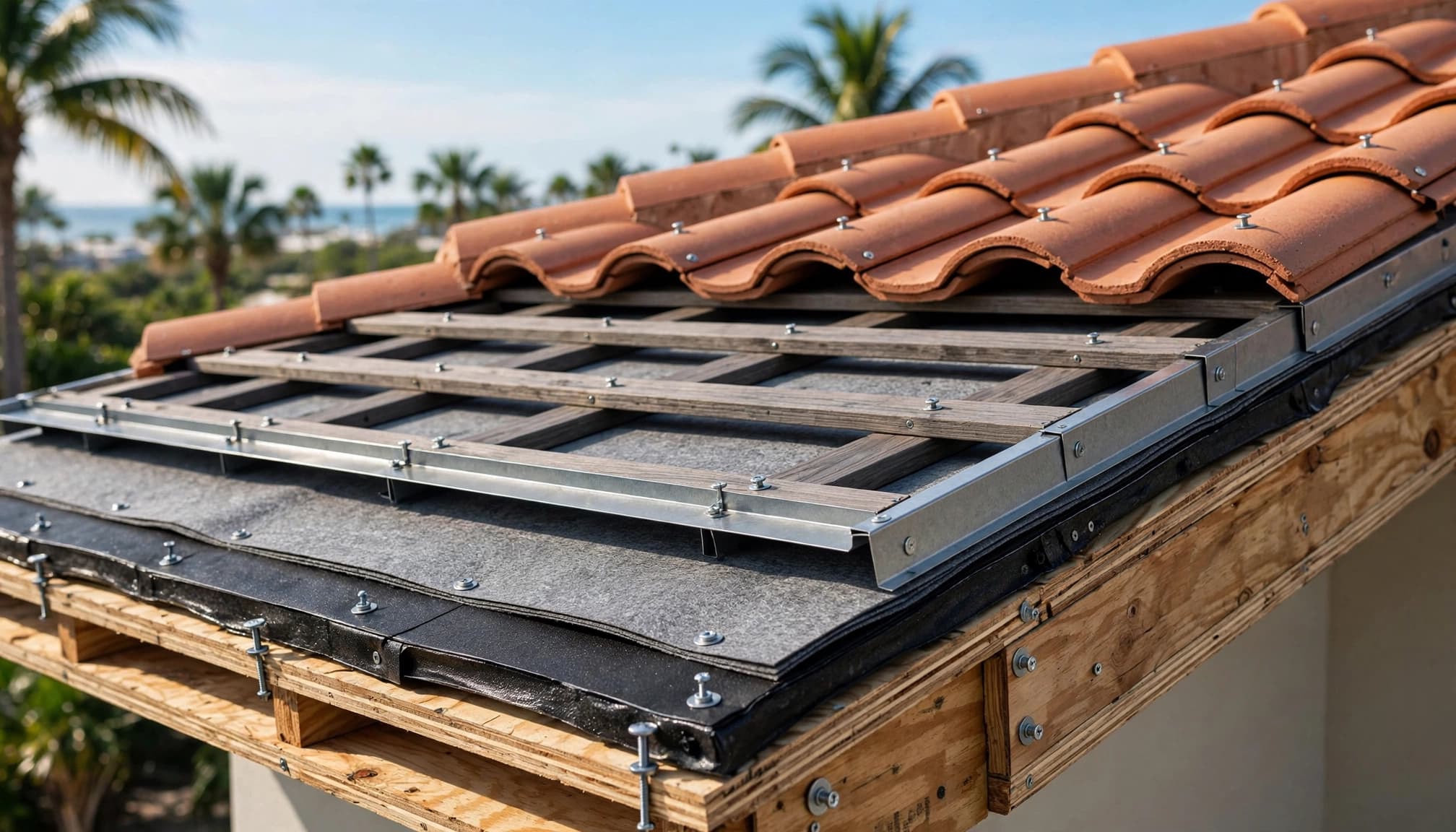
The most common paperwork mistake is checking a material name without checking the full assembly. Roof performance depends on how the covering, underlayment, fasteners, substrate, flashing, and supporting structure work together.
A tile or shingle may have an approval, yet the planned installation can still be wrong if the fastener pattern, roof slope, adhesive, or underlayment differs from the approved option.
Match attachments and limitations
Approval documents may specify nail size, spacing, screws, clips, mortar, adhesive, flashing, course layout, and other installation details. Some Miami-Dade roofing NOAs refer to Roofing Application Standard RAS 115 and include manufacturer application instructions.
Ask the contractor to identify the exact approval section that applies to your roof. Pay attention to:
- Roof slope and deck type.
- Approved fasteners and spacing.
- Edge and corner requirements.
- Flashing and penetration details.
- Approved underlayment combinations.
- Product limitations and exposure conditions.
- Required manufacturer instructions.
A substitution made in the field can affect compliance. Get changes documented before installation, especially when the substitution involves underlayment, fasteners, flashing, or a roof covering.
Verify underlayment conditions
Underlayment documents may include conditions that are easy to miss. One Miami-Dade underlayment approval, for example, requires a smooth, clean, dry surface. It limits use over an existing roof membrane unless the document approves that use as a base or anchor sheet. It also states that the underlayment cannot remain exposed as a temporary roof for more than 30 days.
Those conditions may not apply to every product, but they show why a generic statement such as "we use approved underlayment" is incomplete. The exact product and installation instructions control.
Homeowners should ask whether the existing deck is suitable, how damaged sheathing will be handled, and how long exposed materials may remain uncovered during the project.
Documents to request before work begins
A clear document package can prevent confusion when the crew arrives or an inspector asks how a material was installed. Request copies before demolition or delivery, while there is still time to resolve mismatches.
The package should match the actual scope of work, not a generic roofing template.
Your homeowner document checklist
Ask for:
- The product approval number or applicable NOA.
- The manufacturer name and exact product or system designation.
- The approved installation pages for the planned roof assembly.
- Current manufacturer installation instructions.
- The roof plans or permit drawings showing the proposed work.
- The contractor's license and insurance information.
- The building permit number and inspection schedule.
- Any engineering, structural, or wind documentation required for the project.
- Product information for underlayment, flashing, fasteners, vents, and accessories.
- Final inspection or completion records when the work is finished.
The contractor's license supports the contractor's authority to perform the work. The permit authorizes the project. Product approval supports the material and installation method. Inspections confirm that the permitted work was completed in accordance with the applicable requirements.
Keep records after installation
Store the approval documents, paid invoice, warranty paperwork, permit, inspection results, photos, and change orders together. These records can help if you sell the home, repair storm damage, investigate a leak, or need a future roof inspection.
A professional inspection can also compare the completed roof with the approved plans and visible installation details. Professional residential roof inspections can be useful after a new installation or when documentation is incomplete.
Key Takeaways
Florida roofing product approvals apply to specific products and installation assemblies. They do not replace the contractor's license, the building permit, or required inspections.
For a Naples roof project, verify the following before work starts:
- Use the current approval document and code version.
- Confirm the exact product, model, and manufacturer.
- Check roof-zone, wind-rating, slope, substrate, and fastening requirements.
- Review underlayment, flashing, ventilation, and penetration details.
- Ask whether removing more than 50% of the roof diaphragm triggers additional evaluation.
- Confirm which local building department handles the permit.
- Keep approved plans, inspection records, and final documents.
FAQ about Florida roofing product approvals
Does every Naples roof need a Miami-Dade NOA?
No. Miami-Dade NOAs are a separate approval pathway connected with products used in the HVHZ. Naples homeowners should not assume that every local roof requires a Miami-Dade NOA or that any NOA automatically satisfies every project requirement.
Ask the relevant local building department and qualified roofing professional which approval document applies to the property.
Is a Florida Product Approval enough to pass inspection?
No. The approval must match the installed product and assembly. The crew must also follow the approved installation method, permitted plans, manufacturer instructions, and applicable code requirements.
The building department's inspection process is separate from the product approval process. A product with an approval number can still be installed incorrectly.
Can a contractor use an older approval document?
An older document may not match the code version, product, or current permit requirements. Ask for the document being submitted for the present project and compare its details with the plans and material order.
If the roof design or materials change, request confirmation that the approval still applies before installation continues.
Who should answer questions about my roof's wind rating?
Start with the contractor and the local building department. A qualified Florida roofing professional can identify the approval information and installation requirements, while the building official can explain local permitting and inspection expectations.
For unusual roof shapes, major deck removal, structural changes, or unclear wind documentation, the project may also require input from an appropriate design professional.
Conclusion
The safest way to review Florida roofing product approvals is to follow the complete document trail, from the code version and approval number to the final inspection. Product, assembly, wind requirements, underlayment, fasteners, and installation instructions must agree with the permitted work.
Naples homeowners should request the documents early, confirm details with the relevant local building department, and work with a qualified Florida roofing professional. A roof is properly documented when the paperwork and the finished installation describe the same system.