


Planning a new home in Fort Myers? The height question comes up early, and for good reason. Fort Myers height limits are not one simple number for every lot, so a house that fits on one parcel may be too tall on the next.
If you assume the answer before checking zoning, flood elevation, and roof design, you can end up revising plans after they are already drawn. That can mean lost time, extra fees, and a harder permit review.
The good news is that the rules make sense once you break them into pieces.
The short answer for most Fort Myers homes
For most residential projects in Fort Myers, there is no single citywide height limit . The number usually comes from the zoning district tied to the parcel.
That matters because one lot may allow a taller home than another, even on the same street. The home's structure, the flood requirements, and the way the city measures height also affect the final answer.
For larger homes, there is another line to watch. Lee County's residential building guide treats buildings over 3 stories or 50 feet as threshold buildings, which can bring extra structural review and paperwork. That is a useful red flag for anyone planning a bigger custom home.
| Project type | What usually controls height | Practical note |
|---|---|---|
| Most single-family homes and duplexes | Zoning district, flood elevation, roof design, measurement method | No single citywide cap |
| Live Local affordable housing | Citywide Live Local rules plus nearby zoning context | Often tied to the highest allowed height within 1 mile, or 3 stories |
| Larger residential buildings | Lee County threshold-building rules | Over 3 stories or 50 feet may trigger extra review |
The pattern is clear. The smaller the project, the more the zoning district and site conditions matter. The larger the project, the more technical review comes into play.
If the parcel has not been checked against zoning and flood elevation, the height answer is still a guess.
Why zoning district matters more than one citywide number
Every parcel sits inside a zoning district, and that district tells you what can be built there. In Fort Myers, that is why two homes on different lots can face different height limits.
Some districts are built for lower-rise homes. Others allow more height because they are meant for denser development. The city does not treat every residential lot the same way.
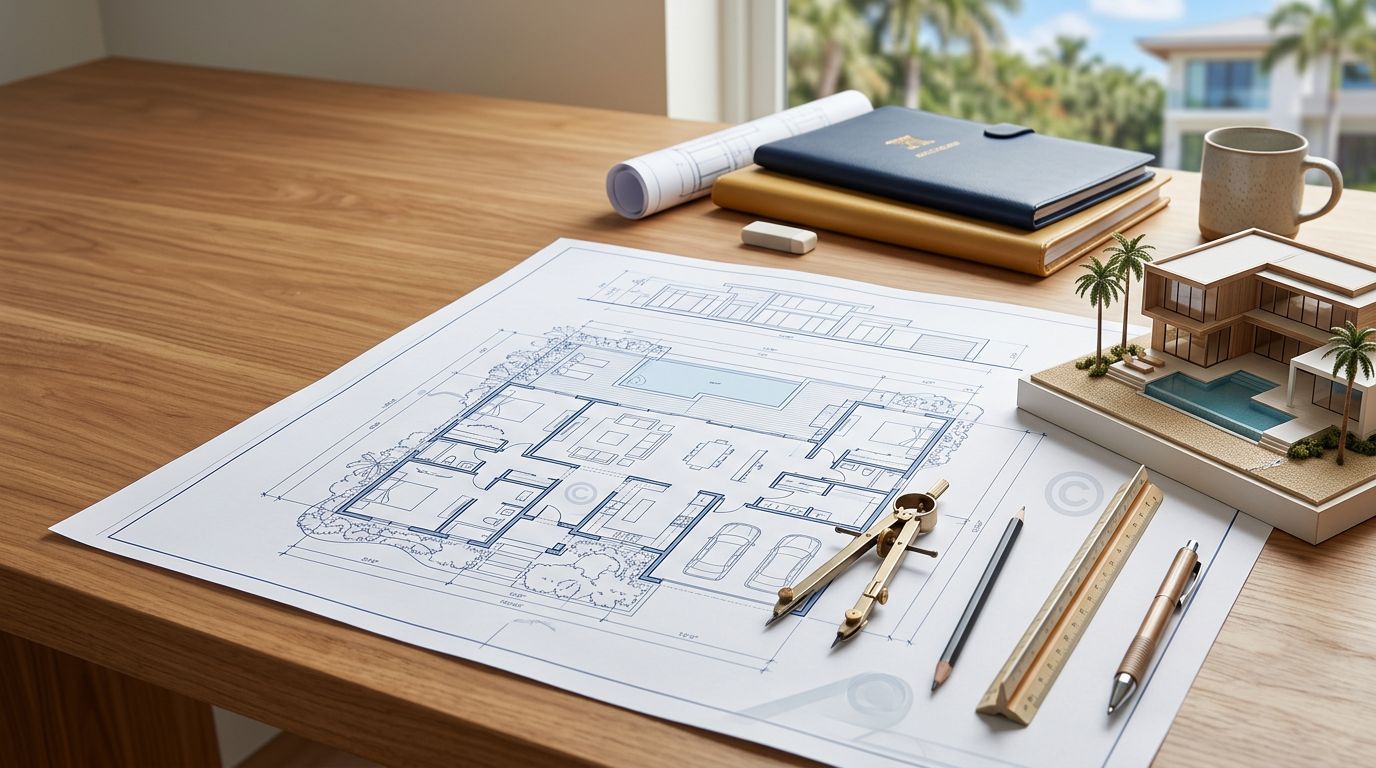
That is why a survey and zoning check should happen before the floor plan is final. If you wait until the end, a roofline, second-story wall height, or structural layout may have to change. Small changes can have a big effect when the home is close to the limit.
Height also sits beside wind and flood rules in Southwest Florida. A lot near water may need a higher finished floor, and that can change the home's final profile. If your site has storm and flood exposure, this overview of Southwest Florida hurricane-zone building requirements shows how those rules connect to new home design.
The main takeaway is simple. Zoning sets the frame, but site conditions fill in the details. A plan that works on one lot may need a different roof, a different foundation, or both on another lot.
What the Live Local Act changes for some Fort Myers projects
Affordable housing projects under Florida's Live Local Act follow a different rule set than a standard custom home. In Fort Myers, the city generally cannot set the height below the highest height allowed within 1 mile, or 3 stories , whichever is higher.
That rule gives these projects more room to work with. Still, it does not mean every Live Local project gets the same height.
There is a narrower case where the city can limit height more tightly. If the site is on two or more sides next to single-family zoning, and that area includes at least 25 connected single-family homes, the city may apply a different cap.
In that case, the city may limit height to:
- 150% of the tallest nearby building
- the highest height allowed under the land development code
- 3 stories, up to 10 stories max
That list matters because it shows how the rule changes with the site context. A Live Local project on one parcel may have a very different answer from another parcel only a short distance away.
For builders and owners, this means one thing above all else. A Live Local project needs a separate height review, not a copy of the rules used for a normal single-family home.
Flood elevation, roof design, and the way height gets measured
"Height" can mean more than a number on a sketch. The measurement method matters, and the code may use a different reference point than a homeowner expects.
A steep roof, a flat roof, a raised foundation, or roof features near the top can all change the final calculation. Because of that, two homes with the same square footage can end up with different height results.
Flood rules matter too. If your lot sits in a flood zone, the finished floor may need to be elevated. That can make the home start higher before the roof is even added.
This is where the design details deserve extra attention. A builder should not wait until permit review to ask whether the roof pitch, wall height, or floor elevation still fit the zoning limit. That check should happen early.
A cost-plus home builder can help here because the design changes stay visible in the budget. With transparent pricing , it is easier to see when a higher stem wall, a different truss package, or a changed roof shape pushes the project closer to the limit. That matters when you are trying to balance appearance, code, and cost at the same time.
How builders keep the permit path cleaner
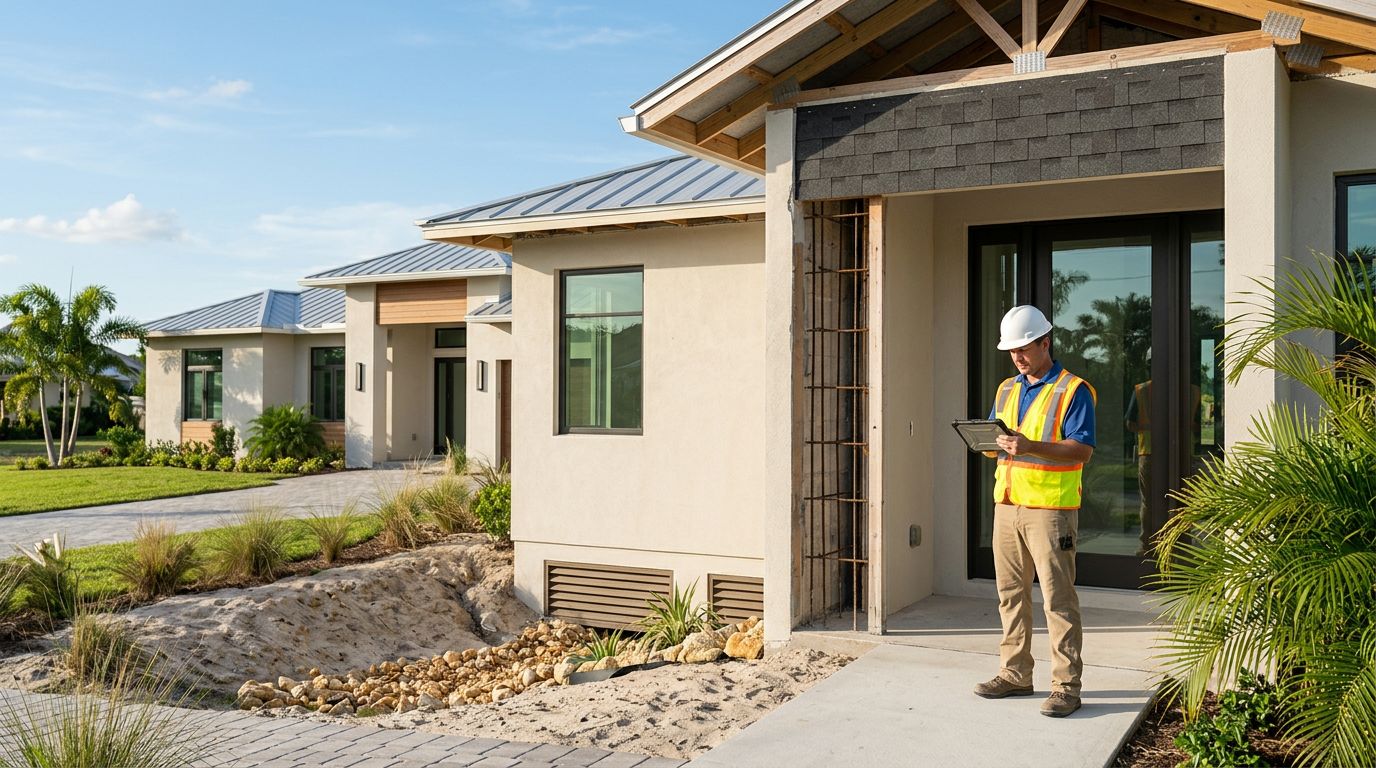
The best time to check height is before plan review. A careful pre-build check usually starts with the survey, then moves to zoning, flood elevation, and roof design.
That order matters because one change can ripple through the rest of the project. A taller foundation can affect stairs, porches, and the roofline. A different roof shape can change both the height and the cost. By the time the plans are polished, the home may already be committed to a shape that does not fit the lot as well as it should.
Permits also have their own cost structure. Fort Myers and Lee County fee schedules can shift, and the permit path may involve more than one review step. If you want a clearer picture of the budget side, the 2026 Southwest Florida new home permit fee guide breaks down how those costs can stack up.
The cleanest submittals usually come from teams that check the lot first and draw second. That keeps everyone focused on the same question: does the home fit the parcel, the district, and the height rules?
Conclusion
Fort Myers height limits for new homes in 2026 come down to the parcel, not a single citywide number. For most homes, zoning district, flood elevation, roof design, and measurement method matter more than guesswork.
Live Local projects follow a separate rule set, and larger homes can run into Lee County's threshold-building rules. That is why a careful site check saves more time than a last-minute redesign.
If the home is close to the line, the safest move is simple, confirm the zoning, confirm the flood elevation, and build the plan around the real number. That is the difference between a clean permit path and a costly surprise.