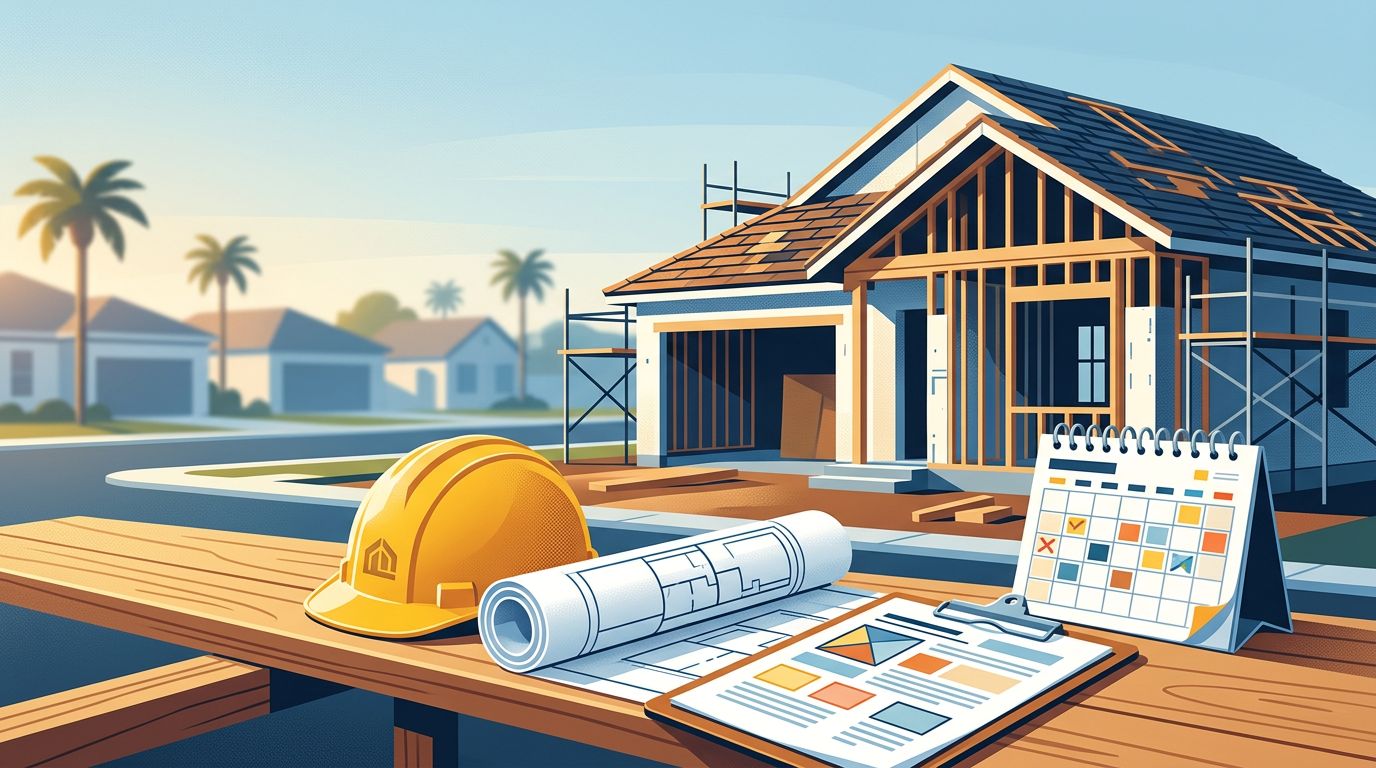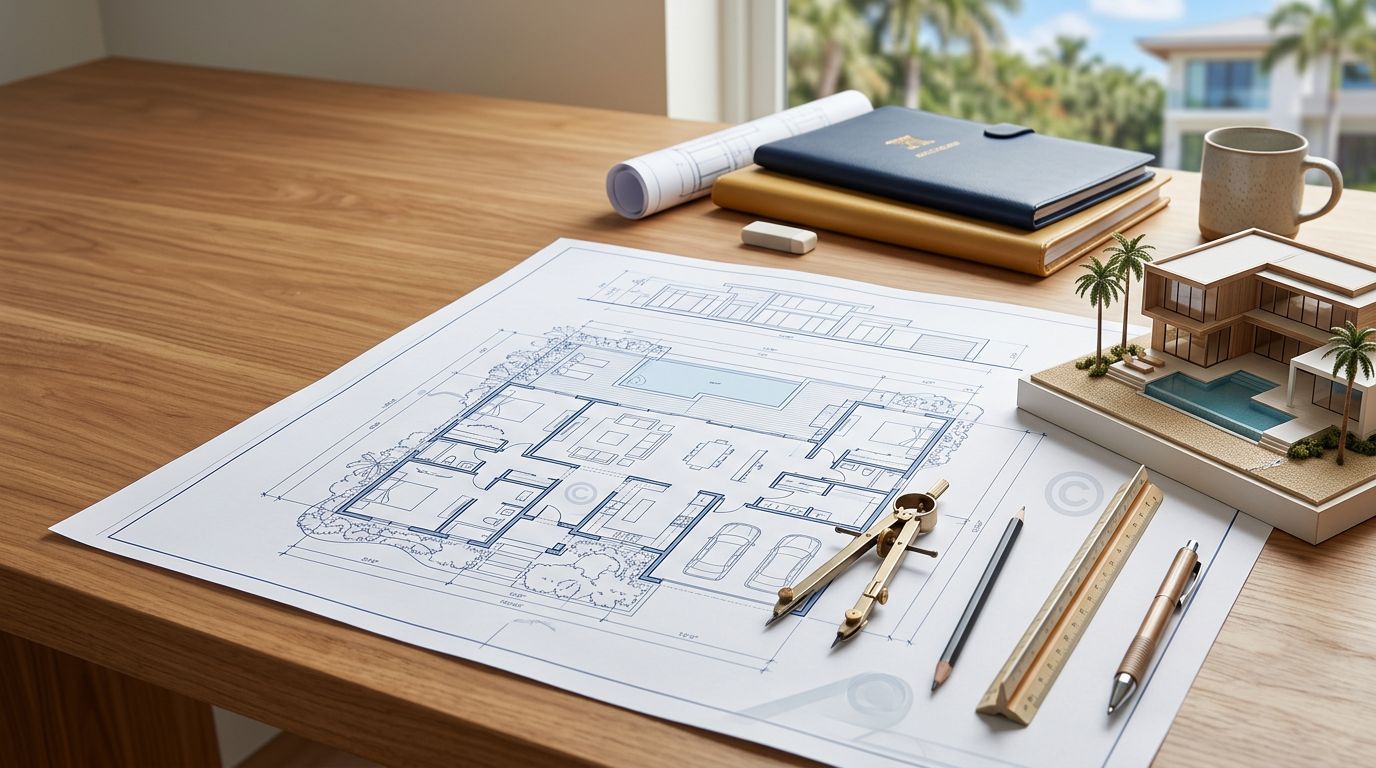
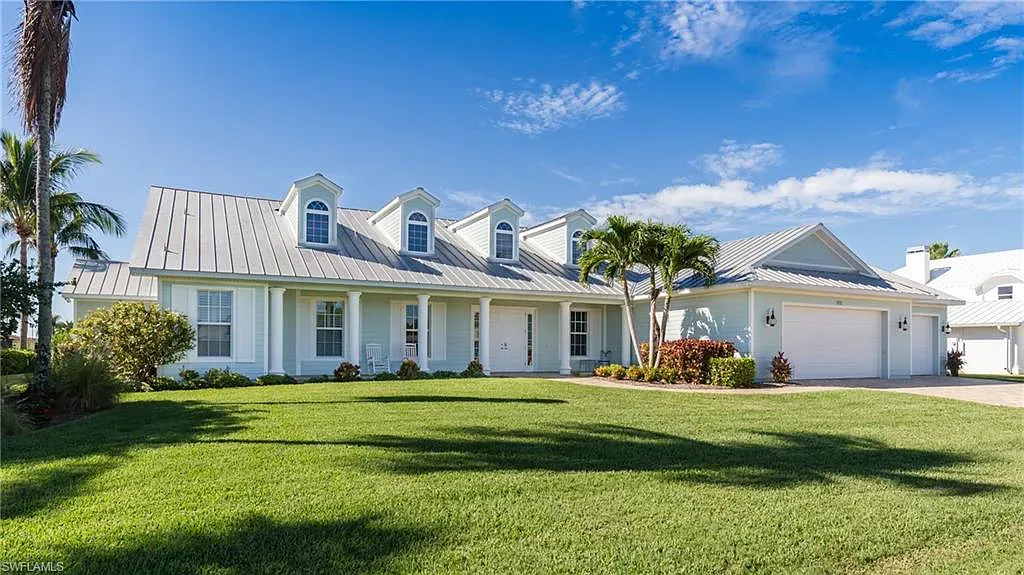



Fort Myers lot coverage rules can shape your home before the first line is drawn. If your lot is tight, a garage, lanai, and one-story floor plan can run out of room fast.
That matters because the size of the house is only part of the puzzle. In 2026, the lot itself sets the ceiling, and the rest of the code decides where that ceiling can sit.
What lot coverage means in plain English
Lot coverage is the share of your lot that can be covered by buildings and other roofed structures. In simple terms, it asks how much of the parcel your home and covered spaces occupy when viewed from above.
For single-family homes in Fort Myers, the current cap is 35% of the lot area . That means a 10,000-square-foot lot can support up to 3,500 square feet of covered area, at least under the lot coverage rule.
That number is easy to miss when people focus only on living space. A floor plan can look modest indoors and still use a lot of land once the garage, porch, and other roofed areas are added.
The fastest way to think about it is this, the lot is the pie, and the covered footprint is the slice. You can make the slice wider or taller, but you still need to stay inside the limit.
The 2026 Fort Myers limit and what usually counts
The 2026 Fort Myers rule for single-family homes is straightforward at the top level, but the details matter. The city code sets the basic 35% lot coverage limit , yet the way a plan is drawn can change how close you get to that line.
A quick look at common design elements helps explain why.
| Design element | How it affects lot coverage |
|---|---|
| Main house footprint | Uses the largest share of coverage |
| Attached garage | Adds to the covered area |
| Covered lanai or porch | Takes coverage fast, especially on smaller lots |
| Detached roofed structure | May count, depending on the design and approval path |
| Open patio or uncovered deck | Usually affects yard space more than roofed coverage |
That table is a planning tool, not a substitute for a permit review. The safe move is to draw every roofed area on the site plan and total it before the layout gets locked in.
The city also uses the same land-use framework to control other parts of the build. As of 2026, single-family homes are also limited to 2.5 stories and 32 feet in height. That matters because a taller home can help preserve yard space when the footprint gets tight.
Why the footprint matters as much as the square footage
Two homes can have the same living area and very different site needs. A wide one-story plan spreads out across the lot. A two-story plan stacks space upward and leaves more room around the house.
That tradeoff is common in Southwest Florida. Many buyers want a larger lanai, a bigger garage, and a clean indoor-outdoor flow. Those features feel small in a sketch, yet they can use a surprising amount of coverage.
A wider footprint may also limit future options. If you leave less room at the edges, you may have less flexibility for additions, drainage fixes, or outdoor features later.
A taller plan can solve some of that, but it adds its own choices. Stairs, structure, and roof design all affect the budget. So does the shape of the slab. That is why lot coverage should be part of the first design meeting, not the last one.
If you want to see how site choices change the numbers, the custom home budget breakdown is a useful place to compare footprint decisions with total project cost.
Setbacks, easements, and corner lots can shrink your build pad
Lot coverage is only one piece of the puzzle. Setbacks decide where the house can sit, and that can matter just as much as the percentage cap.
If you want a deeper look at spacing rules, review the Fort Myers residential setback requirements. The placement rules and the coverage rules work together, so one cannot fix the other.
The current residential standards include these common front-line rules:
| Rule | 2026 Fort Myers standard |
|---|---|
| Front yard setback | 25 feet |
| Interior side yard setback | 10 feet on each side |
| Corner lot street-facing side | 25% of lot width, with a 12.5-foot minimum if the lot is under 50 feet wide |
Those numbers can change with zoning district, lot type, or special development rules. A parcel in a planned community may not follow the same pattern as a standard single-family lot.
Easements can also cut into usable space. A drainage easement, utility easement, or odd lot shape can reduce the area where a foundation actually fits. That is why a lot can meet the 35% cap and still feel cramped on the ground.
A lot can stay under the coverage cap and still fail review if setbacks or easements squeeze the build pad.
Corner lots need extra care. They often have more street exposure, which means more rules on the side that faces the road. That can change where the garage goes and how wide the home can be.
Budget, permits, and the team that reviews your plan
Fort Myers lot coverage affects design, but it also affects money. A smaller footprint with a second story may reduce slab area, yet it can add stairs and structure. A wider one-story plan may feel simpler, but it can raise roofing and foundation costs.
That is why the lot review should happen before you commit to final drawings. Ask for a current survey, confirm the zoning district, and check recorded easements. Then compare the sketch to the actual buildable area on the lot.
A cost-plus home builder can make these choices easier to read because the line items stay visible as the plan changes. With transparent pricing , you can see how a larger garage, a deeper lanai, or a different roof shape affects the budget before construction starts.
That matters in Southwest Florida, where site conditions can shift quickly from one parcel to the next. You want the design to fit the lot, the lot to fit the rules, and the budget to match both.
Before construction, confirm the current requirements with the City of Fort Myers and your design/build team. If the lot is in a different district or a planned unit development, the answer may change.
Conclusion
Fort Myers lot coverage rules for new homes in 2026 start with a simple number, but the real job is fitting that number to the lot. The 35% cap is the headline, yet setbacks, easements, lot shape, and height limits all affect what you can build.
A smart plan starts with the parcel, not the floor plan. When you check the code early, the design can grow around the lot instead of fighting it.
Before you pour a slab, make sure the City of Fort Myers, your survey, and your design/build team all point to the same answer. That one check can save a lot of redraws later.