Fort Myers Mudroom Plans for Sand, Rain, and Pool Days
Explore Our Services
Contact Us Today!
(239) 322-9295
A Florida entryway can collect more than a pair of shoes. It may catch rain-soaked flip-flops, pool towels, dog paws, beach sand, and grocery bags within the same afternoon.
A well-planned Fort Myers mudroom keeps that mess near the door instead of tracking it across your new home. When you customize a builder plan, this small transition space can protect floors, reduce daily cleanup, and make the house feel calmer.
Start by following how your household truly comes and goes.
Plan a Fort Myers Mudroom Around Real Entry Traffic
The best mudroom location depends on the doors your family uses most. In many Fort Myers homes, that is the garage entry, not the front door. If you have a pool or lanai, a secondary connection near the backyard can also prevent wet traffic from crossing the kitchen or great room.
Map a typical Saturday. Someone returns from the beach with coolers and sandy bags. Children come inside from the pool. The dog needs a rinse after a rainy walk. Those routes reveal where storage, cleanup space, and a durable floor matter most.
Put the wet zone closest to the door
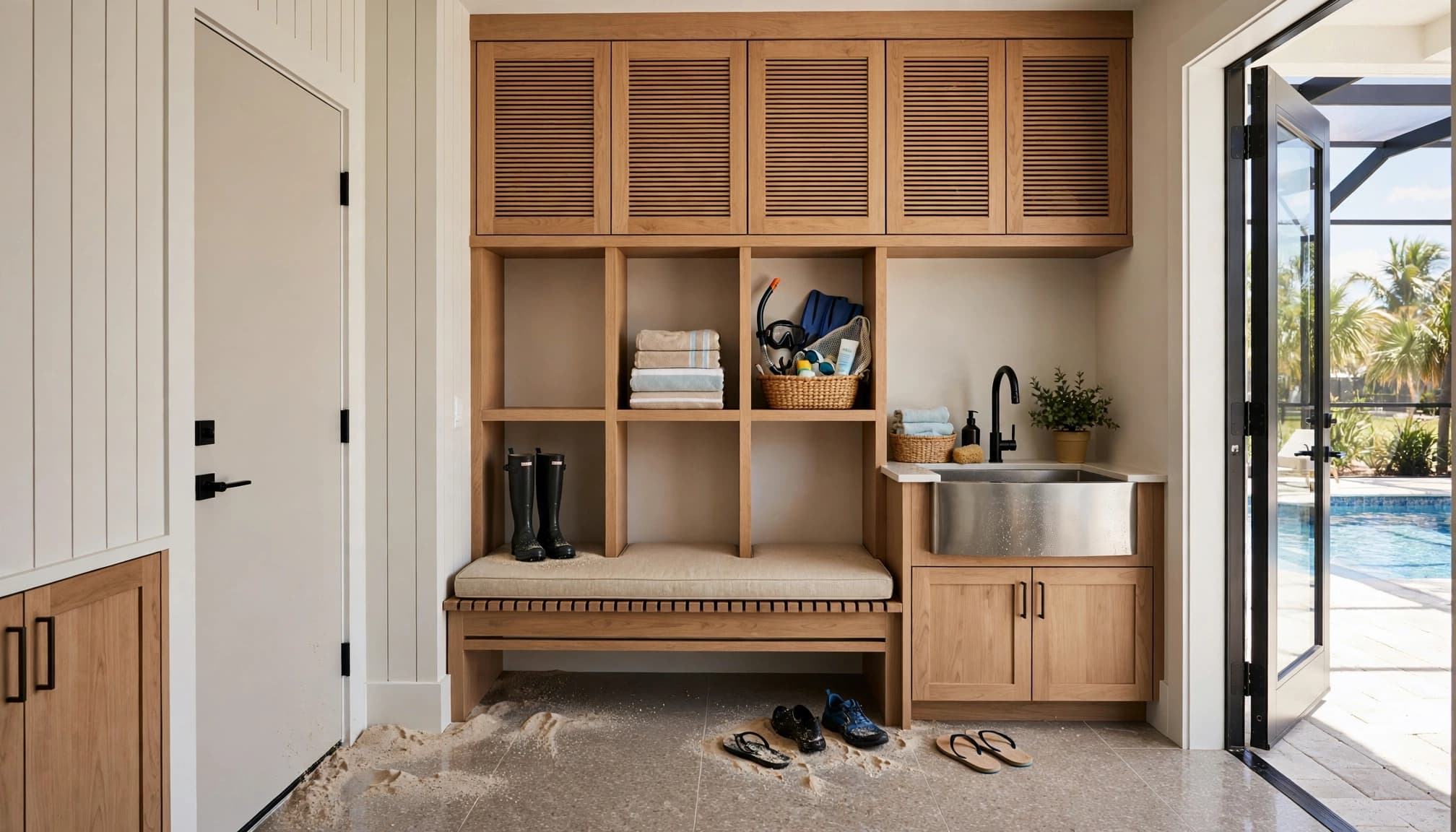
Place the toughest finishes within a few steps of the exterior, garage, or pool entry. This zone needs room for wet footwear, umbrellas, leashes, towels, and a washable rug.
A recessed tray, tile inset, or low-profile rubber mat can hold moisture and loose sand. Keep the surface flush or nearly flush with the surrounding floor. Raised edges become a tripping point when people carry bags or laundry.
Separate drop-off space from clean storage
Every item doesn't belong in the same cabinet. Set open hooks and a bench near the door for items used daily. Then place closed storage farther inside for spare towels, seasonal gear, cleaning supplies, and pet food.
This simple separation keeps wet items from sitting against cabinet doors or clean backpacks. It also makes the room easier to reset after a busy day.
Choose the Right Location in a New Home Plan
A mudroom needs a useful connection, not leftover square footage squeezed into a hallway. During custom home construction in Fort Myers, the room can become part of the circulation plan instead of an afterthought.
A garage-adjacent mudroom works well for errands, school mornings, and stormy weather. A space near the laundry room adds convenience, although wet swimsuits and sandy items should not pile up beside clean clothes. If the home includes a pool, a route from the lanai to a mudroom or bath can save your main living area from constant wet footprints.
Keep the path clear during peak use
A narrow pass-through may look fine on a floor plan but feel crowded in real life. Consider two people arriving at once, one carrying groceries and another managing a pet.
As a general planning guideline, allow a clear walking path of about 36 to 42 inches. Wider is better near a bench, open cabinet doors, or a utility sink. These dimensions are design guidance, not building code requirements.
Connect pool access to practical cleanup
Homes with pools need a place where damp gear can land without damage. A nearby half bath, outdoor shower, or pet-wash station can work with the mudroom layout.
Coordinate this route early if you are planning custom pool construction in Fort Myers. The pool gate, lanai door, outdoor shower, and interior entry should support the same daily routine.
A mudroom near the pool works best when wet feet can reach it without crossing the kitchen, dining area, or carpeted bedrooms.
Set Mudroom Dimensions That Feel Comfortable
A functional mudroom can be compact, but it cannot be shallow. Depth matters because benches, shoe storage, and open doors quickly consume floor space.
Use this chart as a starting point when reviewing a plan with your builder or designer. These are general design guidelines , not code requirements or universal minimums.
| Feature | General planning guideline | Why it helps |
|---|---|---|
| Clear walkway | 36 to 42 inches | Allows people to pass with bags or pets |
| Bench depth | 16 to 20 inches | Provides comfortable seating for shoes |
| Tall locker depth | 18 to 24 inches | Holds backpacks, towels, and hanging gear |
| Hook height for adults | About 60 to 66 inches | Keeps wet items off the floor |
| Lower hooks for children | About 36 to 42 inches | Lets children hang their own towels and bags |
| Utility sink width | About 24 to 36 inches | Gives room to rinse gear and fill buckets |
The key takeaway is simple: protect the walking path first. A smaller bank of cabinets is more useful than a large cabinet that forces everyone to sidestep around it.
Give the bench a job
A bench should do more than fill a wall. Include space beneath it for removable shoe trays, ventilated baskets, or open cubbies. Avoid deep, dark compartments that become a permanent pile of damp sandals.
If you have young children, leave enough open floor space in front of the bench for them to sit and put on shoes. For older adults, a sturdy bench with a back or nearby wall support can make daily use more comfortable.
Reserve room for large Florida gear
Beach chairs, pool noodles, fishing gear, umbrellas, and rolling coolers take more space than a typical coat closet. Decide where each item will live before finalizing cabinet layouts.
A tall utility cabinet can hold upright items, while a dedicated closet near the garage can handle bulky gear. Don't rely on upper cabinets for anything needed weekly. Heavy, awkward items should stay easy to reach.
Pick Materials That Handle Humidity, Sand, and Water
A Fort Myers mudroom faces conditions that standard entry finishes may not handle well. Sand acts like fine grit underfoot. Humidity can linger inside closed cabinets. Heavy rain can arrive before anyone reaches the door.
Porcelain tile is often the strongest flooring choice because it resists water, scratches, and routine cleaning. Select a matte or lightly textured finish for better traction when wet. A pale grout may look crisp at first, but medium-toned grout usually hides sand and daily wear more gracefully.
Compare durable flooring options
Luxury vinyl plank feels warmer and costs less than many tile installations. However, standing water at seams and heavy sand can shorten its life, especially near a pool entry. It works better in the dry side of the room than directly beside an exterior door.
Sealed concrete handles water and is easy to sweep, but it can feel hard and cool underfoot. Natural stone gives a high-end look, yet it needs sealing and can show mineral deposits or staining. For most busy homes, porcelain tile offers the best mix of appearance and low maintenance.
Use cabinet materials that won't swell
Avoid standard particleboard cabinetry in areas where wet towels may sit against a panel. Choose moisture-tolerant plywood boxes, high-quality laminate, or thermofoil cabinet faces. Painted wood cabinets can work when properly finished, but they need quick wipe-downs after repeated splashes.
Use solid surface, quartz, or porcelain slab for a small folding counter. These materials clean easily and don't require the ongoing sealing that natural stone does. For the wall behind a sink, tile is a sensible backsplash that handles spray and makes cleanup quick.
Build Storage for Daily Habits, Not Catalog Photos
Good storage is visible where it needs to be and concealed where clutter would distract. A beautiful mudroom loses its usefulness when every hook, cubby, and drawer has no clear purpose.
Assign one open locker or set of hooks to each regular user. A family of four does not need four towering cabinets if the room feels boxed in. It may need four hook zones, a shared towel cabinet, and a lower shoe area instead.
Add ventilation where damp gear waits
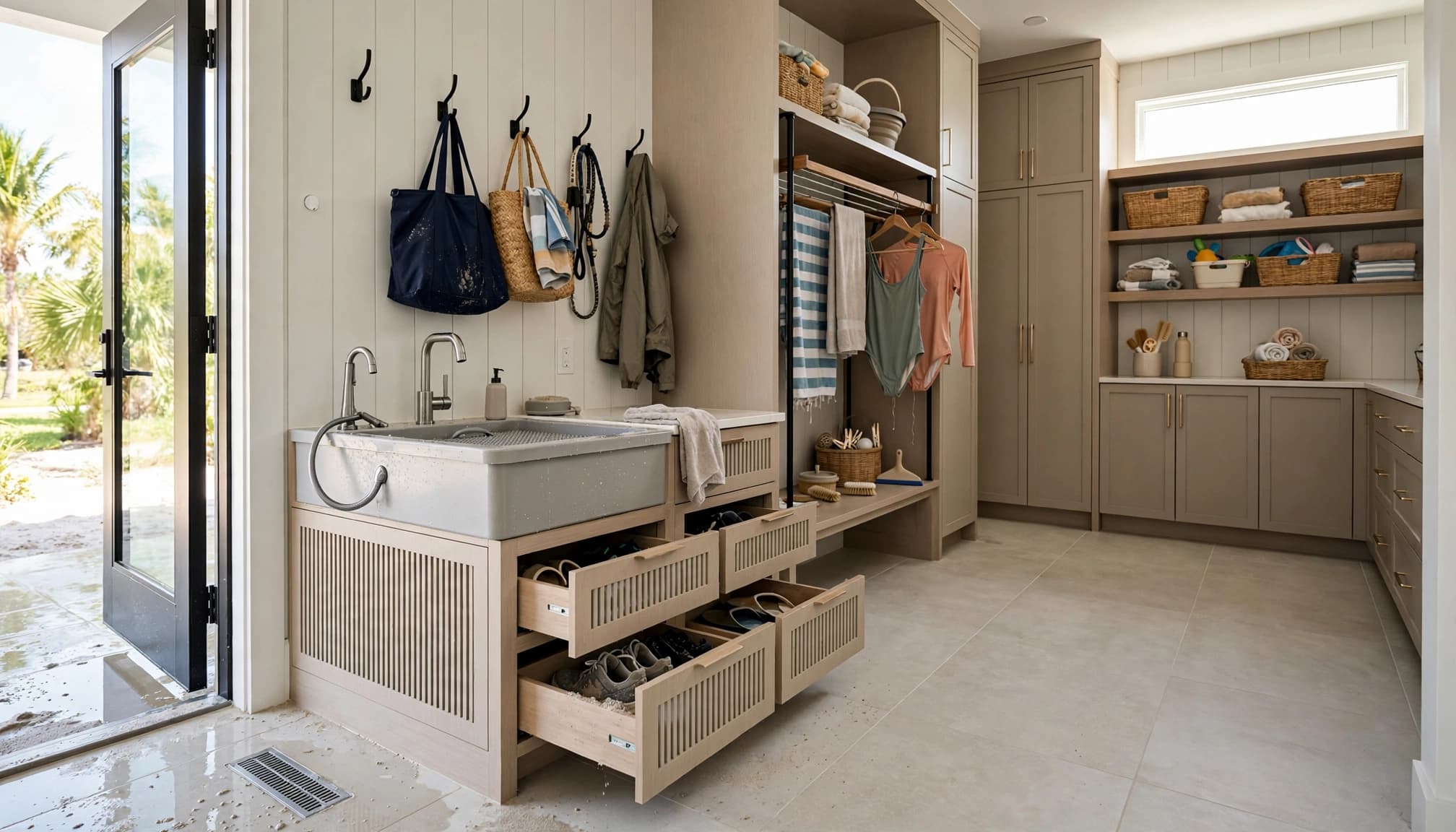
Wet shoes and swimsuits need airflow. Use slatted shelves, wire baskets, perforated cabinet panels, or open cubbies for items that cannot go away dry.
Closed toe-kick vents or a louvered cabinet door can help air move through a storage area. A small exhaust fan is also useful in a mudroom with a shower, pet-wash station, or frequent pool traffic. Ask your contractor how the room's ventilation plan fits with the home's mechanical system.
Make pet cleanup easy on the house
A dog wash is useful if you have the floor space and plumbing nearby. A raised basin saves your back, while a hand shower makes rinsing paws faster. However, even a simple utility sink and a durable floor can handle most pet cleanup.
Keep pet towels in an open basket and place a hook within reach of the wash area. Store shampoos and cleaning products in a closed, child-safe cabinet. That arrangement keeps daily supplies close without crowding the counter.
Plan Drainage, Lighting, and Power Before Walls Close
Some of the most useful mudroom decisions are invisible once construction is complete. Plumbing, electrical outlets, lighting, and drainage locations should match the room's workflow.
If you want a floor drain, utility sink, pet wash, or washer connection, discuss it early. Proper slope, waterproofing, drain placement, and local approvals matter. A floor drain is not automatically required for every mudroom, but it can be a practical choice for a wet entry or pet-wash area.
Use layered lighting for early mornings and rainy afternoons
A single ceiling fixture can leave locker interiors and lower shelves in shadow. Recessed lights provide broad coverage, while under-cabinet lighting helps near a bench or counter.
Choose fixtures rated for the room's expected moisture exposure. Motion-sensor lighting can also help when someone enters with arms full of groceries or pool gear.
Add outlets where they solve real problems
Plan outlets for a cordless vacuum, boot dryer, handheld steamer, phone charging shelf, or small dehumidifier. Put them above the counter where practical and follow local electrical requirements.
A dedicated outlet in a tall cabinet can keep a rechargeable stick vacuum out of view. That small decision makes sand cleanup much easier, especially during beach season.
Give the Room a Coastal Look Without Sacrificing Cleanup
Practical finishes do not have to look utilitarian. A Fort Myers mudroom can feel polished with warm white cabinetry, light oak accents, muted blue-green tile, or woven-look porcelain flooring.
Keep the visual focus on durable elements. Use a washable cushion on the bench instead of a delicate upholstered seat. Choose metal hooks with a finish that suits the rest of the home, then install enough of them to prevent towels from landing on the floor.
Wall color also matters. Soft neutrals hide the contrast between wet and dry areas better than stark white. If you want patterned tile, use it in a small floor inset or backsplash where it adds character without overwhelming the room.
A Mudroom That Works Through Every Florida Season
A successful Fort Myers mudroom contains the mess that comes with rainstorms, pool days, sandy weekends, and pets. It begins with the right location, then relies on generous walking space, moisture-tolerant materials, ventilation, and storage that suits your household.
The most useful plans make cleanup part of the routine rather than another chore. When every wet shoe, beach towel, and bag has a place near the door, the rest of the home stays ready for the life you built it for.