
Why New Fort Myers Home Windows Condense on the Inside
Explore Our Services
Contact Us Today!
(239) 322-9295
Window condensation in a new Fort Myers home usually forms when moist indoor air touches glass that has become cooler than the surrounding room. A little moisture can appear under certain conditions, but recurring water deserves attention because it can also point to excess indoor humidity or a separate moisture problem.
Southwest Florida's climate, air conditioning, everyday household activities, and the drying materials in new construction can all affect indoor moisture. Knowing where the water is forming helps you choose a safe next step.
Key Takeaways
- Condensation on the room-facing side of the glass forms when humid indoor air meets a cooler surface.
- Fort Myers' humid weather and steady air-conditioning use can make that temperature difference more noticeable.
- Cooking, bathing, laundry, and drying construction materials can add moisture indoors.
- Occasional droplets don't prove a window is defective. Persistent wetness, signs of damage, water between panes, or moisture that appears after rain needs further investigation.
Why window condensation forms
Air contains water vapor. When humid air cools against a colder surface, some of that vapor turns into liquid water. On a window, the result may be a light film or small droplets on the room-facing pane.
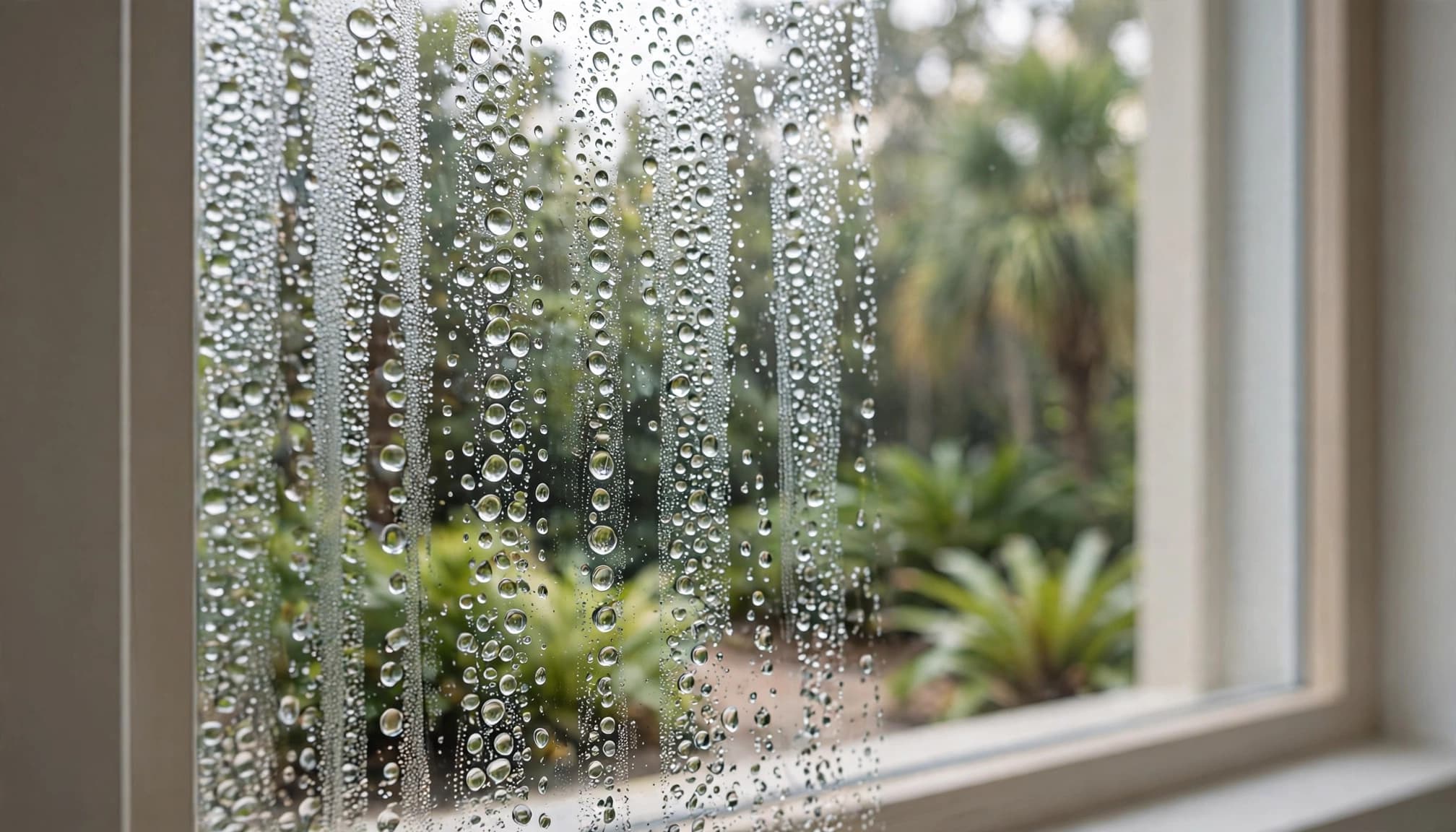
The glass is cooler than the indoor air
Air conditioning cools the home, while outdoor conditions can remain warm and humid. Glass near a cool room, a supply vent, or a shaded area may be cooler than the moist air around it. When that air reaches the pane, condensation can form.
The basic process doesn't by itself show that the window is leaking or damaged. It explains why water can appear on the indoor surface even when the exterior looks dry.
Find which side of the glass is wet
Wipe the glass with a dry cloth. If the moisture comes off from inside the room, you're seeing surface condensation. If water appears to sit between panes of insulated glass, it may require a window professional to assess the glazing unit.
Also look at the frame, sill, and nearby wall. Water confined to the glass has a different pattern from damp trim or a stain that spreads onto drywall.
Why Fort Myers' climate makes it more noticeable
Fort Myers has long humid periods, hot weather, and frequent rain. Outdoor air already carries moisture, so a small change in temperature at the glass can make condensation more visible when indoor humidity is elevated.
Air conditioning adds another part to the picture. It cools the room and can cool the glass, while moisture from people, cooking, and showers remains in the indoor air. The glass may be the first surface where you notice the combination.
Window size and exposure also affect conditions inside a room. Large panes, shade, and air movement near the glass can change how cool the surface feels. When planning a new home, Fort Myers window placement for safer homes is one part of balancing daylight, heat gain, and storm protection.
If you're building a home, window layout, air-conditioning design, and moisture control are best considered together. Our new home builder in Fort Myers page describes our local construction services.
Moisture sources in a new home
The house doesn't need a leak to have extra moisture indoors. Normal activities add water vapor to the air, and new construction may have materials that are still drying.
Daily activities add water vapor
Showers, cooking, dishwashing, and indoor clothes drying release moisture. Several activities happening close together can make condensation more likely, especially if exhaust fans aren't operating or the home's air isn't circulating well.
Use a bathroom exhaust fan during a shower and keep it running afterward to remove damp air. When cooking, use an exhaust hood that vents outdoors if the home has one. These steps remove moisture near its source.
Building materials can take time to dry
Concrete, plaster, joint compound, paint, and other wet-applied materials release moisture as they cure and dry. A newly completed home may therefore have more moisture indoors than it will after those materials have dried and the home has been occupied for a while.
That possibility doesn't explain every case. If water appears repeatedly in one location, damages finishes, or follows rain, have the cause assessed rather than assuming the home is simply drying out.
How air conditioning affects indoor humidity
An air conditioner removes heat and some moisture as it cools. However, room temperature and humidity aren't identical measures of comfort. A home can reach the thermostat setting and still feel damp if moisture removal is insufficient.
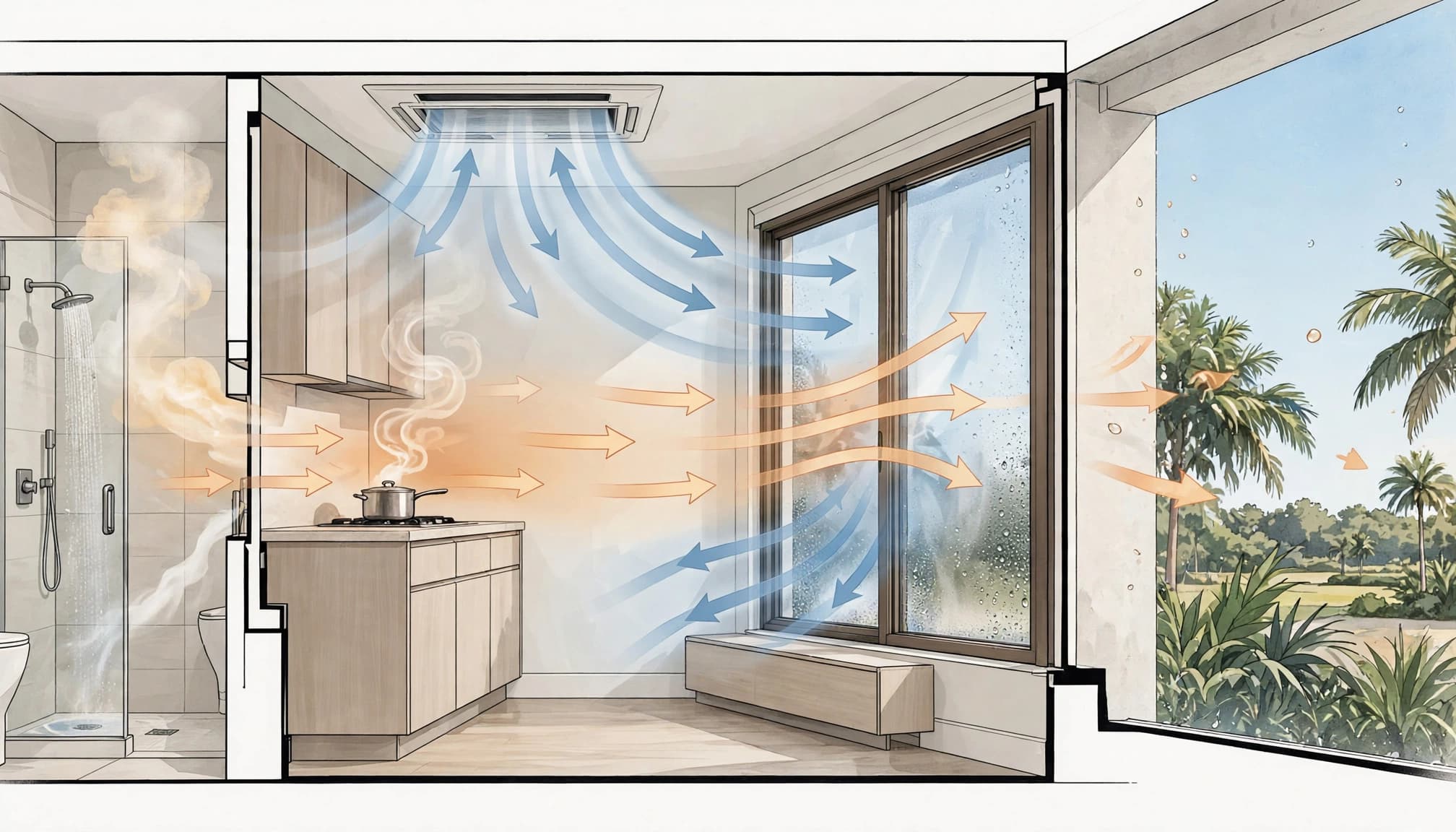
A system that cycles off quickly may remove less moisture
If equipment cools the home to its set temperature quickly, it may run for shorter periods. That can limit how much moisture it removes during a cycle. This is one possible factor, not a diagnosis: equipment sizing, duct design, controls, and the home's air leakage all affect performance.
Don't make a large thermostat change or close several supply vents to try to force longer operation. Those adjustments can affect system airflow and comfort elsewhere in the home.
Fresh air needs a plan
A tightly built home reduces uncontrolled air leakage, but cooking, bathing, and occupancy still introduce moisture and odors. A planned ventilation system brings in outdoor air and removes stale indoor air. In Southwest Florida, the ventilation design also needs to account for humid outdoor conditions and work with the cooling system.
If window condensation appears throughout the home or indoor air feels persistently damp, an HVAC professional can assess operation, airflow, ventilation, and humidity control. A separate dehumidifier may suit some homes, but equipment choices depend on the home's design and existing system.
Safe troubleshooting steps for homeowners
Start with observations and simple steps that don't change the home's equipment settings. A short record can help distinguish an occasional event from a recurring pattern.
Track when and where it happens
Note the room, the time of day, recent weather, and whether anyone cooked, showered, or dried clothes indoors. Check whether one window is affected or several windows show moisture. A basic indoor humidity monitor can help you see whether the readings stay elevated over time, though the pattern matters more than a single reading.
Wipe the glass dry and check whether the water returns. Keep blinds or curtains open briefly to let room air move near the glass, and make sure furniture isn't blocking nearby supply vents or return grilles.
Use existing fans and keep air moving
Run the bathroom fan when showering and afterward. Use the kitchen exhaust hood while cooking, and keep interior doors open when that supports normal airflow through the home.
Avoid leaving windows open as a routine fix during humid or rainy weather. That can bring more moisture indoors. Likewise, don't remove trim, apply sealant, or adjust window hardware before you know where the water is coming from.
Condensation, leaks, or a window problem?
Condensation is water formed from indoor air on a cool surface. A leak involves water entering through or around a building component. The two can look similar at first, so location and timing matter.
Occasional surface moisture differs from ongoing wetness
A small amount of water on the room-facing glass that clears as conditions change may be temporary. Persistent moisture on the sill, wet trim, peeling paint, swollen wood, musty odors, or staining on nearby drywall calls for more attention.
If the moisture appears between panes, it isn't something you can wipe from either room or outdoor surface. A qualified window professional can assess the insulated-glass unit and explain whether it needs further service.
Rain-related patterns need a closer look
Water that appears after wind-driven rain, collects at a frame corner, or leaves a stain on the wall may have a different source than indoor humidity. A stain near a ceiling or upper wall can also call for a roof inspection. Early signs of a hidden roof leak can help you recognize patterns that warrant a closer look.
Proper installation around the opening matters for water management. Our article on preparing window openings for impact glass covers why support and moisture-control details at the opening matter during construction.
When to contact the builder or a professional
For an isolated episode of light condensation, dry the glass and observe whether it returns. Contact the builder if water recurs in the same place, affects the frame or surrounding finishes, or appears during or after rain. In a recently completed home, report the issue early and provide clear details.
Share dated photos, the affected room and window, the time of day, recent weather, and whether the water was on the glass, frame, or wall. That record can help the builder decide what needs inspection. Avoid dismantling the window or covering the area with a repair product before the source is understood.
If several rooms feel damp, condensation keeps returning, or the air conditioner seems to reach its setting without controlling humidity, ask a qualified HVAC professional to assess the system and ventilation plan. If there are stained ceilings, soft trim, spreading paint bubbles, or a musty odor, a qualified contractor can investigate the surrounding assembly and likely water paths.
Frequently asked questions
Is condensation inside new windows normal?
It can happen when humid indoor air meets cool glass, especially as outdoor conditions, air conditioning, and indoor moisture change. A brief occurrence doesn't establish a defect. Repeated wetness or damage to the frame or wall deserves an assessment.
Should I turn off the air conditioner?
No. Turning it off can make the home warmer and may allow indoor moisture to build. Keep the system operating as intended, use exhaust fans, and note when condensation occurs. If the home stays damp, have an HVAC professional assess humidity control and ventilation.
Does condensation mean the window is defective?
Not on its own. Surface condensation can form without a window fault. Water between panes, recurring moisture around one frame, or signs of water damage should be assessed by the builder or an appropriate window or building professional.
A clear next step for persistent moisture
Indoor air meeting cool glass is the simple explanation behind many cases of window condensation. In Fort Myers, humidity, air-conditioning operation, household moisture, and new construction can all contribute.
Dry the surface, track the pattern, and use exhaust fans. If moisture persists, appears after rain, sits between panes, or damages nearby finishes, contact the builder or a qualified professional to find its source.