
Gunite Pool Rebound: Why Crews Remove It Before Finishing
Explore Our Services
Contact Us Today!
(239) 322-9295
When a gunite pool shell is sprayed, some material separates from the portion that stays in place. That loose material is called rebound , and crews remove it rather than count it as part of the structural shell.
For Fort Myers homeowners, the distinction matters because shell construction and pool finishing are separate stages. Understanding what rebound is, and why the crew clears it, helps you follow the work without trying to assess or handle construction materials yourself.
Key Takeaways
- Gunite pool rebound is loose material that separates during application.
- Rebound should not be treated as structural shell material.
- Crews remove it before preparing the shell for later finishing.
- Its presence alone doesn't tell you whether the completed shell is sound.
- Leave removal and shell evaluation to the pool professionals.
What gunite pool rebound means on a job site
Material that separates during spraying
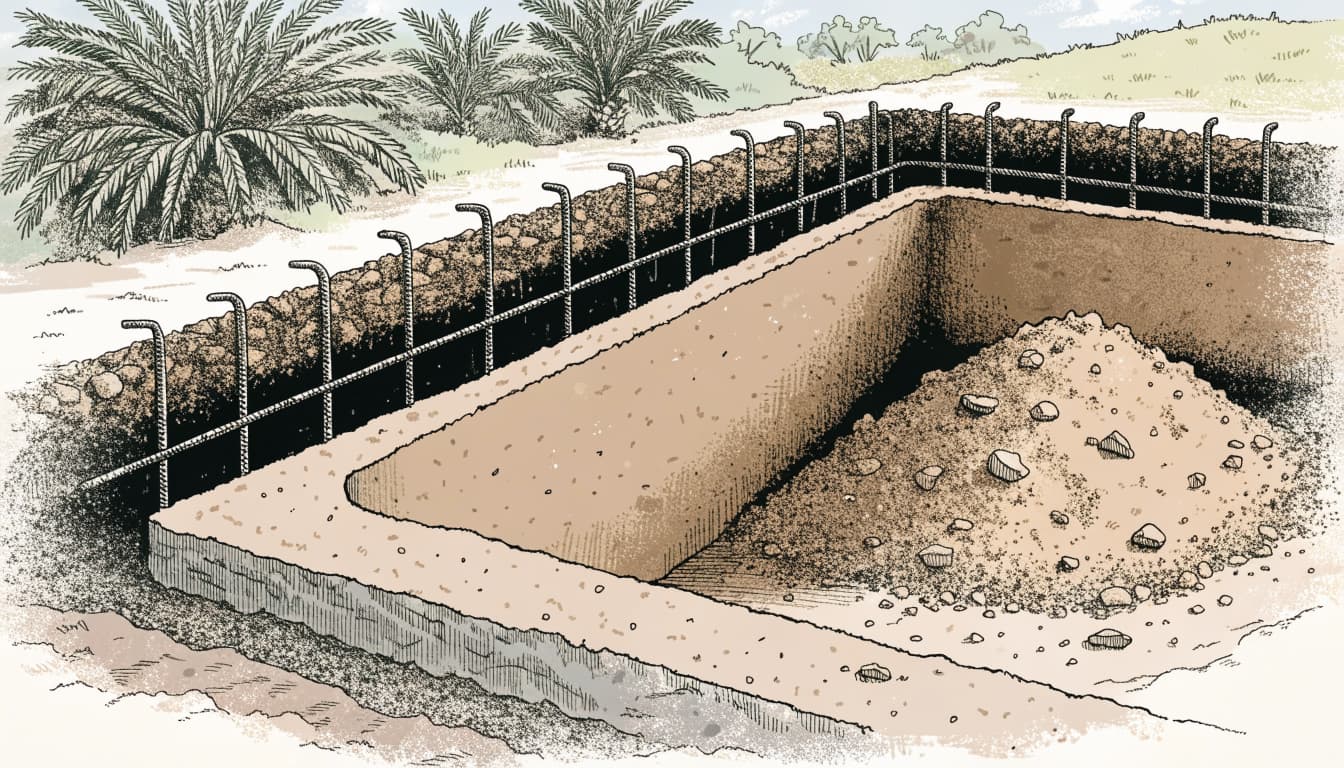
Gunite is pneumatically applied concrete. During application, some material may not remain in the intended shell and instead separates as loose pieces or accumulates in the pool basin. That loose material is rebound.
The important distinction is where the material ends up and whether it becomes part of the placed shell . Concrete that adheres as intended forms the shell. Material that separates and sits loose is not equivalent to that structural material, even if it looks similar.
Why the name can be confusing
Loose rebound may look like concrete from the shell, so a homeowner seeing it in the pool might assume it can be worked back into place. That isn't a safe assumption. Its appearance doesn't change its status as separated material, and it shouldn't be counted as part of the pool's structural shell.
In other words, rebound is a byproduct of the application process, not a supply of extra shell material. The crew's job is to distinguish it from the concrete that forms the pool structure.
Why crews remove rebound before shell finishing
The shell and loose material have different roles
A pool shell is the concrete structure shaped for the pool. Rebound has separated from that structure, so crews remove it rather than treat it as usable shell material. Keeping the two distinct supports a clear handoff from shell application to later work.
The key point for homeowners is straightforward: the amount of loose material isn't a stand-alone measure of shell quality . Its presence doesn't, by itself, confirm a problem or prove that the shell is sound. The construction team evaluates the shell as part of its work.
Removal clears the way for the next stage
Once rebound is removed, the crew can proceed with the work needed to prepare the shell before finishing. That makes removal a transition step between applying the shell and carrying out later work on the pool interior.
It also keeps loose material from being mistaken for the surface that will receive the pool finish. Rebound removal is not the finish itself, and it doesn't replace the crew's shell preparation or evaluation.
Where rebound removal fits in pool construction
First comes the shell, then preparation
The shell application creates the pool's concrete structure. Rebound separates during that work and is removed before the project moves ahead with shell preparation and finishing. The exact work sequence depends on the project, but rebound removal belongs between application and later interior finish work.
For homeowners, this is useful context when a crew is working in an unfinished pool basin. A pile of loose material may appear during construction, but it shouldn't be treated as part of the finished shell or left for a homeowner to clear.
Finishing is a separate stage
The pool finish is applied after the shell has been prepared for that work. Plaster, quartz aggregate, and pebble are examples of interior finish types homeowners may consider. Each is a surface choice, separate from the concrete shell underneath.
That distinction can help when reviewing a project proposal. Shell construction, removal of rebound, shell preparation, and finish installation are related steps, but they aren't interchangeable. A clear project scope should describe the work in terms you can understand.
How rebound differs from the finished pool surface
Structural concrete versus an interior finish
The concrete shell provides the pool's form and structure. The finish is the surface visible and felt inside the pool after construction reaches that stage. Since they have different roles, loose rebound isn't a substitute for either the shell or its finish.
This matters when comparing descriptions of the work. A reference to "concrete" may concern the shell, while a finish selection refers to the pool's interior surface. Ask the builder to clarify which stage a project update or proposal is describing if the wording is unclear.
Gunite and shotcrete terminology
The terms can overlap in everyday pool construction conversations. Gunite refers to a dry-mix form of shotcrete, while shotcrete is the broader term for concrete or mortar projected at high velocity. With gunite, water is added at the nozzle; wet-mix shotcrete has water blended in before it reaches the nozzle.
Both methods can produce concrete pool shells. The application method doesn't change the core point about rebound: loose material that separates during spraying isn't suitable structural shell material. Read more about gunite versus shotcrete for Fort Myers pools.
What Fort Myers homeowners should keep in mind
Site conditions are part of the broader plan
Pool projects in Southwest Florida can involve lot-specific questions about groundwater, drainage, access, and the placement of the pool and surrounding features. Those matters belong in the broader construction plan. They don't make rebound appropriate to reuse as shell material.
For a new pool, the approved project documents and the builder's construction plan guide the work. If you're planning the pool alongside a home project or outdoor improvements, raise those coordination questions early. Our page on new pool construction in Fort Myers covers the local construction service.
Don't judge the shell from loose material alone
A homeowner may see rebound during construction and wonder whether it indicates a defect. The loose material itself isn't enough to answer that. It's separated material that crews remove; the project team is responsible for evaluating the shell and determining whether it's ready for the next stage.
You don't need to climb into the pool, handle the material, or try to assess the shell. Instead, ask the pool builder to explain where the project is in the sequence and what work follows removal.
Questions to ask your pool builder
Clarify what the crew is removing
A practical question is: "Is this loose rebound, and what happens after it's removed?" That invites the builder to explain the work in plain language without asking you to make a technical judgment.
You can also ask how rebound removal fits the project schedule, what shell preparation follows, and how the crew will communicate that the pool is ready to move forward. The goal is to understand the handoff, not to supervise material removal yourself.
Ask how shell and finish work are documented
If a proposal or update combines several stages under one broad label, ask for the scope to distinguish shell work from finishing. That can make it easier to understand what has been completed and what remains.
A useful update should make clear whether the crew is still working on the shell, preparing it for the finish, or applying the selected interior surface. If you're comparing proposals, the same clarity helps you compare the work included rather than relying on vague labels.
Frequently asked questions
Is gunite pool rebound suitable for the shell?
No. Rebound is loose material that separates during shooting. It shouldn't be treated as part of the structural shell or used as a replacement for the concrete that adheres as intended.
Does seeing rebound mean the shell is defective?
Not by itself. Loose rebound is produced during application, but its presence alone doesn't establish whether the shell has a problem. The pool crew evaluates the shell as part of the construction process.
Should I remove rebound or inspect the shell myself?
No. Leave rebound removal and shell evaluation to the pool professionals. You can ask the builder to explain the work stage and next steps without entering the pool basin or handling construction material.
A clear distinction protects the construction sequence
Rebound is loose material that separates during gunite application. It isn't structural shell material, so crews remove it before preparing the pool for its interior finish.
For Fort Myers homeowners, the most useful takeaway is simple: removal is a normal construction step, while shell evaluation belongs to the project team. Knowing the difference helps you follow progress and ask clear questions as the pool moves from concrete work toward the finished surface.