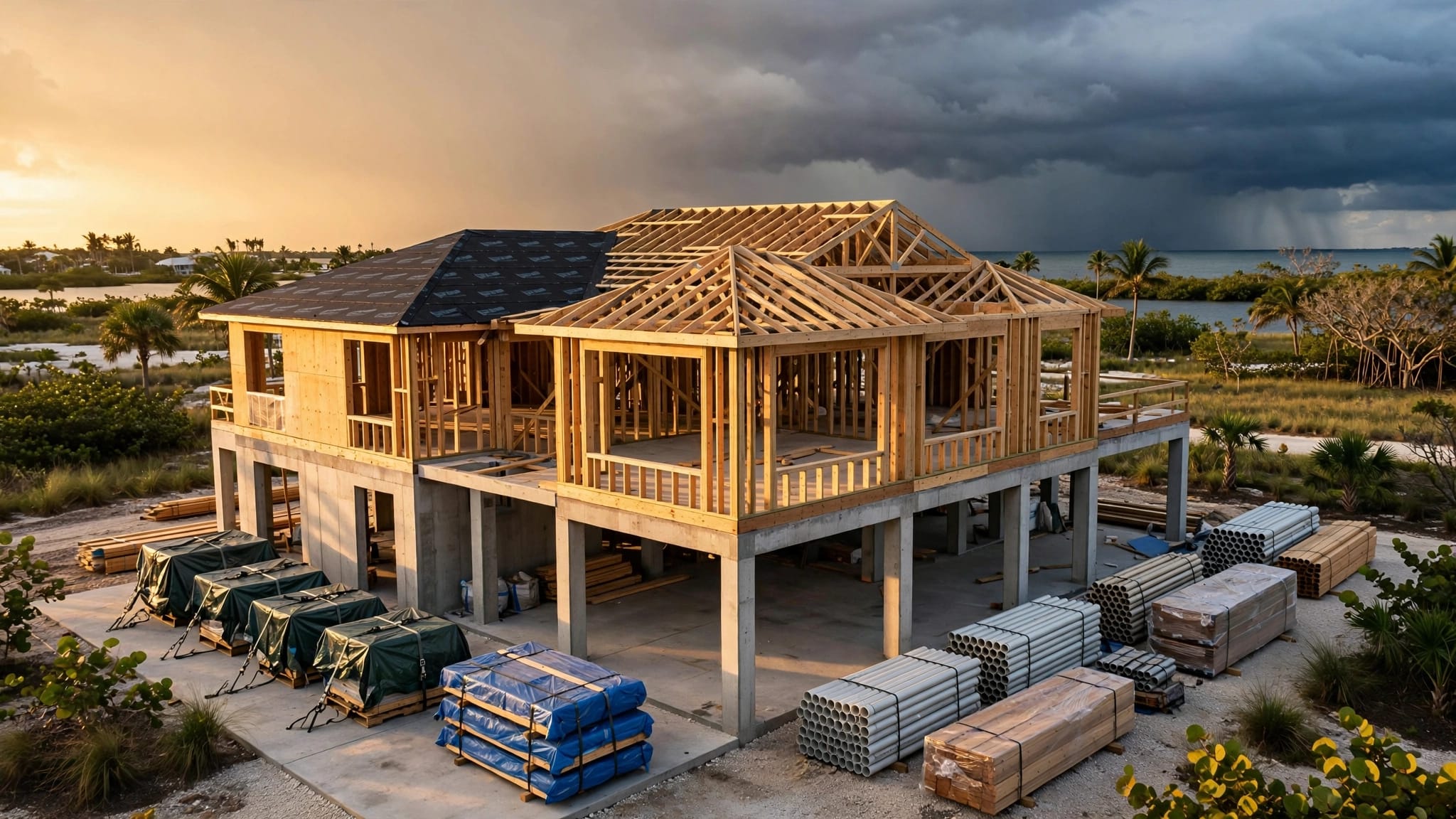
Cape Coral Window Buck Installation Before Impact Glass
Explore Our Services
Contact Us Today!
(239) 322-9295
A window opening can look ready long before it can safely receive impact glass. In Cape Coral new construction, window buck installation sets the shape, support, and water-management path for every finished window.
The buck must be correct before the window installer arrives with an impact-rated unit. Small errors in square, level, fastening, or flashing can lead to delays, leaks, and a poor final fit. A clear sequence keeps each trade working from the same plan.
What a Window Buck Does Before Impact Glass Arrives
A window buck is the built-out frame or mounting surface installed within the structural opening. In Southwest Florida homes, it often bridges the concrete masonry opening and the window system's approved anchorage method.
The buck is not the finished impact-glass window . The completed unit includes the manufacturer-built frame, laminated impact glass, anchors, shims, perimeter sealant, and installation details listed in its Florida Product Approval package.
The opening must match the selected window
The framing crew should build the opening around the approved window model, not a rough estimate from an early plan. The builder needs the unit's exact dimensions, required clearances, anchoring layout, and installation instructions before window buck installation begins.
Measure the opening for plumb, level, square, and plane. Check both diagonals, inspect the sill, and confirm the buck has a flat, continuous surface. A twisted or bowed buck can force the window frame out of alignment.
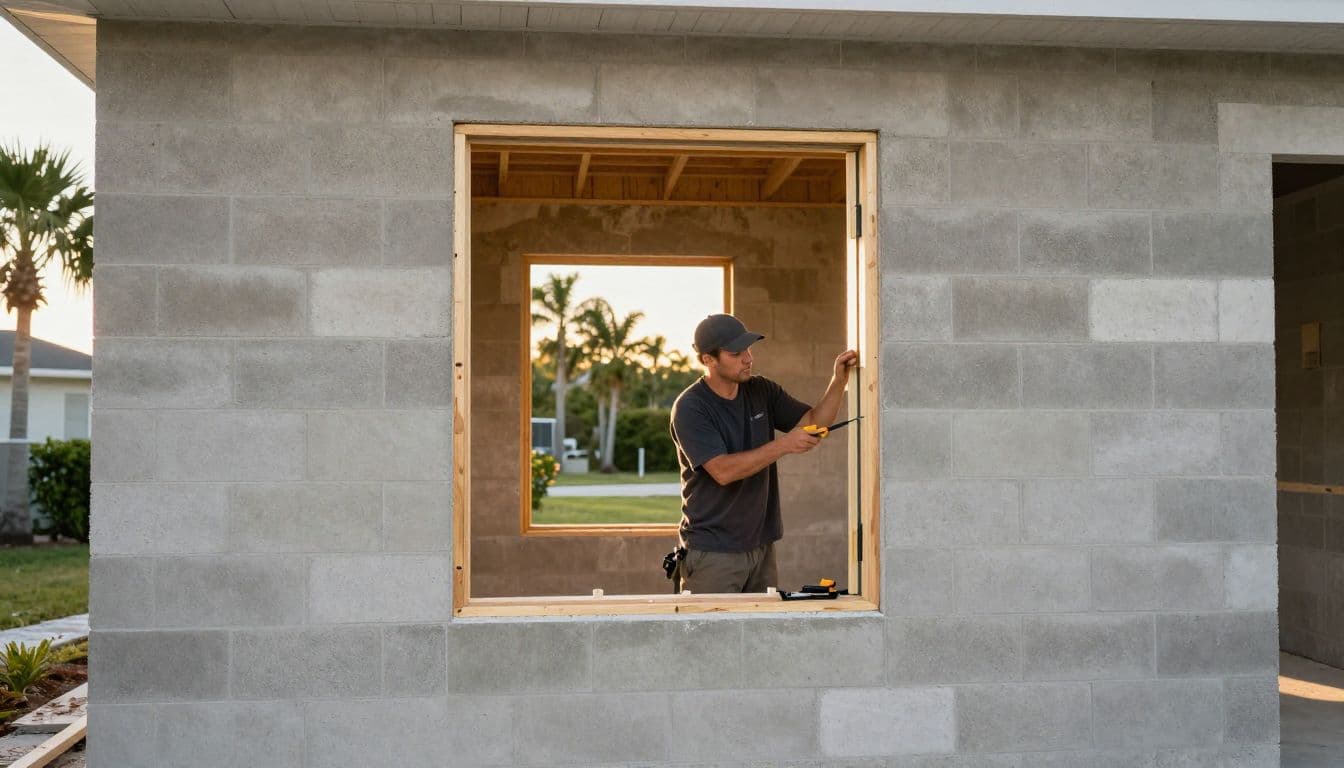
Impact glass can resist debris, but its performance also depends on the approved frame, anchors, and opening preparation working together.
Treat the buck as part of the wall system
The buck needs a secure connection to the structure. That connection varies with the wall type, window design, and approved installation details. Do not substitute fasteners, alter spacing, or add anchors based on habit.
For a Cape Coral home, the selected product approval and manufacturer instructions should guide fastener type, edge distances, embedment, and attachment locations. The window installer needs a clean, accessible mounting surface with no concrete fins, excess mortar, or protruding hardware.
Coordinate Window Buck Installation With Every Trade
The general contractor should set the sequence before crews start closing exterior walls. Window work crosses several scopes, and missed handoffs often show up after drywall and paint make repairs more costly.
Builder and framing crew set the geometry
The builder confirms the approved plans, window schedule, and Florida Product Approval documents. Then, the framing or masonry crew forms the opening and installs the buck to the required dimensions.
Before anyone applies a water-resistive barrier or exterior finish, the builder should inspect the opening. This is the right time to catch an out-of-square buck, an uneven sill, or a missing attachment point.
Waterproofing contractor creates the drainage path
The waterproofing crew must connect flashing to the wall's water-management layers. Under the Florida Building Code, 8th Edition (2023), exterior window flashing must direct moisture out of the wall assembly.
That detail matters in Cape Coral's wind-driven rain. Water that gets behind stucco or cladding needs a deliberate path back outside, rather than a path into framing, insulation, or interior finishes.
Window installer protects the approved system
The window installer should receive the product approval, installation instructions, and confirmed opening dimensions before delivery. A unit might fit physically yet still be wrong for the permitted design pressure or impact requirement.
Keep the opening protected from debris, standing water, and damage while the glass is pending. Cover it without trapping moisture against unfinished materials, and remove temporary protection before flashing and installation inspections.
Flashing, Sealing, and Drainage Details That Can't Wait
Impact windows do more than block wind and debris. They also need properly layered flashing and sealants to handle heavy rain. Window buck installation gives those materials a stable surface to bond and drain.
Start at the sill and move outward
The sill needs a continuous drainage detail. When project documents and manufacturer instructions don't provide another approved method, Florida code guidance calls for pan flashing at the sill, sloped or sealed to drain to the exterior.
Head and side protection still matter. The sill, jambs, and head work as one system, with overlapping materials that shed water outward. Reversing those layers can send rain behind the barrier.
Seal the right locations
Perimeter sealant is not a substitute for flashing. Sealant closes intended joints, while flashing handles water that reaches behind the exterior face.
Use compatible materials. Some membranes, sealants, and window-frame finishes can react poorly when paired without approval. The waterproofing contractor and window installer should confirm compatibility before work begins.
For broader planning, review the Cape Coral new home permit checklist before ordering windows. The exact product approval, drawings, and installation documents should match the unit that arrives on site.
Inspections and Final Preparation for Impact Windows
Cape Coral publishes separate guidance for new or modified openings and size-for-size replacements. New construction follows its own permit path, so confirm required inspections with the local building department before scheduling trades.
Document the work before it disappears
Take clear photos of the buck, sill flashing, side and head details, and attachment preparation before exterior finishes cover them. Keep the approved window paperwork, installation instructions, and permit documents available on site.
The inspector may need to see work that becomes hidden once stucco, cladding, or the window unit goes in. Early documentation also helps the builder resolve questions without removing finished materials.
Confirm the window order before delivery
Compare the shipped labels and approval information with the permitted window schedule. Confirm frame type, glazing, size, configuration, and installation requirements. Do this before the crew sets the first unit.
For budgeting, impact-resistant window costs in Southwest Florida vary widely with opening size, frame material, glass options, and design-pressure needs. Ordering the correct approved unit costs less than correcting a mismatch after delivery.
A Strong Opening Supports a Strong Window
Window buck installation is where structural alignment and moisture control meet. A square, securely attached, properly flashed buck gives the impact-glass unit the conditions it needs to perform as approved.
Coordinate the builder, framing crew, waterproofing contractor, inspector, and window installer before the glass arrives. Confirm project requirements with Cape Coral's Building Division and a qualified licensed professional, then keep the approved details in view through final installation.