Fort Myers Gunite Pool Cold Joints: Causes and Prevention
Explore Our Services
Contact Us Today!
(239) 322-9295
A gunite pool cold joint can form when new concrete meets a section that has already begun to harden. The result may be a visible seam or a less obvious change in the shell, but a line alone doesn't prove there's a structural problem.
In Fort Myers, careful scheduling and clear communication matter because weather and site conditions can affect pool construction. Understanding how cold joints form, how they differ from cracks, and what a thorough placement plan includes can help you follow the work with confidence.
What a cold joint means in a gunite pool
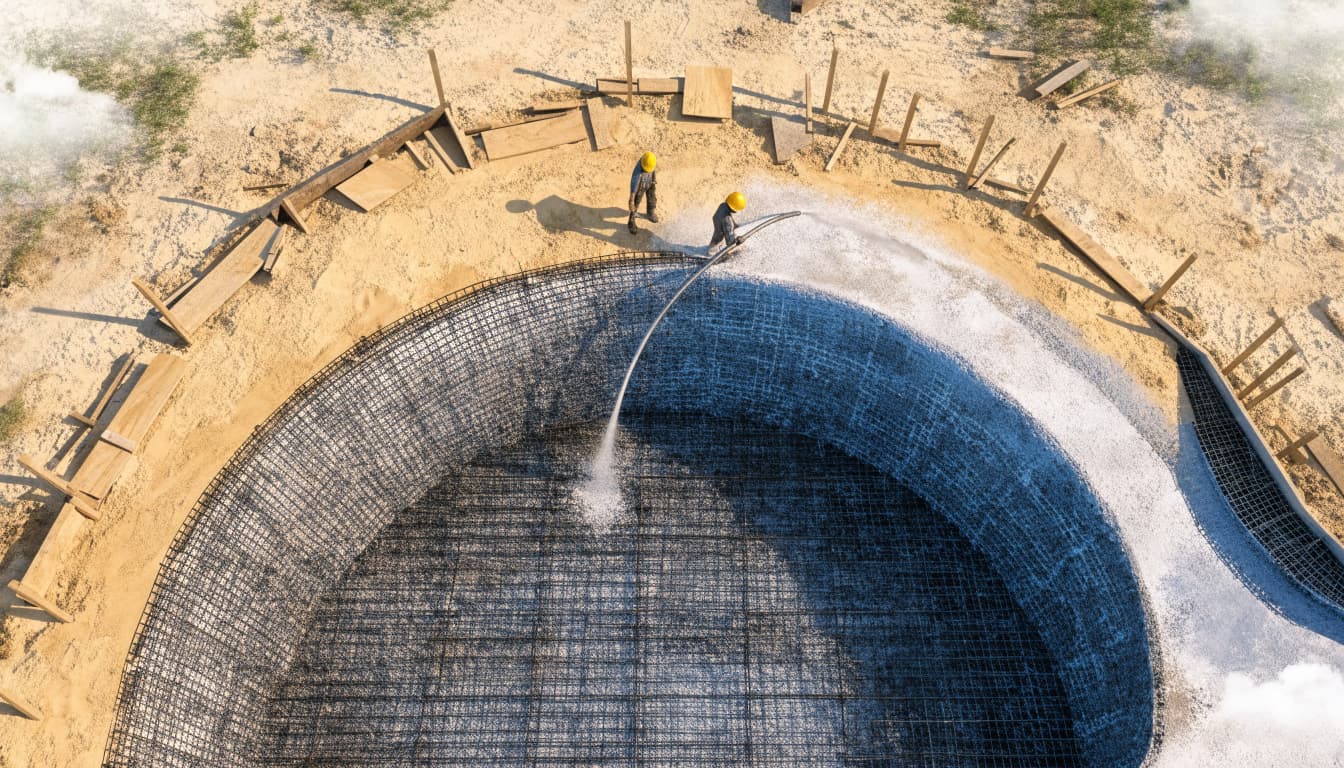
Gunite is a dry concrete mix that receives water at the nozzle as the crew sprays it over the pool's reinforcing steel. The crew builds the shell in layers, shaping the floor, walls, steps, and other features as placement progresses.
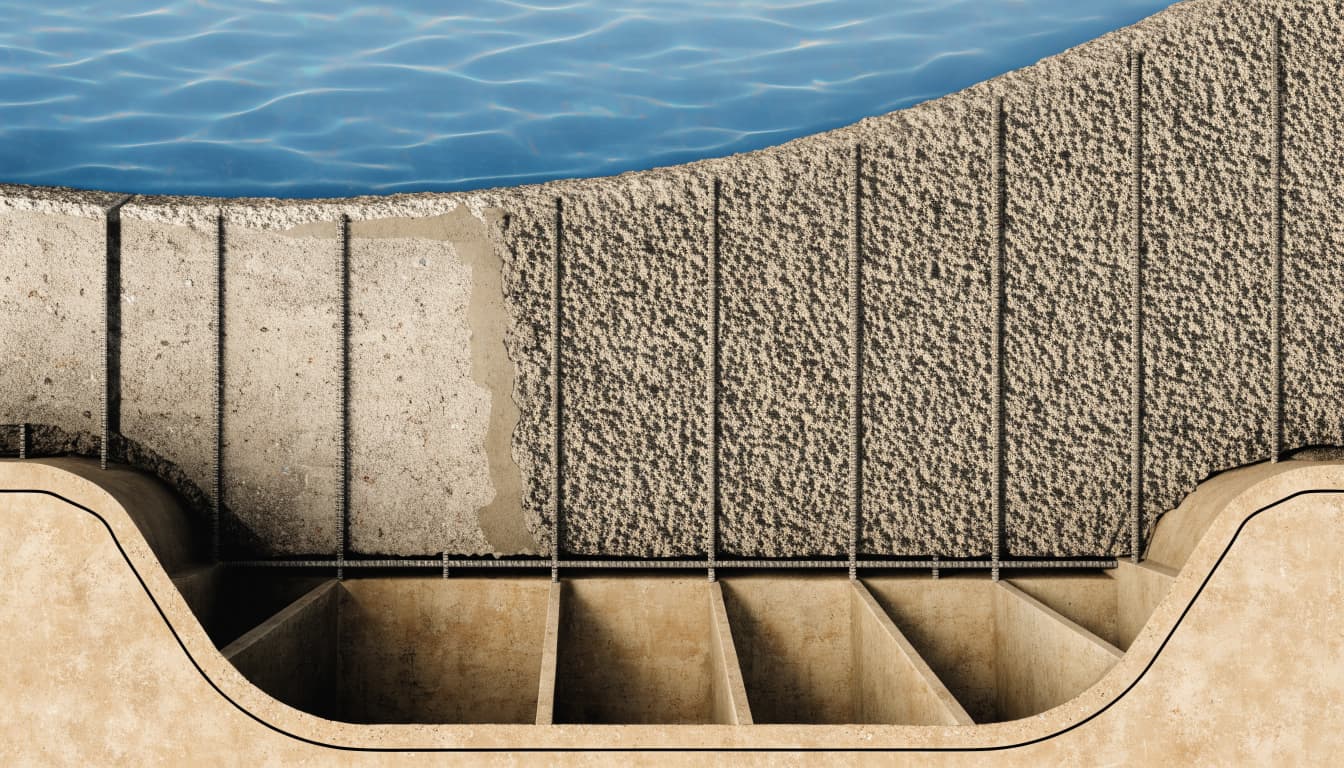
A cold joint can develop if work stops long enough for part of the sprayed concrete to set before fresh material is applied against it. Instead of forming a continuous bond, the two sections may meet at an interface. The extent and significance of that interface depend on the conditions and construction details.
A cold joint isn't the same as a planned joint
Some pool structures have intentional joints that allow separate materials or sections to move independently. For example, a flexible movement joint may separate a pool structure from nearby decking. Its design and materials differ from an unintended break in a concrete placement. See our guide to gunite pool expansion joints for more on planned movement joints.
Why continuity matters
Pool shells rely on coordinated design, reinforcing steel, concrete placement, and curing. A cold joint can interrupt the continuity of the concrete, but its presence doesn't automatically establish that the shell is unsafe or leaking. Its location, preparation, and relationship to the rest of the structure all matter.
Common causes during gunite placement
Cold joints are most likely when a pause occurs while one area of the shell is still being placed. A pump or compressor problem, material delay, equipment change, crew coordination issue, or an unexpected site condition can interrupt the sequence. A delay may also arise if the crew can't safely reach part of the pool or needs to address a problem before continuing.
Weather can affect the work as well. Heavy rain or water accumulating in the excavation may require a pause. Heat, wind, and sun exposure can also affect how quickly fresh material loses moisture. Those conditions don't guarantee a cold joint, but they make planning and active coordination more important.
Design and access add scheduling pressure
Freeform walls, raised features, steps, benches, and tight working areas may take additional care during application. The crew needs access to place and shape the material while maintaining the specified design. Resolving plumbing or reinforcement issues before placement helps avoid a preventable interruption.
A pause needs a construction response
The right response depends on how long the interruption lasts and the shell's condition. A crew may be able to continue as planned, or the design and project requirements may call for treating a specific stopping point as a construction joint. The crew should follow the project documents and a defined procedure rather than simply spraying over a surface that has already hardened.
How cold joints differ from ordinary cracking
A cold joint is a boundary between concrete placed at different times. A crack is a split or fracture within the concrete or its surface. Both can appear as lines, so appearance alone doesn't establish which condition you're seeing.
Cracks may result from shrinkage, movement, loading, or other causes. A cold joint may remain visually subtle, or it may develop a crack along the interface. A line near a seam therefore needs assessment in context, particularly before tile or interior finish work conceals the shell.
A visible line isn't a diagnosis
A homeowner might notice a change in texture, a straight line, or a difference in surface appearance. Those details can be useful to report, but they don't show how deep a condition goes or whether it affects the shell. Pool builders and qualified professionals can assess the concrete, surrounding conditions, and project records.
Don't confuse a shell seam with a finish defect
The interior finish can show marks that don't match the underlying concrete. Conversely, a shell condition may be partly hidden by the finish. If a line appears or changes after construction, document where it is and when it appeared, then contact the pool builder for an assessment.
Prevention starts before the spray crew arrives
A good placement day begins with a coordinated plan. The pool's shape, steel, plumbing, access, equipment, material supply, and crew schedule all need to be ready before spraying starts. Any required inspections should be complete, and unresolved work should not force the crew to stop after placement is underway.
For a Fort Myers project, site planning should account for conditions that affect access and the excavation. Groundwater, drainage, weather, and limited shade can influence the schedule. Our information on pool drainage planning before excavation explains why water management belongs in the early planning conversation.
Agree on a response to delays
Before placement, the homeowner and builder should understand how the crew will handle equipment trouble, a weather change, or a material delay. That plan should address who makes the decision to stop, how an interruption is recorded, and how work resumes. A planned construction joint may be preferable to an improvised stop in a critical area.
Confirm the shell details in the project documents
The approved design should guide the required dimensions, reinforcing steel, and placement sequence. Homeowners can ask how the crew plans to manage the work across complex areas, such as steps or a raised spa. These conversations help set expectations without requiring the homeowner to direct the technical work.
Mixing and placement practices that reduce risk
Gunite uses a dry mix, with water added at the nozzle. The nozzle operator controls that water during application, so consistent technique and communication with the crew matter. Adding water without following the mix requirements can affect the concrete. The crew should use the specified materials and follow the project's placement procedure.
Keep the crew and equipment coordinated
A steady placement sequence depends on material arriving when needed and equipment working properly. Crew members must coordinate spraying, shaping, and trimming so they don't leave an area unfinished while attention shifts elsewhere. Before work begins, the builder should have a practical plan for equipment checks and material supply.
Treat an unavoidable stop as a construction decision
If placement must stop, the crew should assess the state of the concrete and follow the project's procedure for restarting. That may involve preparing the existing surface before applying fresh material. The exact approach depends on the condition and design. Covering an unprepared interface with new gunite doesn't, by itself, establish a sound bond.
Curing is part of the shell's construction
Curing follows placement and gives the concrete conditions to develop strength. It's a separate stage from spraying, and it has its own instructions. The builder should set a project-specific curing plan based on the concrete, weather, site conditions, and later finish requirements.
In Southwest Florida, heat, humidity, wind, storms, groundwater, and shade can vary between sites and days. The shell's condition and the approved procedure should guide the work. Rain alone shouldn't be treated as a substitute for the planned curing method, and homeowners shouldn't create a watering schedule without direction from the builder.
Later work should follow readiness, not a calendar alone
Tile, coping, decking, and plaster are separate milestones. A schedule can shift with weather, inspections, and shell conditions. In our gunite curing and plaster timing guide, we explain why the builder's instructions and applicable product requirements matter when planning later work.
For broader schedule context, our Fort Myers gunite pool construction timeline notes that local project timing varies. The shell's curing plan is project-specific, so a general schedule shouldn't replace instructions for a particular pool.
Signs homeowners can report
During construction, look for visible changes rather than trying to classify them. A seam, a sudden texture change, a crack, exposed reinforcing steel, or an area that appears loose or damaged is worth reporting to the pool builder. Share the location and timing, and take clear photos if it's safe to do so.
After the pool is finished, report changes such as a crack that grows, a line that appears to change, finish loss, or water loss that concerns you. These signs can have different causes. A photo or a remote description can't show the full condition of the shell, so don't assume that a line is either harmless or a cold joint.
Keep observations separate from conclusions
Note whether a mark is on the pool interior, at the waterline, near a fitting, or beside a step. Record when you noticed it and whether it has changed. This information gives the builder a useful starting point without turning a visual observation into a structural diagnosis.
Key takeaways for Fort Myers homeowners
- A cold joint forms when fresh gunite meets concrete that has already begun to harden.
- Delays, weather, equipment, access, and crew coordination can interrupt placement.
- A visible line may be a seam, a crack, or a finish mark. It needs assessment in context.
- Planning the schedule, materials, equipment, crew roles, and interruption response helps reduce avoidable stops.
- Curing and finish timing should follow project-specific instructions and the shell's condition.
The homeowner's role is to understand the plan, keep the work area clear, and promptly report visible concerns. The builder and qualified professionals are responsible for evaluating the shell and determining what any observed condition means.
Frequently asked questions
Does every seam in a gunite pool mean there's a cold joint?
No. A line may be a planned joint, a finish variation, a crack, or a placement seam. The appearance alone can't confirm its cause or significance.
Can a cold joint cause a leak?
A cold joint may create a vulnerable interface, but it doesn't automatically mean the pool will leak. A qualified professional needs to assess the shell and any signs of water loss.
Should a homeowner water the shell during curing?
Follow the builder's curing instructions. The right method and frequency depend on the project and conditions, so a routine from another pool may not apply.
What should I do if I spot a crack before plaster?
Report it to the builder promptly and note its location. The builder or another qualified professional should assess it before finish work proceeds.
A well-planned placement protects the shell
Cold joints are best addressed before and during placement, through preparation, coordinated work, and a defined response to interruptions. After spraying, curing and later construction should follow the project's requirements rather than a generic schedule.
If you notice a seam or crack, report what you see and where it appears. A qualified assessment can determine whether it's a placement issue, a surface condition, or something that needs repair.