
Why Asphalt Shingles Lose Granules in Fort Myers
Explore Our Services
Contact Us Today!
(239) 322-9295
Granules protect asphalt shingles from the sun and weather, so some shedding is expected as a roof ages. However, a sudden increase in granules or bare-looking patches can point to damage that deserves attention. Asphalt shingle granule loss has several possible causes, and by itself it doesn't prove that your roof needs replacement.
Fort Myers roofs face intense sun, heat, heavy rain, and seasonal storms. Age, foot traffic, and installation problems can also affect shingle surfaces. Knowing what to look for from the ground can help you decide whether to monitor the roof or arrange an inspection.
What asphalt shingle granule loss can tell you
Granules are small mineral particles bonded to the shingle's asphalt surface. They help shield the asphalt from ultraviolet exposure and contribute to the roof's weather resistance. As the surface wears, some granules loosen and wash into gutters or downspouts.
Why granules matter
When granules wear away in isolated spots, the exposed asphalt can age faster under the sun. Widespread bare areas may indicate more advanced surface deterioration, especially when they appear alongside curling, cracking, or leaks. Still, granule loss is one clue among several, not a diagnosis on its own.
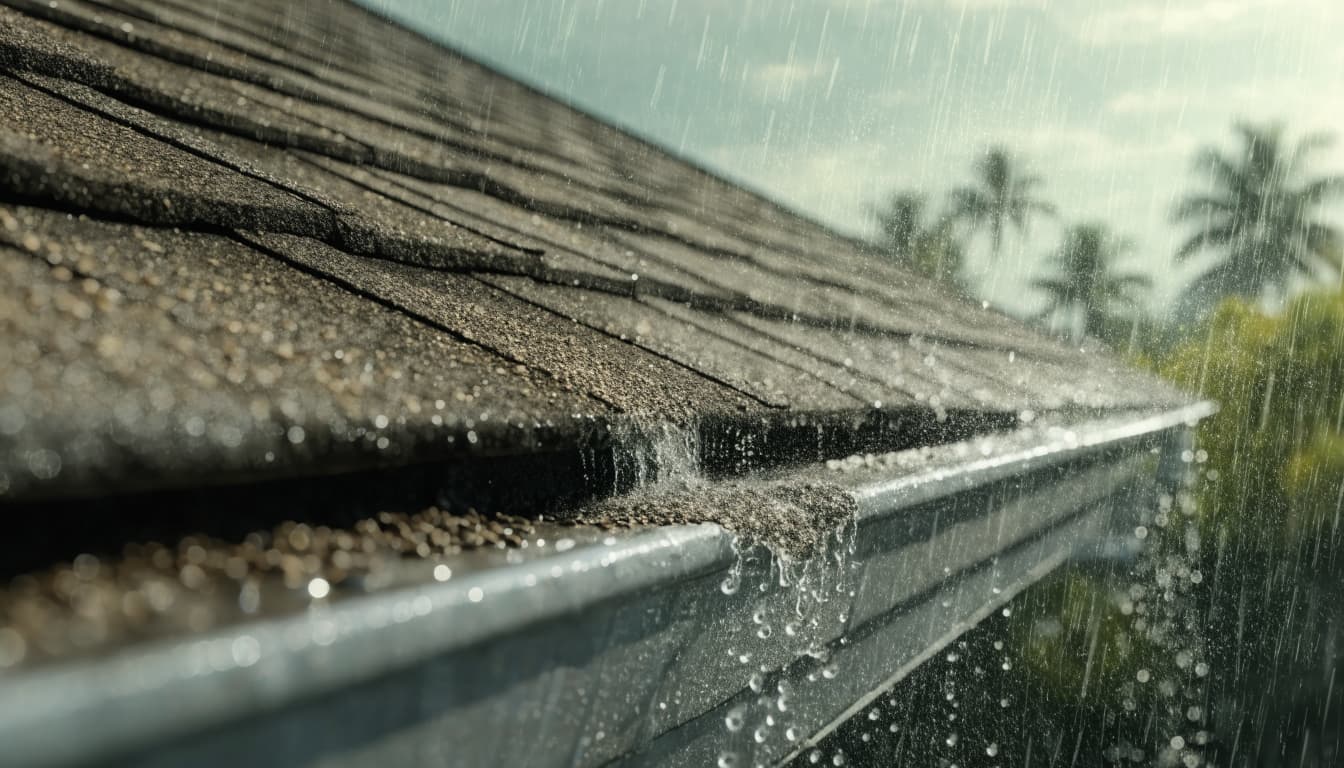
How roof age changes the picture
As shingles age, their asphalt binder can become less flexible and hold granules less securely. That process tends to affect the roof over time, rather than create a sudden, isolated change. Previous repairs, sun exposure, and overall roof condition also matter, so two roofs of similar age may show different levels of wear.
Fort Myers sun and heat put shingles under strain
Southwest Florida's strong sunlight exposes roof surfaces to sustained ultraviolet radiation. Heat adds stress as shingles warm during the day and cool later. Over time, these conditions can dry and age roofing materials, making the surface more vulnerable to wear.
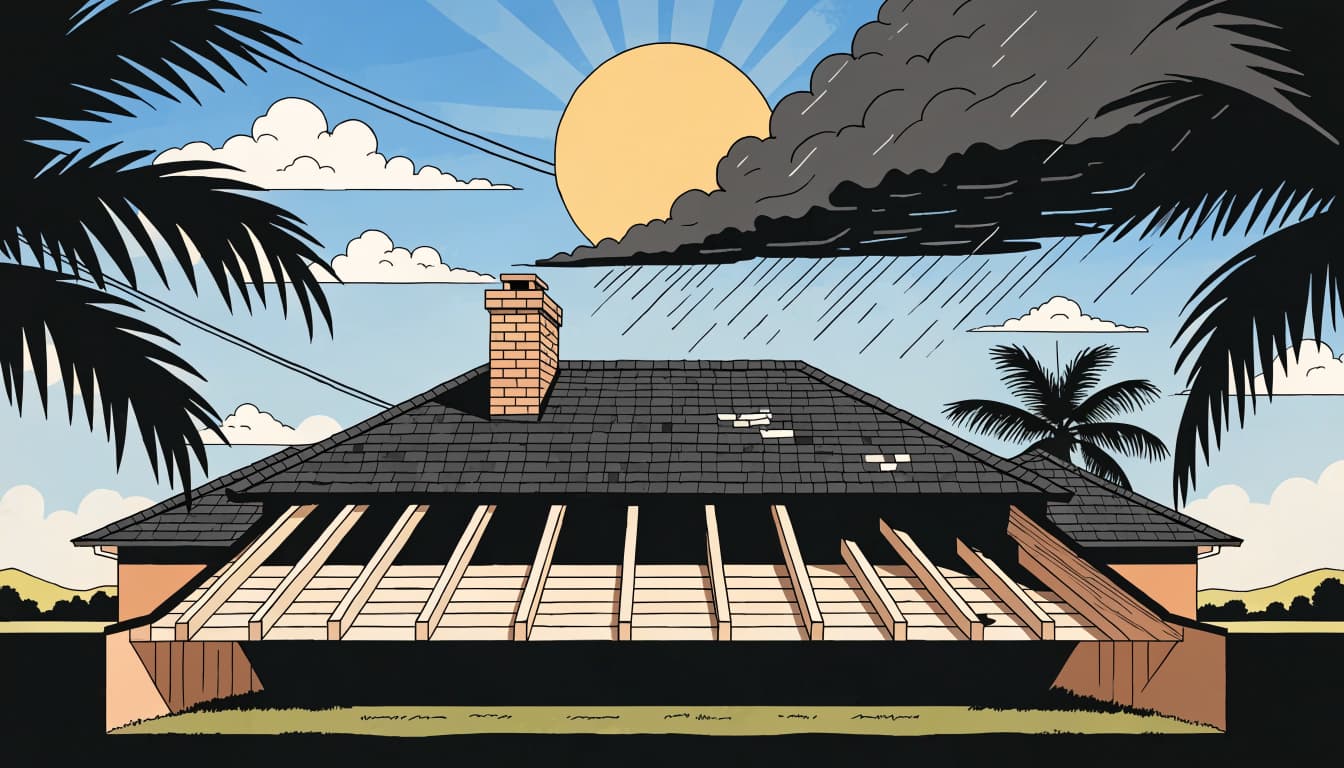
Sun exposure can make existing wear more visible
A roof with strong, direct exposure may show age-related changes sooner than a shaded roof. The sun doesn't explain every bare patch, though. A distinct area of granule loss could also reflect impact, foot traffic, or a problem that began during installation.
Heat and humidity are part of the local conditions
Florida's heat and humidity can make roofing materials more brittle as they age. Heavy rain then carries loosened granules off the surface and toward roof edges. This combination can make the damage easier to notice after a storm, even if wear developed over a longer period.
Storms can loosen granules and move shingles
Hurricanes, tropical storms, and severe thunderstorms expose roofs to forceful gusts and wind-driven rain. Strong gusts can press beneath shingle edges, especially around eaves, rakes, ridges, and roof perimeters. Once a shingle loosens, later gusts may lift it or disturb adjacent shingles.
Wind damage may be subtle from the ground
A shingle can remain attached while an edge lifts or a tab develops a crease. If it rubs against nearby shingles as it moves, the surface may lose granules. Look for raised corners, uneven rows, or a sharp crease, particularly near roof edges and ridge caps.
For more ground-level clues, see our guide to signs of wind-damaged roof shingles.
Heavy rain can reveal an existing problem
Rain can wash loose granules into gutters and downspouts, making a roof's surface wear more apparent after a storm. Wind can also drive debris across shingles or expose weaknesses around flashing and roof penetrations. A storm may reveal existing deterioration, but timing alone doesn't show what caused it.
Foot traffic and installation can affect the shingle surface
Walking directly on asphalt shingles can scrape or dislodge granules, especially when shingles are hot, aged, or brittle. Work around vents, skylights, and other roof equipment may also involve foot traffic. Homeowners should avoid walking on the roof to inspect it, since a fall or further roof damage can result.
Installation handling matters
Careless handling during installation can scuff the shingle surface. Fastening and placement errors can also leave shingles less secure, which may make them more vulnerable to movement in strong winds. However, a patch of granule loss doesn't identify an installation error by itself. A roofer needs to assess the affected shingles and the surrounding roof.
Avoid pressure washing the roof
Aggressive pressure washing can dislodge granules and damage roofing materials. It can also disturb shingle edges or other roof components. If you see algae or dark streaks, avoid trying to clean the roof with high-pressure equipment.
Normal shedding isn't the same as excessive granule loss
Some granules may come loose as part of ordinary wear. A newly installed roof can also shed extra granules as excess material washes away. A few granules in a gutter, without other signs of damage, don't automatically mean the roof has failed.
Look for a change in amount or pattern
A sudden increase in fresh granules after a storm deserves closer attention, especially if you also see bare or rough-looking shingle areas. A pattern across multiple roof sections is more concerning than a small amount collected in one spot. There isn't a single visible granule count that can determine whether repair or replacement is needed.
Consider the whole roof, not one clue
Granule loss matters most when combined with other signs, such as cracking, curling, missing shingles, recurring leaks, or damage across several slopes. A few isolated damaged shingles may be repairable when the rest of the roof remains in good condition. Widespread wear may call for a broader assessment, but only an inspection can establish the roof's overall condition.
What homeowners can check safely from the ground
Walk around the home and view each roof slope from more than one position. Binoculars can help you see details without climbing. Take photos from a safe spot, including a wider view that shows where each area sits on the roof.
Look for shingle changes and exposed areas
Watch for missing tabs, raised corners, uneven rows, cracks, curled edges, or dark bare patches. A sharply folded crease may indicate that a shingle moved in the wind. Check the eaves, rakes, and ridge line carefully, since exposed edges can be more vulnerable to gusts.
Check gutters and look indoors for leaks
You can look for fresh granules in gutters, at downspout outlets, and on the ground below roof drainage points. A sudden buildup is more useful as a warning when it appears with visible bare patches. Indoors, check ceilings and upper walls for new water stains after heavy rain. Don't climb a ladder or step onto the roof to investigate.
When to contact a qualified local roofing professional
Arrange an assessment if granule loss is widespread, increases suddenly, or appears with missing or lifted shingles. New ceiling stains, repeated leaks, exposed underlayment, or visible damage after a storm are also reasons to act promptly. If an opening is allowing water inside, a professional can help limit further damage.
An inspection can separate surface wear from broader damage
A roof assessment can examine the shingles, roof structure, and areas where leaks may start. It can also distinguish isolated damage from problems that affect multiple roof slopes. Our roof inspections in Fort Myers assess roof materials, structure, integrity, and signs of weather-related wear.
Repair may be enough
Granule loss alone doesn't require a full roof replacement. If the damage is localized and the surrounding shingles remain sound, a targeted repair may be appropriate. When granule loss appears alongside missing shingles, damaged flashing, or leaks, roof repair services in Fort Myers can address the immediate damage and help determine what else needs attention.
Key Takeaways for Fort Myers Homeowners
- Granules protect asphalt shingles, and some shedding can occur after installation or through normal aging.
- Fort Myers sun, heat, heavy rain, and storms place ongoing stress on roofing materials.
- Foot traffic and poor installation handling can damage shingle surfaces, but granule loss alone doesn't identify the cause.
- Check for sudden changes, bare patches, lifted or creased shingles, and indoor water stains from the ground or inside the home.
- A professional inspection can help determine whether the roof needs a focused repair or a broader plan.
Frequently Asked Questions
Do granules in the gutter mean my roof needs replacement?
No. A small amount can come from normal shedding, especially on a new roof or as shingles age. More granules than usual, combined with bare patches, cracking, leaks, or missing shingles, warrants a closer assessment. The amount in the gutter alone can't determine whether replacement is needed.
Can I inspect granule loss by walking on the roof?
No. Walking on shingles can scrape away granules, damage brittle materials, or create a fall hazard. Check from the ground with binoculars instead. If details remain unclear or you see possible damage, arrange a professional assessment.
Should I call a roofer after a storm if I only see granules?
If the amount has suddenly increased, or you also see lifted shingles, bare patches, debris, or new water stains, contact a qualified local roofer. If you see only a small amount and no other changes, monitor the roof from the ground. Never climb up to investigate storm damage.
Make the decision based on the full roof condition
Granule loss can point to aging or damage, but it doesn't tell the whole story. Sun exposure, storms, foot traffic, and installation details may all affect the shingles. The pattern and accompanying signs matter more than granules alone , so a safe ground-level check followed by a professional assessment can help you choose a repair or replacement only when the roof's condition calls for it.