Before the First Storm: Protecting an Unfinished Naples Home
Explore Our Services
Contact Us Today!
(239) 322-9295
An unfinished home can face a severe storm with open walls, exposed framing, incomplete roofing, and materials that aren't yet secured in their final locations. Good unfinished home storm protection starts with the builder's plan, because the right steps depend on what's complete and what's still exposed.
In Naples, wind-driven rain and flying debris can affect both the structure and the work already completed. Coordinate early with the builder and trades, follow project-specific directions, and keep the site clear of avoidable hazards.
Key Takeaways
- Ask the builder to set a storm-preparation plan based on the home's current stage.
- Have the builder assign responsibilities for openings, roof work, materials, equipment, and site access.
- Use only protection methods approved for the project. Improvised coverings or attachments can damage work or create hazards.
- Photograph the site before weather arrives, then wait for the builder's direction before entering or restarting work.
- Treat an unfinished building site as a construction zone, not a place to shelter during a storm.
Why an Unfinished Home Needs a Stage-Specific Plan
A completed home has installed windows, doors, roofing, and finished drainage details. A house under construction may have none of these protections, or may have some areas finished while others remain open. That changing condition affects how rain can enter, where water may collect, and which materials need protection.
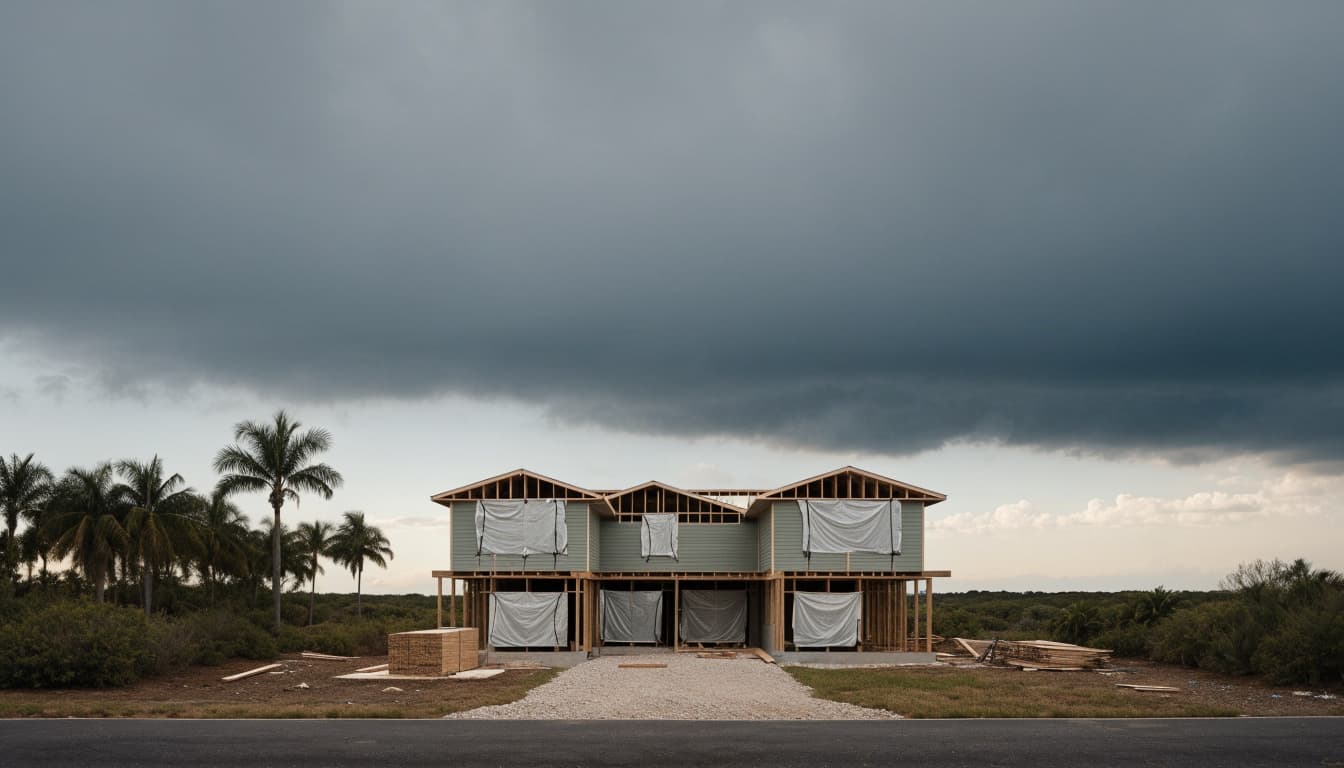
For example, a house with roof sheathing but no finished roofing has different exposures from one with completed roofing and missing windows. Openings, wall cavities, unfinished penetrations, and exposed insulation can all be vulnerable to water. Meanwhile, loose items can become debris if wind picks them up.
Naples projects may also involve coastal requirements tied to a property's location. The Naples CCCL rules for coastal home construction can affect the permitted scope and site work for homes in the Coastal Construction Control Line area. Storm preparation should fit the approved project, not introduce unplanned changes.
A storm plan is useful even when the forecast is uncertain. It gives the owner, builder, and trades a shared understanding of who makes decisions and what must happen before crews leave the site.
Coordinate a Pre-Storm Plan With the Builder
Contact the builder as soon as severe weather becomes a possibility. The builder can assess active work, coordinate subcontractors, and set priorities for the site. Homeowners can help by sharing any concerns about valuable materials, access, or known drainage issues, but construction methods should remain under the builder's direction.
Assign tasks and confirm who is responsible
Ask who will secure each part of the site and when the work will be completed. The plan may involve the builder, roofing crew, window or door installers, electricians, plumbers, and other trades. A clear assignment prevents an exposed area from falling between schedules.
Discuss which openings need temporary protection, whether roofing work should pause, and how materials or tools will be stored. The builder should also identify who can make changes if the storm track or project conditions shift. Keep important contact details accessible, and share the agreed plan with anyone responsible for the property.
Keep instructions specific to the project
General storm preparation is useful, but it doesn't replace the job's plans, approved details, or applicable local requirements. A covering that seems simple may interfere with installed components or create an unsafe attachment. Likewise, a method that works at one stage may be unsuitable after another trade has completed its work.
Follow the builder's directions for temporary protection, shutdowns, access, and site closure. If you're working with a builder, make sure owner expectations and trade responsibilities are clear before the weather deadline.
Protect Roof Work and Building Openings
The roof and exterior openings often determine how much rain can reach unfinished interior spaces. Protection depends on the installed materials and the current construction sequence, so the builder should set the method and arrange the right trade support.
Treat the roof according to its current stage
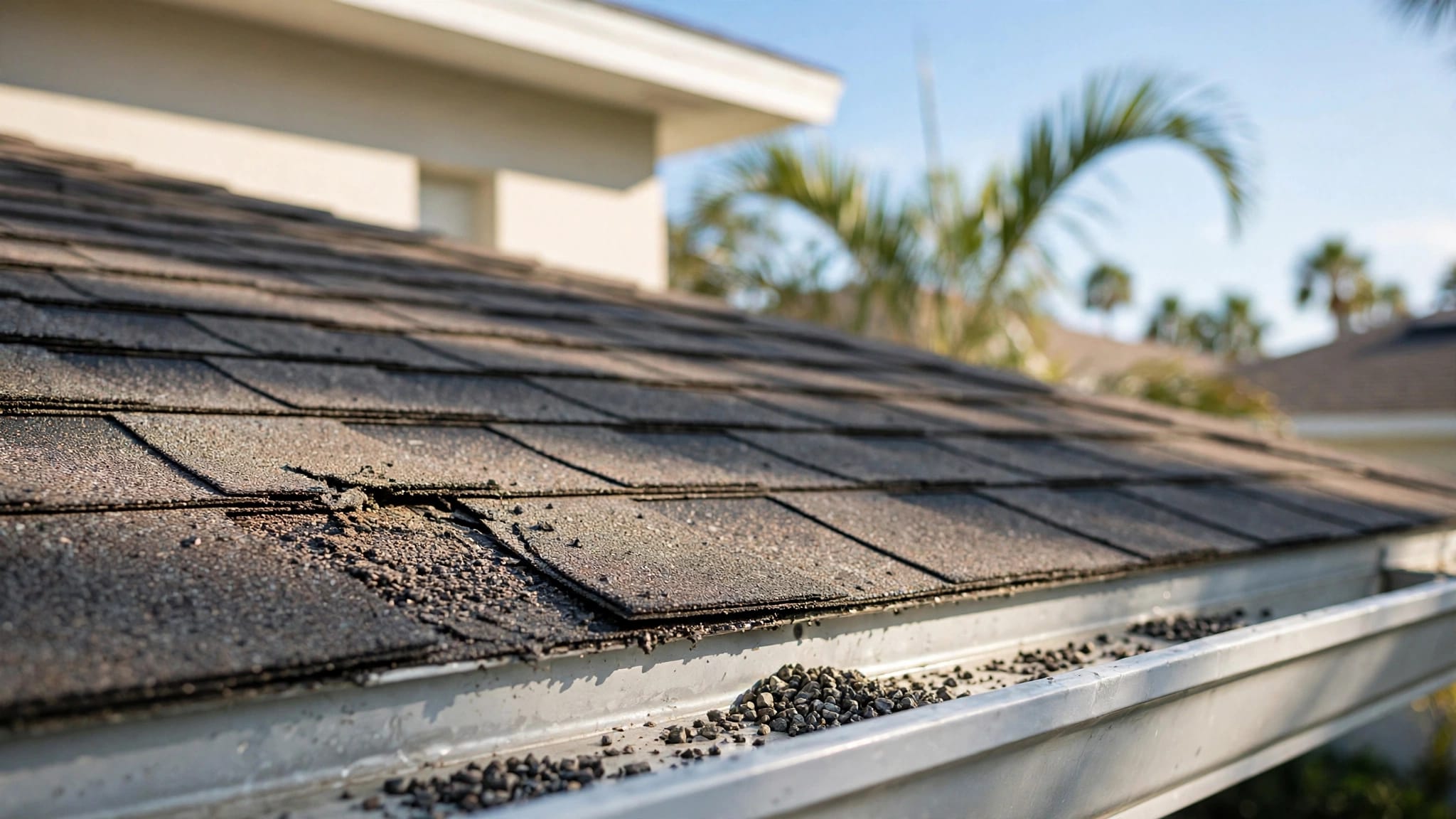
Roof sheathing, underlayment, and finished roofing are different stages, with different exposures. Don't assume a roof is weather-tight because sheathing is installed or because part of the roof looks complete. Ask the builder what remains unfinished, how exposed areas will be managed, and whether any roofing work needs to stop before the storm.
For owners interested in the roof assembly, our guide to plywood versus OSB roof decking describes common decking options without treating one as a universal choice. The builder's plans and project specifications govern what belongs on a particular home.
A Fort Myers hurricane-season roof inspection checklist can also help homeowners understand why roof condition and details matter. During active construction, though, the builder must direct any inspection or temporary roof protection.
Have the builder address doors, windows, and other openings
Open window and door rough-ins can let wind and water enter. The builder should determine which openings need temporary coverings and how to install them without harming the framing, finished components, or planned work. Include garage openings, lanai access, and large openings between indoor and outdoor areas in the discussion.
Also ask how the crew will handle exposed wall cavities, roof penetrations, and places where different materials meet. Temporary protection should fit the specific opening and weather conditions. Avoid fastening boards, plastic, or tarps on your own unless the builder has approved the method.
Secure Materials, Equipment, and the Site
An orderly jobsite is easier to prepare and safer to revisit. Before workers leave, the builder and trades should identify items that could shift, blow away, or become damaged by heavy rain.
Reduce loose items and protect stored materials
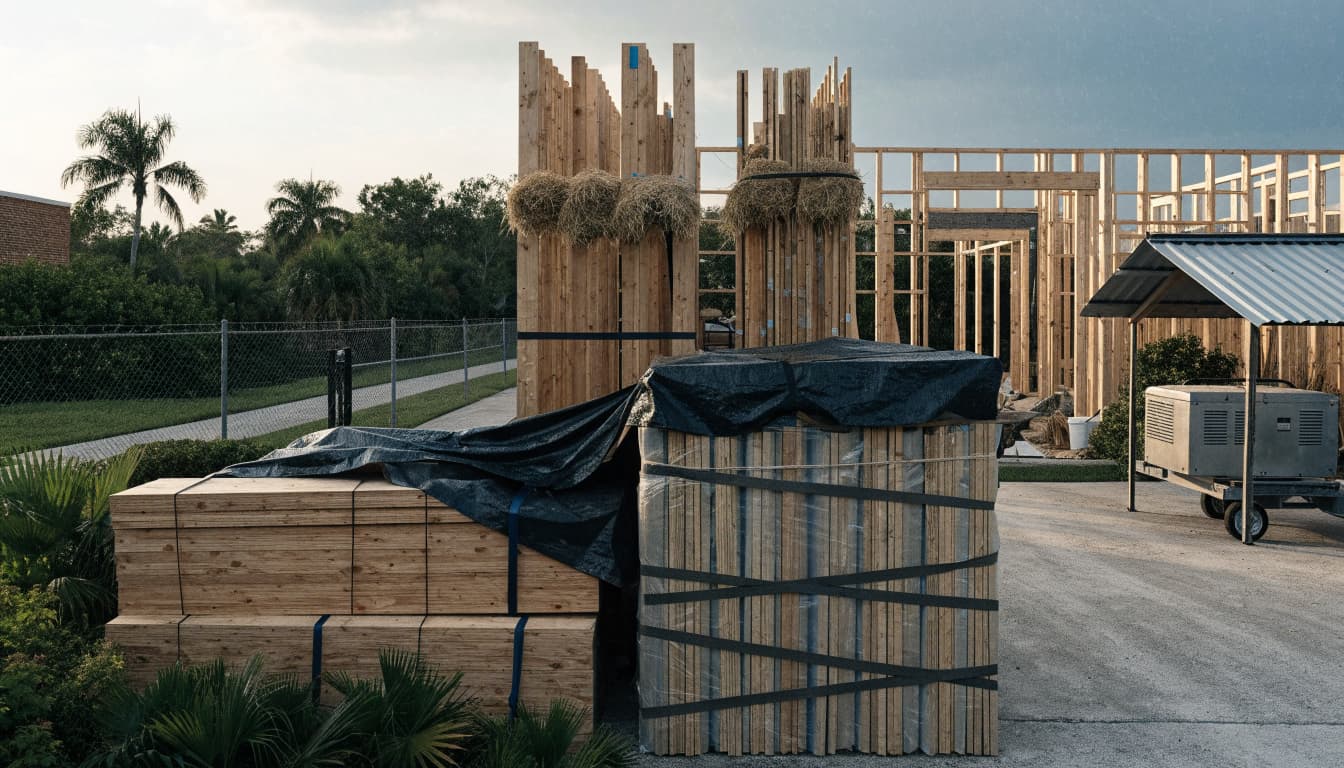
Ask the builder how lumber, roofing supplies, insulation, cabinetry, and other delivered materials will be secured or moved. The right approach depends on the product, its packaging, and where it is stored. Materials meant to stay dry may need an approved protected location, while items at risk of becoming airborne may need to be secured or removed.
Have crews collect loose packaging, scraps, and tools. Secure or relocate temporary fencing, portable toilets, bins, and equipment as the builder directs. Don't move heavy items or materials without permission, since they may be staged for installation or positioned for a reason.
Keep access and drainage in mind
The site should remain accessible to authorized workers while keeping unnecessary visitors out. The builder can decide how to secure gates and temporary barriers without blocking emergency access or creating a new hazard. Keep vehicles out of areas that could become difficult to cross after rain.
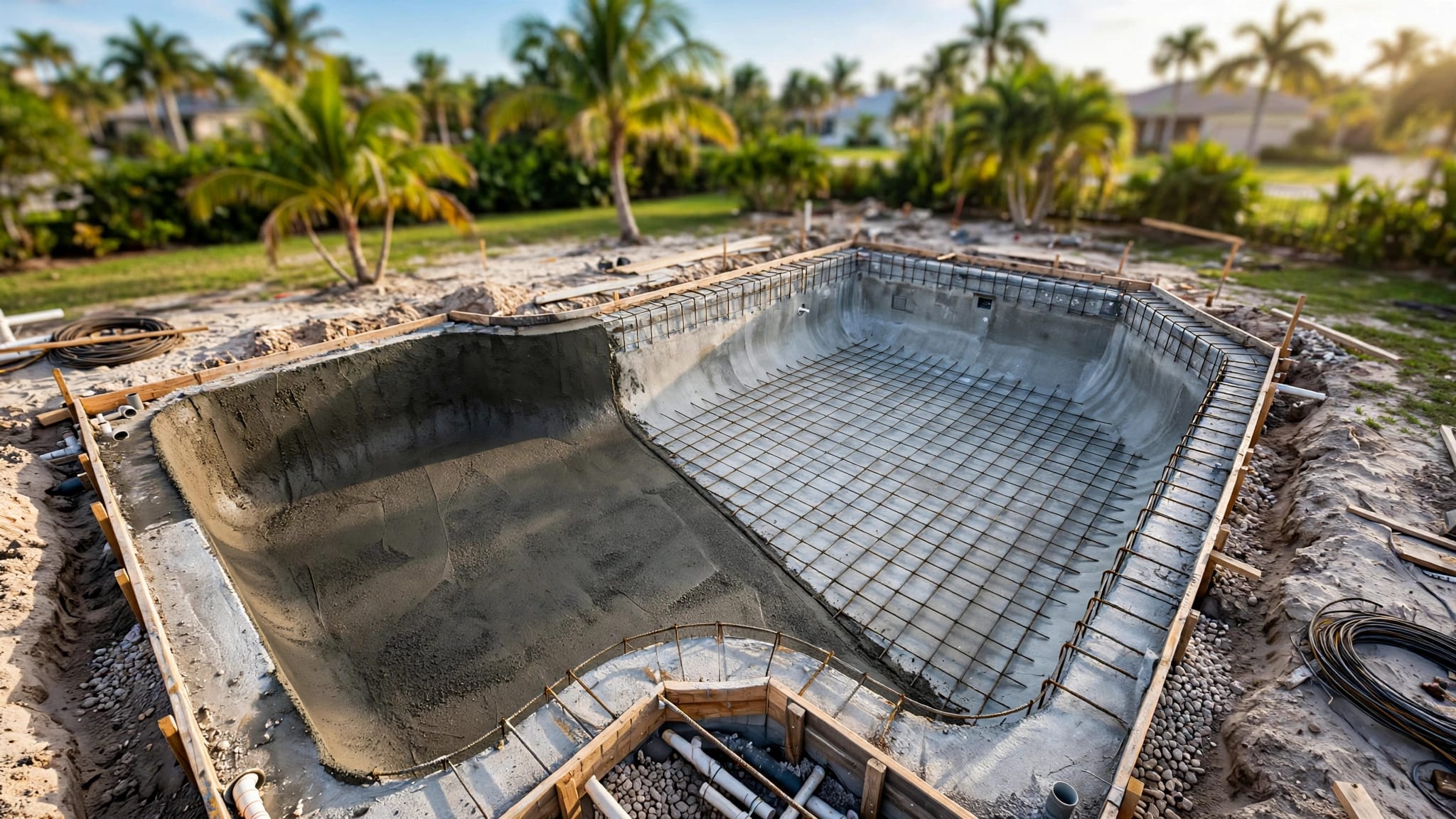
Avoid placing materials where they could obstruct drainage paths or collect runoff. Don't enter excavations or move pumps, electrical equipment, or generator equipment unless the builder has assigned that work to a qualified person. If the project includes a pool or substantial excavation, include those areas in the storm plan.
Document Site Conditions Before Weather Arrives
A dated record helps everyone understand what was complete and what remained exposed before the storm. It can also support communication about damage and the sequence of repairs, although it doesn't replace an inspection or the builder's assessment.
Take clear photos from safe locations
Photograph the exterior from several angles, along with visible roof areas that can be documented safely from the ground. Capture openings, stored materials, fencing, and any existing damage. Inside, take wide photos of rooms and closer images of exposed framing, installed materials, and areas that may be vulnerable to water.
Use a phone or camera that records the date, and save the files somewhere the builder can access. Avoid climbing ladders, walking on unfinished framing, or entering unsafe areas to get a better view. Photos should never take priority over personal safety.
Keep project records together
Save the builder's storm instructions, trade contacts, delivery information, and any records related to site preparation. If a trade confirms completed work or a temporary protection measure, keep that message with the project documents.
After the storm, add photos and notes about when the site was first viewed and who was present. Keep observations factual, such as visible water, displaced materials, or a damaged covering. Don't disturb areas that may need professional assessment.
Plan the First Inspection After the Storm
Wait until local conditions and the builder's instructions make it safe to approach the property. Downed power lines, unstable framing, standing water, sharp debris, and damaged temporary barriers can make an unfinished home unsafe even when the damage looks minor from the road.
Let the builder assess safety and damage
The builder should direct the first site review and coordinate the relevant trades. Depending on the condition of the home, that may include roofing, framing, electrical, plumbing, or other specialists. Don't enter areas with visible structural movement, water around electrical components, or an uncertain floor surface.
Keep the pre-storm photos available for comparison. Report what you can see from a safe location, but avoid lifting coverings or removing debris before the builder gives direction. A temporary cover may be serving a specific purpose, and moving it could expose the structure to more rain.
Restart work in a controlled order
Once the site is safe, the builder can determine what needs attention before work resumes. Some areas may require drying or repair before new materials are installed. Other work may continue after the affected areas are assessed and protected.
The restart plan should account for deliveries, trade scheduling, inspections, and any local requirements that apply. Keep communication centralized through the builder so crews don't work from conflicting instructions.
FAQ
Can an unfinished home serve as shelter during a storm?
No. A construction site may lack completed walls, windows, doors, or roofing, and it can contain hazards that aren't present in an occupied home. Follow local emergency guidance and use an appropriate shelter plan.
Should I cover open windows myself?
Only if the builder approves the method and assigns the work to you. Improvised coverings can fail, damage framing, or create hazards. The builder can coordinate suitable protection with the right trade.
What if the home is far enough along to have a finished roof?
A finished roof reduces some exposure, but it doesn't settle every concern. Openings, penetrations, incomplete exterior work, stored materials, and site drainage still need attention. Ask the builder to assess the whole site.
Should we add a safe room during construction?
A safe room is a design decision, not an automatic requirement for every new home. Discuss household needs and the project design early. Read more about when to include a safe room in new-home plans.
Keep the Storm Plan in the Builder's Hands
The most useful protection plan matches the home's actual construction stage. Clear responsibilities, approved temporary measures, and a safe post-storm inspection can reduce confusion when weather disrupts work.
For a Naples build, coordinate early and follow the builder's direction and applicable local requirements. Protecting an unfinished home starts with knowing what is exposed and letting the right people secure it.