Fort Myers Roof Replacement Signs Your Roof Is Failing
Explore Our Services
Contact Us Today!
(239) 322-9295
A roof rarely fails all at once. Small cracks, loose materials, stains, and persistent leaks often appear first, especially after years of Fort Myers sun, rain, humidity, and high winds.
A Fort Myers roof replacement may be the right answer when damage affects the roof system as a whole. Still, age alone doesn't decide it. A qualified roofing professional should inspect the materials, underlayment, flashing, roof deck, and drainage areas before you choose repair or replacement.
Roof Age Is a Clue, Not a Replacement Deadline
Every roof ages, but homes of the same age can have very different roof conditions. Installation quality, material type, attic ventilation, storm exposure, and past repairs all affect how long a roof performs.
A roof that looks worn from the driveway may only need targeted work. On the other hand, a younger roof with widespread storm damage or failing underlayment may need more than a few replacement pieces.
Florida weather speeds up normal wear
Southwest Florida roofs endure intense UV exposure, heavy afternoon rain, salty air near the coast, and wind-driven debris. Those conditions can dry out shingles, weaken sealants, shift tiles, and wear down flashing long before a homeowner notices a leak.
Humidity also allows algae and moisture to linger on shaded roof sections. That doesn't automatically mean the roof has failed, but it can point to drainage or material concerns that deserve attention.
Inspections look beyond the surface
A professional inspection checks more than visible roof materials. The roofer should examine roof penetrations, valleys, ridge areas, flashing, gutters, soffits, interior staining, and signs of deck movement.
A thorough Fort Myers roof inspection gives you a clear picture of whether repair work can restore performance or whether replacement is the more practical investment.
A few damaged shingles or tiles may be repairable. Repeated failures across different roof areas often point to a system-wide problem.
Tile Roof Warning Signs That Need Attention
Concrete and clay tile roofs are common across Fort Myers because they handle heat well and offer a distinctive appearance. However, tile is only one layer of protection. The underlayment beneath it, plus flashing and fastening, must remain in good condition.
Walk around your home after rain or windy weather and look at the roof from the ground. Binoculars can help, but don't climb onto the roof or walk on tiles. A misplaced foot can crack a tile and create a bigger problem.
Cracked, slipped, or missing tiles
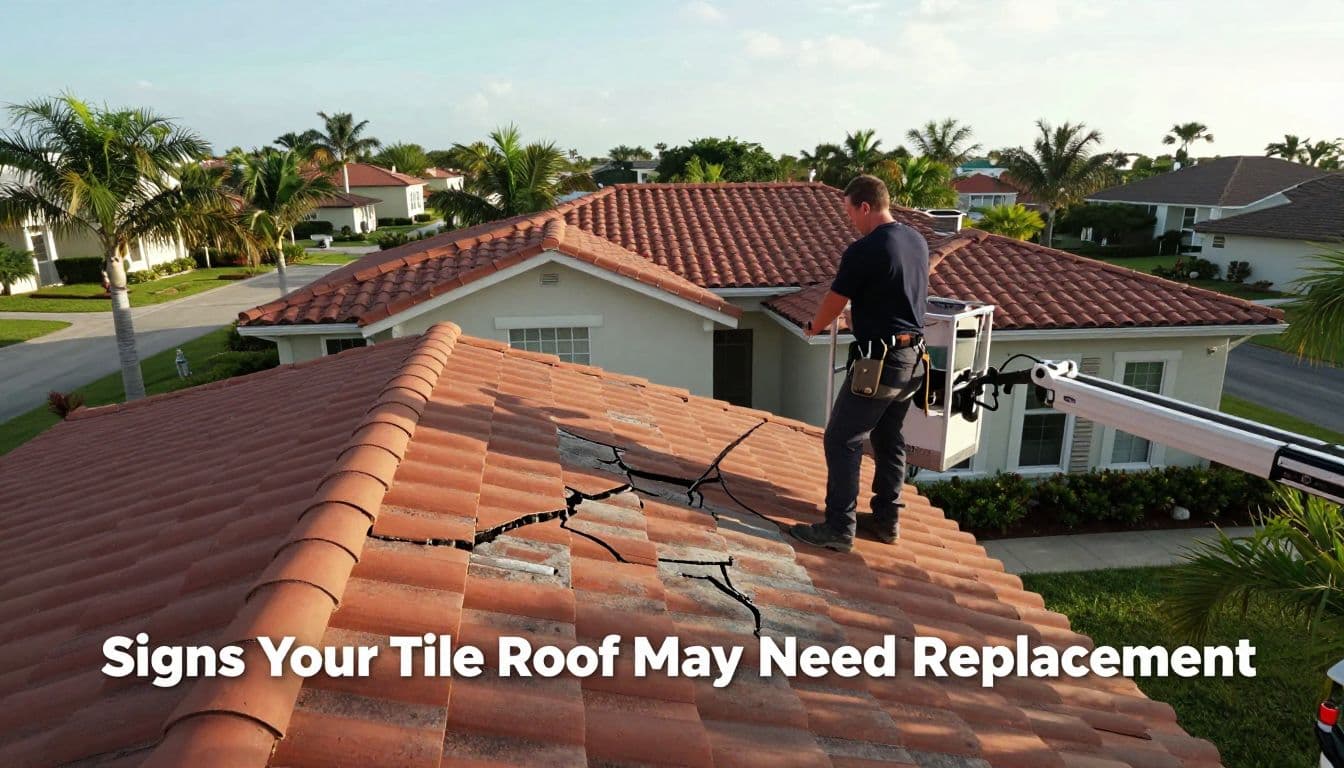
Broken tiles can leave the underlayment exposed to sunlight and rain. A few isolated cracked tiles may result from impact damage, such as a fallen branch. Yet widespread cracking can signal aging material, foot traffic damage, or repeated wind stress.
Slipped tiles are another concern. If a tile no longer sits in line with the rows around it, water can travel beneath it. Missing tiles require prompt professional attention because the layer below was not designed for direct weather exposure.
Underlayment trouble can hide beneath intact tile
Tile may still look presentable when the underlayment has reached the end of its useful life. Interior leaks, stained fascia, deteriorated flashing, or recurring repairs in separate locations can reveal trouble below the surface.
In some cases, removing and reinstalling a few tiles for repairs makes sense. If leaks keep appearing in new areas, replacement may be more cost-effective than repeatedly opening the roof.
Shingle Roof Damage Often Starts Small
Asphalt shingles provide a dependable roofing option when installed correctly and maintained. Still, Florida heat and severe weather can make aging shingles brittle. Once shingles lose flexibility, wind and rain can cause damage quickly.
Look for changes after major storms, but also pay attention during ordinary maintenance. The most useful signs are often visible from the yard, driveway, gutters, or inside the home.
Curling, cracking, and bare patches
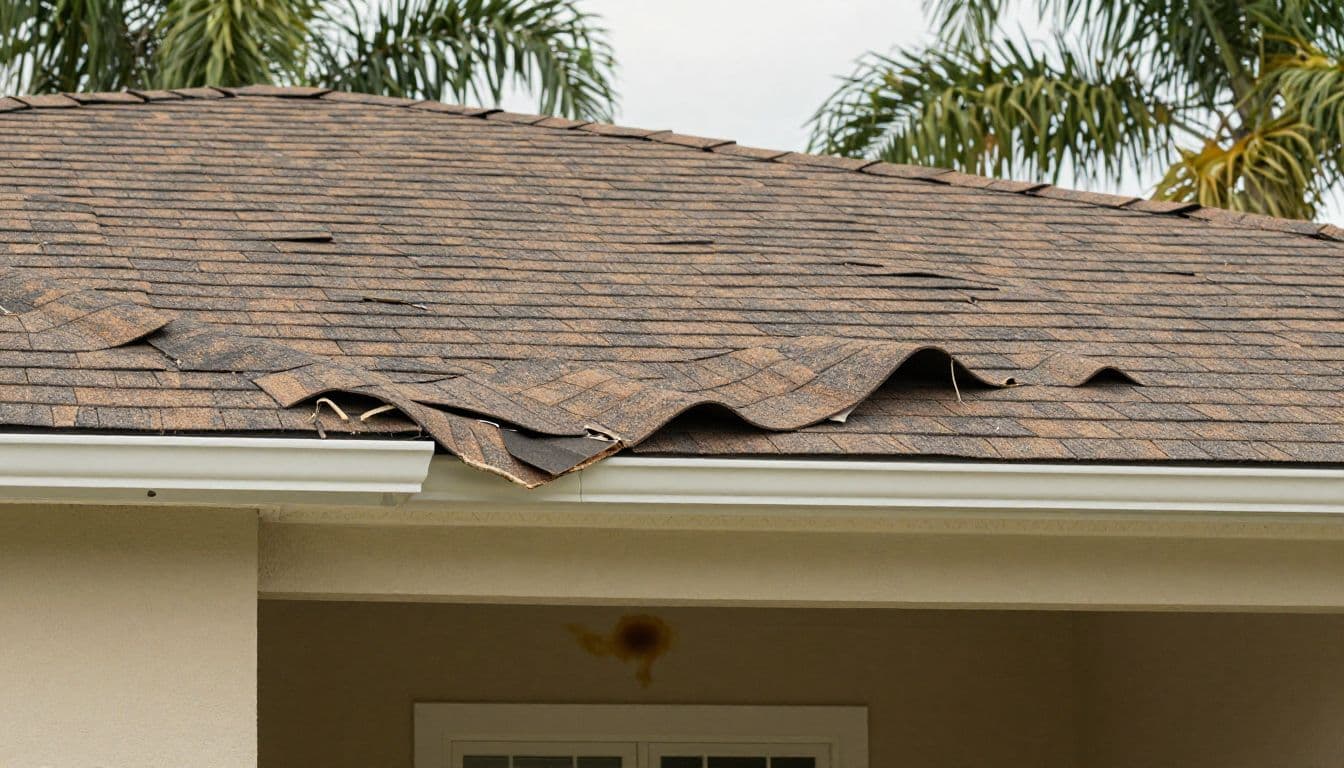
Shingles should lie flat and overlap in a consistent pattern. Curled corners, lifted edges, cracks, or missing tabs create paths for wind-driven rain. Brittle shingles may crack during future storms even if they have not yet blown off.
Dark or bare patches can also show where shingle granules have worn away. Granules protect the asphalt layer from UV exposure. When that protective surface declines across large roof areas, the shingles may be nearing the point where replacement is wiser than spot repair.
Granules in gutters deserve a closer look
Some granule shedding is normal, especially after a new roof installation. However, piles of coarse, sand-like granules in gutters or at downspouts can indicate substantial shingle wear.
A professional should compare that evidence with the roof's overall condition. Granules alone don't settle the question, but they matter when paired with curling, cracking, leaks, or missing shingles.
For homeowners considering material options, Fort Myers shingle roofing services can help clarify what a properly installed replacement involves.
Indoor Clues Can Reveal Roof Leaks
The roof protects your home from above, so indoor symptoms often provide the first clear warning. A ceiling stain may be small, but water can travel along roof framing before it appears inside. The visible spot is not always directly below the source.
Check ceilings, upper walls, closets, and attic access areas after heavy rain. Use a flashlight from a safe, stable location. If the attic floor is not designed for foot traffic, don't enter it.
Ceiling stains, peeling paint, and damp odors
Yellow or brown rings on a ceiling often point to water intrusion. Peeling paint, bubbling drywall, damp insulation, or a musty smell can also indicate moisture has entered the building.
Act quickly when you notice these signs. Water can damage drywall, insulation, framing, flooring, and belongings. Early inspection gives you more options before a small leak grows into an interior repair project.
Sagging needs prompt evaluation
A sagging roofline, bowed ceiling, or soft-looking area can point to damaged decking, long-term moisture exposure, or structural movement. This is not a cosmetic issue.
Keep people away from the affected area and call a qualified roofing professional. Avoid placing ladders against a visibly compromised roof edge, and don't attempt to cover or patch a sagging section yourself.
Flashing, Algae, and Storm Damage Matter Too
Many leaks start at roof transitions rather than in the main field of shingles or tiles. Flashing protects areas around chimneys, vents, skylights, wall intersections, and plumbing pipes. When flashing corrodes, pulls loose, cracks, or loses sealant, water can enter.
Algae growth is common in humid Florida conditions. It can create dark streaks and make tile or shingle surfaces look older. Cleaning may improve appearance, but aggressive pressure washing can damage roofing materials or dislodge components.
Storm damage isn't always obvious
High winds can lift shingles without removing them. Wind can also loosen tile fasteners, bend flashing, drive debris into roof surfaces, and create openings around vents. Hail is less common than wind-driven rain in Fort Myers, but impact damage still deserves an inspection.
After a storm, check the ground for shingles, tile fragments, metal pieces, or debris. Then look for new water spots indoors. If the roof has an opening and rain is expected, request emergency roof tarping in Fort Myers rather than trying to secure a tarp yourself.
Recurring repairs change the calculation
One repair after a fallen branch is different from repeated repairs every season. When leaks return, flashing failures spread, or separate areas need constant attention, repair costs can begin to outweigh a full replacement.
Keep records of invoices, leak locations, and storm dates. That history helps a roofer identify patterns and explain the condition of the full system.
When Fort Myers Roof Replacement Becomes the Sensible Choice
A Fort Myers roof replacement is usually worth serious consideration when deterioration appears across multiple areas. Examples include widespread brittle shingles, repeated tile failures, failing underlayment, ongoing leaks, soft decking, and repairs that no longer hold.
Replacement also gives homeowners the chance to address components that repairs may not fully resolve. Depending on the roof type and condition, this can include deck repairs, new underlayment, updated flashing, improved ventilation, and materials suited to local wind requirements.
Compare the full scope, not one repair invoice
Ask for an inspection that separates immediate repairs from broader replacement needs. A clear proposal should identify damaged areas, explain the recommended work, and describe what happens to flashing, underlayment, roof penetrations, and any compromised decking.
Don't choose solely by the lowest price. Materials, installation methods, permitting, cleanup, and workmanship all affect the roof you will live under for years.
Take safe, practical next steps
Start with a professional assessment if you see damage or suspect a leak. Until then, take photos from the ground, move belongings away from active drips, and place a container beneath water only if it is safe to do so.
Avoid climbing onto the roof, walking on tile, or attempting a temporary repair during wet or windy weather. For localized problems, Fort Myers roof repair may restore protection. When the system shows widespread wear, a replacement plan gives you a more dependable path forward.
A Roof Decision Should Rest on Condition
A roof's age starts the conversation, but its actual condition should guide the decision. Cracked tiles, deteriorating shingles, granule loss, stained ceilings, loose flashing, sagging, moisture problems, storm damage, and recurring repairs all deserve a careful look.
A timely Fort Myers roof replacement can stop repeated water intrusion and protect the rest of your home. The right next step is a qualified inspection that identifies the source of the problem and recommends work that fits the roof you have.