Fort Myers Pool Dewatering Plans for High-Groundwater Lots
Explore Our Services
Contact Us Today!
(239) 322-9295
A pool excavation can look dry in the morning and collect groundwater before the steel crew arrives. On a high-groundwater lot, water control is part of the build plan , not a last-minute pump rental. Fort Myers pool dewatering needs to account for the pool shell, nearby structures, and where the pumped water will go.
If you're planning a gunite pool, ask how the builder will investigate the lot, manage water during construction, and respond if conditions change. Those answers should come before excavation starts.
Why groundwater changes a gunite pool build
Groundwater can enter an excavation through its floor and sides. Rain may add surface water at the same time. Crews need workable conditions for shaping the excavation, placing reinforcement, completing inspections, and applying gunite.
A wet hole affects more than scheduling
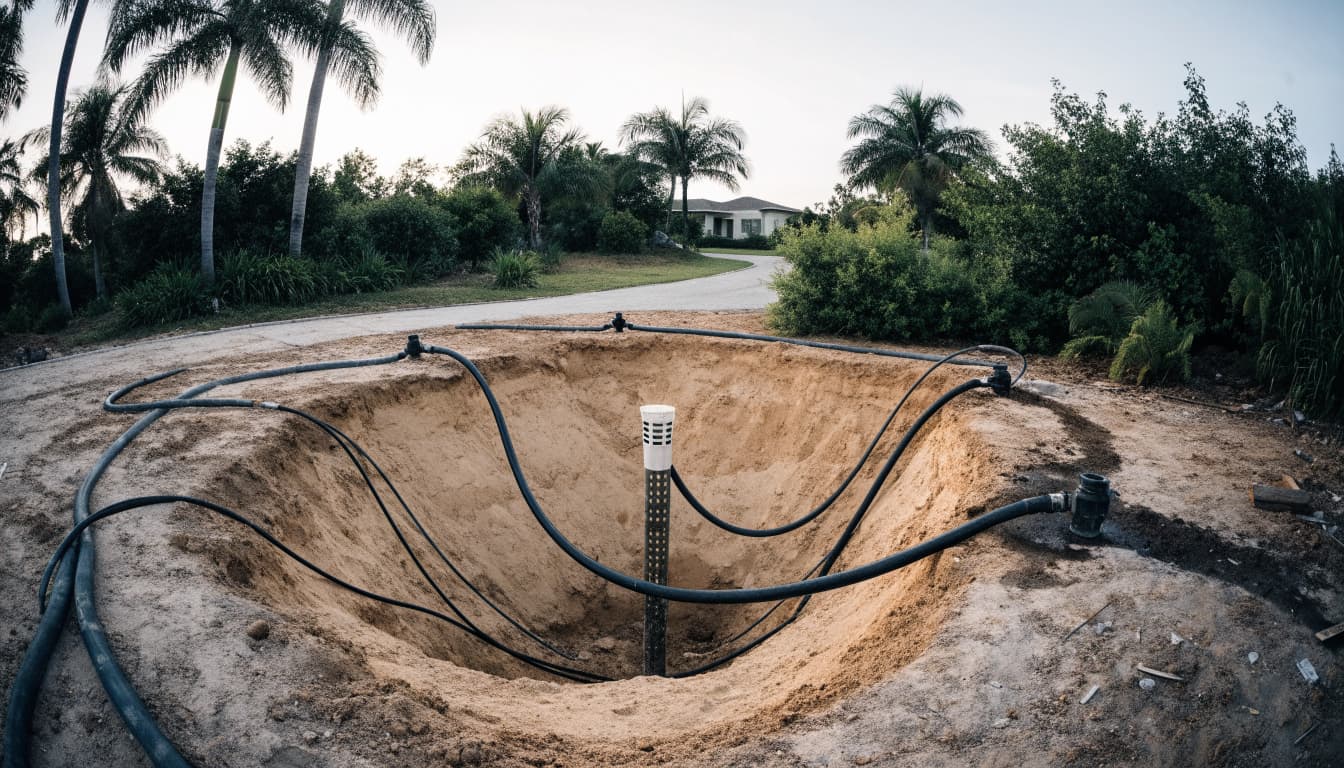
Flowing water can carry sand into the excavation or soften areas that need to support construction. If the crew can't keep the excavation stable, rushing ahead can leave problems hidden beneath the finished shell. The contractor and design professional should decide what conditions must be met before steel placement and gunite application.
Gunite is dry-mix shotcrete applied over reinforcing steel. Its performance depends on the approved structural design, proper steel placement, skilled application, and curing. Pumping alone can't correct a poor excavation or an unsuitable shell design.
Lowering water can affect nearby ground
A dewatering system changes groundwater conditions outside the pool excavation too. On a tight Fort Myers lot, the house foundation, neighboring improvements, deck, utilities, or seawall may be close enough to warrant closer review. Soil movement and settlement are among the risks a qualified professional should assess.
The goal is controlled construction, not the greatest possible drawdown. A plan must consider the soils and nearby structures before anyone decides how or where to pump.
Fort Myers pool dewatering begins with the lot
Two homes on the same street can have different fill, elevations, drainage paths, and excavation conditions. A canal-side property also raises different questions than an inland backyard. No single groundwater depth or pumping duration applies across Fort Myers.
Check elevations, soils, and water conditions
Start with the proposed pool depth and its relationship to the house, swales, easements, utilities, and property lines. The builder should also identify where water collects after rain and whether excavation will encounter fill, loose sand, or other conditions that need investigation.
Lee County maintains hydrological monitoring information and directs readers to South Florida Water Management District data. Those records provide context, but they don't replace an evaluation at the pool location. A qualified professional can determine whether test borings, groundwater observations, or other site work are appropriate.
Give the engineer the complete backyard plan
The pool footprint is only part of the job. Decking, a raised spa, a lanai, and changes to yard drainage can affect the design and construction sequence. If you're building a new home, coordinate the pool with the house foundation and outdoor utilities before either project limits access.
A gunite pool planning and construction process should connect design, permitting, excavation, steel, and gunite work. When unexpected water or soil appears, the contractor should seek direction from the appropriate design professional rather than changing structural details in the field.
Choose a pumping approach that fits the excavation
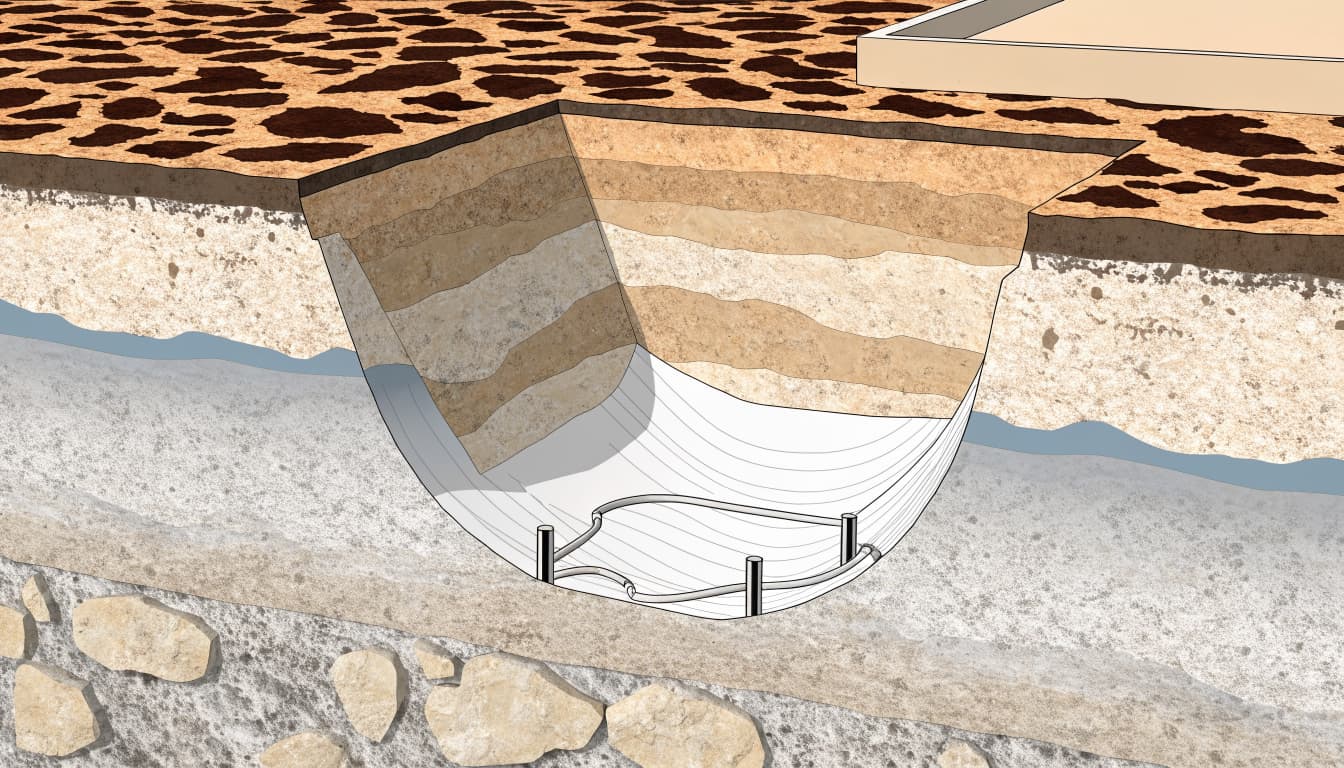
Common temporary approaches include sump pumping from a controlled collection point, wellpoints, and deeper wells. They aren't interchangeable solutions. The choice depends on soil behavior, excavation geometry, expected inflow, access, discharge options, and the effect of drawdown beyond the pool.
Match the method to the soil and neighbors
A sump may collect water entering a suitable excavation, but uncontrolled pumping can draw fine soil toward it. Wellpoints can lower groundwater around an excavation, yet their layout and operation require site-specific design. Deeper wells bring different equipment and influence on surrounding groundwater.
Ask who will select the method and what information supports that choice. On a confined lot, the review should include nearby foundations, seawalls, buried lines, and any structure sensitive to ground movement. Pump placement, capacity, and operating limits belong in the project-specific plan, not in a rule borrowed from another backyard.
Plan for interruptions and rebound
Temporary dewatering has to work through the construction activities that require it. The builder should coordinate pumping with excavation, inspections, steel installation, gunite placement, and the engineer's instructions for later stages.
Once pumping slows or stops, groundwater can rise again. The team needs to understand how that rebound affects the shell and any unfinished work. A contractor shouldn't assume that a newly placed shell or an empty finished pool can safely resist outside water without reviewing the approved design.
Settle the discharge route before the pumps start
Moving water out of the hole creates a second problem: where it can lawfully and safely go. A drainage swale, storm inlet, neighboring yard, or canal isn't automatically an approved outlet. The discharge plan should identify the receiving area, controls, and applicable authorizations before pumping begins.
Confirm the Florida DEP permit pathway
Florida's Department of Environmental Protection (DEP) regulates dewatering discharge. Its guidance discusses both the Dewatering Generic Permit and, where the criteria are met, coverage under the Construction Generic Permit for uncontaminated groundwater. The correct route depends on the operation and site conditions, so the project team should confirm it with DEP.
The DEP dewatering application form calls for a notice of intent at least 14 days before planned discharge and lists a $100 application fee . Eligibility deserves early review, particularly if there may be contamination on or near the property. These details aren't a substitute for checking the current requirements for the actual discharge.
Keep sediment and water on the approved path
A discharge plan should address sediment control and the route water takes across the site. DEP's Construction Generic Permit guidance favors vegetated upland discharge when feasible, with a permitted project stormwater system as another option under its conditions. It also addresses visible floating solids and foam.
Site controls need attention while pumps run, especially after rain changes the flow or sediment load. The contractor should know who checks the outlet, maintains controls, and responds if water reaches an unintended location. Pumping into a convenient street drain without confirming authorization is a poor substitute for that plan.
Coordinate pool permits with the water plan
The pool permit and the dewatering discharge authorization address different parts of the project. Approval to build a pool doesn't automatically settle how construction water may be discharged.
Identify the right building jurisdiction
Properties within Fort Myers city limits follow City of Fort Myers procedures. Unincorporated properties follow Lee County requirements. Lee County requires a permit for an in-ground pool, and its pool guide calls for engineered plans with hydraulic calculations in its paper-submittal instructions.
The City of Fort Myers also requires a pool permit. Its pool checklist calls for a Stormwater User Fee Adjustment Form when a project adds more than 500 square feet of impervious area . Confirm the current submittal requirements for the address, including any site-plan, safety, drainage, or inspection details.
Protect inspection access
A wet excavation can disrupt work that inspectors need to see before gunite covers it. Reinforcing steel and bonding connections must remain accessible for the required inspections. Schedule pumping, inspection requests, and gunite placement together rather than treating each as a separate appointment.
If the excavation exposes conditions that differ from the approved drawings, pause for professional review. A change to support, drainage, or shell details may require revised plans. Keeping that decision visible before gunite placement is better than discovering a problem under the finish.
Monitor conditions throughout construction
A written plan matters only if someone follows it at the site. Monitoring should reflect the chosen system and the risks identified by the responsible professionals. It may include groundwater observations, pump performance, discharge quality, excavation stability, and nearby signs of movement.
Watch the excavation and surrounding property
Crews should report new soil loss, sloughing excavation sides, unexpected sediment in pumped water, or changes near a foundation or seawall. The appropriate response depends on the cause. Increasing pump output without a review could worsen a soil-movement problem.
A dry-looking excavation isn't proof that groundwater conditions have stabilized outside it.
Neighbors and homeowners benefit from a clear point of contact while pumping is underway. If water crosses a property line or a nearby improvement shows distress, work should stop where needed while qualified professionals assess the situation.
Treat an empty pool as a separate risk
High groundwater remains relevant after construction. Draining a completed pool removes water weight that helps counter pressure outside the shell. An empty pool may face uplift or other damage, depending on its design and groundwater conditions.
Don't drain or leave a gunite pool empty based on the dewatering plan used during construction. Before a repair, resurfacing, or long shutdown, have a qualified pool professional assess groundwater, the shell, and any hydrostatic-relief provisions in the approved design.
Budget for site conditions, not a standard pump allowance
Temporary water management can affect equipment, labor, engineering, discharge controls, and schedule. It can also change how crews access the backyard. A quote should identify what investigation and dewatering work it includes, who handles discharge authorization, and how changed conditions will be priced.
Cutting Edge's 2026 Southwest Florida pool cost overview estimates that high groundwater, extra drainage, or structural adjustments can add $3,000 to $10,000 on some lots . That's budgeting context, not a price for your property. A lot beside a seawall or close to another structure may require a different scope.
Compare proposals on the assumptions behind them. An allowance that names the intended method but omits the discharge route, monitoring, or contingency leaves substantial decisions until after excavation.
Key takeaways for homeowners
- Ask for a site-specific dewatering plan that considers soils, nearby structures, the gunite shell, and groundwater rebound.
- Confirm the lawful discharge route and applicable DEP requirements before pumping starts.
- Keep monitoring and inspection responsibilities clear throughout excavation and shell construction.
- Have a qualified professional review unexpected conditions instead of relying on a fixed pumping duration or a standard backyard detail.
Frequently asked questions
Does every Fort Myers gunite pool need dewatering?
No. The need depends on groundwater at the excavation, rainfall, soil conditions, and the pool design. A shallow excavation on one lot may stay workable while a deeper pool nearby requires temporary water control. The builder should evaluate the actual site before choosing a method.
How long will the pumps need to run?
There isn't a reliable universal duration. Pumping may need to support several construction stages, and groundwater can rebound when it stops. The responsible professionals should set operating and shutdown criteria based on site observations and the approved work plan.
Can pool water be pumped into the street?
Don't assume so. The outlet must fit the applicable discharge authorization and site controls. A street inlet, canal, swale, or neighboring property should never become the default route simply because it's close to the excavation.
Can dewatering prevent an empty pool from lifting?
Construction dewatering isn't a permanent guarantee against groundwater pressure. The finished pool's structural design and site conditions govern that risk. Have a qualified pool professional assess an existing pool before draining it, particularly on a lot with known high groundwater.
Build around the water you actually have
That pool excavation that looks dry one morning may change after rain or when pumping stops. Site-specific review gives the builder a way to handle those changes without guessing at the expense of the shell or neighboring property.
Before digging, make sure the pool plans, temporary water controls, discharge route, and inspection schedule agree. Those decisions are easier to make on paper than beside a wet excavation.