Fort Myers Pool Return Jet Placement for Even Circulation
Explore Our Services
Contact Us Today!
(239) 322-9295
A pool can have clear water near the skimmer while debris and algae collect in a quiet corner. That often points to a circulation issue, not a cleaning issue. Pool return jet placement directs filtered water through the basin and helps carry surface debris toward the skimmer.
For Fort Myers gunite pools, there is no one-size-fits-all jet layout. The pool's shape, depth changes, equipment flow, enclosure, and outdoor conditions all affect how water moves. A thoughtful plan starts with the circulation path, not a standard drawing.
Why Pool Return Jet Placement Controls Circulation
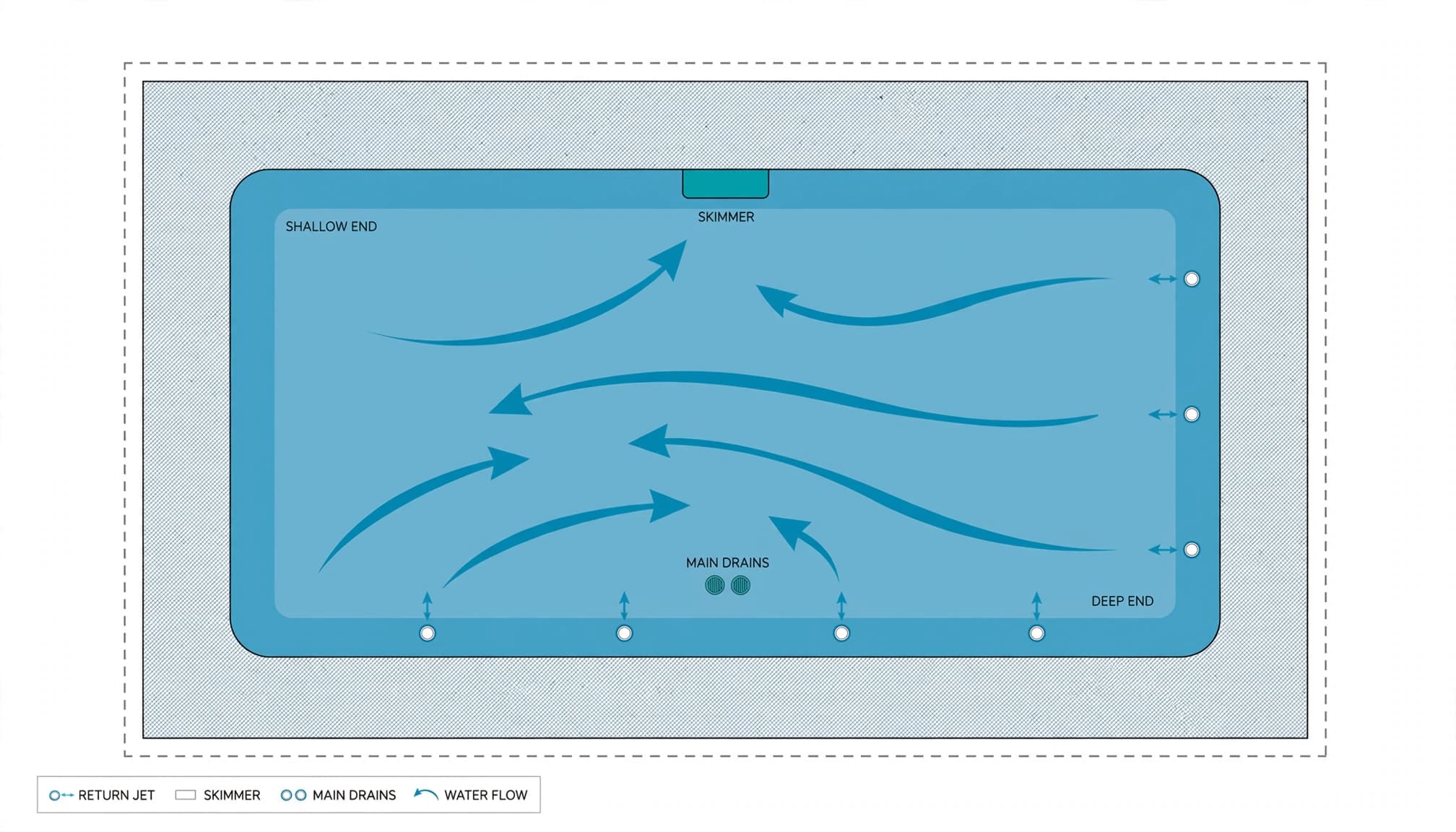
Return jets send filtered water back into the pool. Their location and direction should create a continuous pattern that moves water across the surface and through lower areas without creating strong, uncomfortable currents.
Guide surface debris toward the skimmer
Skimmers work best when surface water travels toward their openings. Returns should generally support that path instead of blasting water directly away from the skimmer or trapping leaves in a far corner.
This matters in Southwest Florida, where pollen, palm debris, insects, and windblown material can reach the water daily. A smooth surface current lets the skimmer capture that debris before it sinks.
Strong jets do not automatically mean good circulation. Water needs a complete route through the pool, not a fast loop through one small area.
Reach steps, benches, and deep areas
Steps, tanning ledges, benches, and tight inside corners can interrupt water movement. These features often need attention during pool return jet placement because they create sheltered pockets where dirt may settle.
Deep ends also behave differently than shallow shelves. A qualified pool professional considers how the returns work with the skimmer, main drain, pump, and filter to keep water moving throughout the pool.
Fort Myers Conditions Change the Jet Layout
A rectangular pool may allow a simple circulation pattern. A freeform pool with a spa, sun shelf, raised wall, or long swim lane needs a more tailored plan. The goal stays the same: balance the flow and reduce stagnant zones.
Shape, depth, and skimmer location come first
A pool's plumbing design should follow the actual vessel. The installer reviews where the shallow end meets the deep end, how water wraps around curves, and whether a bench blocks the natural flow path.
Skimmer location also affects every return decision. If returns point water past a skimmer instead of toward it, surface debris can drift in circles. For custom gunite pool construction, circulation planning belongs in the design stage, before the shell and deck are complete.
Sun, screens, and prevailing conditions matter
Fort Myers sun warms exposed water areas, while shade from a lanai or screen enclosure can create different temperature patterns. A pool cage also changes how breezes move across the water.
Nearby trees, rooflines, and open yard exposure influence where leaves gather. Therefore, a return pattern that works in an open backyard may need adjustment inside a screened lanai. The builder should assess the property's usual wind and debris patterns rather than copying a neighbor's layout.
Plan Return Jets Before Gunite Is Applied
Moving a return after construction can involve opening the pool finish and shell, then repairing the affected area. It is far easier to review the plan while plumbing is accessible and before gunite work begins.
Pool professionals should coordinate the return layout with the equipment pad, suction lines, water features, automation, and anticipated pump output. A higher-flow pump does not fix poor placement. In fact, excessive velocity from a poorly aimed jet can create turbulence while leaving another section untouched.
Match the plumbing to the equipment
Each return line, valve, and fitting affects how much water reaches each opening. A professional can balance those lines during startup and adjust eyeball fittings to refine the direction of flow.
Homeowners should discuss planned additions early. A spa spillway, bubbler, deck jet, or water feature can change circulation and equipment demands. The most reliable layout accounts for those features before crews finish the pool interior.
Keep the finish and structure in mind
Gunite pools allow flexible shapes and custom details, but that flexibility requires careful coordination. Returns must sit where they support circulation without interfering with tile lines, steps, handrails, or future finish repairs.
Pool work often overlaps with lanai, paver, and outdoor kitchen decisions. A coordinated backyard plan avoids conflicts between underground lines, deck drainage, enclosure footings, and equipment access.
Troubleshoot Dead Zones Before Changing Plumbing
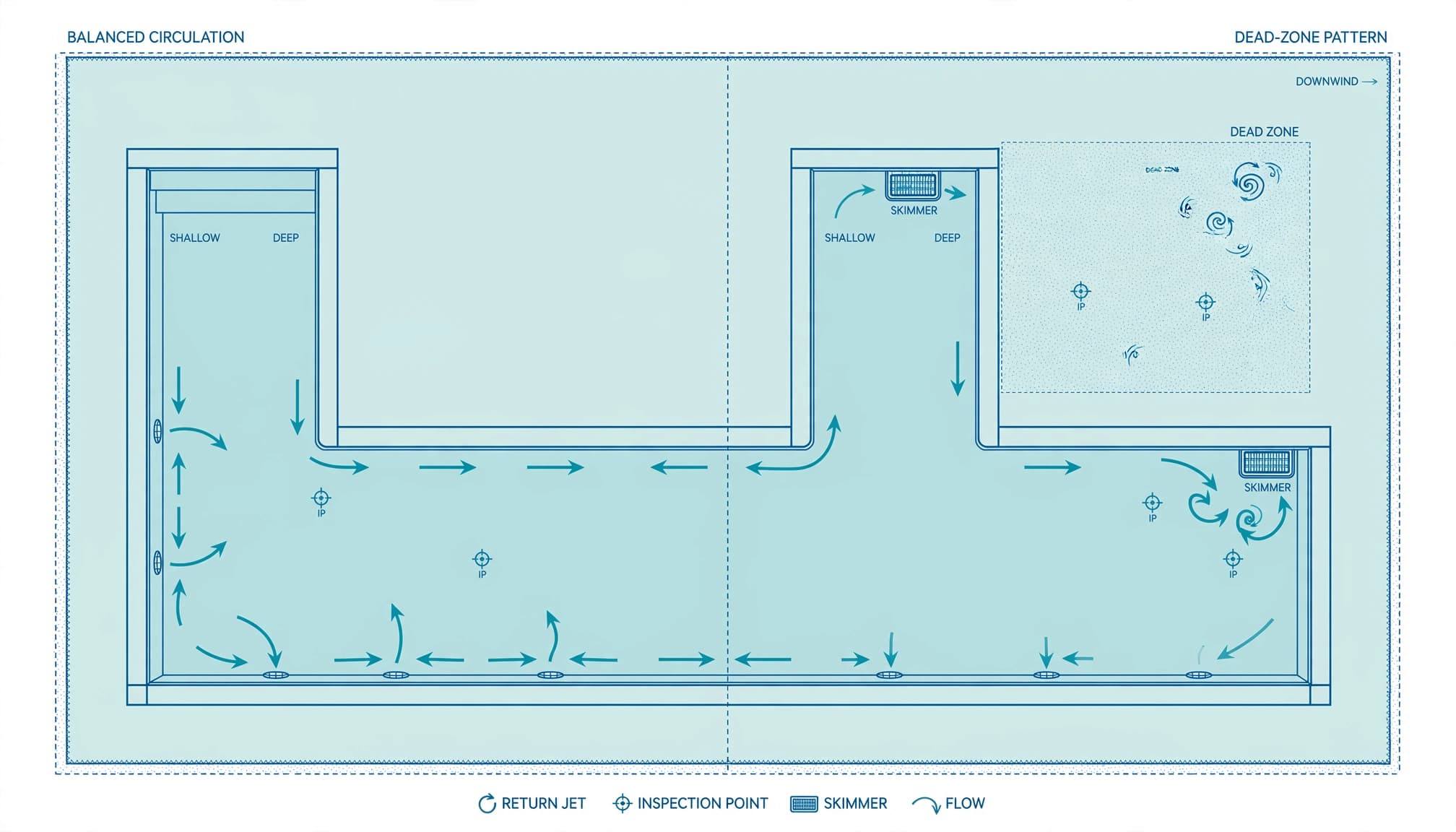
Cloudy water, recurring algae in one corner, leaves that never reach the skimmer, and sediment on steps can all indicate uneven circulation. However, filter condition, pump run time, water chemistry, and clogged baskets can cause similar symptoms.
Start with the simple checks. Empty the skimmer and pump baskets, clean or service the filter as required, confirm the water level supports skimming, and inspect each return for reduced flow. Then observe the water while the pump runs.
Adjust return direction carefully
Many return fittings allow limited aiming adjustments. Pointing one slightly upward can improve surface movement, while another may need a modest downward angle to help circulate lower water. Small changes can alter the entire pattern.
Avoid turning every jet in the same direction without watching the result. Instead, check whether floating debris moves steadily toward the skimmer and whether corners remain calm. Pool return jet placement works as a system, so one adjustment can affect another area.
Know when a professional assessment is needed
Weak flow from one return can point to a valve issue, blockage, plumbing restriction, or equipment problem. Persistent algae in the same location may also call for a circulation review rather than repeated chemical treatment.
During a major update, Fort Myers pool renovation services can address aging fittings, finish damage, equipment changes, and circulation concerns as part of one project. A qualified Florida pool professional should evaluate new construction and any modification that involves plumbing or the gunite shell.
A Balanced Pool Stays Easier to Maintain
Good circulation gives the skimmer a clear job and reduces the spots where debris and contaminants can linger. The strongest plan accounts for the pool's unique shape, depths, skimmer location, outdoor exposure, equipment, and plumbing routes.
For Fort Myers homeowners, pool return jet placement should be part of the pool design conversation from the beginning. A balanced circulation pattern supports cleaner water, more dependable filtration, and a pool that feels better to use every day.