Fort Myers Pool Skimmer Placement for Cleaner Water
Explore Our Services
Contact Us Today!
(239) 322-9295
A pool can have strong equipment and still collect leaves in the wrong corner every afternoon. Smart pool skimmer placement gives floating debris a clear path off the surface before it sinks or settles along the wall.
For Fort Myers homeowners, that path depends on more than the compass. Seasonal winds, return-jet direction, the pool's shape, screen enclosure, and nearby trees all affect how well skimmers work. Plan those details early, before gunite, plumbing, and deck decisions become hard to change.
Pool Skimmer Placement Starts With Circulation
A skimmer pulls in the thin layer of water where pollen, leaves, insects, sunscreen residue, and grass clippings collect. Wind can move that debris, but return jets create the current that keeps it moving toward the skimmer.
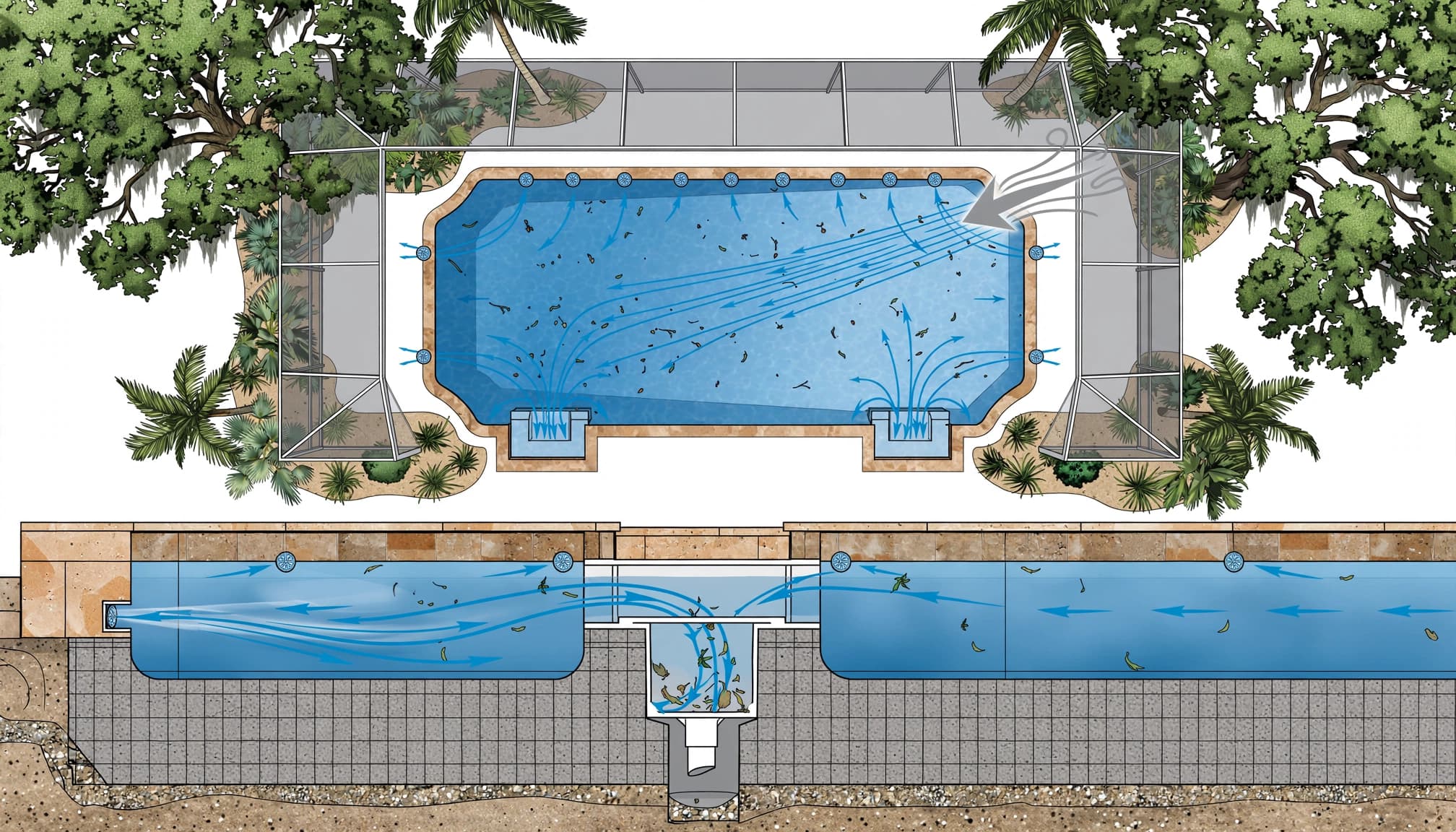
The strongest layouts treat wind and return jets as one system. Returns should push surface water across the pool toward the skimmer side. A jet aimed directly at a nearby skimmer can short-circuit circulation, pulling in freshly returned water while debris remains elsewhere.
Fort Myers winds do not hold one direction
Fort Myers winds are commonly easterly for much of the year. However, winter patterns often shift north, and stronger breezes can change where leaves collect from one season to the next.
WeatherSpark identifies a windier period from late September through mid-May, with March averaging about 9.4 mph. Summer is often calmer, yet afternoon storms can bring sudden gusts and scattered debris.
For that reason, don't place a skimmer solely on the west side because east winds are common. Look at the backyard's actual exposure. A neighboring home, privacy wall, mature hedge, or open preserve can redirect wind more than the regional average does.
Return jets should guide the surface current
A builder can aim wall returns to create a gentle clockwise or counterclockwise surface sweep. In a rectangular pool, returns often work best along the side opposite the skimmers, angled so water travels across the length instead of bouncing into one corner.
Benches, tanning ledges, spa spillways, and water features can interrupt that pattern. Therefore, a good hydraulic plan accounts for each feature before plumbing is installed.
A skimmer works best when the wind assists a planned surface current, not when it is left to fight a return jet.
Match Skimmers to Your Pool Shape and Yard
Gunite gives you freedom to create curves, shelves, and custom waterlines. That flexibility also makes pool skimmer placement more site-specific than it would be in a standard shell pool.
Long rectangles and lap pools need end-to-end movement
A long, straight pool can develop a predictable debris lane. Position skimmers where the dominant surface flow finishes, then use returns to carry water the full length.
If one end faces an open lawn or canal corridor, wind may push leaves across the pool consistently. In that case, the downwind end may be a strong collection point. Still, the plumbing layout should support the choice through both the windier winter months and calmer summer weather.
Freeform pools create hidden collection pockets
Curved walls look natural, but inward curves, shallow coves, and broad tanning shelves can trap floating debris. A skimmer tucked behind a curve may look discreet while missing the area that gets dirty first.
Walk the proposed perimeter with the pool plan in hand. Mark large oaks, palms, bougainvillea, roof valleys, and mulch beds. These sources matter because falling debris usually follows a repeatable route.
A screen cage reduces larger leaves and windblown material, but it doesn't eliminate them. The cage frame, screen panels, and roofline can also alter airflow. During a remodel, changes to a lanai or enclosure should be reviewed alongside the pool's circulation plan.
Plan for Landscaping, Cages, and Everyday Cleaning
Pool maintenance gets easier when equipment placement reflects how you use the yard. A skimmer behind a raised spa wall or beneath heavy planting may be technically reachable, yet inconvenient to empty after a windy day.
Keep baskets accessible without crossing the pool
Place skimmers where you can safely lift the lid, remove the basket, and rinse it without stepping through planting beds or dragging debris across the deck. This matters even more for homes with pavers, outdoor kitchens, or screened living areas.
A clean access route also helps service technicians inspect the lid, weir door, and gasket. For a full backyard project, Fort Myers backyard and lanai design should support pool maintenance instead of boxing it in.
Trees deserve a place in the design discussion
Mature trees add shade and privacy, but seed pods, fronds, blossoms, and leaf drop can overwhelm a poorly positioned skimmer. Don't assume a single trimming visit solves the issue. Seasonal shedding can be as frustrating as a windy week.
When possible, place the primary debris-collection zone away from the heaviest canopy. Also, avoid aiming return jets so they push leaves under a spillway, into a shelf corner, or against a screen wall.
Include Skimmers in New Builds and Renovations
The most cost-effective time to settle skimmer locations is before excavation and plumbing rough-in. A site plan can show doors, deck traffic, cage posts, drainage, shade, and wind exposure together.
For new pool construction in Fort Myers, discuss skimmers and return jets before approving the final shape. Ask where floating debris is expected to travel and how the proposed returns create surface movement.
Remodeling can correct a persistent debris problem
If your existing pool always gathers leaves in one corner, the issue may be hydraulic rather than a cleaning habit. A renovation can evaluate return fitting direction, skimmer condition, added water features, changed landscaping, and pump settings.
Moving a skimmer can involve structural work, plumbing changes, finish repairs, and permitting review. Sometimes re-aiming returns or adjusting circulation provides a practical improvement. Other pools need a larger redesign.
Lee County's pool permitting guide calls for identified suction outlets and inlet covers that meet ANSI/ASME A112.19.8. A licensed pool designer and qualified contractor should review current local requirements, structural details, and circulation safety for the specific project.
Avoid the "Compass Only" Approach
A compass direction offers a useful starting point, but it isn't a complete design. An east-facing pool behind a tall home may behave differently than an exposed west-facing pool near open water.
Before finalizing pool skimmer placement, consider:
- The strongest usual wind direction and winter seasonal shifts.
- The intended route of water from each return jet.
- Curves, ledges, spillways, and corners where debris can stall.
- Screen enclosure airflow, roof runoff, and nearby trees.
- Easy basket access from the deck.
A short on-site review can prevent years of chasing leaves with a pole.
A Cleaner Fort Myers Pool Begins at the Waterline
Good skimmer performance comes from intentional circulation , not a guess based on north, south, east, or west. Wind guides floating debris, while return jets provide the steady push that brings it to the collection point.
When pool shape, landscaping, cage design, and plumbing work together, routine cleaning takes less effort and the waterline stays clearer between service visits.