Fort Myers Roof Valley Design for Heavy Rain
Explore Our Services
Contact Us Today!
(239) 322-9295
A roof valley can move a large amount of rainwater, but it can also become one of the first places to leak. For homeowners and property managers, Fort Myers roof valley design deserves attention during new construction, remodeling, roof replacement, and storm repairs.
The right choice depends on the roof covering, slope, geometry, drainage route, and installation details. Open-metal, closed-cut, and woven valleys each have useful applications, yet none is automatically best for every Southwest Florida property.
Key Takeaways
- A valley is the channel where two sloping roof sections meet and direct water toward the eaves.
- Heavy rain makes correct flashing, underlayment, shingle placement, and roof decking important.
- Wind-driven rain can enter small gaps around valleys, roof-to-wall areas, vents, and other penetrations.
- Open-metal, closed-cut, and woven valleys involve different appearance, drainage, repair, and maintenance considerations.
- Debris should be removed before it blocks water flow or hides damaged materials.
- Valley details should match the approved plans, selected roofing product, and current Florida Building Code requirements.
- A qualified Fort Myers roofing contractor or building official should review project-specific requirements.
How Fort Myers Roof Valley Design Handles Heavy Rain
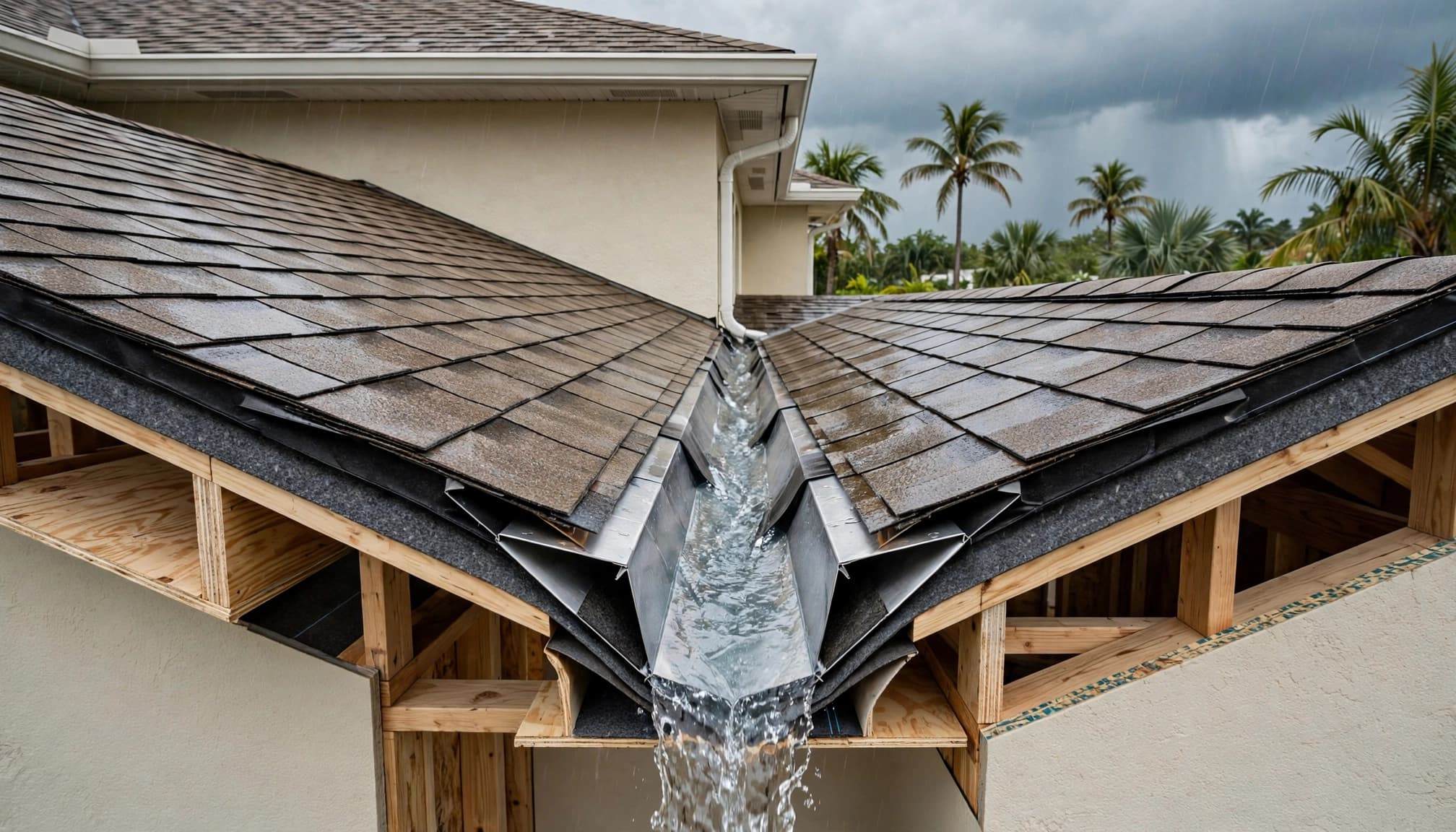
A roof valley gathers water from two roof planes. During a strong storm, that water may arrive quickly, while wind pushes rain sideways beneath exposed edges and laps. The valley must move water toward the gutter or other approved drainage point without allowing it behind the roofing system.
The drainage path matters
A reliable assembly creates a continuous path across the roof surface and through the water-shedding layers below it. Shingles, metal components, underlayment, and flashing should overlap in the direction water travels.
Leaves and palm debris can collect where roof sections meet. If the valley becomes blocked, water may slow down, back up beneath shingles, or spill toward roof edges and walls. Regular visual checks help property owners identify buildup before the next major storm.
The valley also needs a clear outlet. A well-built channel cannot perform properly if gutters, downspouts, or lower roof sections restrict the water leaving it.
The layers below the shingles matter
The roof covering is only the visible part of the system. Underlayment provides an additional water-shedding layer, while flashing protects transitions and vulnerable edges. The roof deck supports those materials and must remain sound enough for proper installation.
Swollen, cracked, delaminated, or loose decking can create problems that remain hidden until a leak or storm exposes them. For a replacement or new home, review the deck, underlayment, and flashing together instead of treating the valley as an isolated strip of roofing.
Open-Metal, Closed-Cut, and Woven Valleys
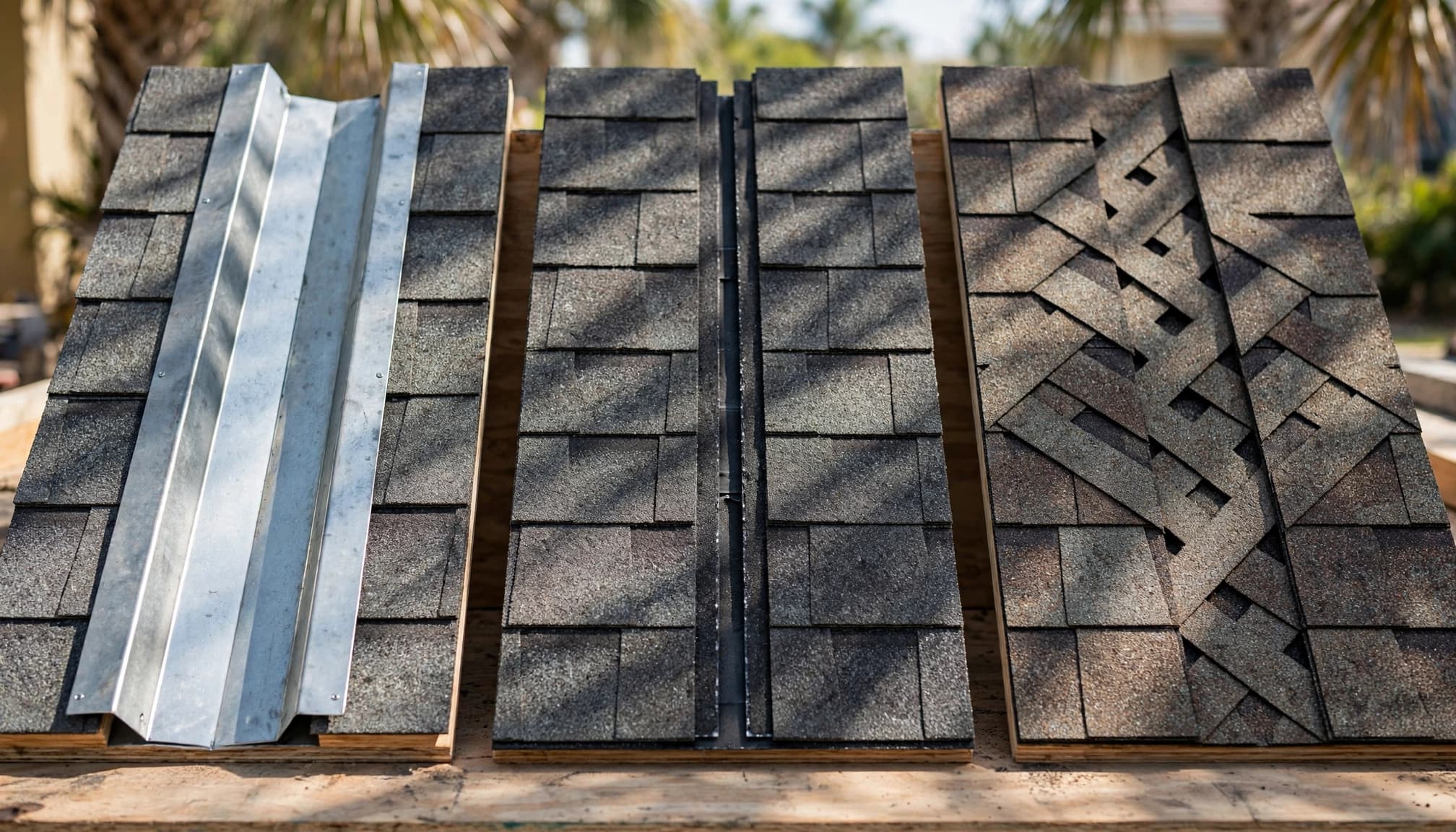
Asphalt shingle roofs commonly use open-metal, closed-cut, or woven valley approaches. The best selection depends on the roof layout, manufacturer instructions, drainage needs, appearance, maintenance plan, and contractor's installation method.
Open-metal valleys
An open-metal valley leaves a visible metal channel between the shingle courses. The metal forms a defined surface for water, and the open area makes the valley easier to see during inspections.
This design can suit roof sections that receive concentrated runoff or need a clearly defined drainage route. It may also make leaves and other debris easier to spot. However, the metal must be compatible with the roofing system and installed with careful attention to laps, fasteners, edges, and transitions.
Appearance is another consideration. Some homeowners prefer a less visible valley, while others value the clear separation and serviceability of exposed metal. Coastal exposure, compatible finishes, and approved product details also deserve review.
Closed-cut valleys
A closed-cut valley uses shingles that meet across the valley, with one shingle plane cut in a relatively straight line. The finished roof has less visible metal and a more continuous shingle appearance.
This approach can work well when the roof covering manufacturer permits it and the installer maintains consistent cuts, fastening, and underlayment protection. The cut edge must direct water correctly and avoid creating openings where wind-driven rain can enter.
Because less metal remains visible, damage or debris at the valley may be harder to notice from the ground. Inspectors should examine the shingle edges, exposed fasteners, flashing, and nearby underlayment during a close review.
Woven valleys
A woven valley interlaces shingles from both roof planes across the meeting point. This produces a shingle-covered appearance and avoids a prominent exposed metal channel.
Woven installation requires careful alignment and consistent shingle placement. Roof geometry, shingle type, slope, and manufacturer instructions can affect whether this approach is suitable. If shingles are not placed correctly, the valley may develop uneven surfaces or weak points.
Maintenance also matters. Debris can settle between shingle courses, and repairs may require removal of more surrounding material. A property manager should ask how the contractor will inspect and repair the valley after storm damage.
Details That Reduce Leak Risk
Valley performance depends on more than the visible finish. During a roof replacement, ask the contractor to describe how the valley connects with the rest of the roof assembly.
Coordinate flashing and underlayment
The underlayment and flashing should work as one drainage system. Upper layers should shed onto lower layers, rather than ending behind them. That principle applies where the valley meets roof edges, ridges, walls, vents, skylights, and other penetrations.
The selected detail may include a secondary water barrier, but that feature is system-specific. It is not automatically required in the same form for every Florida home. Project scope, permitted plans, product instructions, and current code requirements control the final approach.
Cutting Edge Homes & Renovations lists Fort Myers roof installation services that include underlayment, flashing, roof decking, inspections, and hurricane-resistant roofing systems. Those components should be discussed together when planning a new roof.
Match the detail to the roof covering
An asphalt shingle valley should not be treated the same way as a tile or metal roof valley. Tile systems may require specific underlayment, flashing, support, and tile placement details. A repair that works for shingles may damage another roof covering or interrupt its drainage path.
The roof's shape matters too. A valley that receives runoff from a large upper section may need a different approved detail than a small decorative valley. Roof height, exposure, openings, and wind design can vary by property, so generic hurricane assumptions are not enough.
What Fort Myers Owners Should Inspect
A valley inspection should look beyond the point where the shingles meet. The roof surface, lower edges, gutters, attic area, and interior ceiling can all provide clues.
Look for visible warning signs
Check for separated or missing shingles, lifted edges, exposed fasteners, rusted or damaged metal, cracked sealant, and debris lodged in the valley. Stains on ceilings or walls may indicate water entry, although the interior mark may not sit directly below the source.
After heavy rain, look for overflowing gutters, water collecting near the valley outlet, or damp areas in an attic. Wind-driven rain can reach roof-to-wall areas and penetrations as well as the valley itself.
Avoid walking on a wet roof or attempting a high roof inspection without proper equipment. Ground-level photographs can help document a concern for a qualified professional.
Request an inspection after storms
A roof can look acceptable from the driveway while still having damaged flashing, compromised underlayment, or loose materials. A professional inspection examines roof materials, structure, integrity, possible leaks, weather damage, and remaining service life.
For a new roof, an inspection at the appropriate construction stage can identify problems before shingles, tile, or other coverings hide the work. For storm documentation, a Fort Myers wind mitigation inspection may provide broader information about roof and exterior features related to wind uplift and water intrusion.
Repair, Replacement, or Temporary Protection
A valley leak does not always mean the entire roof needs replacement. The correct response depends on the condition of the covering, deck, flashing, underlayment, and surrounding roof sections.
When targeted repair may work
A contractor may recommend localized work when damage is limited to a small area and the surrounding assembly remains serviceable. Possible repair areas include damaged shingles, valley metal, flashing, sealant, underlayment, or roof decking.
Matching older shingles can be difficult, especially after years of sun exposure. The repair should also address the source of the leak instead of covering the visible stain with surface sealant.
For missing shingles, damaged flashing, storm impact, or an active leak, Fort Myers roof repair can help identify whether a focused repair is practical.
When temporary protection is needed
If a storm opens the valley or exposes the roof deck, rain can cause additional damage before permanent work begins. A properly installed temporary covering can reduce water entry while the roof is evaluated and repaired.
Do not treat a tarp as a permanent valley repair. It must be secured without creating new punctures or directing water into another opening. After severe weather, emergency roof tarping may help protect the home while a contractor develops a permanent solution.
Frequently Asked Questions
Which roof valley design is best for heavy rain?
No single design is best for every Fort Myers roof. Open metal provides a visible drainage channel, while closed-cut and woven valleys provide more shingle coverage. The roof shape, covering, approved installation details, debris exposure, and maintenance plan should guide the selection.
Can a roof valley prevent every leak?
No roofing detail can remove every risk. Proper design and installation can improve water shedding, but wind-driven rain, storm debris, aging materials, damaged decking, clogged drainage, and nearby penetrations can still cause problems. Regular inspections remain important.
Should a valley be inspected before a roof replacement?
Yes. The contractor should review the existing valley, roof deck, underlayment, flashing, gutters, and connected roof sections before finalizing the replacement plan. New construction plans should identify the roof assembly and provide the details required for the permitted project.
What should property managers document?
Record the valley's condition, visible debris, damaged shingles or metal, interior stains, dates of storms, and photographs taken from safe locations. Keep inspection reports, repair proposals, permits, and maintenance records with the property's roof documentation.
Conclusion
A dependable Fort Myers roof valley moves water quickly, limits opportunities for wind-driven rain to enter, and remains accessible enough for inspection and maintenance. Open-metal, closed-cut, and woven designs can each work when matched to the roof system and installed correctly.
Before building or replacing a roof, ask for a clear explanation of the valley, underlayment, flashing, decking, and drainage details. Confirm project-specific requirements with a qualified local roofing contractor or building official, because careful detailing matters more than choosing a design by appearance alone.