Fort Myers Roofing Estimate Guide: Compare Costs With Confidence
Explore Our Services
Contact Us Today!
(239) 322-9295
A roof estimate can look simple until you place two bids side by side. One Fort Myers roofing estimate may appear thousands less, yet omit permits, rotten decking, underlayment, disposal, or final inspections.
Southwest Florida roofs face intense heat, wind-driven rain, salt air near the coast, and hurricane exposure. A useful estimate accounts for those conditions in writing, so you can compare the complete job instead of a low starting number.
Use each proposal as a scope-of-work document, not a price tag.
How to Compare a Fort Myers Roofing Estimate Fairly
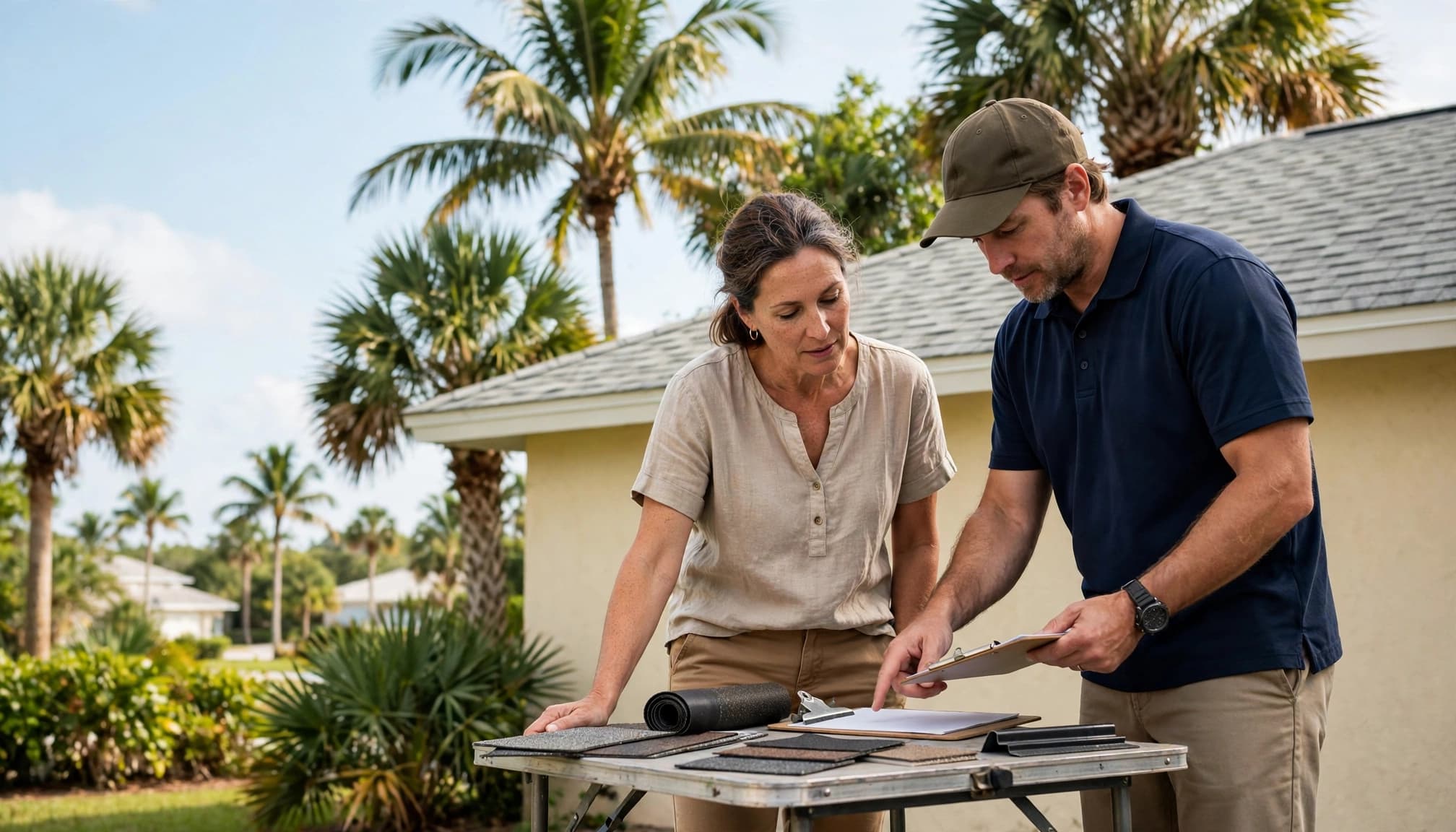
Ask every contractor to price the same roof size, material category, tear-off method, and permit responsibility. If one quote calls for a full tear-off while another covers an existing roof, the totals don't describe the same project.
A complete estimate should identify the roof sections included, such as the main roof, porch, garage, low-slope areas, valleys, penetrations, and flashing transitions. It should also state whether the contractor measured the roof or based pricing on county property records.
Look for matching quantities and work descriptions
Compare the number of roofing squares, with one square equal to 100 square feet of roof surface. A contractor should allow for waste created by hips, valleys, dormers, steep slopes, and material cuts.
Also compare the stated work around vents, skylights, chimneys, solar equipment, and wall flashings. These small lines often separate a thorough proposal from one that leaves expensive work for later.
A clear scope should state:
- Whether the old roof covering will be removed or covered.
- The material and thickness of the underlayment.
- The type of new flashing, drip edge, ridge cap, and ventilation.
- The allowance for damaged decking and the cost per sheet if replacement is needed.
- Who handles cleanup, magnetic nail sweeping, and debris removal.
Put every bid into one comparison table
A short table helps reveal omissions before you sign a contract.
| Estimate item | Bid A | Bid B | What to confirm |
|---|---|---|---|
| Roof covering | Brand, product line, color, and approved installation method | ||
| Tear-off | Number of existing layers removed | ||
| Underlayment | Product type and coverage area | ||
| Decking repair | Included allowance and per-sheet price | ||
| Permit and inspections | Contractor responsibility and fee treatment | ||
| Disposal | Dumpster, hauling, and landfill charges | ||
| Warranty | Workmanship term and manufacturer coverage |
A lower bid can be accurate, but only if its written scope matches the work included in the higher bids.
Labor Costs Depend on the Roof's Real Condition
Labor is more than the crew installing shingles, tile, or metal panels. It includes site protection, tear-off, deck preparation, material handling, flashing details, cleanup, and supervision.
A simple rectangular ranch roof often takes less labor than a roof with multiple valleys, steep sections, a pool cage, solar panels, or tight side-yard access. Those conditions don't make a bid unfair. They should be listed and priced clearly.
Tear-off and site protection should be visible
Removing an old roof takes time, especially when crews must protect landscaping, pool decks, gutters, exterior finishes, and air-conditioning equipment. Ask how the contractor will stage materials and contain debris.
Some homes have two layers of old roofing. Others have heavy tile that requires different removal methods. The estimate should state how many layers are included and what happens if the crew finds more than expected.
If a proposal says "tear-off included" but gives no detail, request a written clarification. Vague language creates room for disputes after materials arrive.
Decking repairs and access can change the price
Roofers can only confirm the deck's condition after removing the old cover. Water stains, soft plywood, termite damage, or missed fasteners may require repairs before new materials go down.
Ask for both the included decking allowance and the unit price for additional sheets. You should also ask how the contractor documents added work. Photos and a signed change order create a clean record.
Access matters, too. A waterfront lot, narrow driveway, screened pool area, or limited space for a dumpster can increase setup time. A dependable Fort Myers roofing estimate explains those site limits before work begins.
Compare Materials as a Complete Roof System
A roof's visible surface matters, but it isn't the only material protecting your home. Underlayment, fasteners, flashing, sealants, vents, and edge metal all affect water control and wind performance.
For replacement work, review professional residential roofing installation details with the contractor before choosing a material. The written estimate should name the system components instead of relying on a general phrase like "high-quality materials."
Match the roof covering to the home and budget
Architectural asphalt shingles remain a common choice because they offer broad color options and a lower initial cost than many tile or metal systems. However, product grade and approved fastening details vary.
Metal roofing can offer long service life and a clean appearance, yet it may cost more upfront and requires careful flashing at penetrations. Tile has a distinctive Florida look, although its weight, breakage risk, and labor needs can affect the proposal.
Don't compare materials by brand alone. Confirm the exact product line, color, warranty category, accessories, and whether the system fits your roof's slope and structure.
Ask about underlayment, flashing, and wind pressures
Lee County roofing application materials require proposed products to meet the applicable Florida Building Code design-pressure requirements. Ask the contractor to identify the product approvals and fastening method included for your roof.
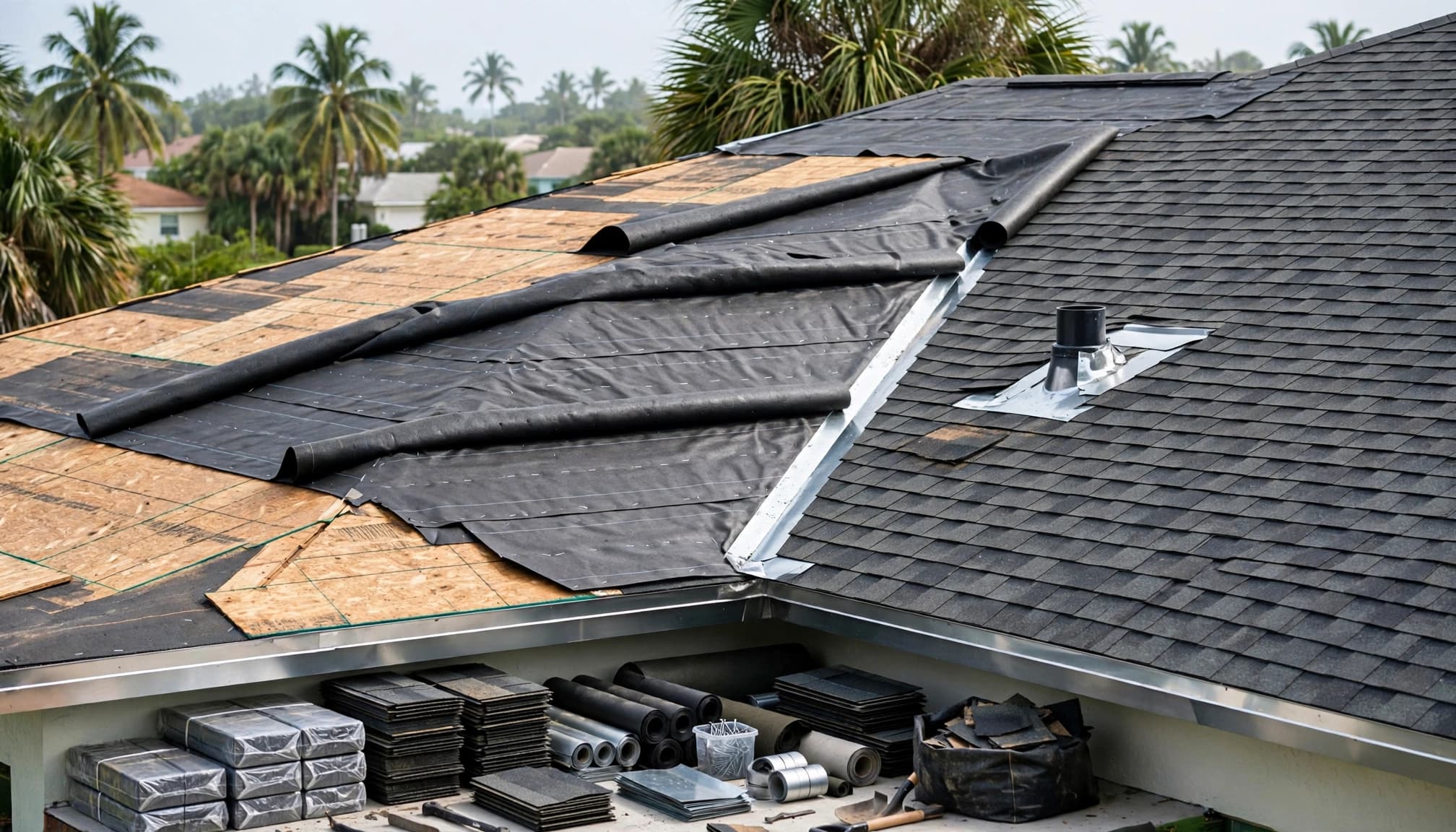
Underlayment deserves close attention because it becomes the water barrier beneath the covering. The estimate should describe its type and where it will be installed, especially around valleys, eaves, roof-to-wall transitions, and penetrations.
New flashing around chimneys, vents, skylights, and walls should be part of the scope. Reusing old flashing may appear cheaper, but it can leave weak points in an otherwise new roof.
Permits, Code Compliance, and Inspections in Fort Myers
Permit responsibility belongs in writing. As of September 2026, Lee County's roof guidance states that a permit is required to replace, repair, or re-cover a roof on an existing structure.
First, determine the property's jurisdiction. Homes within Fort Myers city limits follow the City of Fort Myers Building, Permitting & Inspections process, which uses the EnerGov Customer Self Service Portal for permits, status, and fee payments. Unincorporated properties follow Lee County Building and Permitting Services procedures.
Confirm who pulls the permit
Your contract should state who prepares the application, pays permit fees, responds to plan-review questions, schedules inspections, and closes the permit. A contractor's estimate may include permit fees, list them separately, or exclude them. Any approach can work when the document is clear.
Fee schedules and filing procedures can change. Before signing, verify the current requirements with the City of Fort Myers or Lee County office that governs your address. Fort Myers can be reached at permits@fortmyers.gov or 239-321-7925. Lee County Building and Permitting Services lists 239-533-8329 for roofing permit questions.
Older homes may require roof-to-wall review
Lee County's roof replacement guidance includes an added consideration for structures permitted before 1995 with a building value above $300,000. Under Florida Building Code Section 706.8, roof-to-wall connections may be required unless qualifying connectors are already present or a permitted exemption applies.
The county guidance allows an eligible professional to document existing connectors or establish that installation would exceed 15% of the roof value. If neither condition applies, the work may require a separate residential mitigation permit, with the reroof handled as a subpermit.
This is the kind of code item that can change scope after an initial inspection. Ask the contractor to address it early rather than treating it as a surprise.
Find the Hidden Costs Before Work Starts
No estimate can predict every concealed condition. Still, a good proposal sets rules for how those costs will be identified, approved, and billed.
Disposal is a common blind spot. Roofing debris may require a dumpster, hauling, landfill charges, protective driveway materials, and extra labor to carry materials where trucks can't reach. Local disposal rates vary, so request a clear included amount or a stated allowance.
Require written change-order terms
A change order should describe the newly found condition, the repair method, added labor and material cost, and any schedule impact. Don't accept open-ended language that allows added work without your approval.
Common change-order triggers include:
- Rotten decking found after tear-off.
- Damaged fascia, soffit, or roof framing.
- Additional layers of existing roofing.
- Code-required upgrades identified during review.
- Flashing or structural repairs around chimneys, skylights, or walls.
Photos should support deck repairs and other concealed conditions. That documentation also helps if you need to discuss the work with an insurer or future buyer.
Read workmanship and manufacturer warranties separately
A manufacturer warranty generally covers eligible product defects. It doesn't replace the contractor's workmanship warranty, which covers installation-related issues under its written terms.
Ask how long the workmanship coverage lasts, who performs repairs, and whether transfer rules apply if you sell the home. Keep the signed contract, permit records, inspection approvals, invoices, photos, and warranty documents together.
A post-installation roof condition assessment can also help homeowners who want an independent review of a new roof's visible workmanship and condition.
Handle Storm Damage Without Rushing the Estimate
After a tropical storm or hurricane, protect the home first. Water entering through exposed decking or missing shingles can damage ceilings, insulation, flooring, and electrical systems within hours.
If the roof has an active opening, temporary protection may be needed before a full replacement decision. Take dated photos from safe locations, save receipts, and record all conversations about emergency work.
Separate emergency work from permanent repairs
A tarp, temporary patch, or water-removal service is different from a permanent roofing contract. Ask for separate paperwork so you can see what each service costs and what it accomplishes.
Insurance policies differ, so review your own deductible, reporting deadlines, exclusions, and claim requirements. Contact your carrier before authorizing major repairs when practical, but don't delay reasonable steps needed to prevent further damage.
Avoid pressure after a storm
Storm conditions can make homeowners feel trapped by the first available bid. A qualified contractor should still provide a readable scope, licensing and insurance information, material choices, permit plan, and change-order terms.
If the roof needs immediate stabilization, handle that first. Then compare permanent replacement proposals once the home is protected and the damage is documented.
Make the Final Decision on Scope, Not Price Alone
The strongest Fort Myers roofing estimate gives you a shared plan for labor, materials, permits, inspections, disposal, and unexpected repairs. It also shows how the contractor will meet local code requirements and protect your property during construction.
Choose the proposal that answers your questions in writing and makes costs traceable. A roof is too important to buy as a single number, especially in Southwest Florida weather.