


Why does framing feel like it "shouldn't cost that much," until the first real bids show up? Because framing is the house's skeleton, and in Southwest Florida, that skeleton has to stand up to heat, humidity, and hurricane wind loads.
For 2026 budgeting, most southwest florida framing costs fall into a wide but usable range, depending on roof design, wall heights, wind requirements, and how "custom" the plan really is. This guide breaks down realistic price bands, shows example totals by home size, and calls out the line items that usually cause surprises.
What "framing" includes in a 2026 Southwest Florida build
In new construction, framing is more than studs and a roof shape. A typical framing scope in SWFL usually includes the wall framing package (interior and exterior), roof system (often trusses), roof and wall sheathing, fasteners, hardware, and the labor to assemble it all.
It may also include engineered components that show up on your plans, like LVL beams, hangers, hold-downs, and special connectors. On some homes, the framer also installs fascias, lookouts, and extra blocking that later trades need (for cabinets, shower glass, or heavy fixtures).
What framing often does not include: roof covering, windows and doors, spray foam, drywall, soffit finish, and specialty steel (unless listed). That's why one bid can look "cheaper," yet leave out key pieces you assumed were part of the frame.
The table below gives practical 2026 ranges for a typical SWFL single-family home with an average plan, average wall heights, and no extreme roof features.
| Framing cost category (2026 SWFL) | Typical range ($/sq ft of conditioned space) | What tends to drive it |
|---|---|---|
| Labor | $6 to $11 | Crew availability, schedule pressure, wall heights, second-story work |
| Materials | $6 to $10 | Lumber package, trusses, sheathing thickness, connectors and straps |
| Total framing budget | $12 to $21 | Complexity, wind-load details, roof geometry, equipment needs |
Most homeowners are surprised by how quickly hardware adds up. In SWFL, metal connectors, straps, and fastening schedules often matter as much as lumber.
2026 framing cost examples by home size (trusses vs. stick-built roof)
Price per square foot is a helpful starting point, but your roof shape and story count can swing totals hard. A simple truss roof installs faster than a stick-built roof with multiple valleys and hips. Meanwhile, a two-story home can add labor time, staging, and equipment even if the square footage stays similar.
To keep the examples realistic, the table below assumes a new home in Southwest Florida with standard ceiling heights, typical window and door openings, and a roof designed to current Florida wind requirements. It also assumes the framing scope includes sheathing and standard connectors.
| Home size (conditioned sq ft) | Truss roof, simpler plan ($12 to $18/sq ft) | Stick-built or complex roof ($16 to $24/sq ft) |
|---|---|---|
| 1,500 sq ft | $18,000 to $27,000 | $24,000 to $36,000 |
| 2,000 sq ft | $24,000 to $36,000 | $32,000 to $48,000 |
| 2,500 sq ft | $30,000 to $45,000 | $40,000 to $60,000 |
| 3,000 sq ft | $36,000 to $54,000 | $48,000 to $72,000 |
The takeaway: for many SWFL homes in 2026, the framing "center of gravity" is often mid-teens per square foot , then moves up fast when the roof gets complicated or the build goes vertical.
Where engineered components fit
Even when the walls are traditional stick framing, the "engineered" part often shows up in:
- Roof trusses (including uplift requirements and bracing notes)
- LVLs and beams for big openings and wide spans
- I-joists and engineered floor systems (more common in two-story plans)
- Hangers, hold-downs, straps, anchors , and specialty fasteners
Those parts can improve performance and speed, but they also tighten the tolerance. If trusses require a boom truck or crane for placement, plan for that cost and schedule.
Common adders that swing framing bids in SWFL
If two framing quotes are far apart, it's usually not magic. It's scope. In Southwest Florida, a few common "adders" can change framing cost quickly, even when the square footage stays the same.
Here are the big ones to watch, with rough budgeting guidance:
- Wind-load upgrades and connection schedules : Expect added cost when the plan calls for more straps, hold-downs, anchors, or tighter nailing patterns. This is common near the coast and on more open exposures.
- Sheathing thickness and fastening : Upgrading sheathing, changing nail spacing, or adding more shear areas often increases both material and labor.
- Tall walls (10 to 14 feet) : Taller walls mean more studs, more bracing time, and often more labor hours overall. Plan for a noticeable bump if your design goes beyond standard heights.
- Second-story framing : Labor goes up because crews work slower at height, and staging matters. Floor systems and stair openings also add layout time.
- Complex rooflines : Valleys, hips, dormers, and multiple roof planes increase waste and labor. Even with trusses, complexity raises set time and often needs more field framing.
- Crane or boom truck use : Truss setting can require equipment, especially for large spans or two-story work. This is often a separate line item, and it can be easy to miss.
- Material volatility and re-pricing : Lumber and sheet goods can move during a build. If your contract doesn't address it, your budget can drift.
A low framing number is often missing one of three things: sheathing, connectors, or realistic wall and roof assumptions.
If you want fewer surprises, ask for a scope sheet that lists what's included, right down to sheathing type and connector allowances.
How to compare framing quotes without getting burned later
Framing is early in the build, so mistakes here ripple into every trade. The goal isn't just the lowest price, it's a complete number that matches the plans, the engineering, and the permit set.
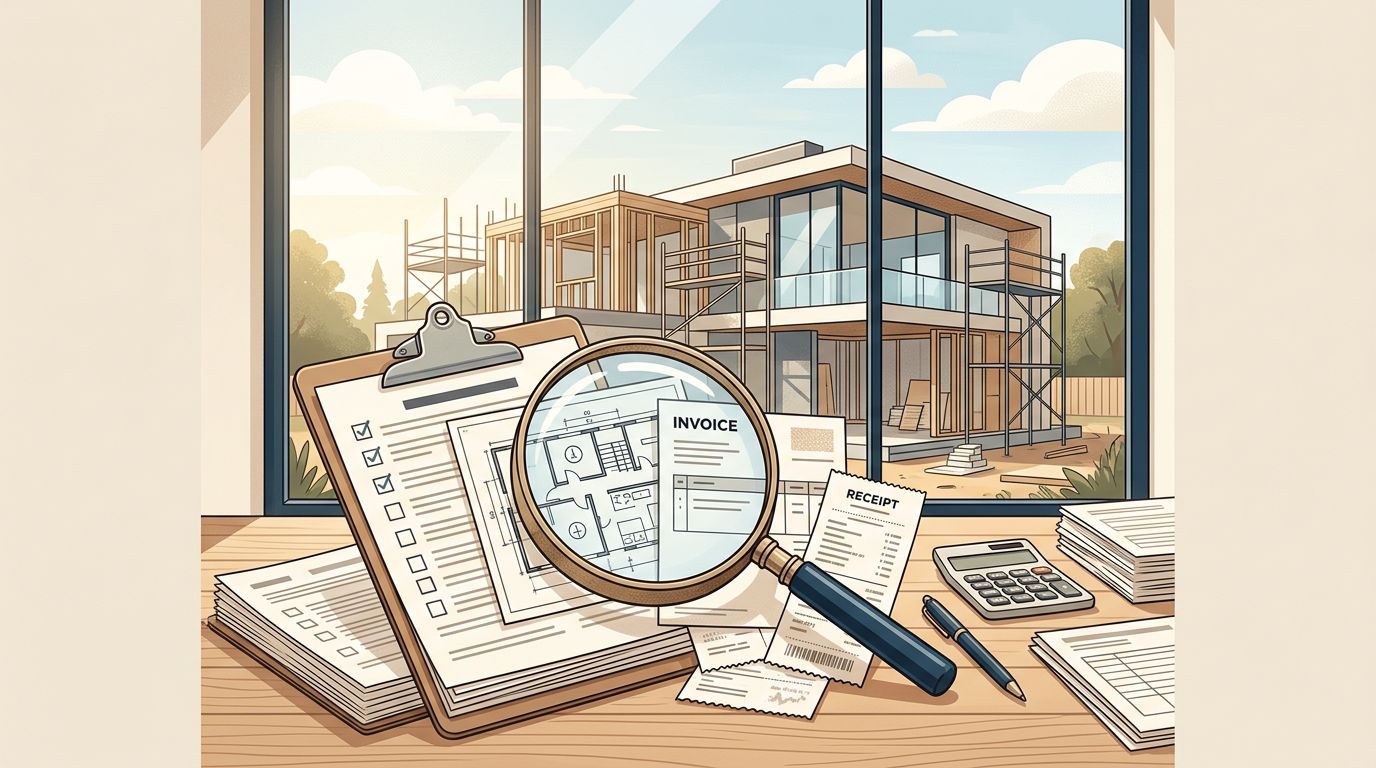
Use this bid-comparison checklist to keep quotes apples-to-apples:
- Included scope : Walls, roof system, sheathing, blocking, and installation labor listed clearly.
- Sheathing details : Type, thickness, and whether roof and wall sheathing are both included.
- Connector and strap allowance : Confirm hardware is included, not "by others."
- Engineered items : LVLs, hangers, hold-downs, and special anchors called out.
- Wall heights and details : Verify the bid matches your elevations, not an 8-foot assumption.
- Roof complexity : Number of hips, valleys, and dormers acknowledged in writing.
- Equipment : Boom truck or crane included if needed, with number of days.
- Schedule and duration : Start date, crew size, and estimated framing timeline.
- Change pricing : Unit prices for added openings, header changes, and wall height changes.
- Cleanup and safety : Debris handling and site protection expectations stated.
Questions to ask your framer before you sign
Ask these early, because the answers affect both cost and schedule:
- What's included, and what's excluded, in plain language?
- Are roof and wall sheathing included, and what thickness?
- Are connectors and straps included, or billed as an allowance?
- Who coordinates truss delivery, staging, and set day?
- What happens if engineering notes change during permit review?
- How do you price changes, per opening, per linear foot, or time and material?
Engineering details can change framing requirements, especially around openings and uplift connections. If you want to see how that side of the budget ties in, this guide on structural engineering costs for SWFL new homes helps explain what drives those decisions.
Finally, consider how your build contract handles money flow. Working with a cost-plus home builder can make framing easier to track because invoices and scopes are visible. When the process supports transparent pricing , you can see where costs moved, and why, before it becomes a dispute.
Conclusion
In 2026, framing in Southwest Florida isn't just lumber and labor, it's also wind details, hardware, sheathing, and roof geometry. Start with a realistic per-square-foot range, then pressure-test it with the adders that match your plans. Most importantly, insist on a clear scope and itemized assumptions, because transparent pricing is what keeps your framing budget from drifting mid-build.