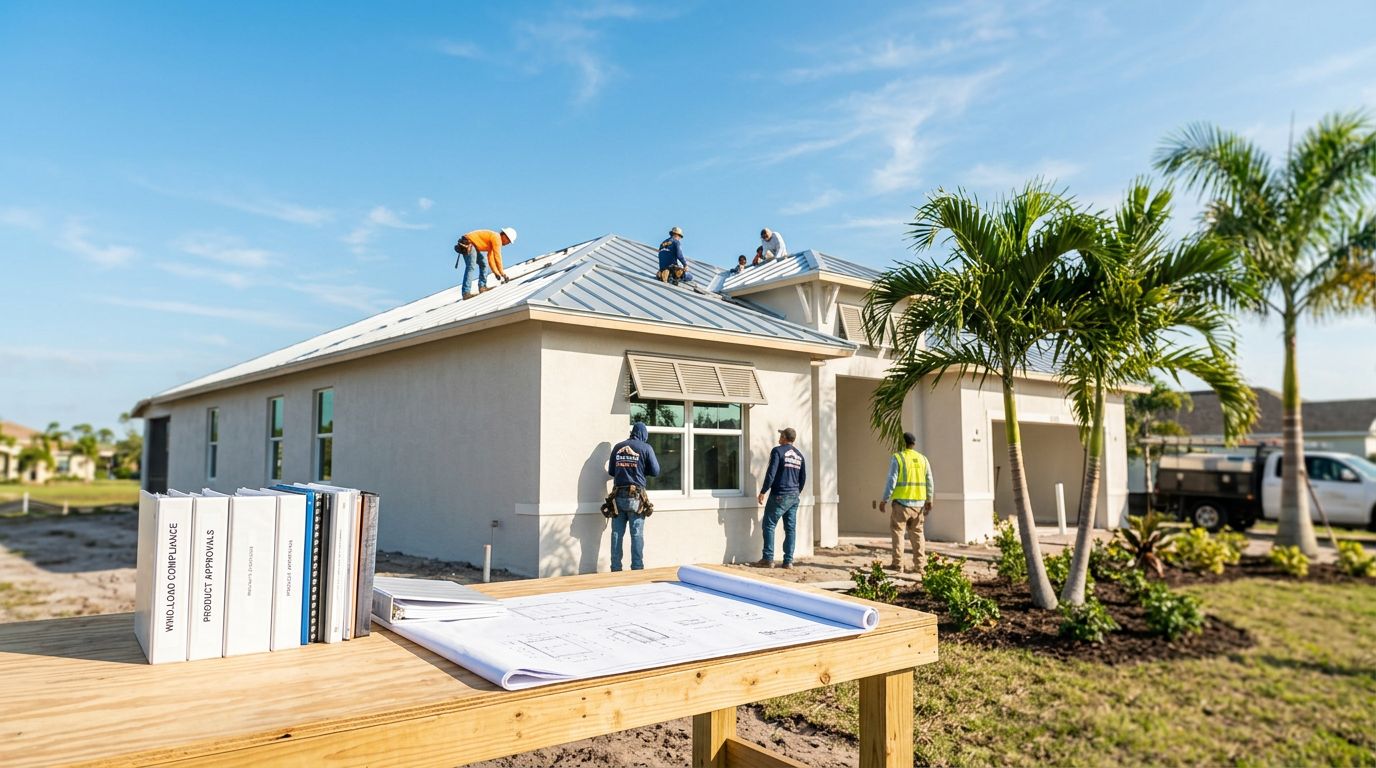



When you price a new home in Southwest Florida, it's easy to focus on the big numbers, land, concrete, windows, and finishes. Yet structural engineering costs can quietly swing your budget, permit timeline, and even your insurance paperwork.
In 2026, those fees aren't just about "doing the math." They're tied to Florida's wind rules, flood zones, soils, and the way your home is shaped. The good news is you can budget this line item with less guesswork once you know what's included, what isn't, and what triggers add-ons.
What a structural engineer actually does for SWFL new homes
Think of your engineer as the person who turns a pretty set of plans into a house that can take a hit. In Southwest Florida, that "hit" usually means hurricane winds, wind-driven rain, and floodwater.
Most residential structural scopes include the design and sizing of the foundation, slabs, lintels, beams, columns, shear walls, and load paths. Load path is a simple idea with big consequences. Wind loads have to travel from the roof, through the walls, down to the foundation, without weak links. That's why you'll see detailed connection notes, anchor schedules, tie-downs, and fastening requirements.
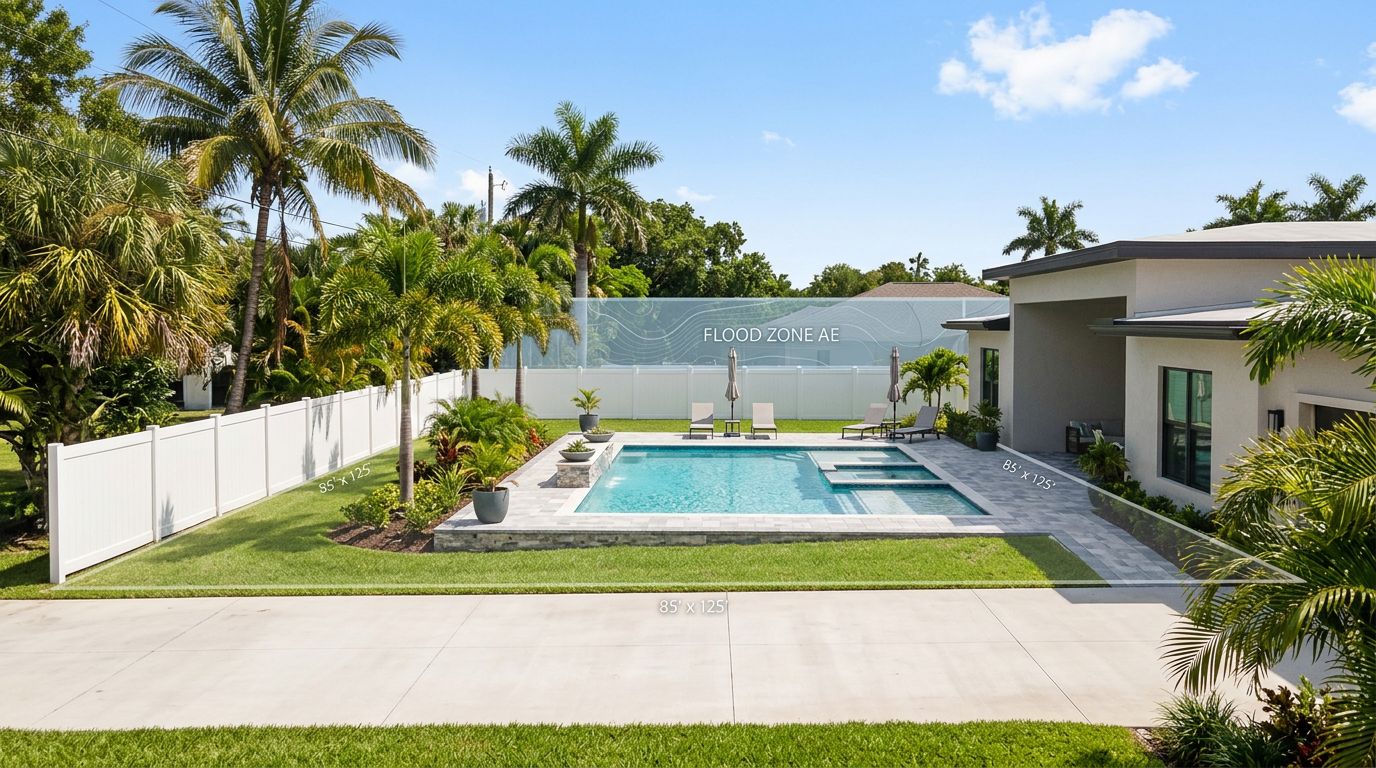
Floodplain considerations also affect engineering. If your lot is in an AE or VE zone, or even a flood-prone pocket that the county treats cautiously, the engineer may need to coordinate finished-floor elevation, stem wall height, breakaway wall rules (where applicable), and uplift checks. Even outside mapped zones, high water tables and fill requirements can change foundation assumptions.
Besides design, engineers often support permitting. Many jurisdictions want sealed sheets, structural notes, and supporting calculations that match the Florida Building Code in effect when you apply. If plan review asks for clarifications, your engineer becomes your "reply writer" so you can keep the permit moving.
Structural engineering costs in Southwest Florida (2026): budget ranges you can use
For most new single-family homes in Southwest Florida, a practical 2026 budget is $5,000 to $15,000 for structural engineering. Homes with more complexity, coastal exposure, or flood-driven elevation work can land higher.
Fees usually cover the core design plus a defined number of revisions. After that, hourly work is common. To keep your budget clear, ask for a proposal that separates base scope from likely add-ons.
Here's a homeowner-friendly way to think about typical line items.
| Engineering scope (new home) | Typical 2026 range (SWFL) | Usually included | Often excluded (ask) |
|---|---|---|---|
| Base structural design + sealed sheets | $3,500 to $9,000 | Foundation, wall and roof framing design notes, key details | Major redesigns after layout changes |
| Wind load analysis + connection schedule | $800 to $2,500 | Site wind parameters, uplift, connectors and anchors | Product selection, specialty testing |
| Flood-related elevation and uplift details | $1,000 to $4,000 | Elevated foundations, extra uplift checks, detailing | FEMA paperwork, surveys, BFE disputes |
| Foundation complexity due to soils or fill | $800 to $3,000 | Adjusted footing/slab assumptions, thicker slabs, reinforcement changes | Geotech (soils) report cost |
| Truss package review and coordination | $300 to $1,200 | Reviewing truss drawings, reactions, bracing notes | Truss manufacturer engineering (usually separate) |
| Permit comment responses and minor revisions | $500 to $2,000 | One to two rounds of revisions, sealed updates | Endless review cycles, owner-driven rework |
| Site visits, letters, or special inspections | $250 to $800 each | Field observation letters when needed | Multiple trips, long travel, photos from subs |
Assumptions: This range fits a typical 2,000 to 3,500 square foot single-family home, one to two stories, with standard spans and no extreme cantilevers. Jurisdiction, exposure, and schedule pressure can change pricing fast.
If you're building with a cost-plus home builder , don't settle for a single lump sum. A cost-plus contract works best when the process supports transparent pricing , including a clear engineering proposal and a written revision policy. This overview of Cost-plus home building in Southwest Florida explains how open-book tracking helps keep professional fees from turning into surprises.
Quick disclaimer: These are planning ranges, not a quote. Engineering fees vary by county, city, flood rules, home design, and how complete your documents are when the engineer starts.
How to keep engineering fees predictable (and avoid costly redraws)
In Southwest Florida, engineering costs often rise for one simple reason: decisions happen too late. Every "small" change can ripple through loads, details, and product approvals.
Open floor plans are a common trigger. Long spans, big pocket sliders, and tall ceilings may need larger beams, more steel, or thicker walls. Roof shape matters too. A complex roofline can increase uplift checks and connector requirements. Meanwhile, coastal exposure and higher design wind speeds can push hardware schedules and details beyond the basics.
Flood and site conditions create another set of variables. If your survey, base flood elevation, or grading plan changes midstream, foundation details may change with it. Soils also play a role. When the soils report shows weak layers or high organics, the foundation assumptions may need a reset.
A good rule: lock the footprint, roof geometry, and opening sizes before engineering starts. Late layout changes are where budgets go to disappear.
Questions to ask your structural engineer before you sign
- What's included in the base fee? Ask how many revision rounds and permit responses are covered.
- What's your hourly rate for changes? Get it in writing, including minimum billing increments.
- Do you coordinate with the truss designer? Clarify who reviews truss reactions and bracing notes.
- What site data do you require? Confirm survey, flood info, and soils expectations up front.
- How do you handle product approval impacts? Windows, doors, and shutters can affect openings and details.
Documents to prepare (so the engineer can price accurately)
Have these ready before kickoff whenever possible:
- Boundary and topographic survey
- Soils report (geotechnical), if available or required
- Architectural floor plans and overall dimensions
- Exterior elevations showing heights and roof geometry
- Roof framing concept (trusses, hips, valleys, overhangs)
- Opening schedule (windows, doors, sliders, garage doors)
- Florida product approvals you plan to use (or a placeholder list)
- Any HOA, coastal, or flood-related design constraints from your jurisdiction
When you start with a complete packet, your engineer can spend time designing, not chasing missing inputs.
Conclusion
In 2026, budgeting structural engineering costs for a Southwest Florida new home means budgeting for wind, flood, and real-world permitting. Plan on roughly $5,000 to $15,000 for most homes, then adjust for complexity and site conditions. Most importantly, push for itemized scope and a clear revision policy, because transparent pricing is what keeps "engineering" from turning into a moving target. If you line up your documents early, you'll protect both your schedule and your wallet.