Gunite Pool Depth Profiles for Fort Myers Homes
Explore Our Services
Contact Us Today!
(239) 322-9295
A pool can look perfect on a drawing and still feel wrong once you step into it. The right gunite pool depth gives your household comfortable places to lounge, play, swim, and gather.
Fort Myers homeowners also need to consider sandy soil, groundwater, drainage, permits, and the layout of the lanai. A depth profile works best when it fits your daily life and your property, not when it follows a one-size-fits-all formula.
Begin With How Your Household Will Use the Pool
Start with the moments you expect to have most often. A pool built for quiet floating, young children, lap swimming, or weekend guests needs different water depths.
No profile is universally best. A deep pool may suit experienced swimmers, while a broad shallow area often gets more use in a home with small children or frequent visitors. A custom gunite shell gives you room to combine uses, but every added zone takes space, water, and excavation.
Picture the pool on an ordinary Tuesday
Consider how the pool will work when it isn't hosting a party. If you enjoy standing in the water while talking with family, a generous waist-to-chest-depth section matters more than an oversized deep end.
Parents may want a shallow play area near the patio where adults can see children easily. Homeowners who swim for exercise may prefer a long, clear lane with fewer level changes. Meanwhile, a couple focused on relaxation may choose a tanning ledge and a consistent depth that supports floating and cooling off.
Account for every regular user
Height makes a major difference. Water that feels comfortable to one adult can feel too deep for another person to stand securely. Discuss the height and swimming comfort of everyone who will use the pool frequently.
Guests change the equation, too. A pool intended for entertaining benefits from several areas where adults can comfortably stand and talk. That often makes a gradual transition or sport-style profile more practical than a design that drops quickly into deep water.
Common Gunite Pool Depth Profile Options
Your gunite pool depth profile describes how the floor changes from one end of the pool to the other. Gunite construction allows curves, slopes, benches, shelves, and custom contours, so the profile can follow the pool's actual purpose.
Shallow and uniform-depth pools
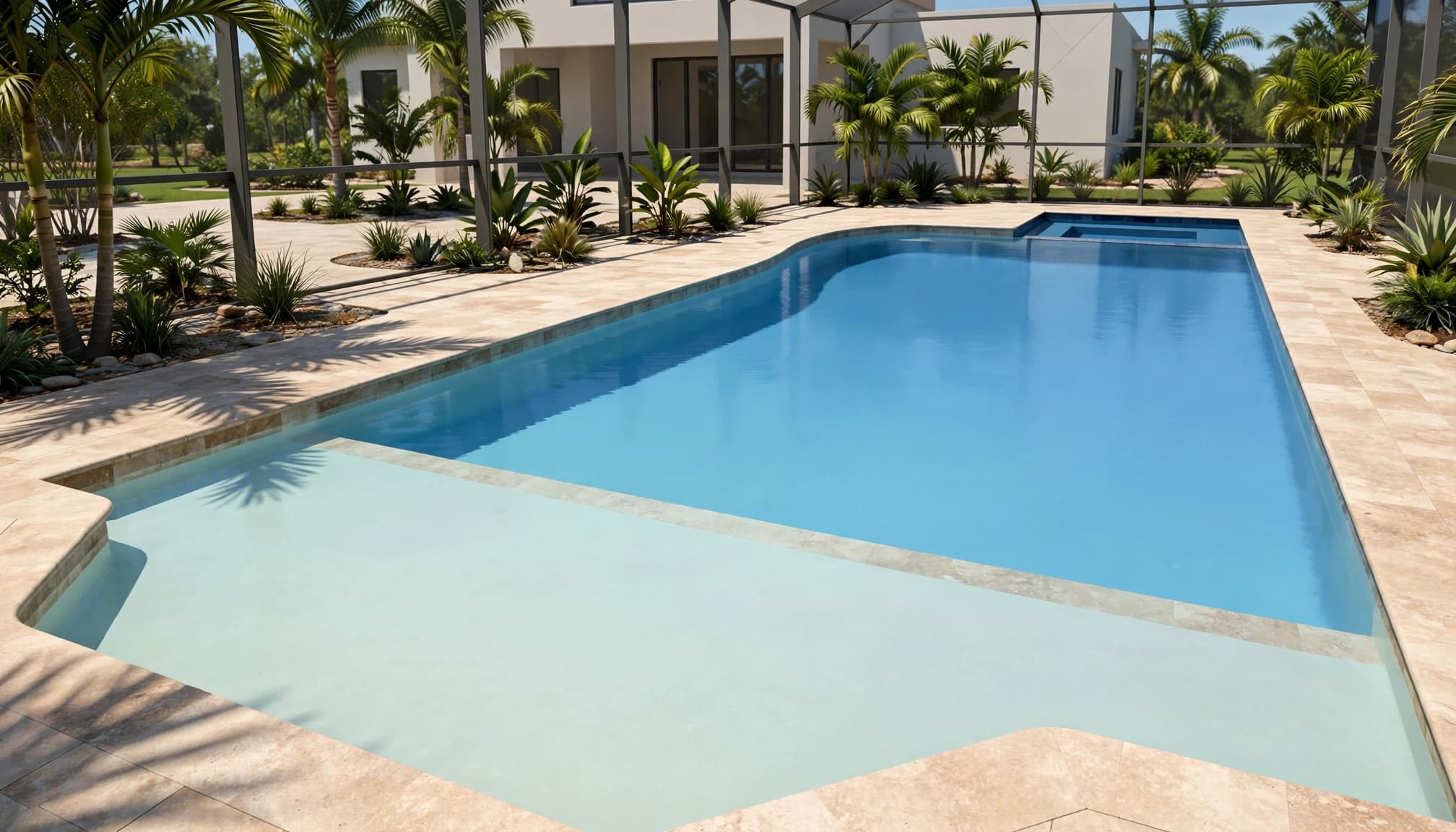
A shallow pool usually maintains a relatively consistent standing depth, often with a slight slope for drainage. This option works well for water walking, floating, casual play, and social time around a sun shelf or bench.
Because fewer areas are over a person's head, a shallow design can feel approachable for mixed-age gatherings. However, it doesn't provide a diving area or much room for underwater games. Tall swimmers may also find a uniform shallow depth limiting.
Sport pools for flexible family use
A sport pool typically places the deeper water near the center, with shallower ends on both sides. This layout can support pool volleyball, casual basketball, and active family use because players can move between standing zones.
The center depth still requires attention around children and less-confident swimmers. In addition, a sport profile doesn't create the clear, deep water needed for a diving board. It is often a strong middle ground when the pool will host both play and conversation.
Deep-end designs for swimming and diving
A traditional deep-end profile slopes or drops toward one end of the pool. It offers room for treading water, underwater play, and deeper swimming, but it reduces the total area where people can stand.
A deep section should never be added merely because it looks dramatic. It requires more excavation and water, and it may reduce usable shallow space on a compact Fort Myers lot. If diving is part of the plan, the entire pool geometry must meet the selected diving equipment's requirements.
Put Safety Ahead of the Deep-End Wish List
Water depth affects supervision, access, and how easily swimmers can recover their footing. A thoughtful layout gives children and cautious swimmers predictable places to enter, rest, and exit.
Give children a clear shallow zone
Young children need close, active adult supervision in every pool, regardless of its profile. Still, a broad shallow zone, visible steps, and a nearby bench can make family pool time easier to manage.
Avoid abrupt changes in depth where children are likely to play. A floor slope should be obvious enough for swimmers to recognize, while depth markers, barriers, gates, and required safety equipment should be part of the approved final design.
A tanning ledge offers a place to cool off, but it is not a substitute for a dedicated shallow play area or active supervision.
Treat diving as a complete design decision
A diving board isn't an accessory to add late in the project. The pool's depth, width, length, wall configuration, slope, and underwater clearance must work together.
A qualified local pool professional should design and approve any diving feature based on the equipment manufacturer's requirements and applicable codes. Do not assume a deep end alone makes a pool safe for diving. Many backyard pools are better without a diving board, especially when the available footprint is limited.
Make Features Work With the Depth Profile
Features influence where people gather and how water moves through the pool. Plan them alongside floor elevations, rather than attaching them after the profile is set.
Tanning ledges, benches, and steps
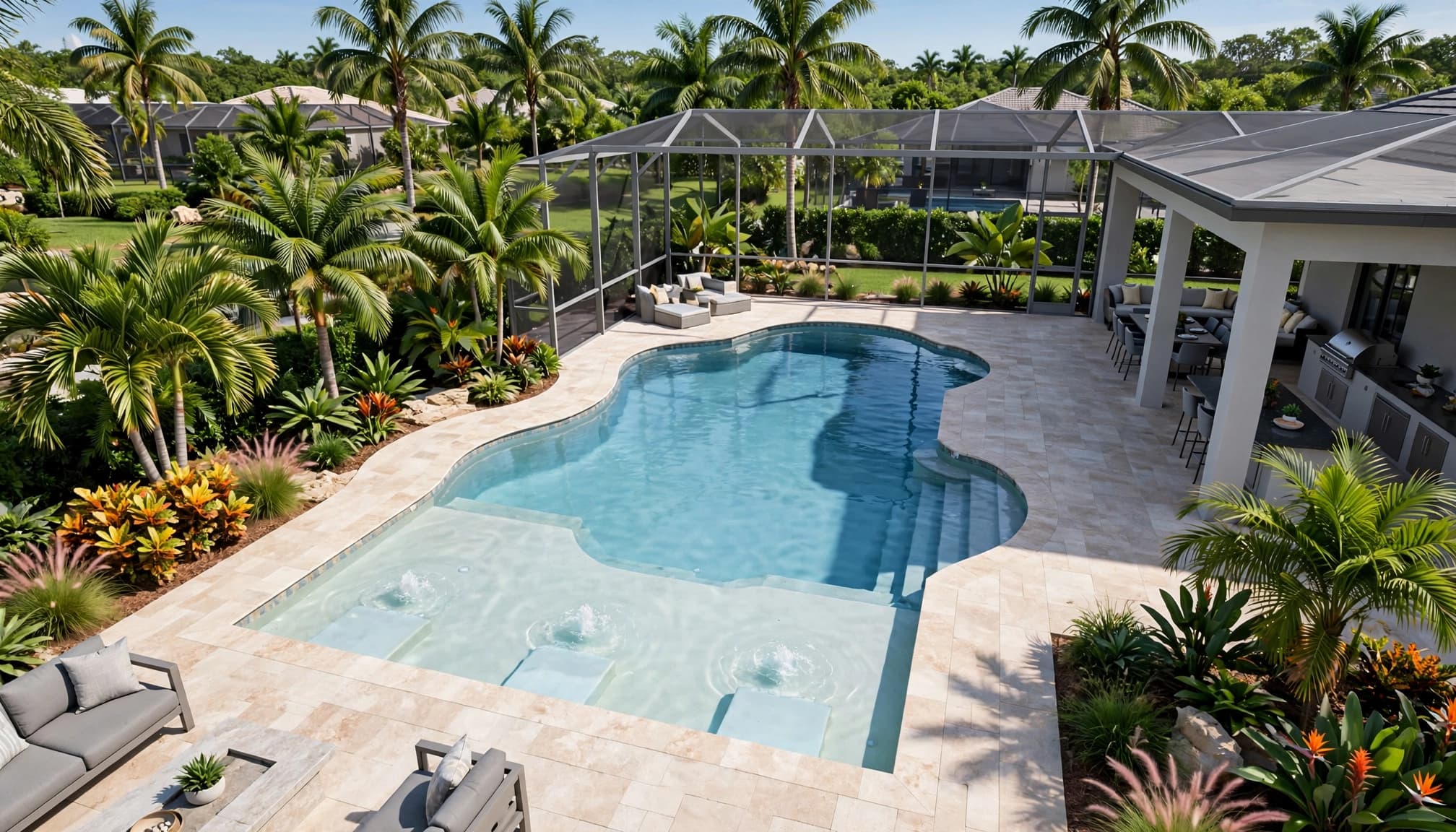
A tanning ledge is a shallow, level platform at or near water level. It can hold in-water loungers, let adults sit with small children, and create an easy cool-down spot beside the deck.
Place it where it won't block the primary swimming path. Wide entry steps and perimeter benches also use floor space, so they can crowd a smaller pool if the plan includes too many elements. The best arrangement leaves an open area for the activity you value most.
Water features and entertaining areas
Sheer descents, bubblers, scuppers, and spillways add movement and sound. However, their placement can affect visibility and comfort. For example, a bubbler on a tanning ledge works well for relaxed play, while a loud waterfall beside a conversation area can make talking harder.
Coordinate pool depth with the grill, covered lanai, seating, and traffic paths. Fort Myers backyard and lanai design can bring the pool, pavers, shade, and outdoor gathering areas into one practical plan. The pool should feel connected to the home, with clear routes around the water.
Plan for Exercise, Water Volume, and Maintenance
A pool's deepest point affects more than swimming. It changes water volume, circulation needs, chemical demand, heating time, and the amount of debris that settles on the floor.
Give swimmers enough uninterrupted length
For lap swimming or water exercise, length and clear travel space usually matter more than extra depth. A lane with a steady depth can support water walking, resistance workouts, and relaxed laps.
Curved freeform pools can still work for exercise, but avoid placing steps, ledges, or a raised spa where they interrupt the preferred route. A designer can help match the pool's dimensions to the exercise you actually plan to do.
Understand the cost of extra water
A deeper pool usually holds more water. That means more water to circulate, balance, heat, and eventually refill after maintenance or storm-related cleanup. Its larger excavation can also add labor, hauling, and structural planning.
That doesn't make a deep end a poor choice. It means the added depth should have a clear purpose. Review the full scope, including equipment, decking, screen enclosure work, and access limitations, when reviewing Southwest Florida pool construction costs.
Fort Myers Soil, Groundwater, and Drainage Matter
A pool profile exists below grade, so site conditions shape what can be built. Fort Myers properties often have sandy soils and groundwater close to the excavation level, especially during the rainy season.
Excavation requires a site-specific plan
A deeper gunite pool depth may reach groundwater sooner than a shallow design. The builder may need temporary dewatering during excavation and structural work. Soil conditions, nearby utilities, property access, and proximity to the home also affect the construction plan.
The pool shell, plumbing, steel, and backfill need professional coordination. A site visit gives the contractor a chance to evaluate elevations and identify issues before finalizing dimensions. This is part of responsible custom gunite pool construction in Fort Myers.
Keep water moving away from the home
Pool deck elevations should support drainage away from the house. On many Southwest Florida lots, the plan also needs to respect swales, existing drainage patterns, easements, and drainage structures.
A raised deck can change how stormwater crosses the yard. Therefore, pool depth, excavation spoils, deck slope, and finished grades should be reviewed together. Poor drainage can create recurring problems long after the pool is complete.
Confirm Permits and Final Plans Before Digging
Pool construction in Fort Myers may involve local building review, electrical permits, barrier requirements, and site-related approvals. Rules can differ based on whether the property falls within the City of Fort Myers, unincorporated Lee County, or another jurisdiction.
Bring decisions together early
If you are building a new home, plan the pool before finalizing doors, windows, utility routes, patio elevations, and the future screen enclosure. This keeps the backyard from feeling like an afterthought.
For an existing home, measure setbacks, equipment placement, access routes, and the distance to the lanai. Final drawings should show the pool shape, depth changes, steps, benches, water features, equipment, and drainage approach.
A qualified local pool professional should review final dimensions, site conditions, and any diving feature before submitting plans for approval. That review protects both the finished pool and the people who will use it.
Choose Depths That Fit Real Life
The right pool floor gives your household more usable water, not simply more water. A shallow play zone, sport profile, consistent exercise depth, or deeper end can all work well when the design matches the people and activities around it.
Start with how you will use the pool most days, then account for safety, features, drainage, and upkeep. A well-planned gunite pool depth profile makes the backyard easier to enjoy for years.