Gunite Pool Renovation Scope Checklist for Bonita Springs
Explore Our Services
Contact Us Today!
(239) 322-9295
A pool renovation proposal can look complete while leaving out the work that controls cost, safety, and durability. For a gunite pool renovation , Bonita Springs homeowners should compare written specifications, not only the total price.
The scope should define existing conditions, structural work, finishes, equipment, permits, inspections, cleanup, warranties, and change orders. It should also explain what happens if draining or demolition reveals damaged concrete, groundwater, plumbing failures, or other concealed conditions.
Why a detailed renovation scope matters
Pool renovation may involve much more than resurfacing. An older gunite pool can have cracked coping, hollow-sounding areas, damaged tile, leaking plumbing, worn equipment, drainage problems, or structural concerns beneath the finish.
A proposal that says "complete pool remodel" without listing the work leaves too much open to interpretation. Ask each contractor to identify what is included, what is excluded, and what has only been budgeted as an allowance.
A complete scope also helps you compare proposals fairly. One contractor may include new coping, equipment startup, permit fees, and cleanup while another lists only the interior finish. The lower bid may not be lower once missing work becomes a change order.
For additional context on available upgrades, review these Fort Myers pool renovation services, which include resurfacing, tile, coping, decking, equipment, lighting, automation, and related outdoor improvements.
What a gunite pool renovation scope should include
The scope should describe the finished pool in enough detail that another qualified professional could understand the intended result. Photos, drawings, product names, measurements, and allowances are more useful than broad promises such as "high-end materials."
Structural steel and shell work
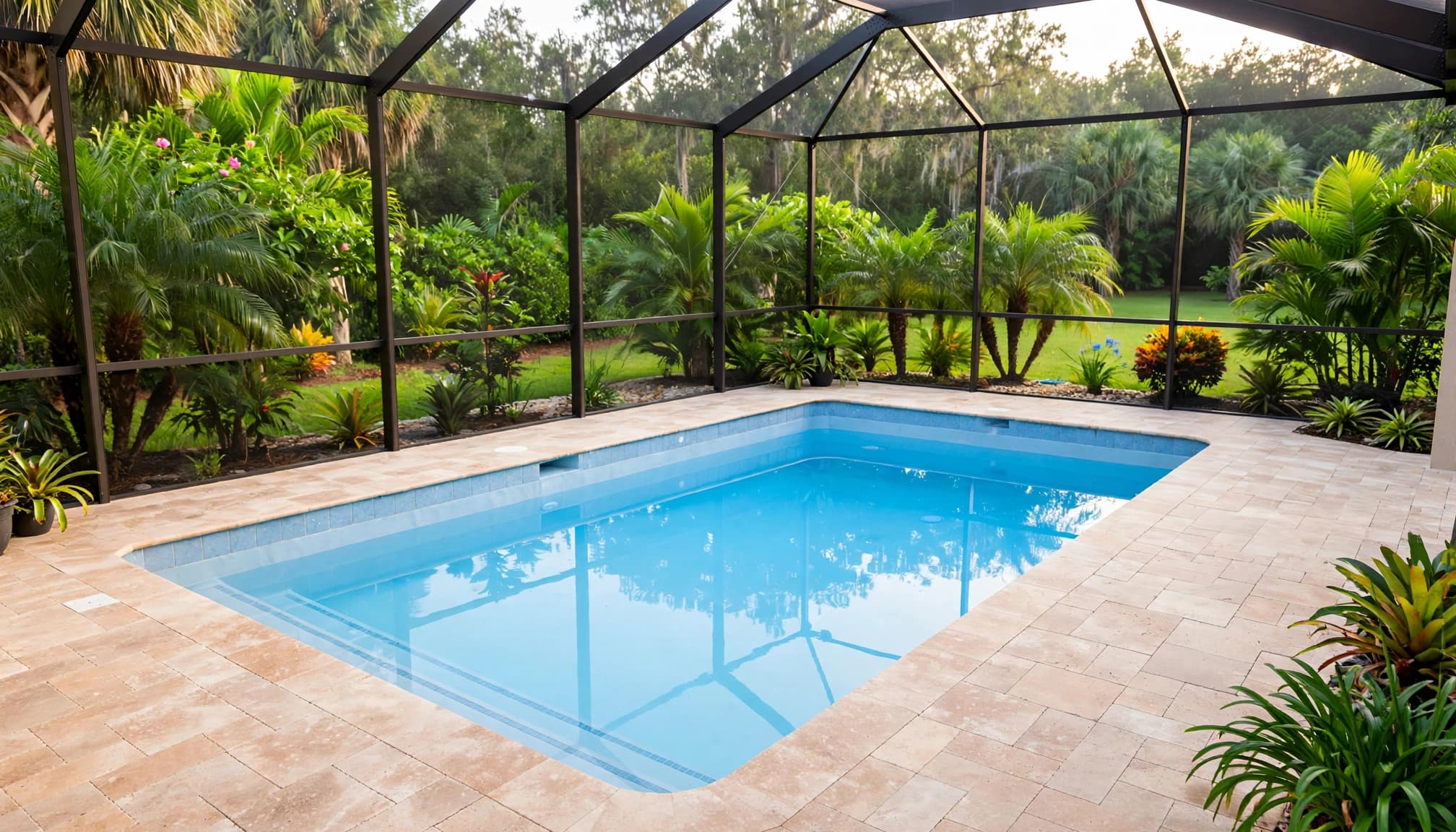
If the project changes the pool shape, adds a spa, modifies depth, or creates a sun shelf, the contractor should identify the design professional responsible for the structural plans. A vanishing edge, raised spa, deep end, or sharp change in depth may require different structural details than a simple rectangular pool.
The approved plans should address the shell geometry and reinforcement. Ask where the plans identify:
- Reinforcing bar size, spacing, laps, bends, and clear cover.
- Connections at walls, floors, steps, benches, the bond beam, and raised features.
- Areas where existing concrete will be removed, repaired, or joined to new work.
- The proposed gunite or shotcrete method, mix information, application process, and curing plan.
- Any engineering response required if excavation exposes unexpected soil, rock, groundwater, or buried material.
Reinforcing steel must remain in its designed position while the crew applies the concrete. The permitted drawings, not an early rendering or sales sketch, should control the work.
Plumbing, electrical, finishes, and equipment
List each system by product, size, location, and responsibility. The scope should state whether it includes plumbing repairs, suction and return lines, skimmers, drains, lights, automation, pumps, filters, heaters, salt systems, and electrical connections.
Finish selections should name the interior product and color, tile style, coping material, grout, sealers, and installation method. If the proposal includes pavers or travertine, specify the base preparation, pattern, edge restraints, drainage treatment, and replacement of damaged areas.
A complete renovation may also include LED lighting, automated controls, energy-efficient equipment, a saltwater conversion, water features, or a spa addition. Each item should appear as a defined line item rather than a verbal promise.
Document existing conditions before draining or demolition
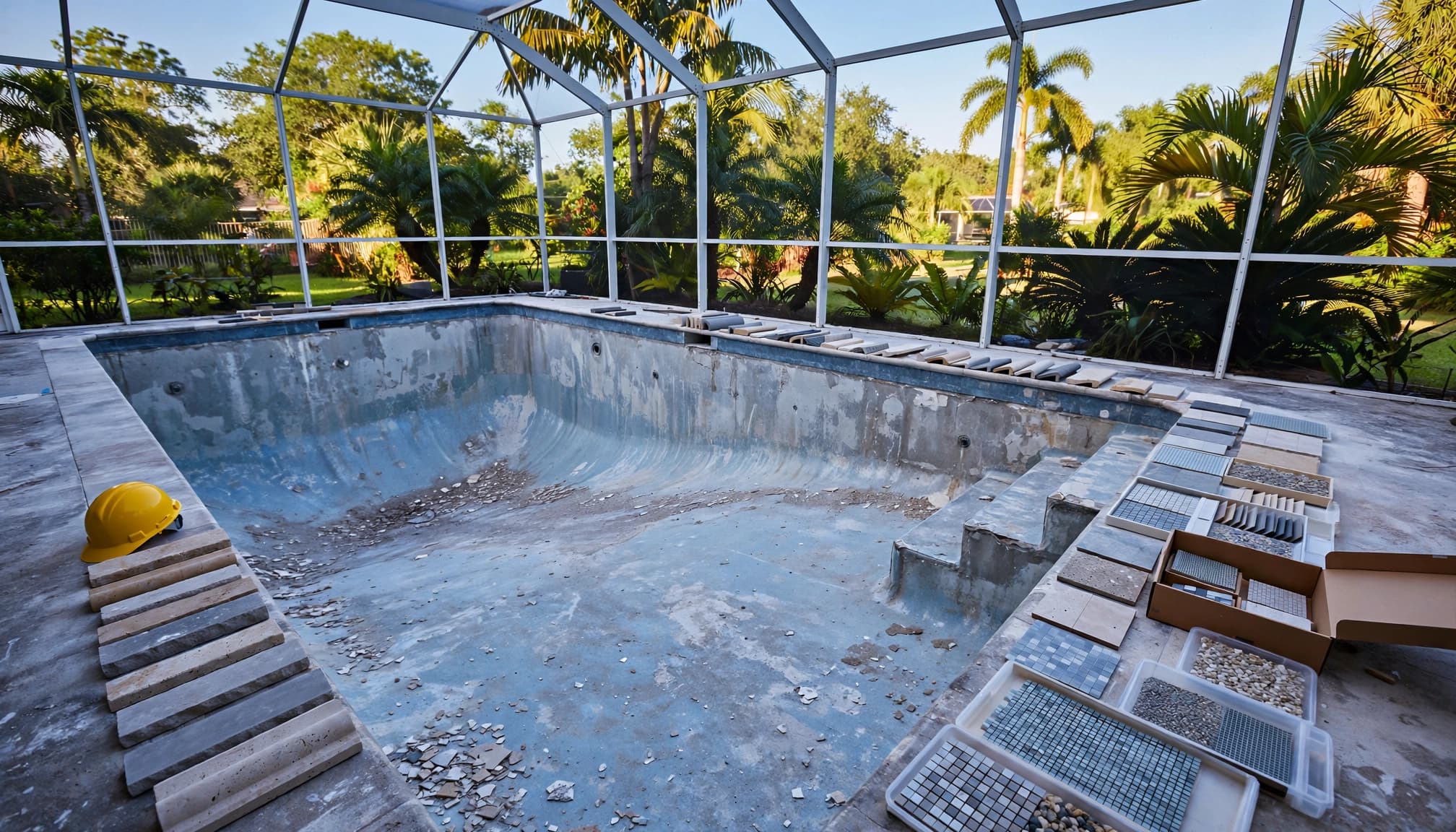
Photograph the pool, equipment pad, deck, screen enclosure, doors, fences, landscaping, irrigation, retaining walls, and nearby structures before work begins. Keep dated copies of the photos and note existing cracks, stains, loose tile, damaged pavers, leaks, and equipment defects.
Request a condition assessment
Before selecting cosmetic upgrades, ask how the contractor will evaluate the existing pool. The assessment should distinguish between surface failure, bond-coat problems, shell damage, plumbing leaks, and deck or drainage issues.
Ask whether the proposal includes:
- Removing loose or hollow material.
- Preparing sound concrete before patching.
- Treating structural or non-structural cracks.
- Repairing damaged steps, benches, bond beams, or raised areas.
- Testing or investigating suspected plumbing leaks.
- Protecting the pool shell and surrounding property during demolition.
Actual conditions may change the work after the pool is drained or finishes are removed. That possibility should appear in the contract, along with the process for documenting the discovery and approving additional work.
Set allowances for uncertain conditions
An allowance can help manage a condition that cannot be priced accurately before demolition. However, it should identify the unit, amount, labor basis, and method for adjusting the price.
"Repair as needed" is too vague by itself. Ask what evidence triggers the repair, who documents it, whether photos are provided, and whether you can approve the work before it starts.
Documents to request before signing
Your contractor should provide a proposal package that you can keep with the contract. Avoid relying on text messages, verbal selections, or a one-page estimate with no specifications.
Get materials and responsibilities in writing
Request a line-by-line scope that identifies the contractor, homeowner, subcontractors, suppliers, and exclusions. Confirm who handles pool draining, water disposal, demolition, hauling, protection of the home, dust control, equipment storage, daily cleanup, final cleaning, and landscaping repairs.
The scope should also list:
- Interior finish, tile, coping, deck, and grout selections.
- Equipment brands, model numbers, quantities, and warranty terms.
- Startup, balancing, owner orientation, and operating instructions.
- Allowances for selections that have not been finalized.
- Manufacturer installation requirements.
- Work excluded from the price, including screen repairs, irrigation, fencing, and electrical service upgrades.
Homeowners considering broader backyard work can also compare the pool scope with poolside paver and patio design plans so deck, lanai, drainage, and landscaping responsibilities do not overlap.
Confirm permits, insurance, and warranty coverage
Ask who applies for the permit, pays applicable fees, schedules inspections, responds to corrections, and obtains final approval. Confirm the contractor's Florida license through DBPR's MyFloridaLicense system. Request a current certificate of general liability and workers' compensation insurance directly from the contractor or insurance agent.
The contract should state warranty periods separately for the interior finish, tile, coping, equipment, plumbing, electrical work, and structural repairs. It should explain how you report a problem and whether labor, materials, or service calls are covered.
Bonita Springs permit and inspection checklist
Jurisdiction comes first. A property inside the City of Bonita Springs follows the city's process. Other properties may fall under Lee County procedures. Ask the contractor to identify the permitting authority for your address before work begins.
Lee County's pool guidance states that a residential pool permit applies to construction or renovation of all in-ground pools. The guide also describes inspection requests, required documents onsite, and final approval requirements. Local procedures can change, so confirm the current requirements for your project.
Ask for the inspection schedule
For Lee County projects, listed inspection stages include pool steel, 304 bonding, pool deck, and electrical final. Pool steel and 304 bonding must be requested together. The permit, approved plans, and manufacturer specifications must be available onsite during inspection.
Ask these questions before signing:
- Who schedules every inspection?
- Which work must remain visible for the inspector?
- What happens if an inspection fails?
- Who pays for correction work caused by installation errors?
- Will the contractor provide inspection results and final approval records?
Do not allow plaster, decking, landscaping, or other work to block inspection access. The final project may also require an applicable Certificate of Compliance or Certificate of Occupancy.
Verify the city process separately
The City of Bonita Springs Community Development Department is located at 9220 Bonita Beach Road, Ste. 111. Its listed phone number is 239-444-6150, and the permit counter hours are Monday through Friday, 9:00 a.m. to 4:00 p.m.
The city provides a pool and spa permit application, but application details should be confirmed for your property and project type. Do not assume that city and county procedures, forms, fees, or inspection timing are interchangeable.
Compare proposals and spot incomplete scopes
A reliable comparison uses the same questions for every contractor. You can also ask a Southwest Florida pool contractor about experience with renovation work, permits, equipment, and outdoor living improvements.
Warning signs in a proposal
Be cautious when a proposal:
- Uses broad terms without measurements or product specifications.
- Omits permits, engineering, inspections, startup, or cleanup.
- Includes a low allowance with no selection range or adjustment formula.
- Promises a fixed price despite unknown demolition conditions.
- Does not identify exclusions around screen enclosures, fences, irrigation, or electrical service.
- Provides no written change-order process.
- Avoids questions about license status or insurance certificates.
- Offers a warranty without stating its length and coverage.
A contractor may be qualified even when concealed conditions require additional work. The warning sign is not a possible change order. The warning sign is having no written method for handling one.
Require a clear change-order process
Every change order should describe the condition, proposed solution, added or reduced cost, schedule effect, and required approval. Ask whether work can proceed before you sign and how urgent safety or weather-related decisions will be handled.
Keep the approved plans, selections, invoices, inspection records, photos, warranties, and change orders together. This file gives you a clear record of what the contractor agreed to build.
Key Takeaways
- Compare complete scopes, not headline prices.
- Require structural plans for shell changes, raised spas, sun shelves, and unusual depths.
- Document the pool and surrounding property before draining or demolition.
- Identify allowances and concealed-condition procedures in writing.
- Confirm whether the City of Bonita Springs or Lee County handles the permit.
- Ask who schedules inspections and obtains final approval.
- Verify the contractor's Florida license and request current insurance documentation.
- Define cleanup, startup, warranties, exclusions, and change orders before signing.
FAQ
Does every gunite pool renovation require a permit?
Lee County guidance states that a residential pool permit is required for renovation of all in-ground pools. The applicable authority depends on the property location, so confirm the process with the City of Bonita Springs or Lee County before work starts.
What should happen if damage appears after the pool is drained?
The contractor should photograph the condition, explain the repair, provide a written price and schedule effect, and obtain your approval through a change order. Structural questions may require direction from the project engineer or another qualified professional.
Should a proposal include rebar details?
If the renovation changes the shell, structure, depth, spa, steps, benches, or raised features, ask to review the current permitted structural drawings. Those plans should define the reinforcement and connections. A contractor should not replace engineering decisions with a generic thickness or verbal description.
Who is responsible for cleanup and startup?
The contract should name the responsible party. It should address demolition debris, dust, protecting nearby surfaces, deck and landscape cleanup, equipment startup, water balancing, and owner instructions. If these items are absent, ask for them before signing.
Conclusion
A successful gunite pool renovation starts with a scope that describes the work before the first demolition tool arrives. Document existing conditions, review structural and system details, verify the permitting path, and require written rules for allowances and change orders.
The strongest proposal gives you a clear record of what is included and a fair process for conditions that cannot be seen until the pool is drained. That clarity protects your budget while helping the finished pool match the plans.