

A new home budget in Southwest Florida can look solid on paper and still feel tight once sitework begins. How much extra should you set aside so one surprise doesn't throw off the whole build? For many buyers, 5% to 10% is a practical starting range, but the right number depends on the lot, the plans, and the builder's pricing method.
That reserve matters because the Gulf Coast brings more unknowns than a clean inland lot. Soil, drainage, flood details, utility runs, and selection changes can all push costs up. A smart Southwest Florida home contingency gives you room to handle those shifts without scrambling. Next, it helps to see what that reserve actually covers.
What contingency covers in a new-home budget
Contingency is a safety fund for the parts of the project you can't fully price on day one. It is not a shopping fund for upgrades you already expect to want. If you know you want better cabinets, a larger lanai, or a pool, those costs belong in the plan from the start.
In a Southwest Florida build, contingency often covers extra fill, drainage tweaks, small engineering changes, permit corrections, and price movement on long-lead items. It can also cover scope cleanup when a drawing leaves room for interpretation. That matters because a missing detail can turn into a real cost during construction.
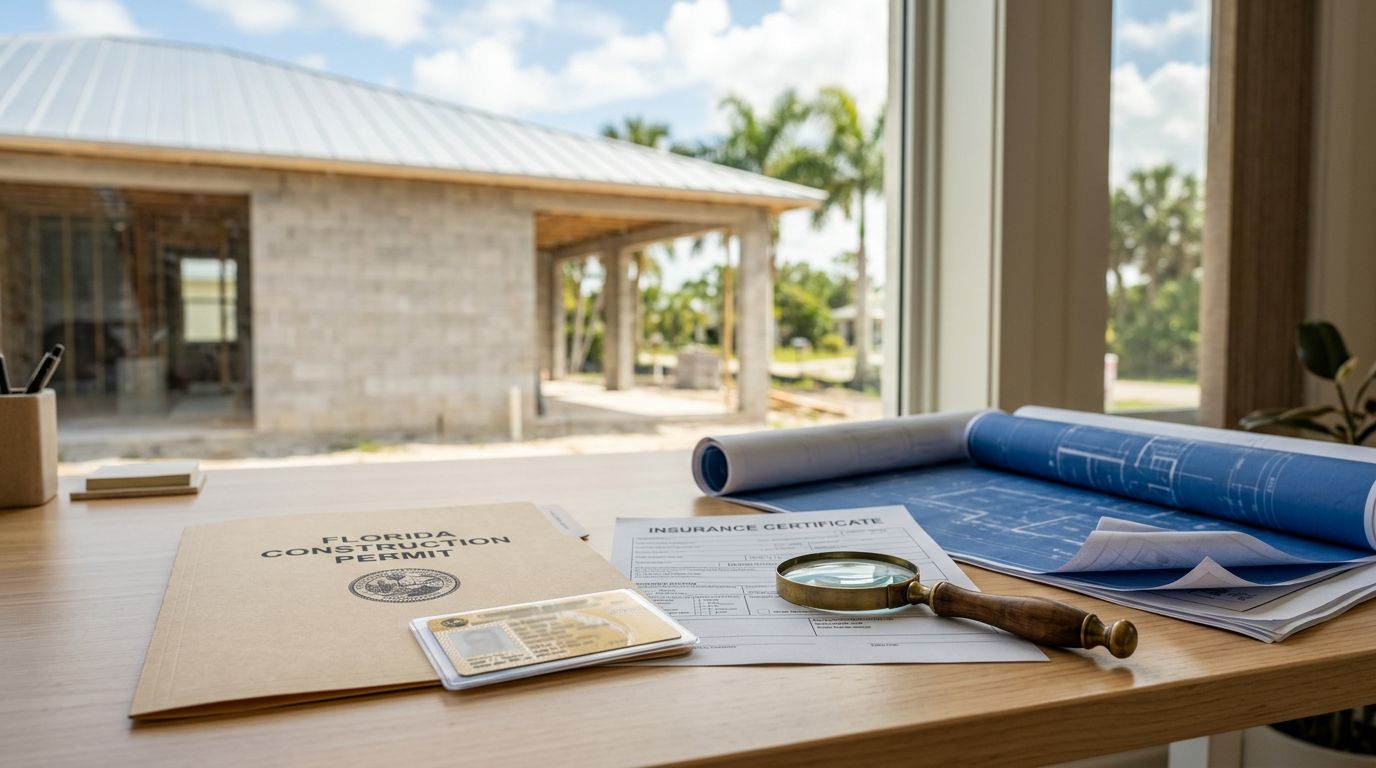
The budget base matters too. Contingency should sit on construction-related costs, sitework, and other build expenses, not on the land price alone. If you want a fuller view of how the numbers fit together, the custom home construction cost breakdown in Southwest Florida shows where construction, sitework, and soft costs usually land.
A useful way to think about contingency is simple. The cleaner the site, the smaller the reserve can be. The more unknowns, the more room you need.
A practical contingency range for Southwest Florida
For many new homes in this region, 5% to 10% of construction-related costs is a reasonable place to start. That range covers a lot of normal surprises without turning the budget into a guess. Some projects can stay near the low end, while others need more breathing room.
Here is a quick way to compare common scenarios:
| Project type | Typical contingency | Why it fits |
|---|---|---|
| Cleared lot, complete plans, simple selections | 5% to 7% | Fewer unknowns and fewer mid-build changes |
| Coastal or flood-sensitive lot, some sitework unknowns | 7% to 10% | More room for fill, drainage, and code-related changes |
| Custom plan, uncertain utilities, major outdoor living space | 10% to 15% | More room for revisions and region-specific surprises |
A lot of buyers start near 7% and adjust after the lot review and plan review. That approach keeps the number tied to real conditions instead of a guess pulled from a general rule.
A smaller reserve works only when the scope is stable and the lot is predictable.
If you are budgeting land, construction, and finishes together, keep the contingency attached to the part of the project that can still move. That keeps the number honest.
When a smaller reserve can work
A lower contingency, usually around 5% to 7%, can work when the build is fairly straightforward. That means the lot is already cleared or well understood, the floor plan is locked, and the major finishes are selected before contract signing. It also helps when the builder has clear allowances and exclusions.
A smaller reserve makes more sense when:
- the lot has been tested and reviewed,
- drainage and access look simple,
- the design is complete before pricing starts,
- the builder has detailed line items and approval rules.
That kind of setup reduces the chance of mid-project shock. Still, a small reserve can disappear fast if one detail changes. A few extra loads of fill or a late fixture upgrade can take a bigger bite than buyers expect.
This is where clear scope matters. If you are comparing options early, a cost-plus home building in Southwest Florida model can help you see how actual costs and fees are tracked. That kind of transparent pricing makes it easier to tell the difference between a real unknown and a normal project choice.
When you should budget more
Some Southwest Florida projects need a larger cushion, often 10% to 15%. That higher range makes sense when the lot or the scope has more unknowns. Coastal conditions, flood concerns, and site work can change the math fast.
A bigger reserve is smart when:
- the lot needs clearing, fill, or drainage work,
- the site sits in a low-lying or flood-sensitive area,
- the build includes a pool, outdoor kitchen, or large lanai,
- utility runs, septic, or well work are still uncertain,
- demolition or teardown work is part of the project,
- plans are still changing after pricing has started.
Those are common pressure points in this region. For example, a lot that looks simple can still need more fill than expected. A design with wide openings and larger spans can also trigger structural changes. Even timing can matter, because late material changes or weather delays can push work into a different phase.
Coastal lots rarely behave like clean inland sites, so the budget should reflect that.
A higher reserve is not a sign of poor planning. It is a sign that the project has more variables. That is especially true if you are building close to the coast, working on a tougher lot, or adding complex outdoor spaces.
How a builder's pricing method affects the reserve
The way your builder prices the job changes how you think about contingency. A fixed-price contract may feel simpler at first, but it can hide padding inside the number. A cost-plus home builder gives you a clearer view of actual costs, plus the contractor fee.
That structure does not remove the need for contingency. Soil surprises, plan changes, and permit revisions can still show up. It does, however, make the reserve easier to size because you can see where the money is going. When costs are tracked with transparent pricing , you are less likely to pad every line "just in case."
That matters in 2026, because buyers want more control over the budget without losing visibility. They want to know what is fixed, what is an allowance, and what can still move. A good contract should answer those questions before the first shovel hits the ground.
If a builder cannot explain how allowances, exclusions, and contingency work together, the budget may not be as safe as it looks. The number on the page can be low, but the real spend can climb once changes start. A better plan is to set the reserve after the scope is clear, then review it with the builder, lender, and design team.
Conclusion
A Southwest Florida new home usually needs a contingency that matches the site, not just the floor plan. For many projects, 5% to 10% is a practical target, with 10% to 15% reserved for tougher lots or more custom work.
The safest number comes from the full budget, the builder's contract, and the scope of the build. Confirm the final reserve with your builder, lender, and design and construction team before work starts.
A steady budget leaves room for the surprises that come with building near the Gulf, without turning every unknown into stress.