


Design choices can move faster than most homeowners expect. In Southwest Florida new construction, one late decision can push cabinets, tile, fixtures, or window orders by weeks.
That matters even more when you're choosing products that take time to ship, or when you're splitting time between homes. Builder schedules vary, community rules vary, and weather can slow the pace, so a clear roadmap helps more than a perfect guess.
A good selection plan keeps the build moving without turning every meeting into a scramble. The sections below show how the process usually unfolds.
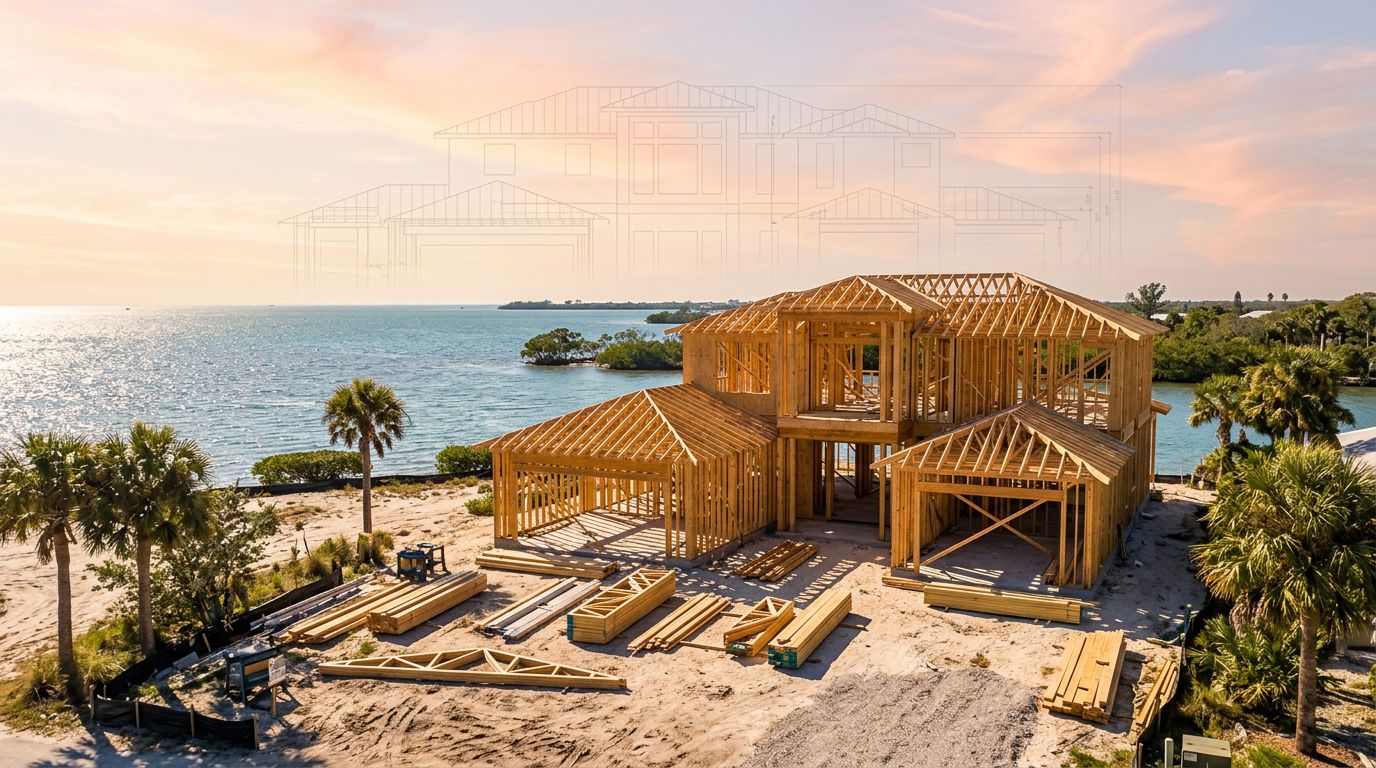
The selection timeline most Southwest Florida homes follow
The order shifts by builder, but the logic stays the same. The choices that affect structure, ordering, and rough-ins come first. Cosmetic choices can wait a little longer.
For a broader view of the build itself, SWFL new construction timeline guide shows what usually happens from slab to close.
| Build phase | Common selections | Why it matters | Typical timing |
|---|---|---|---|
| Pre-contract | Floor plan changes, elevation, roof shape, major allowance targets | These affect pricing, permits, and long-term layout | Before the final contract and permit set |
| Early preconstruction | Windows, exterior doors, garage doors, impact options, exterior finish choices | Long-lead items need early ordering | Before permit or right after contract |
| Design center phase | Cabinets, countertops, tile, flooring, plumbing fixtures, lighting plan | Trades need final specs before rough work ends | After contract, before rough-in is complete |
| Framing and rough-in | Outlet locations, shower details, niches, built-ins, appliance sizes, trim package | Electrical and plumbing changes get expensive here | During framing and rough-in |
| Finish phase | Paint colors, hardware, mirrors, backsplash, final fixture swaps | These choices close the home out | Before drywall finish and trim completion |
| Closeout | Punch list, warranty items, final accessory placement | Final details can delay occupancy if ignored | Near the final walk |
A selection timeline works best when every choice lands before the trade that depends on it. Once a product is ordered or a wall is framed, the freedom drops fast.
Selections that need to be locked early
Some choices look decorative, but they affect the shell of the house. Those belong near the top of your decision list, not near the bottom.
Exterior items that affect the shell
Windows, exterior doors, garage doors, roof material, and lanai details often need to be set early. In Southwest Florida, impact-rated products can take longer to arrive, and that delay can hold up inspections, framing follow-up, or exterior work.
If your home has a custom front elevation or a specific coastal look, lock those details before the schedule gets tight. The same goes for screen enclosures, specialty stucco finishes, and any opening size that changes the framing plan.
Kitchen, bath, and utility choices
Cabinet layout, appliance sizes, shower dimensions, plumbing fixtures, and laundry room details need early attention too. A 36-inch range, a larger refrigerator, or a double vanity can change the rough-in plan. That can ripple into framing, electrical, and plumbing.
A simple way to stay ahead is to decide what must fit, then work outward. Measure the appliances first. Then confirm cabinet sizing, sink placement, and shower layout. Once those pieces are set, the rest of the room becomes much easier to order.
Interior finishes that can wait a little longer
Paint color, cabinet hardware, mirrors, and some lighting choices can wait longer than structural items. Flooring and tile may seem similar, but they still need early attention if the product is special order.
A simple paint swap is easy. A custom vanity or specialty tile is not.
If a selection affects ordering or rough-in work, treat it like a deadline.
How budget and transparent pricing shape the schedule
A strong selection plan starts with the budget, not the showroom. If the numbers are fuzzy, every decision feels like a guess.
With a cost-plus home builder , itemized allowances and contractor fees make it easier to see where each choice fits. That kind of transparent pricing matters because cabinet upgrades, tile changes, and fixture swaps can affect more than one line item. A countertop choice can change the sink, the plumbing rough-in, and the install schedule.
If you're still comparing teams, comparing custom home builder bids in SWFL helps you spot missing allowances before selections begin.
A few budget habits keep the project on track:
- Confirm which products are covered by allowance and which are upgrades.
- Ask whether the price includes delivery, tax, install, and trim-out.
- Get deadlines for each decision in writing.
- Keep a small cushion for products with long lead times or price swings.
That cushion matters because late selections are rarely the only change. They often trigger an updated order, a revised install date, and a new cost check. When the budget and schedule stay connected, the process feels much calmer.
Planning selections when you're not on site every week
Many Southwest Florida homeowners spend part of the year elsewhere. That makes the selection schedule even more important.
If you travel often, group decisions into fixed review windows. A Tuesday cabinet meeting and a Friday fixture call are easier to manage than a string of random texts. Shared photo folders, sample boards, and written approvals also help when you're not standing in the showroom.
A simple remote workflow keeps things moving:
- Set one weekly decision day for open items.
- Ask for photos, samples, or product links before each meeting.
- Approve related items together, such as all bath finishes or all kitchen selections.
- Confirm who can sign off if you're away when a deadline hits.
The key is to reduce back-and-forth. If your builder waits for a reply and you're on a plane, the schedule stalls. If the approval process is clear, the build keeps moving.
Common selection mistakes that slow Southwest Florida builds
Late changes are one of the fastest ways to lose time and money. A good guide to managing construction selections and costs in Florida can help you understand how those changes turn into formal updates.
The most common mistakes are easy to spot once you know what to watch for:
- Choosing finishes before you confirm the budget, which makes every upgrade feel uncertain.
- Picking cabinets or fixtures without checking dimensions, which can trigger rework.
- Waiting too long on windows, doors, or tile, which can delay ordering.
- Assuming every product is in stock, which is rarely true for special finishes.
- Leaving approvals open while traveling, which slows trades that are ready to move.
These issues are fixable, but they need attention early. A selection calendar, a clear allowance list, and a fast approval process solve more problems than last-minute meetings ever will.
A practical order for making decisions
If you want a simple way to think about the process, start with the items that affect the structure of the home. Then move into items that affect rough-ins and ordering. Finish with the details that shape the look and feel.
That order usually works well:
- Lock the floor plan, elevation, and exterior package.
- Confirm windows, doors, roof choices, and any other long-lead products.
- Finalize cabinets, plumbing fixtures, tile, and countertops.
- Approve electrical and layout details during framing.
- Choose paint, hardware, and finishing touches near the end.
This sequence keeps the home from getting ahead of the decisions that support it. It also gives you a cleaner budget trail, which helps when a builder updates pricing or an allowance runs short.
Conclusion
The best Southwest Florida new construction selection timeline is the one that matches the build, not just the showroom calendar. Early structural choices, clear allowances, and fast approvals keep the process from stalling.
When you pair that timeline with transparent pricing , long-lead materials, and a schedule that fits your travel plans, the build feels far more manageable. The work still has moving parts, but the big surprises stay smaller.
A good home build starts with good timing, and timing starts with the choices you lock in first.