How to Choose Gunite Pool Coping for Your Backyard
Explore Our Services
Contact Us Today!
(239) 322-9295
The pool edge affects more than appearance. It shapes the transition between the water, pool wall, deck, and the rest of your outdoor living area.
Choosing gunite pool coping starts with understanding the difference between a profile and a material . The profile is the shape of the edge. The material is what the coping is made from, such as poured concrete, precast concrete, natural stone, or pavers. Once you separate those decisions, it becomes easier to compare designs, costs, comfort, and installation details.
What Pool Coping Does Around a Gunite Pool
Coping is the finished border installed along the top edge of a pool. It covers and defines the transition between the gunite shell and the surrounding deck. In a new pool, coping is coordinated with tile, the interior finish, decking, drainage, and the pool's elevations.
Gunite describes the concrete shell construction method. Coping is a separate finish and design component. A gunite pool can have rounded, squared, cantilevered, or custom coping, depending on the pool shape and the contractor's installation plan.
The coping line also affects how the pool looks from inside the home. A thick rounded edge creates a more traditional appearance. A narrow square edge can make a geometric pool look sharper. A cantilevered edge may create a simpler transition when the deck and pool border are designed as one continuous form.
For new construction, coping should be selected before the deck layout is finalized. Cutting Edge Homes & Renovations includes design, permitting, excavation, structural steel, plumbing, electrical work, gunite, tile, coping, decking, equipment installation, and startup in its custom gunite pool construction in Southwest Florida. That sequence matters because each stage affects the next.
Common Gunite Pool Coping Profiles
There isn't one profile that fits every property. The right choice depends on the pool's shape, the deck material, the home's architecture, and how you want the edge to look and feel.
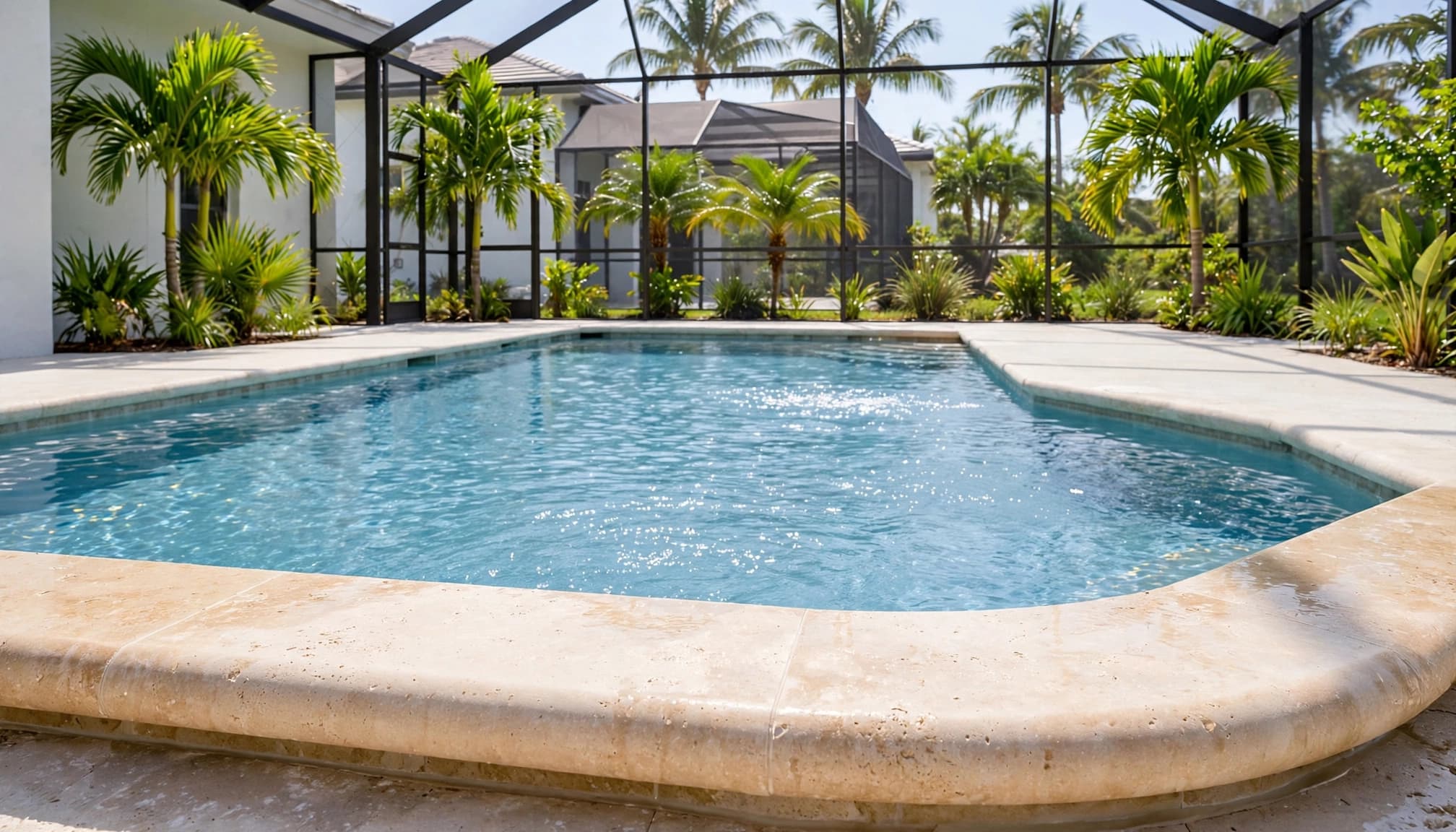
Bullnose coping
Bullnose coping has a rounded outside edge. The curve creates a softer visual transition between the water and deck, which often suits freeform pools, Mediterranean-inspired homes, and traditional outdoor spaces.
A rounded profile can also change how the edge feels when someone rests an arm or sits near the pool. However, the curve alone doesn't determine comfort or safety. The selected material, finish texture, construction quality, and surrounding deck still matter.
Bullnose coping can be made with different materials and finishes, so ask to see a physical sample in direct sunlight and beside the proposed pool tile.
Square-edge coping
Square-edge coping has a sharper, more defined outside line. It works well with rectangular pools, straight walls, modern homes, and clean deck layouts.
This profile draws attention to the geometry of the pool. It can create a crisp border between a contrasting coping material and the surrounding deck. The installer must form the corners and transitions accurately, especially when the pool has steps, raised spas, benches, or changes in elevation.
A square edge isn't automatically less comfortable or more hazardous. Those concerns depend on the complete design and the way the edge is finished.
Cantilevered coping
Cantilevered coping extends the deck material slightly over the pool wall. The result is a continuous-looking edge instead of a separate, visibly thick coping piece.
This approach can suit simple concrete decks and contemporary designs. It may also help create a minimal line around freeform or geometric pools. The final appearance depends on the formwork, concrete finish, edge shape, and joint layout.
Ask how the contractor will support and finish the overhanging edge. The detail should be shown in the plans or written scope before work begins.
Match the Profile to the Pool and Deck Design
Coping should look intentional from every angle. Compare it with the home's exterior materials, lanai columns, screen enclosure, walkways, and deck pattern instead of selecting it in isolation.
Coordinate with the architecture
A coastal or traditional Fort Myers home may work well with a rounded edge and a softer stone or concrete finish. A modern home with straight rooflines and large windows may look better with square coping and a simple deck pattern.
The pool shape matters just as much. Freeform pools usually need coping that follows curves cleanly. Rectangular pools make straight joints and consistent corner details more visible. A raised spa or infinity edge may require different coping details than the main pool.
Bring the pool plans, exterior elevations, tile samples, and deck samples into the same design discussion. This reduces the chance of choosing a coping color or shape that looks disconnected after installation.
Plan the deck transition
The deck may use poured concrete, pavers, stone, or another finish. Each option creates a different joint and elevation detail at the pool edge.
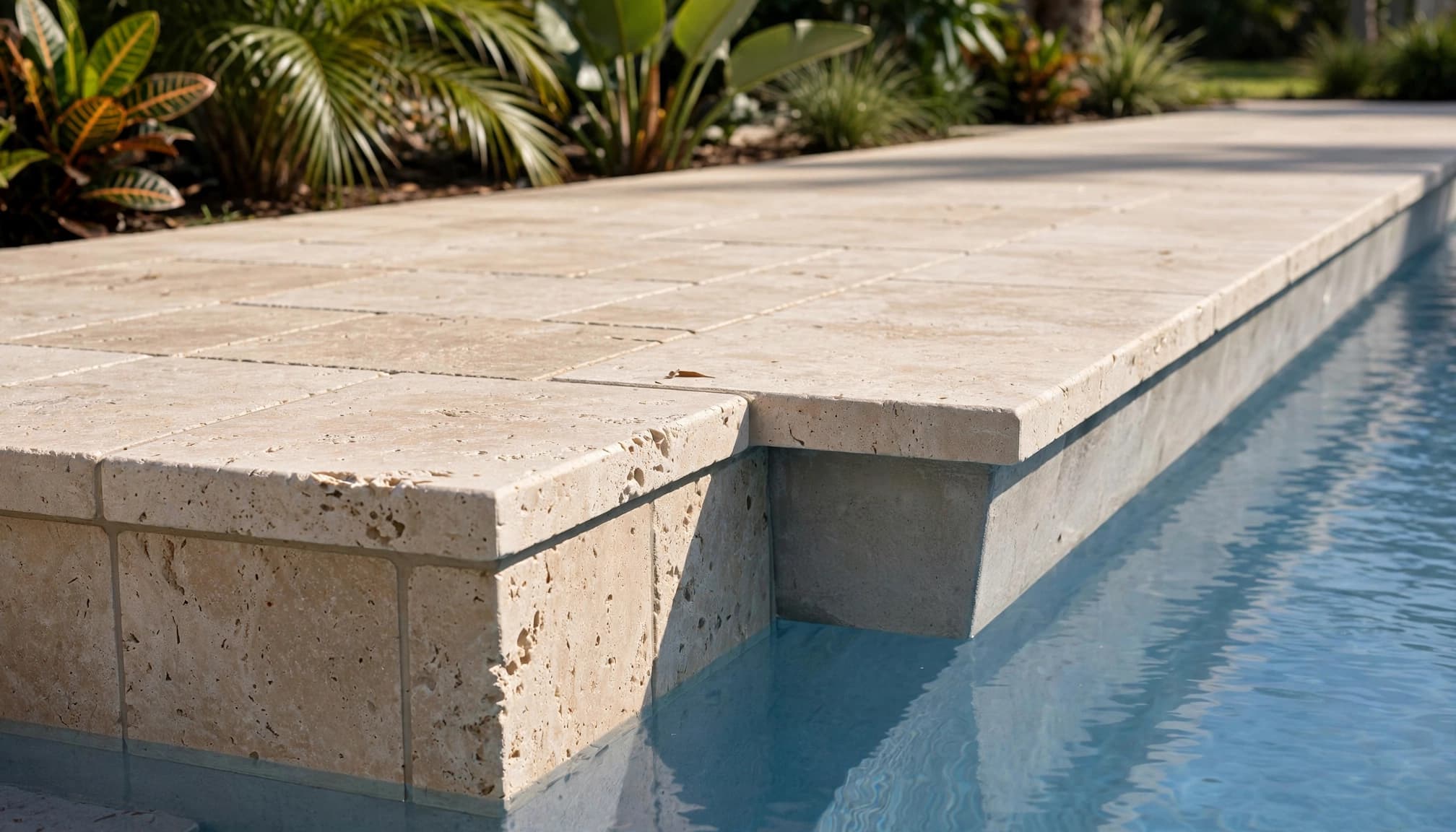
The finished surface should direct water toward the planned drainage path. It shouldn't send runoff toward the house, pool equipment, or low areas around the screen enclosure. In Southwest Florida, heavy rain can expose poor grading quickly.
Also review door thresholds, walkways, screen enclosure posts, equipment access, and deck elevations before construction. A coping choice that looks good in a rendering may require adjustments once these fixed features are measured.
Consider Comfort, Traction, and Southwest Florida Conditions
Profile selection affects the shape and feel of the edge, but it doesn't answer every safety or maintenance question. Discuss the entire pool perimeter with the contractor.
Look beyond the edge shape
A rounded coping profile may feel different from a sharp profile, but traction depends more on the material and surface texture than on the profile name. Excessively rough finishes can irritate bare feet and collect dirt. Very smooth finishes may require closer review for wet areas.
Color also affects outdoor comfort. Dark finishes absorb more heat in direct sun, while lighter colors may feel cooler. The result depends on the material, shade, air temperature, and how much sun reaches the pool deck.
Request samples outdoors, both dry and wet. A color that looks neutral in a showroom can appear much lighter, darker, or more reflective beside blue pool water.
Account for moisture, salt, and chemicals
Humidity and rain can slow drying during installation. Ask how the crew will manage moisture and weather delays before applying concrete finishes, sealers, or other products.
Salt air and saltwater systems can leave deposits on nearby surfaces. Pool chemicals, ultraviolet exposure, frequent cleaning, and standing water can also affect finishes over time. The coping profile won't prevent those conditions, so ask for product-specific care instructions.
In addition, a rigid connection between the pool deck and coping can crack when the pool structure and surrounding concrete move at different rates. The contractor should explain where isolation or expansion joints will go and how the plan protects those joints.
A coping sample shows color and shape, but the written scope should also show joints, elevations, drainage, and the deck transition.
Separate the Coping Profile from the Coping Material
The profile describes the edge shape. The material describes the actual product. Two pools can use the same bullnose profile but look completely different because one uses poured concrete and the other uses natural stone.
Poured or precast concrete can support many shapes and finish choices. Stone coping may provide a more substantial appearance and coordinate with pavers or masonry. Pavers can create a modular border, but the base, joints, and edge restraints need to be part of the installation plan.
Material affects more than appearance. It can influence heat, texture, cleaning, sealing, color variation, replacement options, and the way the deck meets the pool. Ask what happens if one section cracks, stains, shifts, or needs replacement later.
Review samples and maintenance requirements
Don't choose from a small indoor sample alone. Place samples beside the proposed tile and deck material. View them in direct sun, shade, and after wetting them.
Ask the contractor or manufacturer:
- What cleaning products are approved?
- Does the material require sealing?
- How does the finish handle salt deposits and pool chemicals?
- Can individual sections be replaced?
- What does the warranty cover?
- How should joints be maintained?
A qualified pool professional can also explain whether the selected material works with the planned edge, bond beam, deck structure, and drainage details.
Build the Coping Choice into Your Pool Budget
Coping is one part of a larger pool budget. The total project can also include excavation, engineering, reinforcement, plumbing, electrical work, equipment, tile, interior finish, decking, drainage, screen work, and landscaping.
A Southwest Florida cost guide places custom coping upgrades at approximately $5,000 to $15,000 or more , depending on the scope. That figure applies to custom coping work generally, not to one specific profile.
For broader context, standard inground gunite pool installations in Cape Coral may range from about $50,000 to $120,000 , while luxury custom pools can exceed $150,000. Decking and coping materials may account for roughly 15% to 25% of the total project cost. These are planning ranges, not guaranteed prices.
Review the estimate line by line. Confirm whether it includes coping material, demolition, installation, joints, sealing, deck transitions, cleanup, and approved changes caused by site conditions.
Southwest Florida sites may involve shallow groundwater, drainage limits, difficult access, and permit requirements. Compare complete scopes instead of choosing the lowest starting number. You can review broader Southwest Florida pool construction costs before finalizing allowances.
Choose Differently for New Construction and Renovation
A new pool gives you more control because the shell, coping, deck, drainage, and screen enclosure can be planned together. A renovation must work with existing elevations, joints, plumbing, structural conditions, and access limitations.
New pool construction
For a new gunite pool, select the coping profile while the pool shape and deck are still being designed. Confirm how it will meet the interior tile, raised features, steps, sun shelves, and surrounding hardscape.
The construction schedule may take several weeks to months, depending on the design, weather, permits, and site conditions. Changes are easier to evaluate before gunite, tile, and deck work are complete.
Pool renovation
A renovation may involve replacing coping, resurfacing the deck, repairing joints, correcting drainage, or changing the entire pool edge. Resurfacing adds a thin layer and may not correct unstable slabs, major grade problems, or movement below the surface.
Have the contractor inspect coping, drains, screen enclosure posts, door thresholds, expansion joints, and transitions to walkways. Covering a drain or bridging a joint can create new problems. For an existing pool, Southwest Florida pool renovation services can include coping and broader outdoor updates.
Key Takeaways
- A coping profile is the shape of the pool edge, while coping material is the product used to build it.
- Bullnose, square-edge, and cantilevered profiles can all work when matched to the pool and deck design.
- The profile doesn't determine safety or comfort by itself. Texture, color, joints, drainage, and installation quality also matter.
- Southwest Florida heat, rain, humidity, salt, and chemicals should influence material and maintenance discussions.
- Ask for a detailed scope that identifies the profile, material, joints, elevations, drainage, warranty, and total allowance.
- Have a qualified pool professional confirm the structural and installation details before approving the design.
FAQ About Gunite Pool Coping
Is bullnose coping the safest choice?
No profile is automatically safest for every pool. A rounded edge may feel different from a square edge, but traction and comfort depend on the material, texture, maintenance, and surrounding deck. Review the complete installation with a qualified professional.
Can I change the coping profile during a pool renovation?
Sometimes, but the existing pool wall, deck, joints, elevations, and drainage may limit the options. A contractor should inspect the existing structure before promising a new profile. Renovation work may require deck removal or replacement rather than a simple surface application.
Should coping match the pool deck?
It doesn't have to match exactly. Contrasting coping can define the pool perimeter, while coordinated colors and textures can create a more continuous appearance. The best choice depends on the home, tile, deck material, and outdoor lighting.
Does custom coping add much to the budget?
It can. Custom shapes, materials, corners, raised features, and installation details may increase labor and material costs. Ask for coping as a separate line item so you can compare the base allowance with the selected upgrade.
Conclusion
The right gunite pool coping profile is the one that fits the pool's shape, the home's architecture, the deck transition, and the way your family uses the space. Bullnose, square-edge, and cantilevered designs each create a different visual line, but the profile should be reviewed alongside material, texture, joints, drainage, and maintenance.
Before approving the selection, request samples, a detailed scope, and a clear explanation of how the coping will connect to the pool and deck. A qualified Southwest Florida pool professional can confirm whether the design works with your site's structure, permits, weather conditions, and long-term plans.