How to Plan a Gunite Pool Autofill and Overflow System
Explore Our Services
Contact Us Today!
(239) 322-9295
A Southwest Florida pool can lose water during a dry week and gain too much during one afternoon storm. If you're planning a gunite pool, a controlled water level matters for everyday use and for protecting the surrounding deck and yard.
A pool autofill system replaces water when the level drops. An overflow gives excess water a planned route when rain raises it. Both work best when they're designed alongside the shell, plumbing, deck, and drainage, before construction makes changes expensive.
Plan the pool layout before gunite
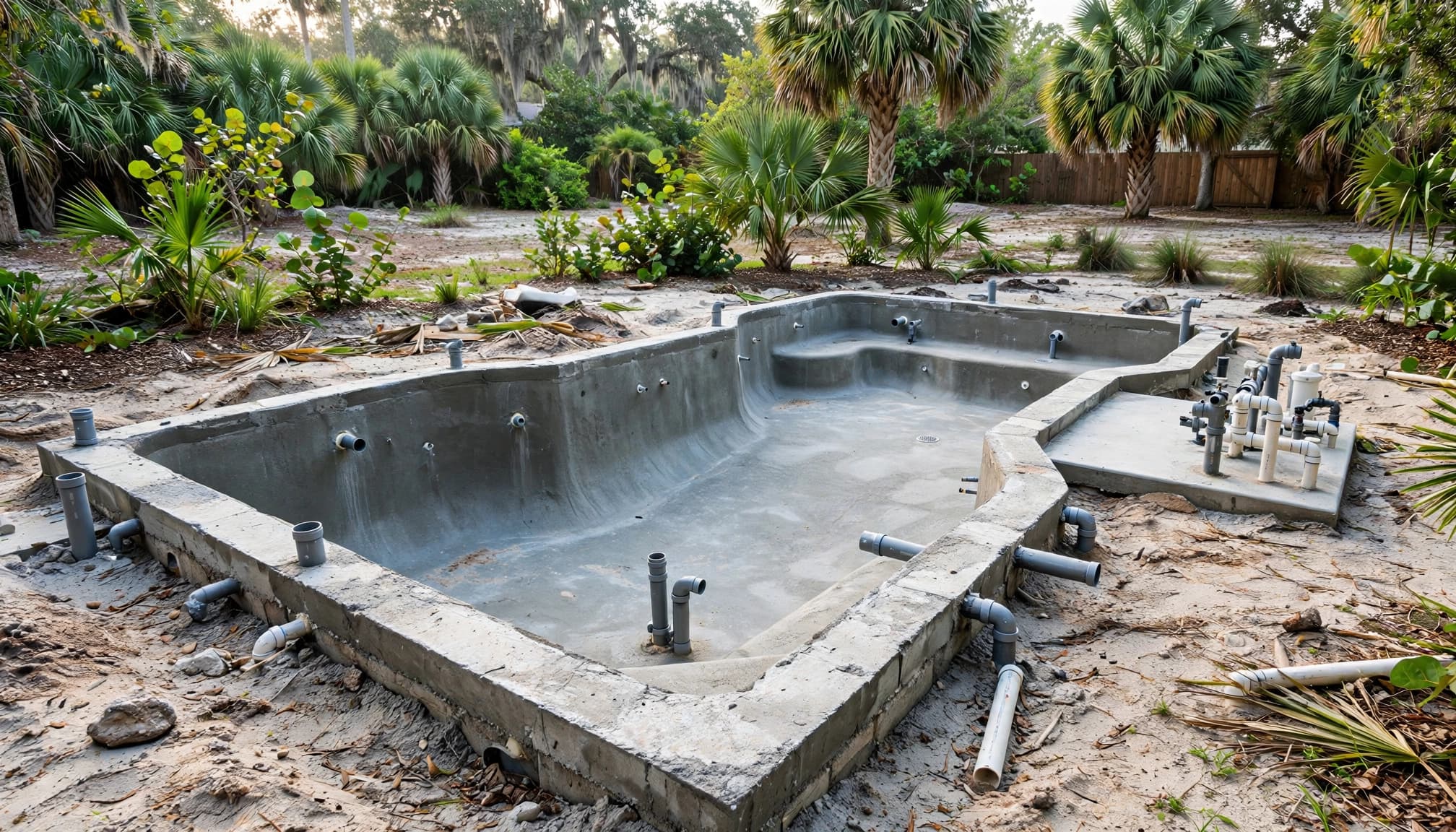
Autofill and overflow details belong on the pool plan, not on a list of accessories to add at the end. Gunite construction involves excavation, steel, plumbing, shell application, and finishing. Once the deck and interior finish are complete, reaching a misplaced line becomes much harder.
Set the working water level first
The designer needs a target water level that suits the skimmer, tile, coping, and any spa or water feature. The autofill should respond below that level; the overflow should handle water above it. Their relationship matters more than either component considered alone.
A sun shelf, raised spa, or unusual pool shape can change where level controls make sense. Ask your pool professional to show both components on the drawings and explain how they'll work during normal circulation and heavy rain.
Coordinate routes with the deck and yard
Mark the proposed water-supply route, overflow route, equipment area, deck elevations, and existing drainage features before excavation. This is especially useful when new pool design and construction happens alongside a new home or lanai.
Southwest Florida lots can have sandy soil, shallow groundwater, swales, utility easements, and tight side yards. Each can affect where a line travels and where overflow water may go. A route that looks convenient on a sketch may conflict with an easement or an approved drainage pattern.
Decide how the pool autofill system will work
A pool autofill system monitors water level and opens a supply valve when the pool needs water. Designs may use a mechanical float in a separate access chamber or an electronic level control. The right choice depends on the pool layout, available utilities, service access, and the builder's approved design.
Keep the sensing point serviceable
An autofill can't work reliably if its sensing point gets blocked, damaged, or difficult to reach. Ask where the float chamber or sensor will sit after coping, decking, landscaping, and any screen enclosure are finished.
The access cover should remain reachable without lifting pavers or cutting through planted areas. It should also be easy to identify during a service visit. If a shared chamber is proposed for level control and overflow, have the pool professional explain how the two functions remain properly separated.
Choose controls you can manage
Some homeowners prefer a simple mechanical arrangement. Others want an electronic control with status information or alerts. Either way, you should know where to shut off the autofill and how to recognize a valve that stays open.
Automation doesn't replace checking the pool. A stuck valve can add water unnecessarily, while a failed sensor may leave the level low. Ask your builder what happens during a power outage if the proposed design uses electronic controls.
Protect the household water supply
Autofill water usually comes from a potable supply, so its connection needs more attention than an ordinary hose near the pool. Backflow protection helps prevent pool water from reaching the drinking-water system. Its required type and location depend on the approved plumbing design and local requirements.
Confirm the connection before work begins
Have a qualified plumber and pool professional identify the water source, shutoff, protection method, and applicable inspections. A home's existing irrigation connection isn't automatically an acceptable source for a pool. Nor should a contractor assume a nearby outdoor faucet settles the design.
If the home and pool are built together, coordinate the supply route before slabs, patios, and landscaping limit access. On an existing property, confirm where other buried utilities run before choosing a path.
Leave room for future service
Valves and protective devices may need inspection, testing, or replacement, depending on the approved arrangement. Keep them accessible and protected as the surrounding outdoor space takes shape.
Ask for a clear handoff showing the autofill shutoff and explaining which components a homeowner can observe. A licensed professional should handle plumbing changes and any required backflow testing. Local plumbing rules, utility requirements, and permits govern the final installation.
Give overflow water an approved destination
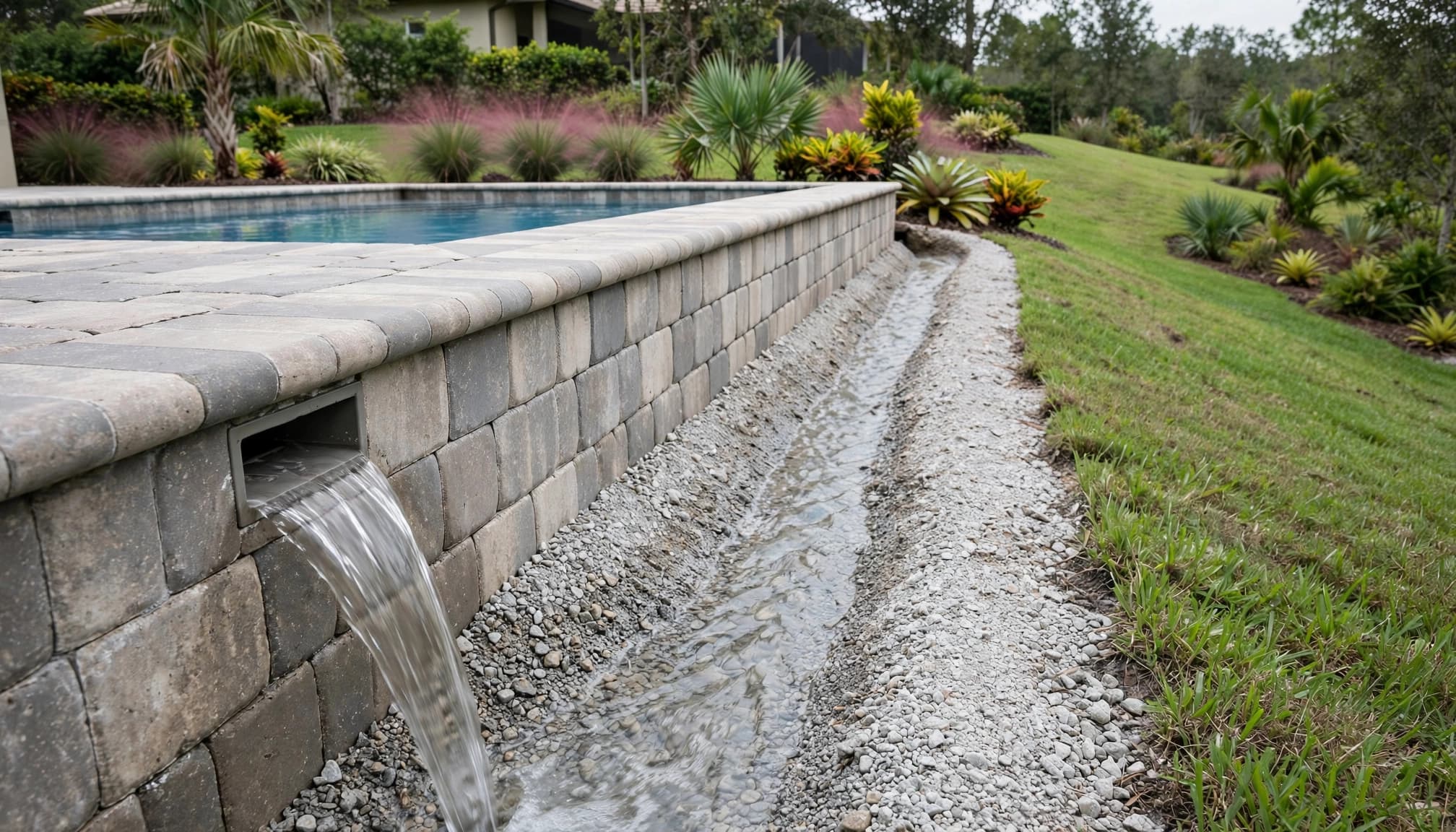
During a Southwest Florida downpour, an overflow outlet needs somewhere to send water. Simply adding an opening to the pool doesn't solve a drainage problem if its discharge collects beside the foundation or flows into a neighbor's yard.
Separate pool overflow from deck runoff
Pool overflow handles water that rises inside the pool. Deck drainage handles rain falling on the surrounding hardscape. Both affect the yard, but one shouldn't be mistaken for a complete solution to the other.
Review deck slopes, roof downspouts, lanai drainage, and existing swales together. For example, a pool outlet directed toward a low spot already receiving roof runoff may leave standing water after storms. Planning backyard and lanai design with the pool helps keep those grades and drainage paths consistent.
Trace the discharge all the way out
Ask the designer to identify the outlet and the full downstream route on the site plan. Check how it relates to the house, adjoining property, easements, groundwater conditions, and the property's approved drainage plan.
Don't assume a canal, street inlet, storm drain, sanitary sewer, or swale is an allowable connection. Discharge options and permits vary by jurisdiction and site. A qualified pool professional should confirm the route with the appropriate local authority before work begins.
An overflow works only when the water has an approved path beyond the pool deck.
Use autofill without losing track of water use
Autofill saves you from repeatedly topping off the pool by hand. It doesn't necessarily conserve water on its own. Because it replaces losses automatically, it can hide a leak that a falling waterline would otherwise reveal.
Watch for abnormal filling
Learn how your system indicates that it's filling, and review water use when a bill rises unexpectedly. If the pool repeatedly needs makeup water without an obvious reason, have a professional investigate rather than adjusting the level control to compensate.
Splash-out, evaporation, filter cleaning, and leaks can all affect water demand. Rainfall changes the picture too, so a single day's water level rarely tells the whole story. A persistent pattern deserves attention.
Reduce losses before adding more water
Keep the pool's equipment in good repair and address visible leaks promptly. A suitable pool cover may reduce evaporation when the pool isn't in use, although it needs to fit your pool and how you use it.
Also check that the autofill and overflow aren't working against each other. If the control adds water near the overflow point, water may leave soon after it enters. Have the builder verify their intended operating levels rather than relying on guesswork at startup.
Put the design, approvals, and costs in one scope
Autofill and overflow involve different trades and parts of the project: pool plumbing, household water supply, site drainage, deck work, and sometimes electrical controls. A clear written scope makes it easier to see who is responsible for each connection and test.
Match approvals to the address
A property within Fort Myers city limits follows the city's permit process; an unincorporated Lee County property follows the county's. Site plans and drainage information can matter alongside structural and safety details. Other Southwest Florida locations have their own requirements.
Ask your contractor to confirm the reviewing jurisdiction before the layout is finalized. Plumbing, backflow protection, overflow drainage, and permits must meet local requirements. The approved drawings, not a detail borrowed from another pool, should guide construction and inspections.
Compare complete proposals
Ask whether a proposal includes the level-control equipment, supply connection, required backflow protection, overflow line, discharge work, access covers, and commissioning. Confirm who handles restoration if a route crosses an existing patio or landscaped area.
For budget context, Cutting Edge Homes & Renovations' 2026 Southwest Florida pool construction costs place most new in-ground residential pools between $70,000 and $130,000. That range describes whole pool projects, not the price of an autofill or overflow addition. Request a project-specific quote that identifies these items rather than assuming they're included.
Commission both systems before handoff
Installation isn't finished when the pipes disappear beneath the deck. The builder should demonstrate how the autofill and overflow behave, identify accessible shutoffs, and document any required inspections before handing over the pool.
Test normal filling and rain response
Have the pool professional verify that the autofill responds at the intended level and stops when it should. The overflow route should also be checked for proper flow and an appropriate discharge location. Any test must follow the approved design and the contractor's commissioning procedure.
Ask what the pool level should look like in normal use. If the pool has a spa or water features, confirm whether their operating modes affect the level you see. Keep the equipment instructions and approved plan with your household records.
Make seasonal checks routine
After heavy rain, look for standing water near the deck, equipment pad, or house. During dry periods, notice whether the autofill appears to run unusually often. Keep accessible covers clear of soil and plant growth.
For an existing gunite pool, adding or changing these systems may involve more than replacing a valve. Older deck grades or drainage routes may need correction as part of pool renovation services in Southwest Florida. Confirm that scope with a qualified pool professional before opening finished surfaces.
Key Takeaways
- Plan the operating water level, autofill location, overflow outlet, and service access before gunite and decking.
- Treat household water protection and overflow discharge as separate design decisions, each subject to local approval.
- At handoff, confirm that filling stops, excess water follows its approved route, and you know where to shut the supply off.
Frequently Asked Questions
Does every gunite pool need an autofill?
No. An autofill is a convenience that replaces water when the level drops. Whether it fits your project depends on the pool design, water-supply connection, budget, and maintenance preferences. You can still manage the level manually if the design and equipment allow it.
Can the overflow drain into an existing swale?
Possibly, but don't choose that route without checking the site's drainage plan and local requirements. The swale's location, intended flow, easements, and neighboring properties matter. Have the pool professional confirm an approved discharge path before the line is installed.
Will autofill tell me if my pool leaks?
Not by itself. It may keep the waterline steady while adding more water than usual. Monitor its operation and your water use, then arrange a professional leak assessment if the pool needs frequent makeup water without a clear explanation.
Conclusion
The best time to decide where pool water enters and leaves is while the gunite pool is still on the drawing board. That lets your builder coordinate water level, supply protection, drainage, and access with the rest of the yard.
Confirm the design with a qualified local pool professional, then test both systems before handoff. A planned water path is far easier to live with than one discovered during the first heavy rain.