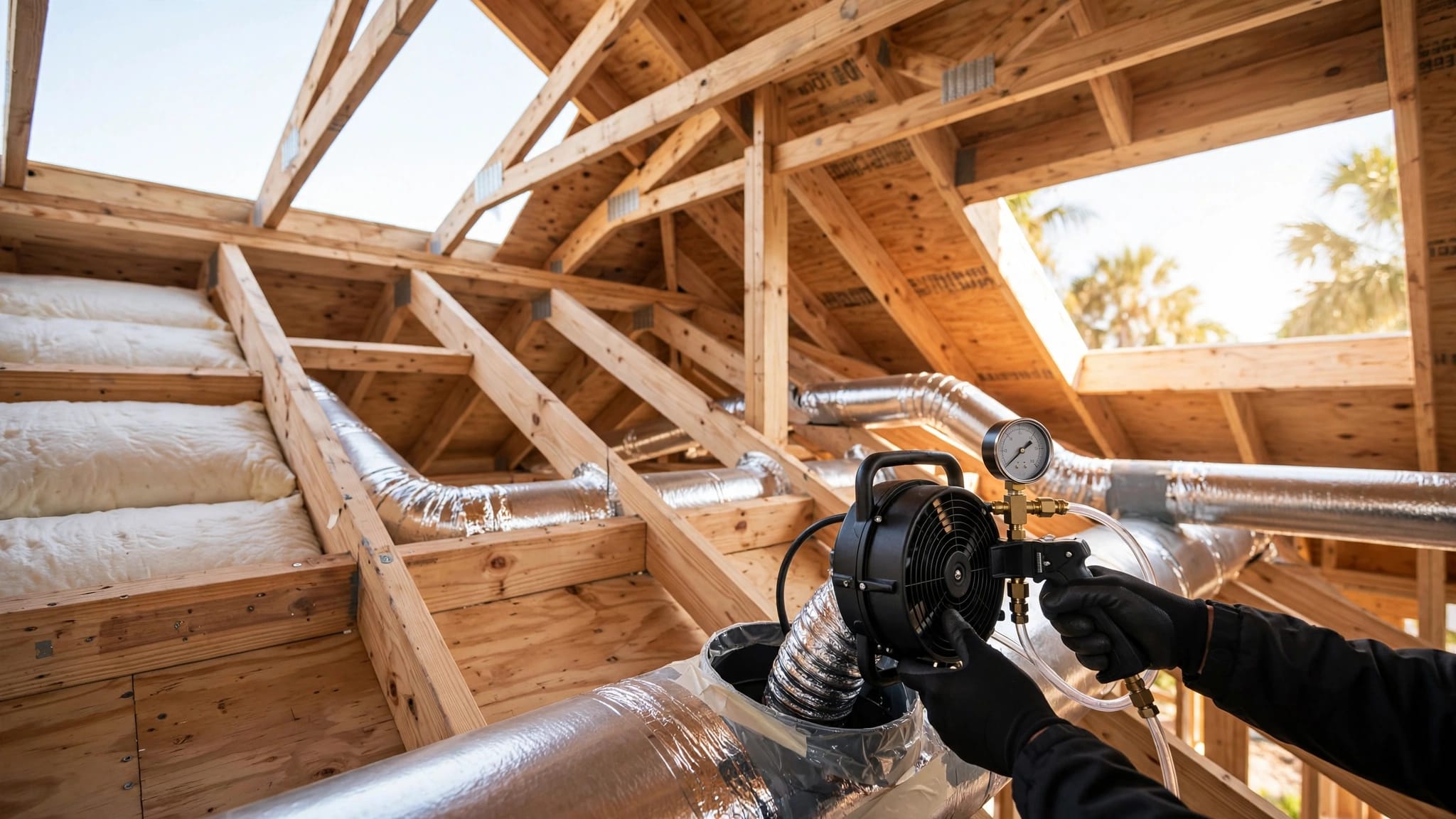
HVAC Curb Flashing for Fort Myers Roofs
Explore Our Services
Contact Us Today!
(239) 322-9295
A rooftop air conditioner can leave your home vulnerable to leaks at the point where its curb meets the roof. In Fort Myers, wind-driven rain can test that joint long before an obvious stain appears indoors. HVAC curb flashing helps move water across the roof covering and away from the opening, but it must fit the roofing system and the equipment.
If you're building, replacing a roof, or changing a rooftop unit, the best time to settle that detail is before anyone covers it up.
What HVAC curb flashing protects
A roof curb is the raised support around an opening for rooftop equipment. Flashing connects that curb to the surrounding roof so rain has a route past the opening rather than into it.
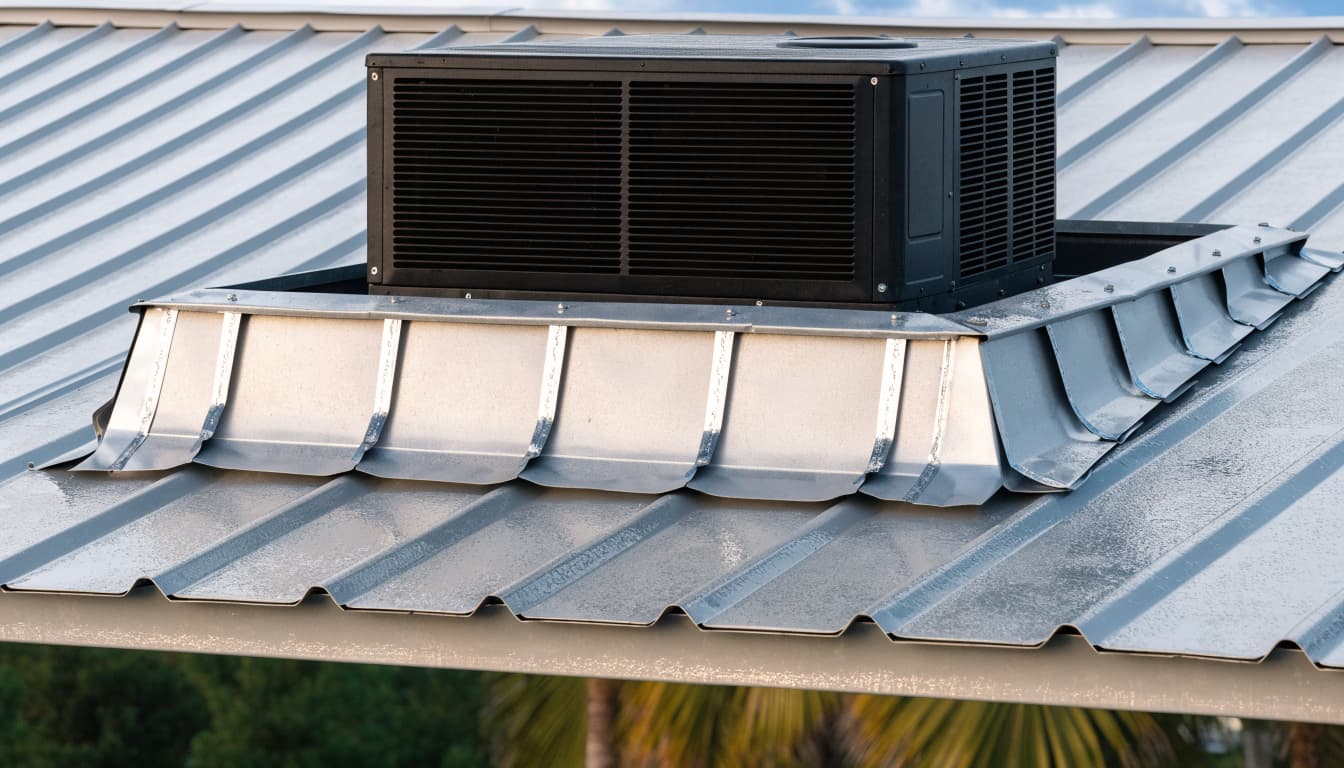
The curb, flashing, and roof work together
Water protection depends on the full connection. The curb must suit the equipment and roof assembly. Then the roof's underlayment, covering, flashing, and termination details must meet it in an arrangement that directs water outward.
The unit above also needs a properly detailed connection to the curb. Even sound roof flashing cannot correct an opening or equipment connection that lets rain enter above it.
Sealant has a limited job
A bead of sealant may close a joint called for by the selected system. It cannot replace missing flashing or correct a poor overlap. Sun, movement, and weather can also expose weak spots in a repair that depends on surface caulk alone.
That matters when a roof looks sound from the ground. The vulnerable detail may sit beneath the unit's edge or behind the visible roof covering.
Why Fort Myers weather tests the curb
Southwest Florida roofs face heavy rain, strong winds, intense sun, and hurricane exposure. The curb is a break in the roof surface, so its corners and material transitions deserve close attention.
Wind changes how rain reaches a joint
Ordinary rainfall tends to run downslope. During a storm, wind can push water sideways or against an uphill curb face. Water may also linger where debris interrupts drainage.
A detail that sheds rain on a calm day may struggle when wind presses water toward an exposed joint. For that reason, a roofer needs to assess the curb on all sides , including the corners.
Exposure affects more than waterproofing
Wind also places loads on the rooftop equipment, its curb, and their connections. Flashing is only one part of that assembly. Its ability to keep water out does not establish whether the unit and curb have the support required for a particular home.
A Fort Myers property near open water may have different exposure from a more sheltered inland home. The permitted design, equipment instructions, and site conditions must guide the work.
How flashing should meet the roof
The basic water-management principle is straightforward: upper components should shed water onto the protected surface below. The approved detail determines how that principle applies to a particular curb and roof covering.
Follow the drainage path
On the uphill side, runoff must pass around or over the curb detail without finding an opening behind it. At the sides, flashing must continue that path past the corners. On the downhill side, water needs a way back onto the roof covering.
Roofers also need to account for the underlayment beneath the visible surface. A neat metal edge doesn't prove that the concealed layers connect correctly. During a new installation or roof replacement, photos before the covering goes on can help document those transitions.
Keep other openings separate
Refrigerant lines, electrical connections, and condensate piping can create additional paths for water. Their penetrations need details appropriate to the equipment and roof system. A damp ceiling near the unit does not, by itself, prove the curb flashing is the source.
This is where coordination matters. Professional roof installation services include flashing and underlayment work, while the HVAC contractor handles equipment-specific connections. Both should know where one trade's work meets the other's before the roof is closed.
Match the curb detail to the roof covering
Fort Myers homes commonly use asphalt shingles, metal roofing, or tile. Each presents a different surface and attachment method. Homeowners choosing a new covering can compare residential roof types before settling the equipment and curb plan.
Asphalt shingles
Shingles shed water through overlapping courses. Curb flashing has to fit that arrangement without sending water beneath a course or relying on caulk across the exposed shingle surface.
During a replacement, the roofer should examine the existing curb and the roof materials around it. Reusing a curb without checking its condition and compatibility can carry an old problem into a new roof.
Metal roofing
Panel shape and seams affect where water travels around a curb. Cutting into a metal roof also creates edges and transitions that need a detail suited to that panel system.
Fasteners, metal components, coatings, and sealants must be compatible with one another and with the roof manufacturer's instructions. A generic metal box is not enough information to judge the finished connection.
Tile roofing
Tile is the visible covering, but the water-management layers beneath it matter at an equipment opening. The curb detail must connect to those layers while allowing the surrounding tiles to sit and drain as intended.
Cracked or poorly fitted tiles can complicate an otherwise careful repair. Ask how the contractor will address the underlayment and replace any tile disturbed by the work, rather than judging the repair by its surface appearance.
Choose materials for the home's exposure
Corrosion deserves attention in humid Southwest Florida, particularly where salt-laden air reaches the roof. The right material choice depends on the home's location, the roof system, and the approved curb detail.
Check the full group of components
Flashing, fasteners, coatings, and adjacent roof metal need to work together. Incompatible materials can corrode at contact points. A protective finish also loses value if installation damages it and leaves an exposed edge.
Ask the roofing contractor to identify the specified materials for your property. The answer should match the roof and curb documentation, not a general claim that the parts are "hurricane-ready."
Confirm adhesion and movement
Some flashing systems use membranes and sealants at joints. Their performance depends on compatible surfaces and proper preparation. Dust, moisture, or a product substitution can weaken a bond even when the finished edge looks tidy.
Equipment and roof materials may also move differently under heat and wind. The selected assembly should account for those transitions according to its approved installation instructions.
Coordinate roof and HVAC work before installation
A curb sits between two scopes of work. Roofers manage its integration with the roof; HVAC professionals address the unit's fit, support requirements, and equipment connections.
On a new home or major remodel
Settle the unit location, curb selection, and roof covering early enough for both trades to review them. The roof opening, structural support, drainage route, and access for future service all affect the final detail.
Then confirm who supplies and installs each component. A gap in responsibility can leave a neatly finished roof with an unresolved connection beneath the unit.
During a roof replacement or unit change
New roofing does not automatically make an old curb suitable for continued use. Likewise, a replacement HVAC unit may not fit the existing curb as intended. Have the contractors compare the actual equipment, curb, and approved plans before reusing parts.
Current Florida Building Code requirements, applicable local requirements, and permit conditions depend on the project. A qualified contractor or local building official can confirm what applies to your home; general flashing guidance cannot replace that review.
Spot problems before a small leak spreads
Curb leaks can resemble problems with nearby penetrations or the HVAC system's condensate drainage. An inspection should find the entry point before anyone commits to a surface repair.
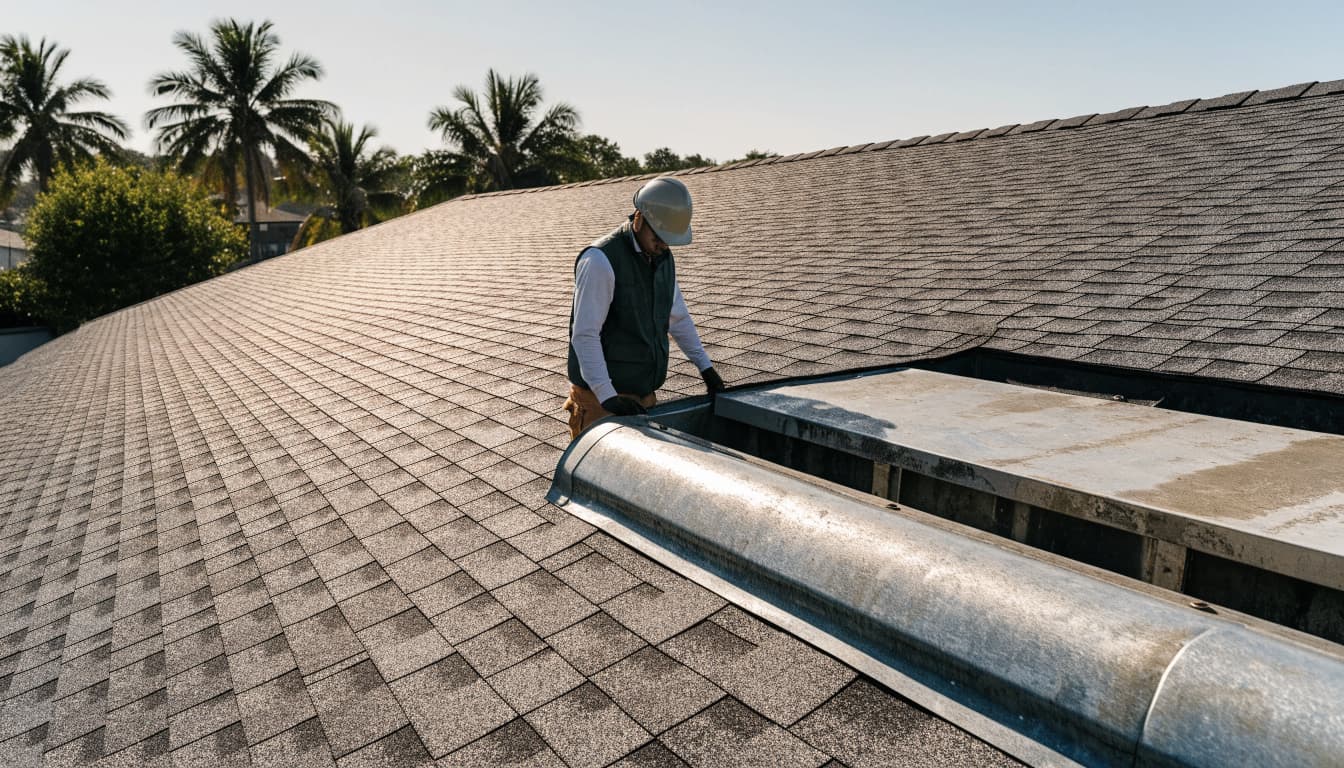
Watch for changes after heavy rain
Indoor clues include a ceiling stain near the unit, damp insulation, or a musty odor that appears after storms. From a safe location, you may also notice displaced roofing, visible rust, or debris gathered beside the curb.
Don't climb onto a wet or storm-damaged roof to investigate. Note when the symptom appeared and share photos of any interior damage with the contractor.
Ask for a diagnosis, not a caulk patch
A roofer can review the covering, curb perimeter, and surrounding roof condition. The HVAC contractor may need to check condensate and equipment connections too. Fort Myers roof inspection services can help establish the roof's condition before a repair plan is chosen.
If a storm has opened the roof to rain, temporary protection may be needed before roof leak and storm damage repairs can proceed. A permanent fix should address the failed connection, not merely cover the visible stain.
Key Takeaways
- HVAC curb flashing must connect the raised curb to the roof's water-management layers, not depend on sealant alone.
- Wind-driven rain can reach uphill faces and corners that ordinary runoff may not test.
- Shingle, metal, and tile roofs call for different curb details; material and equipment compatibility matter.
- A qualified roofer and HVAC professional should review shared connections before installation or repair.
Frequently Asked Questions
Can a roofer replace curb flashing without replacing the HVAC unit?
Sometimes. The decision depends on access, the curb's condition, the roof system, and whether the existing equipment connection can remain intact. A roofer and HVAC professional should review the assembly together before work begins. Disturbing the unit without a coordinated plan can leave another part of the connection exposed.
Does new caulk fix a leak around a rooftop air conditioner?
Caulk may be part of an approved joint detail, but it won't correct damaged underlayment, failed flashing, or an incompatible curb. Water can also come from condensate piping or another nearby opening. Find the source first so the repair addresses the failed component.
Should the curb be inspected after a hurricane?
Yes, especially if you notice interior moisture, displaced roofing, debris around the unit, or visible damage. Keep off a damaged roof and arrange a professional assessment. The inspection should consider the surrounding covering and equipment connections as well as the flashing.
Who confirms the correct curb detail for my Fort Myers home?
Your licensed roofing contractor should review the roof system and permitted project documents. The HVAC contractor should verify the equipment and curb connection. For questions about applicable requirements or inspections, consult the local building department. The correct detail depends on the actual home, not a universal curb-flashing sketch.
Protect the connection beneath the unit
The leak-prone point around a rooftop air conditioner is easy to overlook because much of it disappears beneath the finished roof and equipment. Early coordination gives the roofer and HVAC contractor a chance to confirm how water will pass the curb before those layers are covered.
If you see signs of moisture, seek a site-specific inspection. A lasting repair starts with finding where water enters.