
Kitchen Cabinet Hardware Placement Guide for Cape Coral Remodels
Explore Our Services
Contact Us Today!
(239) 322-9295
Small hardware decisions can make new cabinets look crisp and intentional, or slightly off every time you enter the kitchen. Thoughtful cabinet hardware placement gives doors and drawers a consistent rhythm while making daily use easier.
For Cape Coral homeowners, the right plan starts before anyone drills the first hole. Match the hardware to the cabinet style, confirm the final layout, and review every unusual panel with the installer before cabinetry leaves the shop.
Key Takeaways
- Choose knobs, pulls, and handles after the cabinet door style, drawer fronts, appliances, and countertop selections are confirmed.
- Keep placement consistent within each cabinet group, but don't force oversized doors, narrow drawers, or appliance panels to follow the same pattern.
- Use a hardware template for repeatable drilling, then check it against a real door and drawer front before installation begins.
- Match pull length to the scale of the cabinet front, rather than selecting every piece by cabinet width alone.
- Confirm all dimensions with the cabinet manufacturer, hardware instructions, and the installer's field measurements.
- Give accessibility the same priority as appearance. Hardware should be easy to grip, reach, and use without pinching fingers.
Start With the Cabinet System, Not the Hardware
A pull that looks balanced on a showroom sample can feel too short on a tall pantry door or too large on a shallow drawer. Cabinet construction, door profile, rail width, and drawer-front height should guide the final selection.
Cape Coral kitchens often combine a large island, tall pantry storage, and wide drawer banks. That mix calls for a placement plan that considers each cabinet zone while maintaining a unified look.
Confirm the door and drawer style
Shaker cabinets have visible rails and stiles, so many homeowners position hardware on those framed sections. Slab doors offer more freedom, although consistent edge spacing and alignment still matter.
Look at the cabinet faces as a complete elevation, not as individual pieces. A centered knob on one drawer may look wrong when the adjacent drawers use long pulls at a different visual height.
Separate cabinet zones before drilling
Group upper doors, base doors, drawer stacks, tall cabinets, and appliance panels. Each group can have its own placement approach, provided the hardware appears deliberate when viewed together.
For example, upper cabinets usually call for hardware near the lower corner of the door, while base cabinet doors typically place it near the upper corner. The goal is a comfortable reach and a repeatable line across the run.
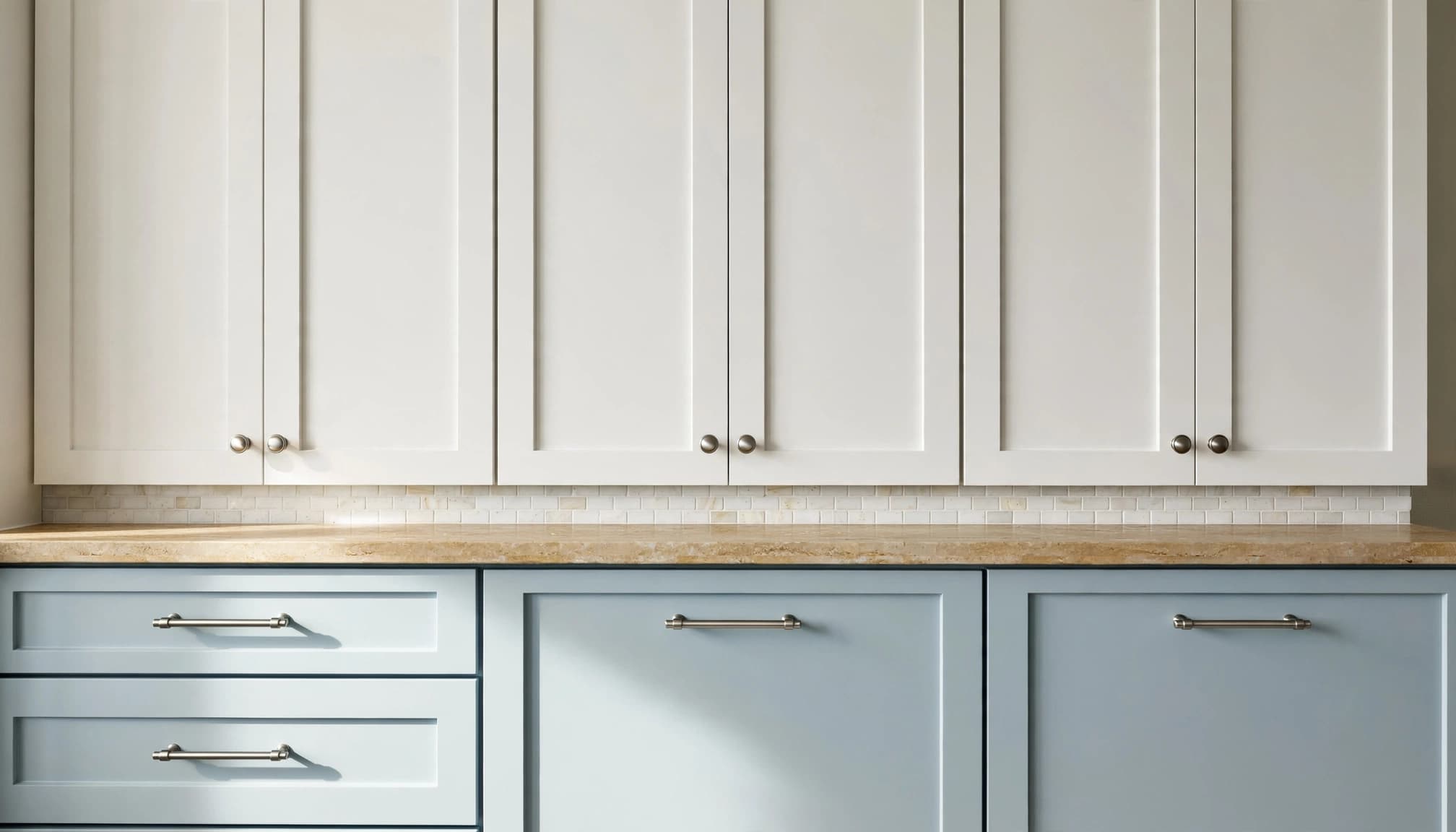
Cabinet Hardware Placement for Doors and Drawers
The most reliable cabinet hardware placement plan creates order without treating every cabinet front as identical. Establish a visual reference line, then make measured adjustments for cabinet size and function.
Before drilling, tape a sample knob or pull onto several fronts. Open doors, pull out drawers, and stand back across the kitchen. This simple test catches awkward locations before permanent holes are made.
Place hardware where hands naturally reach
On base doors, hardware near the upper outer corner makes the door easy to open without bending. On upper doors, hardware near the lower outer corner offers the same practical reach.
For paired doors, place matching hardware near the meeting edges. This creates symmetry and keeps both handles close to where your hands naturally pull the doors apart.
Use the drawer front as the visual guide
A horizontal bar pull often follows the centerline of a shallow drawer front. Taller drawer fronts may need a pull placed higher, or a pair of pulls, so the hardware doesn't look lost in empty space.
Knobs work well on small drawers and traditional cabinet styles. However, wide drawers loaded with cookware often feel better with pulls because they spread force across more of the front.
| Cabinet front | Common hardware approach | Placement priority |
|---|---|---|
| Upper cabinet door | Knob or vertical pull | Reach from below and align with nearby doors |
| Base cabinet door | Knob or vertical pull | Reach from above and keep paired doors symmetrical |
| Shallow drawer | Single knob or horizontal pull | Maintain a centered visual line |
| Deep or wide drawer | Longer pull or matched pair | Provide a comfortable grip and balanced appearance |
| Tall pantry door | Long vertical pull | Keep the pull proportional to the door height |
The hardware should look related across the kitchen, but each front still needs to work for its size and purpose.
Drill only after the cabinet installer confirms the finished door and drawer fronts. A small adjustment on a drawing can change once filler panels, appliances, and countertop overhangs are in place.
Choose Knob and Pull Sizes That Suit the Room
Hardware size changes the character of a kitchen. Small knobs can suit compact doors and a traditional style, while longer pulls often complement broad drawer fronts and modern slab cabinetry.
The best choice is usually one that feels substantial enough to use every day without overpowering the door profile. Bring several samples home when possible, because finish, scale, and grip feel different in the actual room.
Keep the finish consistent, even when shapes vary
You can mix knobs and pulls without making the kitchen feel mismatched. A round knob on small cabinet doors and a bar pull on drawers can work well when the finish, edge detail, and overall style relate.
Brushed nickel, polished chrome, matte black, and warm brass each change the mood of the space. In Southwest Florida, ask about finishes and coatings suited to humid conditions, especially for kitchens that open to a lanai or pool area.
Test the grip before final selection
A handsome pull isn't useful if it catches a fingernail or feels uncomfortable under a full drawer load. Hold the sample as you would when unloading dishes, reaching for a pan, or opening a pantry.
Consider everyone who uses the kitchen. Rounded pulls often feel more comfortable than sharp-edged styles, while knobs can be harder to grip for people with limited hand strength.
A full remodel may include new cabinetry, countertops, lighting, and appliance changes. Cape Coral kitchen remodeling solutions can help coordinate those choices as one connected design.
Align Hardware Across Cabinet Runs
Alignment separates a polished cabinet installation from a collection of individually drilled doors. Establishing reference lines early helps the installer repeat placements accurately across a full kitchen.
Use the cabinetry drawings as a starting point, then confirm the plan against actual doors and drawer fronts. Finished measurements matter more than assumptions based on a catalog image.
Create reference lines for each cabinet group
Choose consistent horizontal and vertical relationships within each group. Upper doors should relate to one another, drawer stacks should read as a set, and pantry doors should have their own proportionate solution.
Don't force a tall cabinet pull to align exactly with a nearby base-door pull if that makes either one difficult to use. Visual order comes from repeated spacing and balanced scale, not from one line across every cabinet in the room.
Check islands from multiple viewpoints
An island is often the first cabinet feature guests see. Its hardware should align across drawers, doors, beverage storage, and trash pullouts, even if the working side uses different cabinet sizes.
Walk around the island before approving placement. A pull may look centered from directly in front, yet appear too high or too low when seen from the kitchen entry or adjacent living area.
Handle Exceptions Without Losing Consistency
Some cabinet fronts need their own rules. Appliance panels, unusually narrow drawers, oversized doors, and accessibility needs are common reasons to depart from the standard placement plan.
Those exceptions should be decided during design, not after the cabinet fronts arrive. Late changes can create extra holes, mismatched hardware, or delays before final completion.
Treat appliance panels as functional cabinetry
Integrated refrigerator and dishwasher panels often need hardware that relates to nearby cabinetry but follows appliance manufacturer requirements. Door swing, panel thickness, clearance, and handle projection all affect the choice.
Review the appliance specification sheet before ordering pulls. The cabinet maker, appliance supplier, and installer should agree on panel dimensions and handle placement before the panels are drilled.
Adjust oversized doors and narrow drawers
Tall pantry doors usually need a longer pull than standard base cabinets. A short pull can look undersized and may not provide enough control when the door is heavy.
Narrow drawers can become crowded with a large handle. A smaller knob or short pull may look cleaner, but it still needs enough clearance for fingers and nearby cabinet edges.
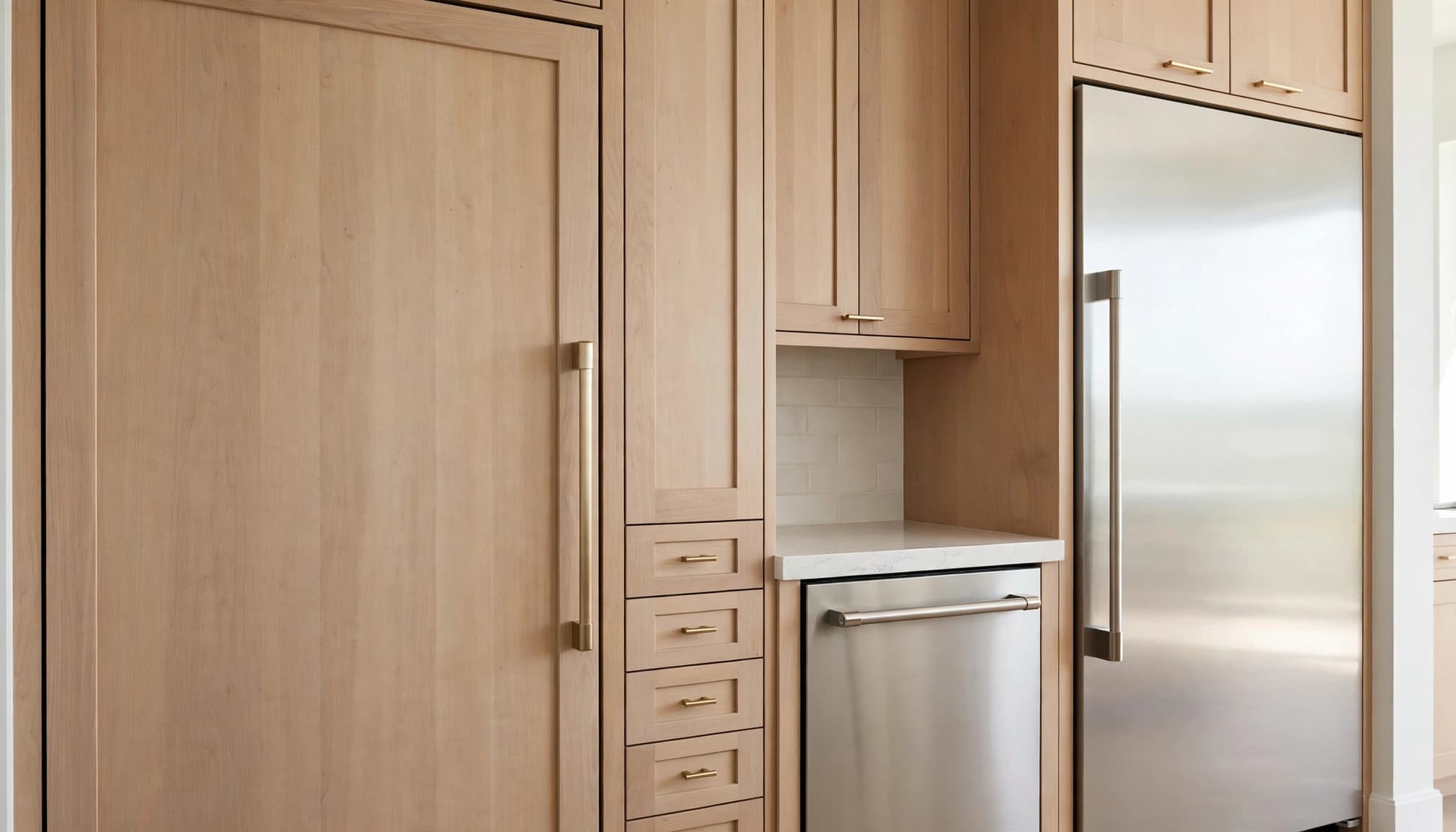
Plan for accessibility and daily comfort
For aging in place or mobility needs, choose hardware with a graspable profile and avoid tiny knobs that require a tight pinch. D-shaped pulls and rounded bar pulls can be easier to operate with limited dexterity.
Also consider reach height. Frequently used dishes, trash pullouts, and pantry storage should have hardware that household members can access comfortably. A beautiful kitchen should not require awkward stretching or repeated strain.
Protect the Plan During Installation
A template helps, but it doesn't replace a field check. Cabinets can shift slightly during installation, and custom doors may vary by a small amount from the original drawing.
The installer should inspect reveals, door operation, drawer alignment, and final appliance-panel clearances before drilling. Hardware mounted on a crooked or poorly adjusted door won't correct the underlying issue.
Approve a full-size mock-up
Ask to see one installed example of each cabinet type before the team completes the kitchen. Review an upper door, base door, shallow drawer, deep drawer, pantry door, and appliance panel if your design includes them.
Check the hardware with the lights on, from normal standing distance, and while opening every front. This is the right time to adjust a reference line or switch a pull size.
Keep a written placement schedule
A simple schedule prevents confusion when several hardware types are involved. It should identify the finish, product, orientation, cabinet group, and approved placement reference for each front type.
This document is especially helpful when cabinets arrive in stages or when a kitchen includes a separate butler's pantry. It also gives the homeowner, cabinet installer, and general contractor one shared reference.
Cape Coral Remodeling Details That Affect Hardware
Cabinet hardware is a finish detail, yet it belongs in the larger construction schedule. Finalize appliance locations, cabinet sizes, and plumbing decisions before ordering door panels and hardware.
Keeping a sink and dishwasher close to existing connections may reduce construction work, while moving them can affect cabinet design, plumbing routes, inspections, and timing. Review the full plan before making a late cabinet change.
Coordinate hardware with the remodel budget
Cape Coral kitchen remodel costs commonly vary with kitchen size, material selections, and structural changes. Hardware is only one line item, but upgraded cabinetry, appliance panels, and specialty storage can influence the total.
If you are comparing project scope, this overview of Cape Coral kitchen remodel costs provides useful local context. Select hardware after setting priorities for cabinets, countertops, appliances, and labor.
Confirm permit and inspection needs
Replacing knobs or pulls alone is typically a finish update. However, moving walls, changing plumbing, or rewiring lighting may require permits and inspections.
Confirm the requirements for your exact project with the Cape Coral Building Department. The Cape Coral remodeling permit requirements guide can help you identify when a kitchen change moves beyond cosmetic work.
Frequently Asked Questions
Should every kitchen cabinet use the same hardware?
No. Mixing knobs on doors with pulls on drawers often improves function and visual balance. Keep the finish and design family consistent, then adjust the size and placement for each cabinet type.
Can I use two pulls on a wide drawer?
Yes, provided the drawer front is large enough to support the look and the pulls remain evenly spaced. Two pulls can make heavy cookware drawers easier to open, but confirm the layout with a sample before drilling.
Where should handles go on shaker cabinets?
Many shaker cabinet layouts place hardware on the door rails and stiles rather than in the center panel. The exact location depends on the door profile, the cabinet manufacturer's guidance, and the approved installation measurements.
Do appliance panels use regular cabinet pulls?
Sometimes, but integrated appliances may have manufacturer requirements for panel dimensions, clearances, and handle placement. Confirm those instructions before purchasing or drilling hardware.
A Finished Look Starts With a Measured Plan
Good cabinet hardware placement makes a remodeled Cape Coral kitchen easier to use and more satisfying to look at every day. The strongest results come from a consistent plan, real-world mock-ups, and careful exceptions for tall doors, appliance panels, and accessible storage.
Dimensions are guidelines , not universal rules. Confirm every final placement with the cabinet system, hardware manufacturer instructions, and the installer's measurements before drilling.