
Naples Roof Leak Diagnosis: Valleys and Penetrations
Explore Our Services
Contact Us Today!
(239) 322-9295
A ceiling stain can show up far from the place where rain first entered your roof. A careful Naples roof leak diagnosis follows the water's path instead of treating the stain as the source.
Valleys, vents, skylights, chimneys, and HVAC curbs interrupt the roof's protective layers. In Naples, intense summer rain, wind-driven storms, sun exposure, and airborne salt near the coast can wear down these details faster than homeowners expect.
Finding the entry point early limits damage to insulation, drywall, framing, and finishes below.
Naples Roof Leak Diagnosis Starts at Valleys and Penetrations
A roof has broad areas that shed water well, but water concentrates at its transitions. Valleys and penetrations handle more runoff or interrupt the roofing surface, so small defects there can become indoor leaks during a hard Florida downpour.
Roof valleys carry concentrated runoff
A valley forms where two roof slopes meet. During heavy rain, water from both slopes funnels through that channel toward the eaves.
Leaves, palm debris, and grit can collect in the valley. As debris slows the flow, water may back up beneath shingles, tiles, or metal panels. Wind can also drive water sideways under loose material.
Valley failures often involve worn underlayment, cracked tiles, lifted shingles, damaged metal flashing, or open seams. Because water volume is high in this area, even a narrow opening can allow a steady leak.
Every roof opening needs secure flashing
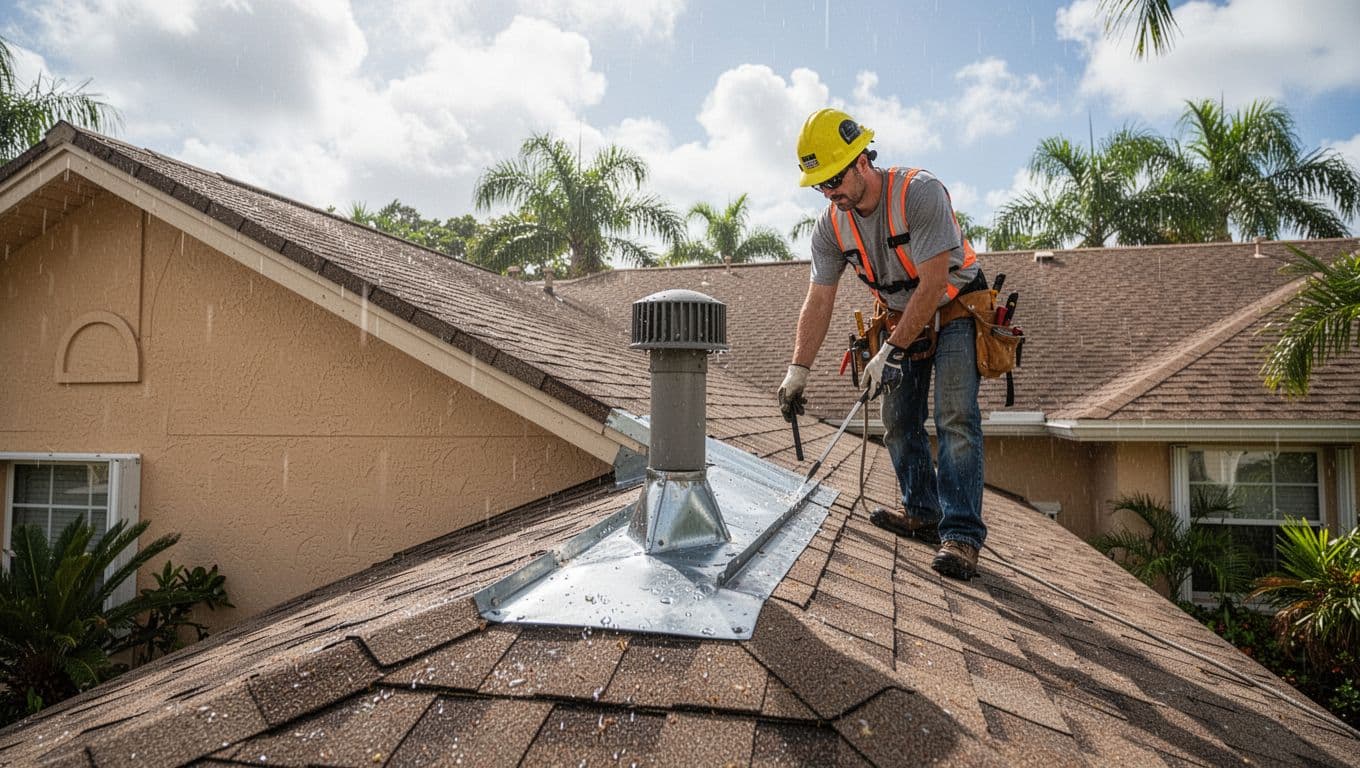
Vents, plumbing stacks, skylights, chimneys, and roof-mounted HVAC components all require flashing. Flashing is the layered metal or membrane detail that directs water around an opening and back onto the roof surface.
On a plumbing vent, the rubber boot around the pipe can split after years of heat and ultraviolet exposure. A skylight can leak at its curb, flashing, or surrounding roof material. Chimneys may develop failed counterflashing, loose mortar, or gaps where the roof meets the chimney.
Roof-mounted HVAC units need watertight curbs and properly integrated flashing. In addition, condensate or duct-related moisture can sometimes resemble a roof leak. A thorough inspection separates those issues before repairs begin.

Photo by David McElwee
Why Water Can Travel Before It Reaches Your Ceiling
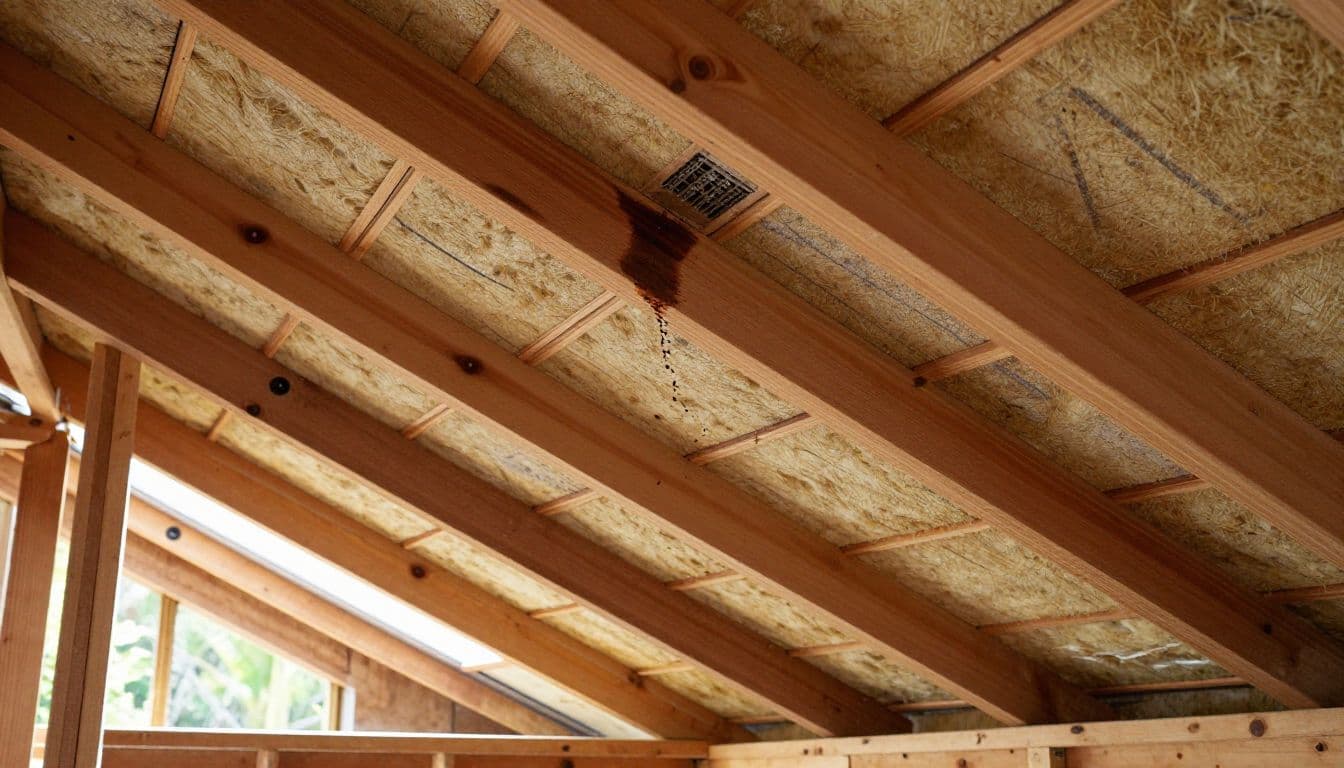
Rain rarely drops straight through a roof and directly onto the ceiling below. It can move beneath roof coverings, along the roof deck, across an underlayment lap, or down a rafter before it becomes visible indoors.
Water may also soak insulation first. That insulation holds moisture like a sponge, so a stain can appear hours after a storm has passed. During a long rain event, a small entry point can create a much larger damp area.
A ceiling stain marks where water collected, not always where the roof first failed.
Framing can redirect the leak path
Roof framing gives water an easy route. Once water reaches a rafter, truss member, nail, or electrical penetration, it can travel downhill before dripping onto ceiling drywall.
This is why a stain near an exterior wall does not automatically mean the problem is at the roof edge. Likewise, a stain beneath a vent may originate higher on the slope, where the roof deck or underlayment has failed.
A professional traces the evidence upslope. They look for the highest moisture mark, then check the roof details above it.
Roof systems have more than one layer
Tiles and shingles are the first line of defense, but they are not the only barrier. Underlayment, flashing, fasteners, roof decking, and sealants all work together to keep water out.
A cracked tile may not leak immediately if the underlayment below remains sound. Yet once water reaches aged or torn underlayment, it can run beneath several rows before finding an opening. That delayed path makes surface-only repairs risky.
Attic and Ceiling Clues Homeowners Can Safely Check
A leak often leaves evidence before it becomes an obvious ceiling drip. Check your ceilings after severe rain, especially in rooms below valleys, skylights, bathrooms, or roof-mounted equipment.
If you enter the attic, do so only when it is dry, well-lit, and safe to access. Step only on established walk boards or structural framing, never on the ceiling drywall between joists.
What to look for overhead
Ceilings may show a faint yellow or brown ring first. Paint can bubble, drywall tape can separate, and textured ceilings may begin to sag.
Watch for these warning signs:
- A stain that grows after rain or becomes darker around its edges.
- Soft drywall, bubbling paint, or a ceiling that appears to dip.
- A musty odor, damp insulation, or visible mildew near the attic floor.
- Rusted roofing nails, dark streaks on roof sheathing, or damp wood around a vent pipe.
Take clear photos and note the date, storm conditions, and room location. Those details help connect an indoor symptom to a roof area.
A wet attic is a stronger clue than a stain
In the attic, inspect the underside of roof sheathing around valleys and penetrations. Look for fresh darkening, drips, wood staining, rusted fasteners, or compressed wet insulation.
Do not pull apart insulation or touch wet wiring. If water is near a light fixture, outlet, or electrical wiring, keep people away from that area and call for qualified help.
How Roofing Professionals Isolate the Real Source
A proper inspection starts with a timeline. A roofer asks when the leak began, whether it appears only in wind-driven rain, how long it drips after a storm, and whether recent work occurred near the roof.
A careful Naples roof leak diagnosis compares that history with attic evidence and an exterior inspection. This process avoids sealing a visible crack that has nothing to do with the actual water entry.
The inspection follows water from outside to inside
A roofing professional checks the valley surface, roof covering, flashing overlaps, sealant condition, pipe boots, skylight curbs, exposed fasteners, and roof-to-wall transitions. They also look for storm-related lifting, displaced tiles, cracked shingles, and debris that blocks drainage.
Inside, they inspect sheathing and framing above the stain. Moisture meters can help map damp areas, while photographs document damaged materials. On fragile or steep roofs, a roofer may use close-range imaging before stepping onto the surface.
Leaks near bathroom vents and HVAC equipment may require a closer look at ductwork, condensate lines, or equipment curbs. A roofer can then coordinate with an HVAC contractor when the issue is not part of the roofing system.
Controlled water testing can confirm a hard-to-find leak
When weather and roof conditions allow, a professional may perform a controlled water test. They wet one small area at a time while another person watches inside or in the attic.
Testing usually begins lower on the slope and moves upward in stages. Flooding the whole roof would obscure the result, so careful testing isolates one detail at a time.
Once the source is confirmed, professional residential roof repair can address the failed flashing, underlayment, roof covering, or damaged decking rather than applying a temporary surface patch.
Storm Response and Temporary Water Control
Naples storms can turn a minor weakness into an active leak within minutes. Wind pushes rain uphill and sideways, while branches and flying debris can damage valleys, skylights, and vent flashings.
Never walk on a wet, damaged, or storm-exposed roof. Slippery surfaces, loose materials, hidden weak spots, and lightning risks make roof access dangerous for homeowners.
Protect the interior while you wait for help
Focus on limiting indoor damage without putting yourself in danger:
- Move furniture, electronics, rugs, and valuables away from the leak.
- Place buckets or containers beneath active drips, then protect nearby surfaces with plastic sheeting.
- Photograph stains, damaged belongings, and visible exterior damage after conditions are safe.
- Stay clear of sagging ceilings, which can fail under the weight of trapped water.
Avoid applying caulk, tape, or loose plastic to the roof during rain or high winds. Those attempts can create a fall hazard and rarely hold against another storm.
Know when the situation needs urgent service
Seek prompt help if water is flowing through the ceiling, a ceiling is bulging, roof decking is visible, a tree limb struck the home, or shingles, tiles, or flashing have blown away. A new round of rain can quickly expand the damage.
For temporary weather protection after storm damage, emergency roof tarp installation can cover the affected area until permanent work is possible. If water reaches electrical fixtures or you see sparks, leave the area and contact emergency services.
Maintenance That Prevents Valley and Vent Leaks
Roof maintenance works best before the wet season and after major wind events. You do not need to climb onto the roof to spot early trouble.
From the ground, look for debris buildup, lifted material, damaged soffits, stains on exterior walls, or flashing that appears out of place. Binoculars can help, but they do not replace a close inspection when a problem is suspected.
Keep water moving off the roof
Have valleys, gutters, downspouts, and nearby tree branches maintained safely. A clogged valley or gutter can trap water where it does not belong and force it under roofing materials.
Schedule a professional inspection after a hurricane, tropical storm, or unusually severe rain event. It is also smart to inspect a roof before buying a home, starting a remodel, or placing solar equipment and new mechanical components on the roof.
If leaks recur across several areas or the roof covering has widespread wear, repairs may no longer be the sensible long-term choice. In that case, residential roof replacement can address the full roofing system, including new underlayment and flashing details.
Protect roof details during other home projects
New exhaust fans, plumbing work, satellite equipment, solar installations, and HVAC changes can add penetrations or disturb existing flashing. Every new opening should have a roofing plan before anyone drills into the roof.
Ask contractors how they will integrate flashing with your roof type. Tile, shingle, metal, and low-slope systems each require compatible materials and installation methods.
Salt-laden coastal air can also corrode exposed metal parts over time. Regular checks of flashing, fasteners, and HVAC curbs help catch surface wear before water reaches the roof deck.
A Small Leak Deserves a Complete Answer
A roof leak near a valley or penetration often starts as a small flaw, but Florida rain can expose it quickly. The visible ceiling stain is useful evidence, yet the repair must address the actual entry point above.
A sound Naples roof leak diagnosis traces water through the roof system, checks the attic, and tests suspect details safely. Acting before the next storm protects the parts of your home that water can damage out of sight.