Pool Equipment Pad Noise Control for Cape Coral Homes
Explore Our Services
Contact Us Today!
(239) 322-9295
A pool pump should fade into the background, not dominate your lanai, bedroom, or neighbor's yard. When pool equipment pad noise becomes noticeable, the cause may be normal operation, vibration, poor placement, or a developing equipment problem.
Cape Coral homeowners also need to account for heat, humidity, salt air, heavy rain, drainage, and limited side-yard space. The best solution protects airflow and service access while reducing sound at its source. Start by identifying the type of noise before adding a screen or enclosure.
Key Takeaways
- A steady, low hum is often normal, while grinding, screeching, rattling, or sudden vibration deserves inspection.
- A solid, level pad with good drainage helps prevent movement, standing water, and unnecessary vibration.
- Equipment placement should leave room for filter service, electrical access, plumbing repairs, and manufacturer-required clearances.
- Louvered screens can improve privacy and interrupt direct sound without creating a sealed box.
- Gas heaters need proper combustion air and exhaust clearance. Never fully enclose one without following the heater manufacturer's instructions and applicable requirements.
- New pool construction gives you more control over equipment location, plumbing routes, drainage, and screening than a retrofit.
What Pool Equipment Pad Noise Usually Means
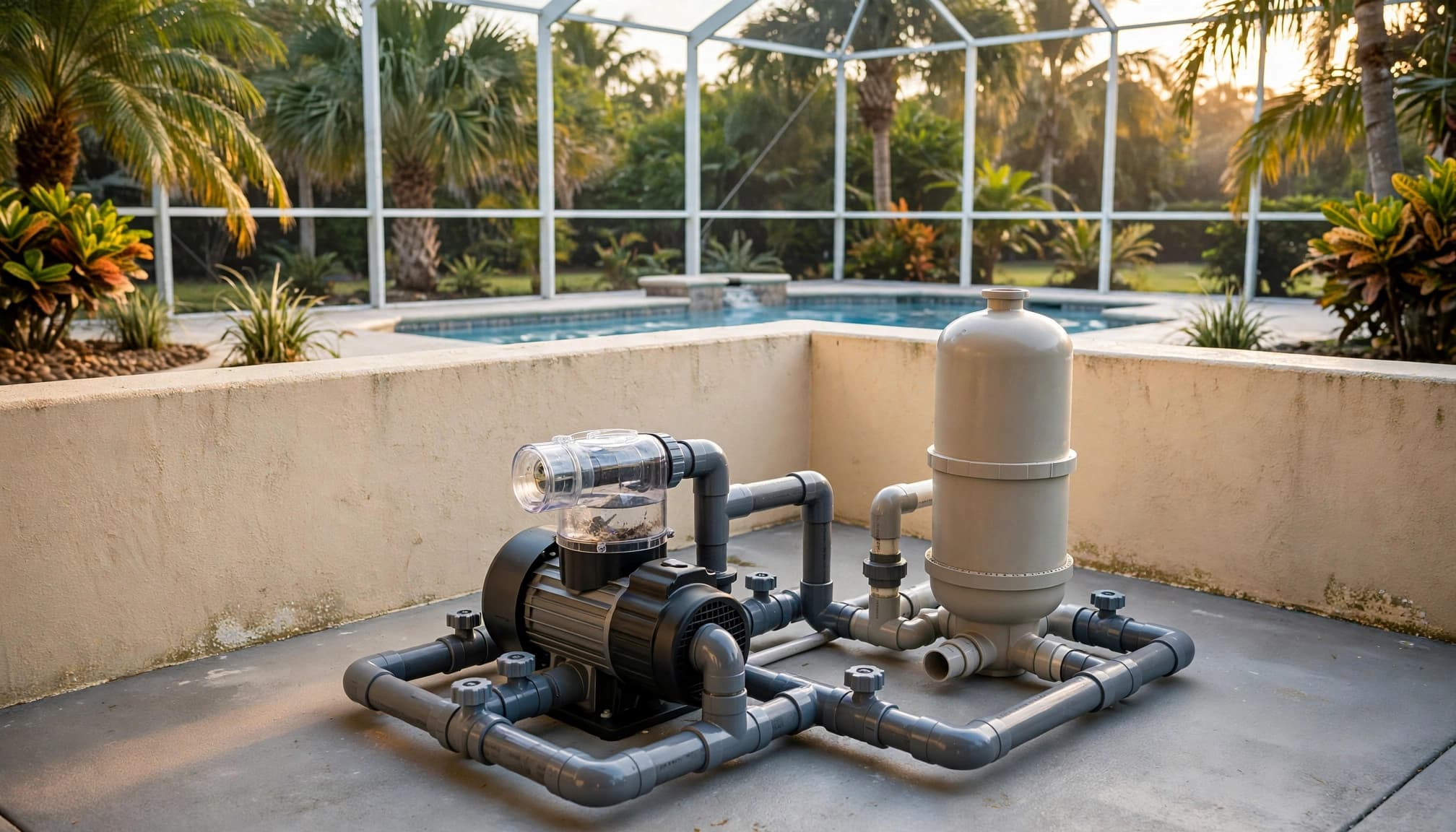
Pool equipment produces several sounds at once. The pump motor creates a hum, water moving through the plumbing produces a soft rushing sound, and the filter may transmit a low vibration through the pad. A gas heater can add fan and burner noise while it operates.
The sound should remain fairly consistent when the equipment runs normally. Changes in pitch, volume, or vibration are more useful warning signs than the mere presence of sound.
When normal operation sounds steady
A properly installed pump may be audible near the pad but much less noticeable inside the home. Variable-speed pumps can often operate at lower speeds for routine circulation, although the correct speed depends on the pump, plumbing design, pool size, and required flow.
A short startup sound can also be normal. Water features, spa spillways, automatic cleaners, and heater operation may create additional noise during certain cycles. Keep track of when the sound occurs, because a noise that appears only when the heater or water feature runs has a narrower list of possible causes.
When the sound points to a problem
Grinding, squealing, clattering, and repeated rattling are not sounds to mask with a privacy wall. They can indicate a worn motor bearing, loose hardware, trapped debris, air entering the system, or plumbing that is vibrating against a structure.
Pay attention to related symptoms:
- The pump basket repeatedly loses water or fills with air.
- The equipment shakes against the slab or nearby wall.
- A fitting drips, sprays, or leaves mineral deposits.
- The breaker trips or the motor becomes unusually hot.
- A heater displays an error, produces an unusual odor, or makes a new banging sound.
Turn off equipment that shows an electrical fault, burning smell, or severe mechanical problem. A qualified pool technician should inspect the system, and gas equipment should be handled by a properly qualified professional.
Start With the Equipment Pad Layout
Noise control begins before anyone installs a screen. The pad, plumbing, equipment orientation, and surrounding surfaces all affect how sound and vibration travel through the backyard.
For new construction, work with a custom gunite pool builder before the pool deck, lanai, landscaping, and utility routes are finalized. Moving equipment later can require new plumbing, electrical work, gas work, concrete, and drainage changes.
Build around access, airflow, and drainage
The pad should remain level, stable, and large enough for the complete equipment arrangement. Leave working space around pump lids, filter tanks, valves, electrical disconnects, and heater service panels. A quiet installation becomes frustrating when a technician cannot safely reach the part that needs attention.
Cape Coral's rain and humidity also make drainage important. Water should not collect beneath the motor, electrical components, or filter connections. Finished grades, pavers, downspouts, irrigation, and pool overflow routes should direct water away from the equipment area.
Use outdoor-rated, corrosion-resistant hardware and materials suited to Southwest Florida exposure. Salt systems, coastal air, sunlight, and standing water can shorten the life of unsuitable fasteners, brackets, and screens.
Limit vibration through the structure
A pump can sound louder when vibration transfers into a wall, fence, deck, or concrete walkway. Avoid placing equipment hard against a home wall or attaching a screen directly to the pump pad unless the design specifically allows it.
Flexible plumbing connections, properly supported pipes, and vibration-control components may help, but they must match the equipment and plumbing plan. A loose pipe can rattle even when the pump itself works correctly. Conversely, an overly rigid or poorly supported system can carry motor vibration into nearby surfaces.
Keep the equipment pad separate from delicate finishes when possible. This approach helps protect pavers, stucco, screen enclosure components, and outdoor living areas while leaving room for future repairs.
Neighbor-Friendly Noise Control Without Blocking Airflow
Cape Coral homes often have compact side yards, screened lanais, and nearby property lines. Equipment that seems quiet beside the pool may sound much louder near a bedroom window, fence, or neighboring patio.
Placement matters more than decorative screening alone. Aim pump discharge, heater exhaust, and direct sound away from living areas when the equipment layout permits. Do not promise a particular noise reduction or property-line distance without reviewing the site, equipment specifications, and current requirements.
Use open-sided visual screens
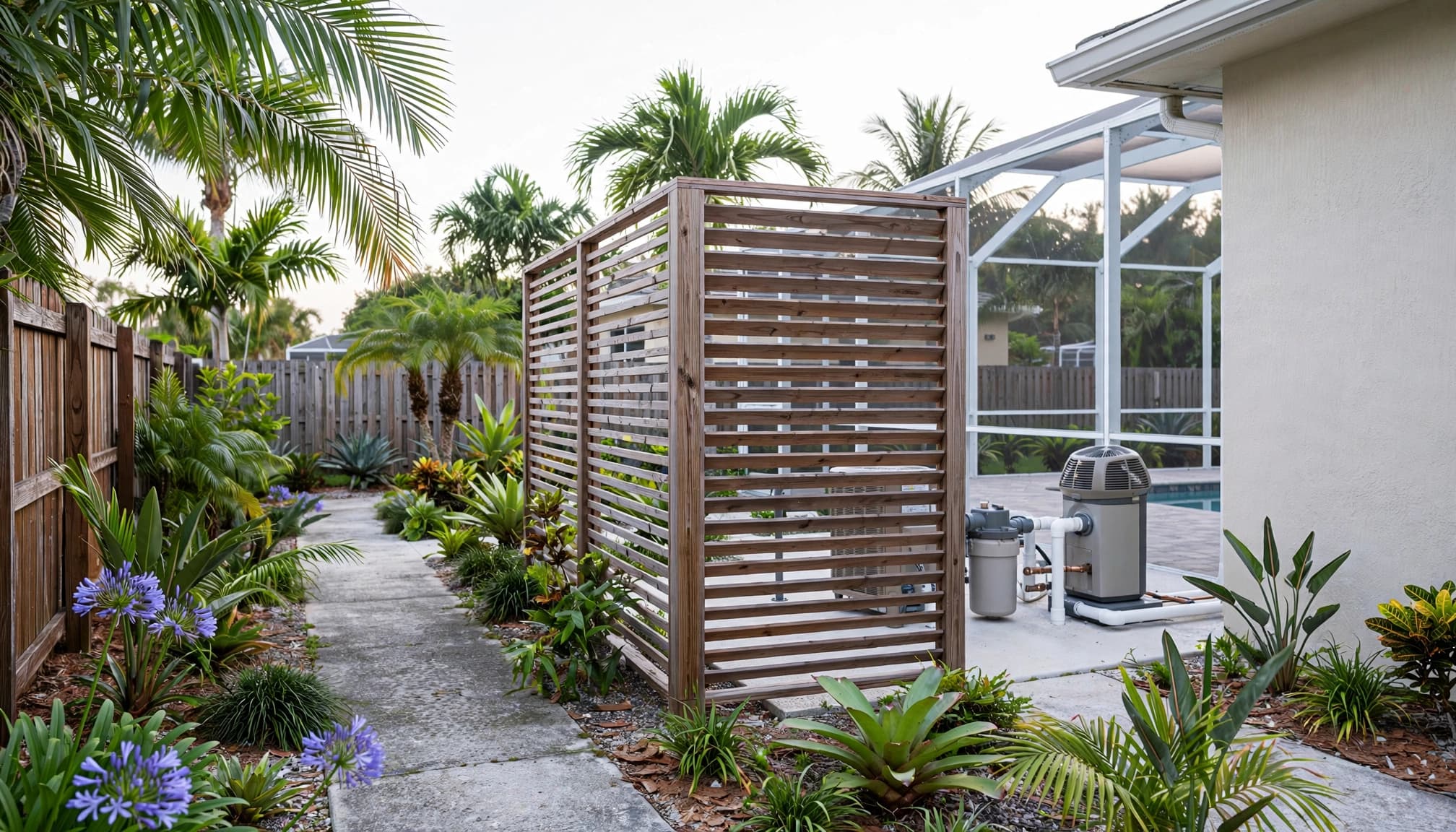
A louvered screen can hide equipment and interrupt a direct line of sight while leaving air movement around the pad. The screen should not press against the motor, block a filter lid, cover a heater vent, or prevent access to electrical components.
Solid walls can reflect sound toward the house or neighboring property. They may also trap heat and moisture. Open slats, adequate gaps, and a deliberate layout usually provide a better balance than a tightly sealed box.
Coordinate the screen with the property
A screen should fit the finished grade, drainage plan, fence layout, pool cage, and maintenance route. Do not assume that a screen can sit anywhere along the property line. Confirm its location with the contractor and review any applicable city, community, utility, and equipment requirements.
Planting can soften the view and improve the backyard's appearance, but landscaping should not crowd the motor or heater. Keep irrigation spray away from electrical equipment and corrosion-sensitive components. Choose plants that can tolerate the site without dropping heavy debris onto the pump or filter.
Gas Heaters Need Special Ventilation Planning
Gas heaters require more careful planning than pumps and filters because they produce combustion exhaust and heat. A decorative enclosure that works for visual screening may be unsafe for a heater if it blocks combustion air or traps exhaust.
Follow the exact installation manual for the heater model. Manufacturer instructions may address vent clearance, openings, overhead obstructions, wall locations, service space, and separation from doors or windows. Local permitting and inspection requirements also apply.
Never treat a heater like a sealed cabinet
A fully enclosed gas heater can develop dangerous airflow and exhaust problems. Even an open-looking structure may create a problem if its roof, side panels, or nearby wall interferes with the manufacturer's required clearances.
Ask for the heater's installation requirements before designing a screen, roof, cabinet, or equipment shed. The finished structure must allow safe operation and service access in every season, including periods when the heater runs for spa heating.
Separate noise control from heat control
A heater may become more noticeable when it operates at night or when the surrounding yard is quiet. Scheduling heating during reasonable hours can reduce disruption when that schedule still meets the pool's needs.
If the heater has new ignition sounds, repeated shutdowns, unusual odors, or unstable operation, call a qualified technician. Do not cover the unit to make it quieter. The source of the noise needs diagnosis first.
Maintenance Keeps Pool Equipment Quieter
Routine maintenance can prevent minor vibration and water-flow issues from becoming disruptive. Keep pump baskets, filters, skimmer paths, and cleaner lines clear according to the equipment manufacturer's service schedule.
Air leaks on the suction side can create a rattling or bubbling sound. A clogged filter can change pressure and force the system to work harder. Loose pipe supports, cracked couplers, and worn motor components can also increase vibration.
Check the pad after major storms. Look for shifted equipment, pooled water, damaged screens, exposed wiring, broken straps, and debris around vents. Hurricane preparation should never involve covering a gas heater or electrical component in a way that prevents safe ventilation.
Homeowners should avoid opening electrical panels or gas appliances without the right qualifications. Record the noise, operating mode, pressure reading, and time of day before calling for service. That information can help a technician reproduce the problem.
Planning Noise Control for New Pools and Renovations
New gunite pool construction allows the equipment pad to be coordinated with excavation, plumbing, electrical routes, drainage, the pool cage, and the finished deck. That early coordination can prevent the common problem of placing the pad wherever a small leftover space remains.
Southwest Florida lots vary in soil, groundwater, elevation, drainage patterns, and utility locations. Those conditions affect more than the pool shell. They can also affect where water flows around the pad and whether later access becomes difficult.
For an existing pool, a contractor may need to evaluate the slab, plumbing, electrical supply, gas route, finished surfaces, and screen enclosure before recommending relocation. A pool renovation service in Fort Myers can help coordinate equipment upgrades with deck, coping, drainage, or outdoor-living work.
If you are designing a new backyard, connect the equipment plan with your backyard and lanai design services. A well-planned layout can keep service paths open without making the pad a visual focal point.
Pool Equipment Pad Noise FAQ
How quiet should a pool pump be?
There is no single sound level that fits every pump, pad, yard, and operating speed. A steady hum may be normal. Sudden grinding, rattling, screeching, or strong vibration deserves an inspection.
Can I put the equipment inside a shed?
Only if the complete design meets the equipment manufacturer's ventilation, clearance, combustion-air, exhaust, electrical, drainage, and service requirements. A sealed or crowded shed can create a safety problem, especially around a gas heater.
Will a privacy screen solve the noise?
A screen may interrupt direct sound and hide the equipment, but it cannot repair a failing motor or eliminate vibration transmitted through a slab. Use an open design that preserves airflow and access, then evaluate the equipment's condition.
Should the pad be moved away from the house?
Sometimes relocation helps, but the answer depends on plumbing length, electrical routing, gas service, drainage, property layout, and maintenance access. Have the entire system reviewed before breaking concrete or moving equipment.
Conclusion
Good pool equipment pad noise control starts with diagnosis, not decoration. A steady operating hum may be acceptable, while new rattles, grinding, heat, leaks, or vibration point to a problem that needs service.
For Cape Coral homes, the strongest plan combines a stable drained pad, corrosion-resistant materials, open airflow, safe heater clearances, practical service access, and considerate equipment placement. When those decisions happen during pool construction or renovation, a quieter backyard is easier to achieve without creating new maintenance or safety problems.