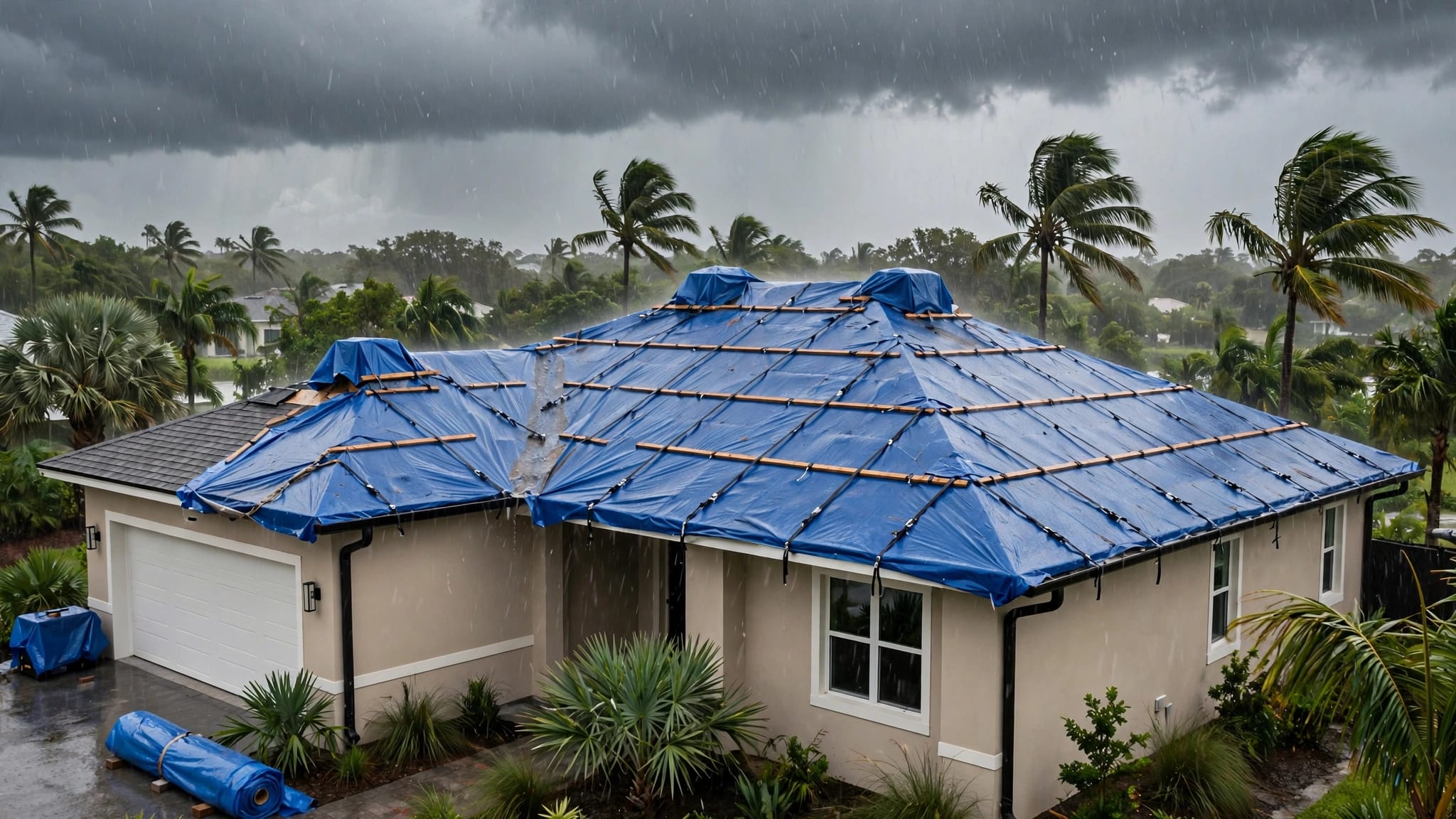
Port Charlotte Roof Flashing Repair for Skylights and Vents
Explore Our Services
Contact Us Today!
(239) 322-9295
A ceiling stain under a skylight may be the final sign of a leak that started on the roof weeks earlier. For Port Charlotte homeowners, prompt roof flashing repair can help keep water away from insulation, drywall, and roof framing.
Flashing protects the openings where water is most likely to enter. When it lifts, cracks, corrodes, or gets installed incorrectly, rain can move beneath shingles and into the home. The right repair depends on whether the problem is limited to the flashing or involves the skylight, vent, roof covering, or surrounding structure.
Why Skylight and Vent Flashing Fails in Port Charlotte
Skylights and roof vents create openings in an otherwise continuous roof surface. Each opening needs a properly integrated flashing system that directs water downhill and keeps wind-driven rain outside the roof assembly.
Port Charlotte roofs also face intense sun, heavy rain, humidity, and storm-related wind. Those conditions can age sealants, loosen roofing materials, and expose weak installation details.
Skylight flashing problems
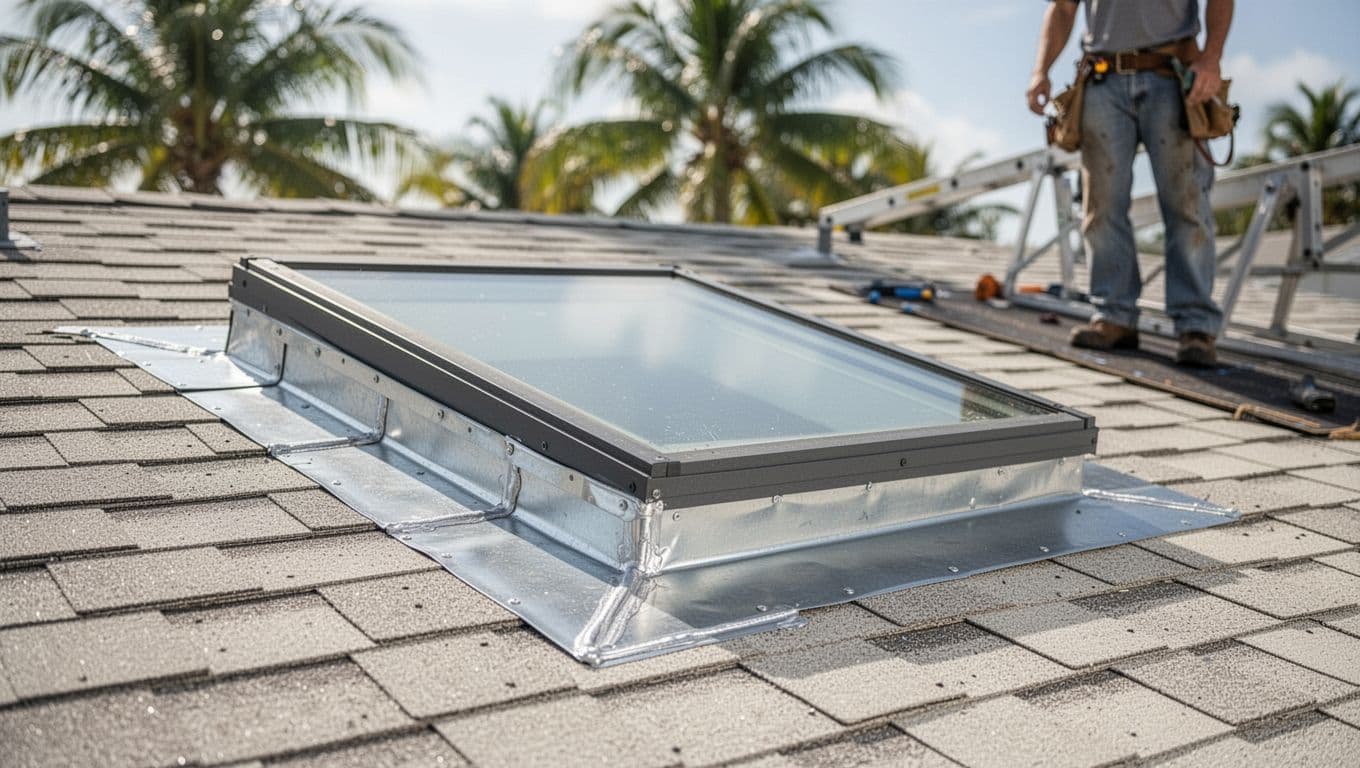
A skylight usually relies on several parts working together. These can include a metal flashing kit, step flashing along the sides, head flashing across the upper edge, and a sill or apron that directs water toward the lower roof slope.
A leak may begin when:
- The flashing kit doesn't match the skylight or roof type.
- Step flashing is missing, bent, or covered incorrectly by shingles.
- Sealant has cracked around the frame or curb.
- Shingles near the skylight have lifted or deteriorated.
- The skylight curb or frame has warped, cracked, or started to rot.
A small gap at the upper edge can allow water to travel along the roof deck before appearing around the ceiling opening.
Vent flashing problems
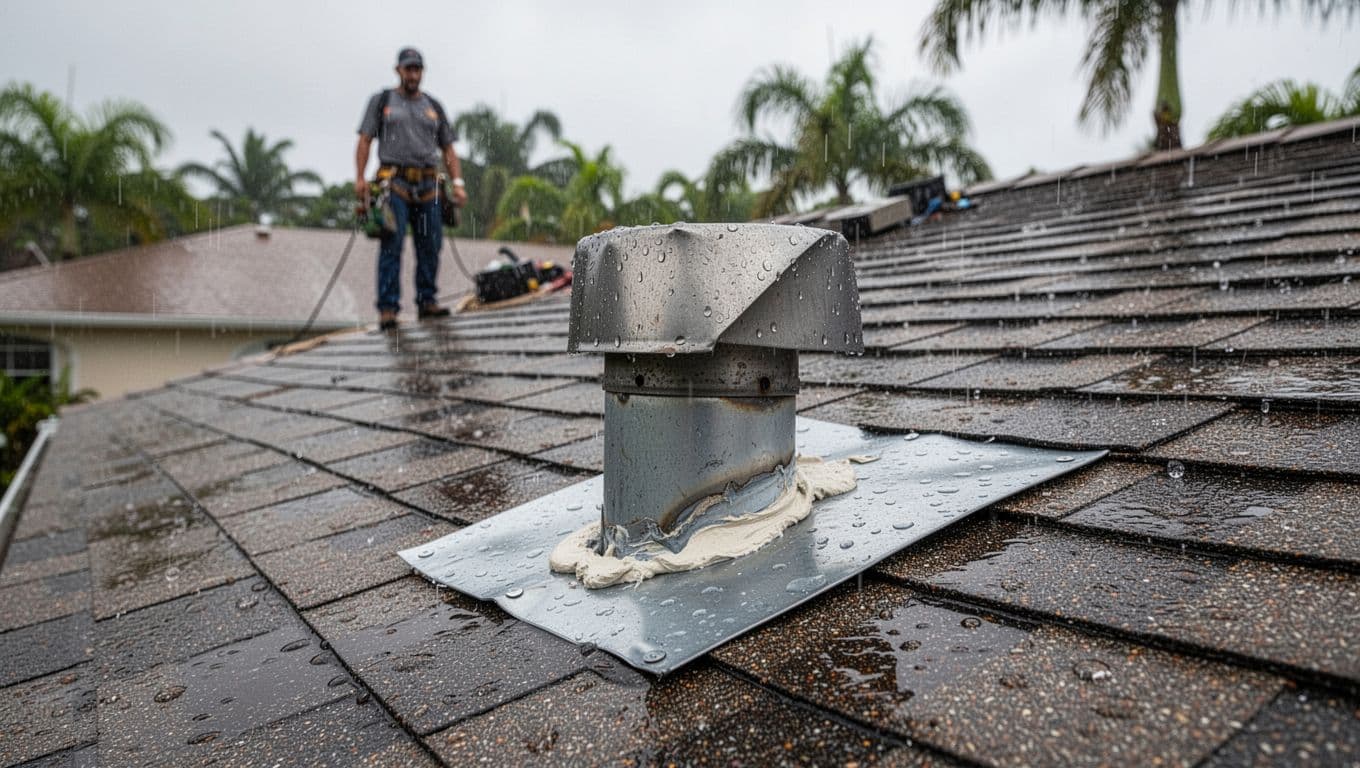
Plumbing vents and attic ventilation pipes need boots or metal flashing where they pass through the shingles. Rubber and neoprene components can become brittle under constant sunlight. Metal flashing can also corrode, lift, or separate from the roof surface.
A vent leak often appears below the pipe, but water may travel along rafters or roof decking before reaching the ceiling. That makes the location of an indoor stain an unreliable guide to the exact entry point.
Adding caulk around the exposed edge may hide the problem for a short time. It won't correct missing step flashing, a damaged boot, or a poorly integrated underlayment system.
Signs Your Roof May Need Flashing Repair
Water intrusion doesn't always announce itself with an active drip. By the time water reaches a finished ceiling, it may have already moved through insulation or along framing.
Indoor warning signs
Look for changes around skylights, vent locations, and nearby ceilings or walls. A stain that expands after rain deserves attention, even if the surface dries later.
Common interior clues include:
- Yellow, brown, or faint gray ceiling stains.
- Bubbling paint or soft drywall.
- Damp insulation visible from the attic.
- A musty odor near a skylight or upper-floor ceiling.
- Mold growth in areas that stay damp.
- Peeling trim around a skylight shaft.
Mold needs moisture, so treating the visible growth without correcting the leak won't solve the cause. Moisture can also weaken wood components over time. That doesn't mean every stain indicates major structural damage, but delayed inspection gives a small leak more time to spread.
Exterior warning signs
From the ground, you may notice lifted shingles, missing roof materials, or visible damage around a vent. Binoculars can help you look without stepping onto the roof.
Still, many flashing defects remain hidden beneath shingles or at the upper edge of a skylight. A leak may also come from the roof slope above the opening rather than the opening itself.
After a strong storm, check the attic and ceilings when it's safe to do so from inside the home. Take clear photos of stains, damp insulation, or damaged materials. If water is actively entering, place a container below the drip and contact a roofing professional.
What Roof Flashing Repair Around Openings Involves
The scope of roof flashing repair should follow the cause of the leak. A qualified roofer needs to inspect the roof covering, flashing, underlayment, fasteners, roof deck, and the skylight or vent itself.
When a repair may be enough
A targeted repair may work when the surrounding materials remain in good condition. The roofer might replace a cracked vent boot, reset loose flashing, replace damaged step flashing, or remove and reinstall shingles around the penetration.
The repair should restore the water-shedding layers instead of relying on surface sealant alone. That can require lifting nearby shingles, checking the underlayment, replacing corroded metal, and fastening new materials correctly.
A small roof flashing repair may also be appropriate when a skylight's frame and curb are sound, but the original flashing has deteriorated. The roofer should explain which components need replacement and why.
When replacement makes more sense
Flashing replacement may be more practical when the metal has extensive corrosion, the flashing system is incorrectly sized, or earlier repairs have created several layers of sealant and patch material.
A skylight may need replacement when its frame, curb, dome, or glass seal has failed. Cracks, fogging between glass panes, persistent drafts, or repeated leaks after correct flashing work can point to a unit problem rather than a flashing-only issue.
Roof replacement around an opening can also become necessary if nearby shingles are brittle, the roof deck has moisture damage, or the roof covering no longer accepts a proper repair. A professional should separate the confirmed damage from optional upgrades in the written estimate.
Sealant can close a visible gap, but it cannot replace missing step flashing or repair a damaged skylight curb.
Why Homeowners Shouldn't Climb Up to Inspect
Roof surfaces can be steep, wet, hot, or covered with loose granules. Skylights may also look solid while lacking the strength to support a person. Walking near one can crack the glazing or cause a fall.
Port Charlotte homeowners should inspect from the ground, attic, and finished interior instead. Avoid climbing onto the roof after rain or a storm, and don't place a ladder against a gutter or skylight frame.
A qualified roofing professional can inspect the penetration without guessing from the ceiling stain. A detailed roof condition assessment can review visible roof materials, flashing, penetrations, and signs of moisture.

Photo by David Brown
What the roofer should check
Ask the professional to trace the water path rather than replace the first visible piece of flashing. The inspection should consider:
- The skylight frame, curb, glazing, and flashing kit.
- The vent boot, pipe, collar, and surrounding shingles.
- Step flashing and counterflashing near walls or roof transitions.
- Underlayment around the penetration.
- Roof decking, rafters, and insulation for moisture.
- Interior stains and attic ventilation near the affected area.
Request photos of the problem areas and a written description of the proposed work. Clear documentation helps you compare repair and replacement options without relying on vague terms such as "seal everything."
Maintenance and Storm Preparation for Your Roof
Routine observation can catch problems before a ceiling stain appears. You don't need to walk on the roof to monitor its condition.
Keep an eye on vulnerable areas
After heavy rain, inspect ceilings and attic spaces below skylights and vents. Look for fresh discoloration, damp insulation, or a musty smell. Check gutters and downspouts from the ground as well, because blocked drainage can leave more water near roof edges and transitions.
Keep nearby trees trimmed by a qualified service if branches rub against the roof or could fall onto it. Don't pressure-wash shingles or scrape flashing yourself. Those actions can damage protective surfaces and disturb roofing materials.
Schedule a professional inspection when you notice a change, after visible storm damage, or before a planned remodeling project that could affect the roof. If you plan to install a skylight, vent, solar equipment, or other roof penetration, address flashing details before work begins.
Prepare before a storm
Before a storm threatens Port Charlotte, confirm that gutters are clear and downspouts discharge away from the home's foundation. Secure loose outdoor items and check that attic access panels close properly.
If you already know about a damaged skylight or vent, don't wait for the next storm to test it. Arrange an inspection while the roof is accessible and dry. Keep interior photos and prior repair records in a safe place.
After the storm, look from the ground for missing shingles, displaced materials, or visible debris. Inside, check upper ceilings and attic areas for new moisture. Stay off the roof and call a qualified local roofing professional if you see damage.
Choosing a Local Roofing Professional
Look for a contractor who regularly handles skylights, plumbing vents, roof penetrations, and storm-related repairs. Ask whether the inspection includes the surrounding roof area, not only the visible stain or pipe boot.
Before approving work, request:
- A clear description of the leak source.
- Photos showing damaged or deteriorated materials.
- A written scope that separates repair from replacement.
- Information about which shingles, flashing, boots, or skylight parts will change.
- Confirmation of who will perform the work and inspect it afterward.
A trustworthy professional won't pressure you into replacing the entire roof without explaining the evidence. They should also identify conditions that need attention now and items that can wait.
For a home inspection or roofing project, keep permits and product information when they apply to the work. Your contractor can explain which project details require local review rather than asking you to guess.
Conclusion
A skylight or vent leak often starts with a small failure in flashing, sealant, shingles, or the opening itself. Early roof flashing repair can limit moisture exposure, but the correct solution may involve replacing the flashing system or the skylight.
Watch for ceiling stains, attic moisture, lifted shingles, and damaged vent boots. Stay off the roof, document what you can safely see, and have a qualified Port Charlotte roofing professional trace the leak before choosing between repair and replacement.