Tankless vs Heat Pump Water Heaters for Punta Gorda Homes
Explore Our Services
Contact Us Today!
(239) 322-9295
A water heater can affect your home's electrical plan, plumbing layout, monthly utility bills, and available storage space. For Punta Gorda new-home buyers, tankless vs heat pump is not a simple question of which product is newer or more efficient.
New construction gives you a valuable advantage because the fuel source, service size, drain location, and equipment space can be planned together. The right choice depends on household demand, available utilities, garage conditions, and the installation plan approved for your property.
Tankless vs heat pump: understand the basic difference
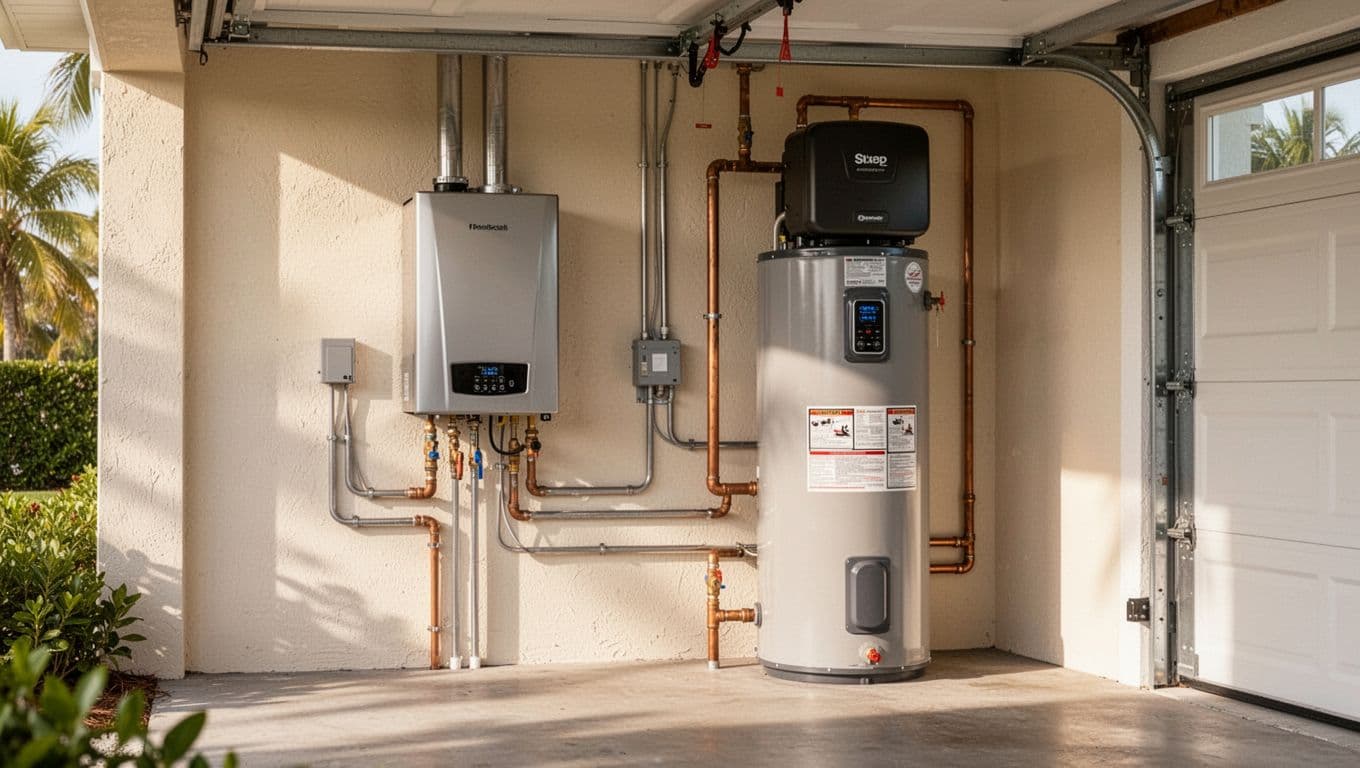
Tankless water heaters heat water as fixtures call for it. They don't store a large tank of heated water, so they save floor space and can provide continuous hot-water production when properly sized.
Heat pump water heaters store hot water in a tank. Instead of creating all the heat with electric resistance, they use a compressor to pull heat from surrounding air. Many models also include electric resistance elements for backup or faster recovery.
How tankless water heaters work
Tankless systems come in gas and electric models, and the installation requirements differ substantially.
A gas tankless heater uses natural gas or propane to heat water through a heat exchanger. It needs correctly sized gas piping, combustion air, approved venting, and electrical power for controls and ignition. This option can work well when gas service is already part of the home's design.
Electric tankless units avoid combustion and venting. However, they often require large, dedicated 240-volt circuits. One manufacturer's 8-kilowatt example calls for a 40-amp double-pole circuit and heavy-gauge wiring, although every model must be sized from its own specifications.
Tankless performance also depends on flow rate and incoming water temperature. A system sized for one shower may struggle when several showers, sinks, or appliances operate at the same time.
How heat pump water heaters work
A heat pump water heater uses electricity, but it moves heat instead of relying only on resistance elements. That generally makes it more efficient than a standard electric tank.
The tradeoff is storage. Your household uses the hot water held in the tank, and the system needs time to recover after heavy use. A properly sized unit can handle normal demand, but back-to-back showers, large soaking tubs, and multiple fixtures require careful planning.
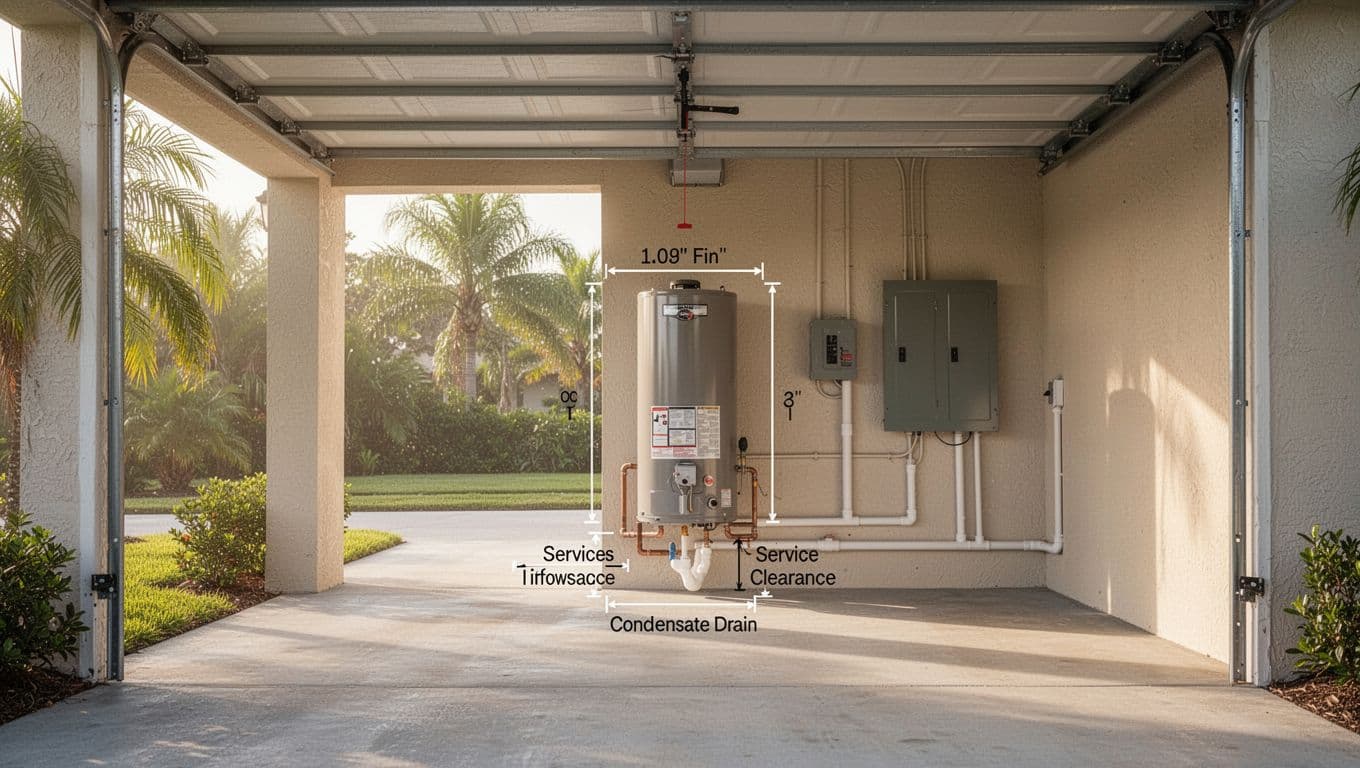
Heat pump models also need airflow, service clearance, condensate drainage, and a location that can accept cooler exhaust air. In Punta Gorda's warm climate, the surrounding air usually gives the unit plenty of heat to collect.
Compare efficiency, operating cost, and capacity
The phrase tankless vs heat pump can create an oversimplified comparison. A heat pump water heater often uses less electricity than a conventional electric tank, but that doesn't automatically make it cheaper to operate than every gas or electric tankless model.
Your actual cost depends on the home's electric and gas rates, daily hot-water use, equipment efficiency rating, temperature settings, and installation quality. Before selecting a system, compare the full installed price in a Southwest Florida water heater cost guide.
| Factor | Gas tankless | Electric tankless | Heat pump water heater |
|---|---|---|---|
| Fuel source | Natural gas or propane | Electricity | Electricity |
| Hot-water method | On-demand heating | On-demand heating | Stored water with heat-pump recovery |
| Space needs | Compact, wall-mounted | Compact, wall-mounted | Floor space for a tank |
| Main installation concern | Gas sizing and venting | Electrical capacity and wiring | Airflow, drain, and service clearance |
| Peak-demand strength | High when properly sized | Limited by electrical capacity | Limited by tank volume and recovery |
| Common maintenance focus | Scale, burner, and venting | Scale and electrical connections | Filter, condensate, controls, and tank components |
Tankless systems suit homes with high simultaneous demand and limited mechanical-room space. Heat pump units suit owners who value lower electric consumption and have a suitable location for a storage tank.
Neither system should be selected from the equipment price alone. Include gas piping, venting, electrical work, condensate drains, water lines, shutoffs, permits, pads, and future service access in the comparison.
Let the home's utilities guide the decision
A water heater decision affects more than the plumbing trade. It can change the electrical service, gas design, mechanical-room size, and construction budget.
Fuel source and electrical service
Start with the utility plan for the lot. If natural gas is unavailable, a gas tankless system may require propane storage and additional site planning. Adding a new gas service late in the design can affect trenching, appliance choices, ventilation, and permit documents.
Electric tankless systems remove combustion concerns, but their high instantaneous demand can create a poor fit for some new homes. The electrician must review the service size, panel space, feeder capacity, and other planned loads.
That review matters even more when the home includes a pool pump, electric range, induction cooktop, electric vehicle charger, heat pump HVAC system, or large outdoor kitchen. A Southwest Florida electrical rough-in cost guide can help separate normal wiring allowances from equipment-specific upgrades.
Heat pump water heaters also use electricity, and many models need a dedicated circuit. Their running demand is usually much lower than electric tankless heating, but the exact circuit and breaker requirements come from the selected model.
Household demand and recovery
Tankless heaters are designed around peak flow. The plumber should calculate the likely gallons per minute when several fixtures operate together, then account for the incoming water temperature and desired outlet temperature.
Florida's relatively warm groundwater can reduce the temperature rise compared with colder regions. Still, a larger home with multiple bathrooms, a large tub, or frequent simultaneous use may need a higher-capacity unit or more than one heater.
Heat pump systems are designed around tank volume, recovery time, and daily usage. A larger household may need a larger tank, a faster recovery model, or a usage plan that avoids exhausting the stored supply.
Recirculation can improve wait times at distant fixtures, but it also adds piping, controls, and energy considerations. Decide whether recirculation is needed before the plumbing rough-in, not after the walls are closed.
The useful comparison is not only energy efficiency. It is whether the chosen heater fits the home's fuel source, electrical service, space, and busiest hour of hot-water use.
Plan for hot, humid Punta Gorda conditions
Southwest Florida's climate affects where a heat pump water heater should go. Warm air can help the system operate efficiently, but the unit still needs room to move air and a reliable way to dispose of condensate.
Is the garage a good location?
A garage can be a practical location for a heat pump water heater in Punta Gorda. The unit can collect heat from warm garage air, and its exhaust may make the immediate area cooler and drier.
That effect is local. Research on garage installations indicates that a garage exposed to outdoor air may not experience a noticeable reduction in overall humidity. The unit shouldn't be treated as a replacement for air conditioning or whole-garage dehumidification.
The installation still needs adequate clearance around the air intake and exhaust. It also needs a condensate drain, a level base, accessible controls, and protection from accidental vehicle or storage damage.
Garage rules require careful review. An 18-inch elevation requirement can apply to certain fuel-fired or ignition-source appliances, and some local checklists extend garage protection requirements to particular tankless installations. Don't assume the same rule applies to every heat pump model. The appliance listing, current Florida code, flood conditions, and local authority having jurisdiction all matter.
What about a utility room or conditioned space?
A utility room inside the conditioned envelope can make service access easier and protect equipment from outdoor exposure. A heat pump water heater in that space will discharge cooler air and remove some moisture, but the room needs enough air volume and airflow for reliable operation.
A tight closet can restrict the unit and reduce performance. Some installations may need louvered doors or ducting, but those details must follow the manufacturer's instructions. Noise also matters when the equipment is near bedrooms or living areas.
Tankless units are easier to fit into narrow spaces because they mount on a wall. Gas models still need approved venting and combustion provisions, while electric models need suitable wiring and service access. Small size doesn't eliminate the need to plan around the equipment.
Coordinate rough-ins, permits, and inspections early
The heater location should appear on the plans before concrete, insulation, and drywall limit access. Confirm the water lines, drain pan or floor drain, temperature and pressure relief discharge, electrical circuit, gas piping, vent route, and service clearances as one coordinated layout.
A switch between systems after rough-in can cause more than an equipment change. It may require a new circuit, larger panel, gas line, vent opening, wall blocking, drain location, or mechanical-room adjustment. Review Southwest Florida plumbing rough-in costs while the design is still flexible.
Confirm the local permit path
Punta Gorda projects must follow the current Florida Building Code and the requirements of the local permitting authority. Requirements can vary based on the home's location, fuel type, appliance listing, flood exposure, and scope of work.
A tankless installation may involve a plumbing permit and an electrical permit when new circuits or panel work are required. Gas systems may also need gas-piping documentation, load calculations, vent details, and manufacturer installation instructions.
Ask the builder or plumber to confirm these items before ordering equipment:
- The approved model and its installation listing.
- Required clearance, elevation, and mechanical protection.
- Circuit, breaker, disconnect, and grounding requirements.
- Gas pipe size, venting method, and combustion-air provisions.
- Condensate routing and drain protection.
- Inspection stages before walls or ceilings close.
The 18-inch garage rule deserves particular attention. It may apply to some water-heater installations, but it should not be treated as a universal requirement for every heat pump water heater. Confirm the exact rule with the local building department before framing the platform or setting the finished-floor elevation.
Inspect the work before it disappears
Water-heater problems are easier to correct when the rough plumbing and electrical work remain visible. During the new-home inspection sequence, the reviewer can check pipe routing, support, electrical panel installation, wiring, drain provisions, equipment clearances, and coordination between trades.
A new construction inspection sequence shows why rough-system reviews matter before insulation and drywall. Although the page focuses on Cape Coral, the same inspection timing is useful for planning a Southwest Florida build.
Choosing the right system for your Punta Gorda home
Choose gas tankless when the home has suitable natural gas or propane service, the household needs strong peak output, and the plans support proper venting and gas-pipe sizing.
Choose electric tankless only after the electrician confirms that the service and panel can handle the unit without an unsuitable upgrade. Its compact size is attractive, but high electrical demand can outweigh that space savings.
Choose a heat pump water heater when the home has a suitable floor location, dependable drainage, enough airflow, and a household demand pattern that fits stored hot water. A warm Punta Gorda garage can support efficient operation, provided the installation handles service clearance, condensate, humidity, and flood or impact concerns.
The practical answer to tankless vs heat pump should be settled during design, not after the rough-ins are complete. When the equipment matches the home's utilities and layout, the water heater becomes a planned part of the home instead of an expensive late change.
Conclusion
For Punta Gorda new homes, gas tankless, electric tankless, and heat pump water heaters each solve a different set of problems. Tankless systems favor compact installation and strong peak demand, while heat pump units favor efficient electric operation and warm-air recovery.
Review the fuel source, electrical capacity, household usage, placement, drainage, and local permit requirements before choosing. The best water heater is the one the home can support properly for years, not the one that looks cheapest on an early equipment quote.