Punta Gorda Pool Heaters for Year-Round Swimming
Explore Our Services
Contact Us Today!
(239) 322-9295
Florida sunshine doesn't guarantee warm pool water in January. A windy evening or a few cloudy days can turn a beautiful backyard pool into a feature you avoid.
Choosing the right Punta Gorda pool heaters can extend your swim season, but the right system depends on more than the equipment label. Pool size, target water temperature, local weather, existing equipment, and utility rates all affect results. The best place to start is a practical comparison of how each heater works in your home.
Why Punta Gorda Pools Still Need Heating
Punta Gorda has a warm climate, yet water loses heat after sunset and during cold fronts. Wind increases evaporation across the surface, while shade can keep the pool cooler than the surrounding patio. A screened enclosure may reduce debris, but it doesn't stop every heat loss during a breezy night.
Your preferred temperature also changes the decision. Many recreational swimmers are comfortable in the upper 70s or low 80s, while children, older adults, and therapeutic users may prefer warmer water. Raising a large pool several degrees requires more energy than maintaining a stable temperature.
A pool cover can make any heating system work less often. Use it whenever the pool isn't in use, especially overnight and during cooler weather. Check that the cover fits the water surface and store it safely when swimmers are present.
A heater replaces lost heat, while a cover helps prevent that heat from escaping. Using both usually creates a more predictable swimming season than relying on either one alone.
For new construction, plan the heater location, fuel source, drainage, and controls before the deck and equipment area are complete. Existing pools need a similar review because an older pump, clogged filter, or undersized plumbing can limit heater performance.
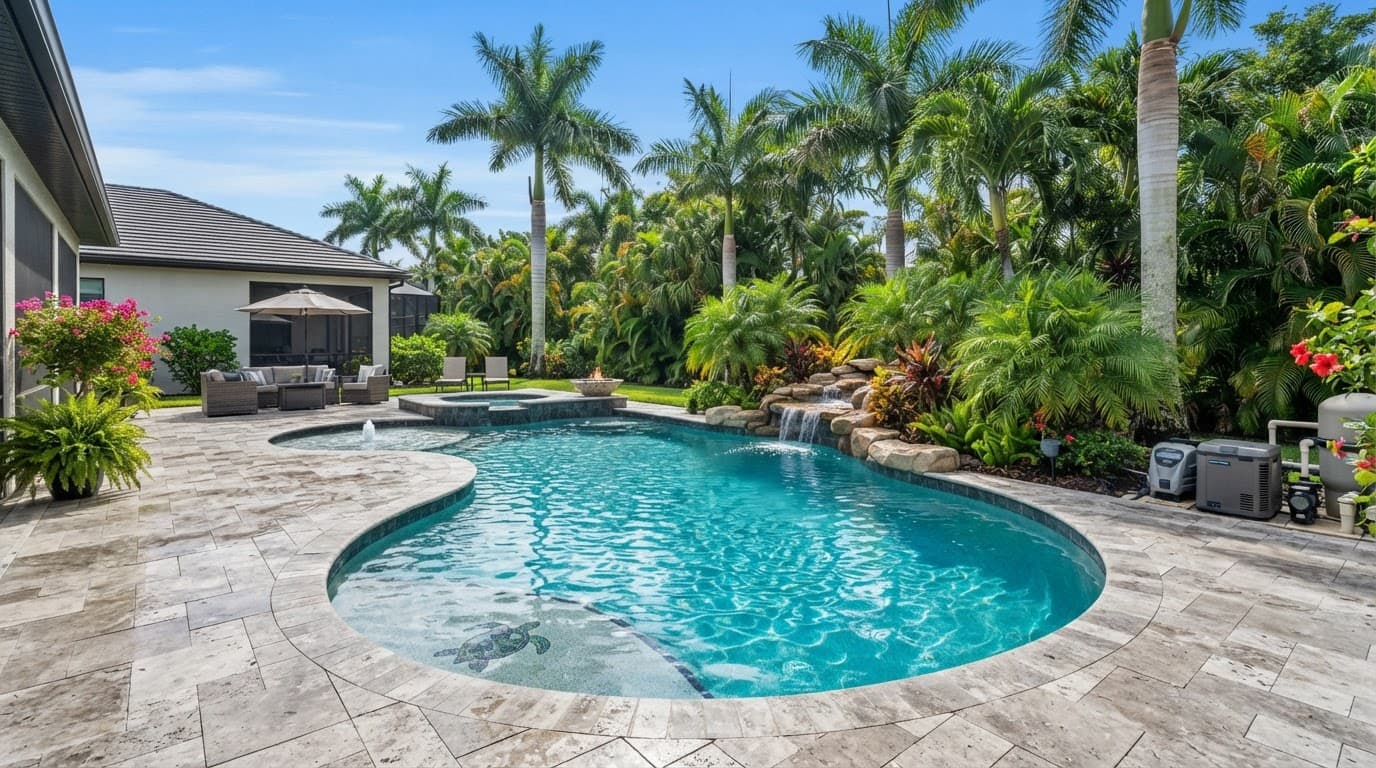
Comparing Punta Gorda pool heaters by type
Each heater type solves a different problem. Punta Gorda pool heaters face warm air for much of the year, but no single design fits every pool. Review the basic tradeoffs before comparing brands or model numbers.
| Heater type | Best fit | Main advantage | Main limitation |
|---|---|---|---|
| Heat pump | Regular swimming and maintaining a set temperature | Efficient operation in warm air | Slower initial heating |
| Gas heater | Fast warm-up or occasional use | Heats quickly in many conditions | Fuel use and installation needs can cost more |
| Solar heater | Flexible schedules and strong sun exposure | Low operating cost after installation | Weather and available roof area affect output |
| Electric resistance | Small pools and spas | Simple equipment design | High electricity demand for larger pools |
Heat pumps fit many Punta Gorda households
A pool heat pump pulls heat from the surrounding air and transfers it into the water. Punta Gorda's warm, humid conditions generally give this type of heater a favorable environment, although output drops as air temperatures fall.
Heat pumps usually warm water more gradually than gas units. They work well when you maintain a comfortable temperature instead of waiting until the afternoon to heat a cold pool. A properly sized unit can also pair with a pool cover and automation system to limit unnecessary run time.
Common equipment manufacturers include Pentair, Hayward, and Jandy. Brand names matter, but sizing, installation quality, airflow around the unit, and local service support matter just as much.
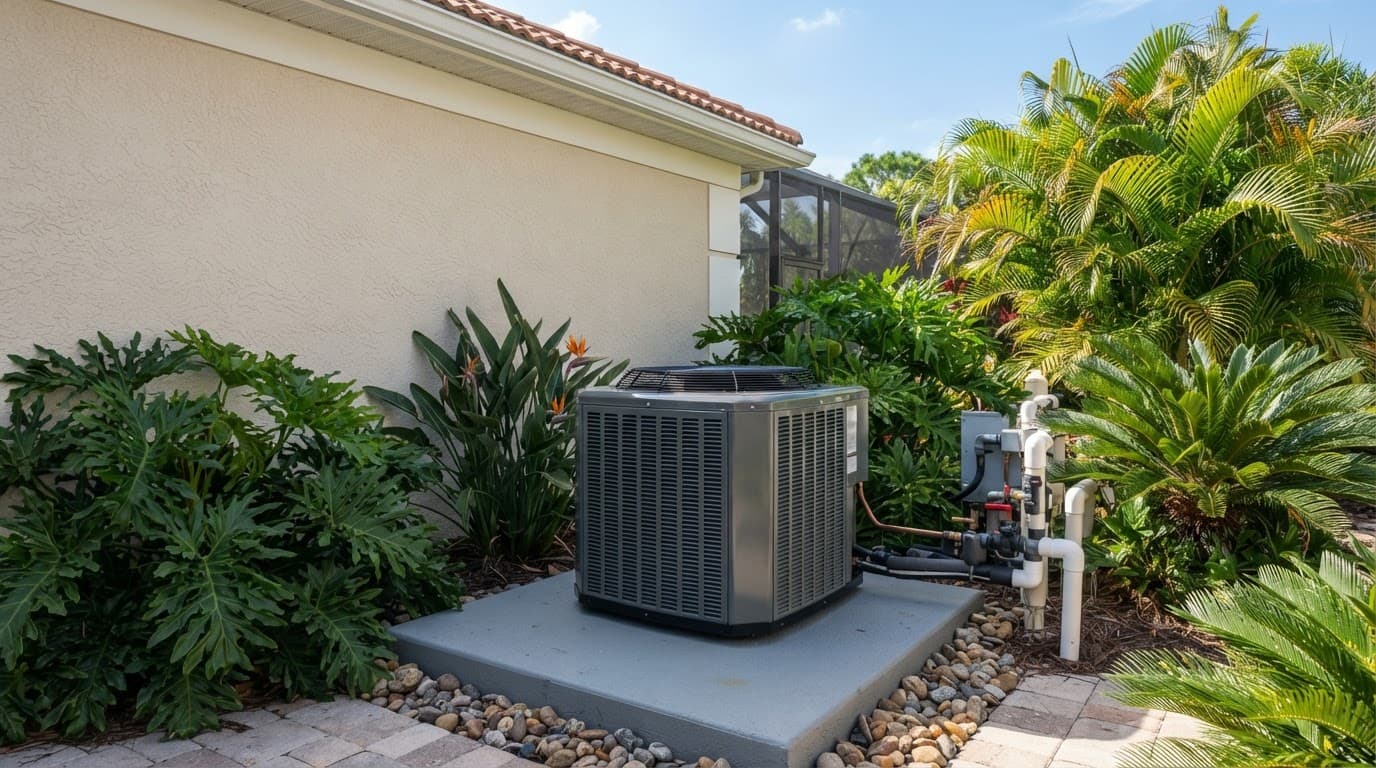
Gas heaters provide quick heat
Natural gas and propane heaters burn fuel to heat water as it passes through the unit. They are a strong choice when you want a rapid temperature increase, use the pool on an irregular schedule, or heat a connected spa.
Gas heating can maintain water temperature in conditions that challenge air-source equipment. However, the installation may require a suitable gas line, proper venting, clearances, and fuel capacity. Operating cost depends on the fuel type, local rates, heater efficiency, pool size, and how often you run it.
A gas heater isn't automatically the expensive choice for every homeowner. Occasional users may prefer paying for quick heat only when needed, while daily swimmers may favor the lower routine energy use that a heat pump often provides.
Solar and electric resistance systems have narrower uses
Solar pool heating uses collectors mounted on a roof or another sunny surface. It can provide low-cost supplemental heat, but cloudy weather, winter sun angles, shade, and limited roof space affect how much warmth reaches the pool. Solar usually works best for homeowners with flexible swim times.
Electric resistance heaters convert electricity directly into heat. They can make sense for a spa or a smaller body of water, but a full-size pool may require substantial electrical power. An electrician should confirm panel capacity before you select this option.
Choose a heater around how you use the pool
The best Punta Gorda pool heaters are the ones that match your schedule, comfort range, and property. Use this framework before requesting quotes:
- Start with pool volume. A larger pool needs more heating capacity and more time or fuel to change temperature. Ask for sizing based on measured or verified pool gallons, not a guess based on surface appearance.
- Set a realistic temperature. Decide whether you want cool-season maintenance or occasional warm-up. A higher target temperature increases run time, especially when nights are cool or wind crosses the pool.
- Choose based on swim habits. Frequent swimmers who maintain a set temperature often prefer a heat pump. Families who heat the pool for selected weekends may value a gas heater's speed. Solar can supplement either approach when the property receives strong sun.
- Review the existing equipment. The pump, filter, valves, plumbing, electrical service, automation, and gas connection all affect the installation. A heater can't perform well if water flow is restricted or the circulation system needs repair.
- Account for the pool cover. If you won't cover the pool during cool nights, expect greater heat loss and higher operating costs. A cover should be part of the usage plan, not an afterthought.
Actual heating performance and operating costs vary with pool size, desired water temperature, weather, equipment condition, and utility rates. Ask every contractor to state the assumptions behind any operating-cost estimate. That makes one quote easier to compare with another.
Plan for installation, maintenance, and total cost
The equipment price is only one part of a pool-heater project. A complete quote may include a concrete or composite equipment pad, plumbing changes, electrical work, a disconnect, gas-line work, venting, automation connections, removal of old equipment, and permits where required.
Placement affects safety and performance. Heat pumps need open airflow around the cabinet, while gas heaters need the clearances and venting specified by the manufacturer. Keep equipment away from roof runoff, standing water, dense landscaping, and locations where salt spray or chemical fumes can accelerate corrosion.
Saltwater pools still need compatible equipment and balanced water chemistry. Poor chemistry can damage heat exchangers and shorten the life of pumps, heaters, and other components. Regularly clean the filter, keep water flow within the manufacturer's requirements, and schedule service before the swimming season becomes busy.
For a new pool or backyard renovation, coordinate heating with the pool shell, plumbing, electrical plan, screen enclosure, and deck layout. Homeowners comparing the full project budget can review this guide to Southwest Florida pool costs before selecting upgrades.
An existing pool may need a different approach. The assessment should identify whether the current system can support a new heater or whether repairs and upgrades should happen first.
Get a professional pool-heater assessment
A site visit turns a general recommendation into a reliable equipment plan. The contractor should inspect the pool and equipment area, confirm pool volume, check water-flow components, review available electrical or gas service, and discuss your preferred water temperature and swimming schedule.
Ask for a written proposal that identifies the heater type, heating capacity, installation work, controls, warranty, maintenance requirements, and expected operating assumptions. If the estimate depends on a cover, ask whether the cover is included or priced separately.
Homeowners building a pool can also work with a Southwest Florida pool contractor early in the design process. That timing helps prevent equipment placement, gas, electrical, and drainage decisions from becoming expensive changes later.
Schedule a professional pool-heater assessment before you buy a unit. A qualified installer can compare heat pump, gas, solar, and resistance options against your actual pool, property, and budget.
Keep Your Pool Comfortable Through More Seasons
Punta Gorda's climate gives homeowners a strong starting point for extended swimming, but the water still responds to wind, nighttime temperatures, evaporation, and your chosen set point. A heat pump often suits regular swimmers, gas works well for quick heating, solar can reduce routine energy use, and resistance heating usually fits smaller applications.
The strongest recommendation comes from proper sizing and an honest operating-cost review. When you pair the right heater with a cover, sound circulation equipment, and regular maintenance, your pool is more likely to stay comfortable when the weather turns cool.