Punta Gorda Roof Tarping After Storm Damage
Explore Our Services
Contact Us Today!
(239) 322-9295
Roof damage can become interior damage with the next rain. Punta Gorda roof tarping gives homeowners a temporary way to cover exposed areas while a professional evaluates the roof.
A tarp can't repair missing shingles, damaged decking, broken flashing, or structural problems. It can reduce additional water intrusion when installed correctly, but safety comes first. Use these steps to protect your household, document the loss, and prepare for permanent repairs.
What Punta Gorda roof tarping does after storm damage
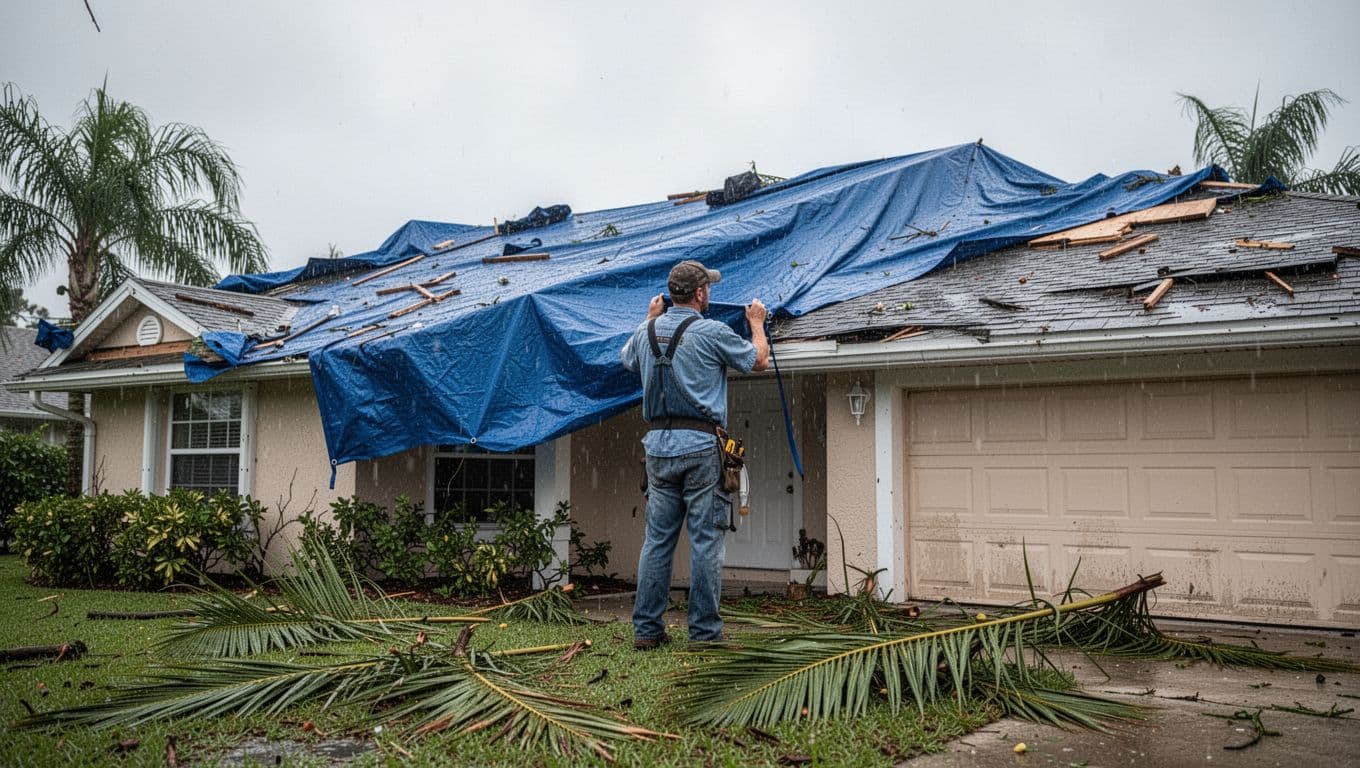
A roof tarp covers an opening or exposed section after high winds, fallen branches, flying debris, or other storm damage. It creates a temporary barrier between the roof and incoming rain. That barrier can help protect ceilings, insulation, walls, flooring, cabinets, and personal belongings while you arrange an inspection.
Professional emergency roof tarp services in Punta Gorda can help limit ongoing exposure after severe weather. The crew should assess the roof before installing the tarp, because a loose or unstable surface may create additional hazards.
A tarp buys time, not a permanent repair
Tarping is temporary roof protection. It doesn't restore the roof covering, dry wet insulation, repair damaged trusses, or seal every possible entry point. Water may still enter around exposed flashing, roof penetrations, wall transitions, or areas outside the tarp.
Schedule a full roof inspection even if the leak appears to stop. Storm damage can remain hidden beneath shingles or underlayment. A professional needs to determine whether the roof needs a limited repair, broader restoration, or complete replacement.
Why installation details matter
A tarp must cover the damaged area with enough overlap to direct water away from the opening. Professionals may use compatible lumber, fasteners, or other securing methods based on the roof design and condition. They also need to account for roof pitch, wind exposure, drainage, and nearby damage.
A tarp that flaps, sags, collects water, or leaves exposed edges may fail during the next storm. Homeowners shouldn't try to adjust it from a ladder or roof. Call the installer if the material shifts or water continues entering the home.
Stay safe before anyone reaches the roof
Storm damage creates risks that aren't always visible from the street. A roof may have weakened decking, broken rafters, loose shingles, exposed nails, or unstable tree limbs. Wet surfaces also become slippery, and power lines may be hidden by branches or debris.
Never climb onto a storm-damaged roof to inspect it or install a tarp. A fall, electrical injury, or roof collapse can happen without warning.
Call emergency services for immediate hazards
Leave the area and call emergency services when you see fire, smoke, a gas odor, active electrical hazards, major structural collapse, or an injury. Stay away from downed power lines and assume they remain energized. Don't move branches or debris that may be touching wires.
A sagging ceiling also needs caution. Keep people and pets out of the room if water is collecting above it, the ceiling is bowing, or electrical fixtures are wet. Don't stand beneath the damaged area or touch a wet light switch.
Inspect only from the ground
From a safe location, look for missing roof coverings, torn materials, visible holes, displaced vents, fallen branches, and water running down exterior walls. Use binoculars or your phone's zoom instead of climbing.
Check the attic only if the space is dry, stable, well-lit, and free of electrical or structural hazards. If you see daylight through the roof, wet insulation, sagging materials, or damaged framing, leave the area and wait for a professional. A ground-level view is enough to request emergency help.
Limit interior water intrusion while you wait
After a storm, focus on controlling water without creating another safety problem. Place buckets or containers beneath active drips, then move furniture, electronics, rugs, and other belongings away from the affected area if the floor is safe to cross.
Cover furniture with plastic sheeting, but avoid trapping wet materials against walls or ceilings. Use towels to direct small amounts of water toward containers. Don't use electrical equipment in wet areas, and don't touch outlets, fixtures, or appliances exposed to water.
Shut off power only when it's safe
If water is near electrical outlets, wiring, appliances, or the electrical panel, keep away from the area. You may shut off power from a dry, accessible location only when you can do so without stepping into water or touching damaged equipment. Call an electrician or emergency services when you aren't certain.
Don't use candles, grills, or fuel-burning equipment inside the home during a power outage. These create fire and carbon monoxide risks. Keep the area ventilated only when opening doors or windows won't allow more rain inside.
Protect people and property
Move important documents, medications, clothing, and valuables to a dry area. Photograph items before moving them when you can do so safely. If drywall, insulation, or flooring is wet, limit contact and arrange professional drying as soon as possible.
Mold can develop when damp materials remain wet. A tarp may reduce additional rain, but it doesn't dry the damage already inside the home. Your roofing contractor may recommend a separate water mitigation or restoration assessment.
Document storm damage before cleanup
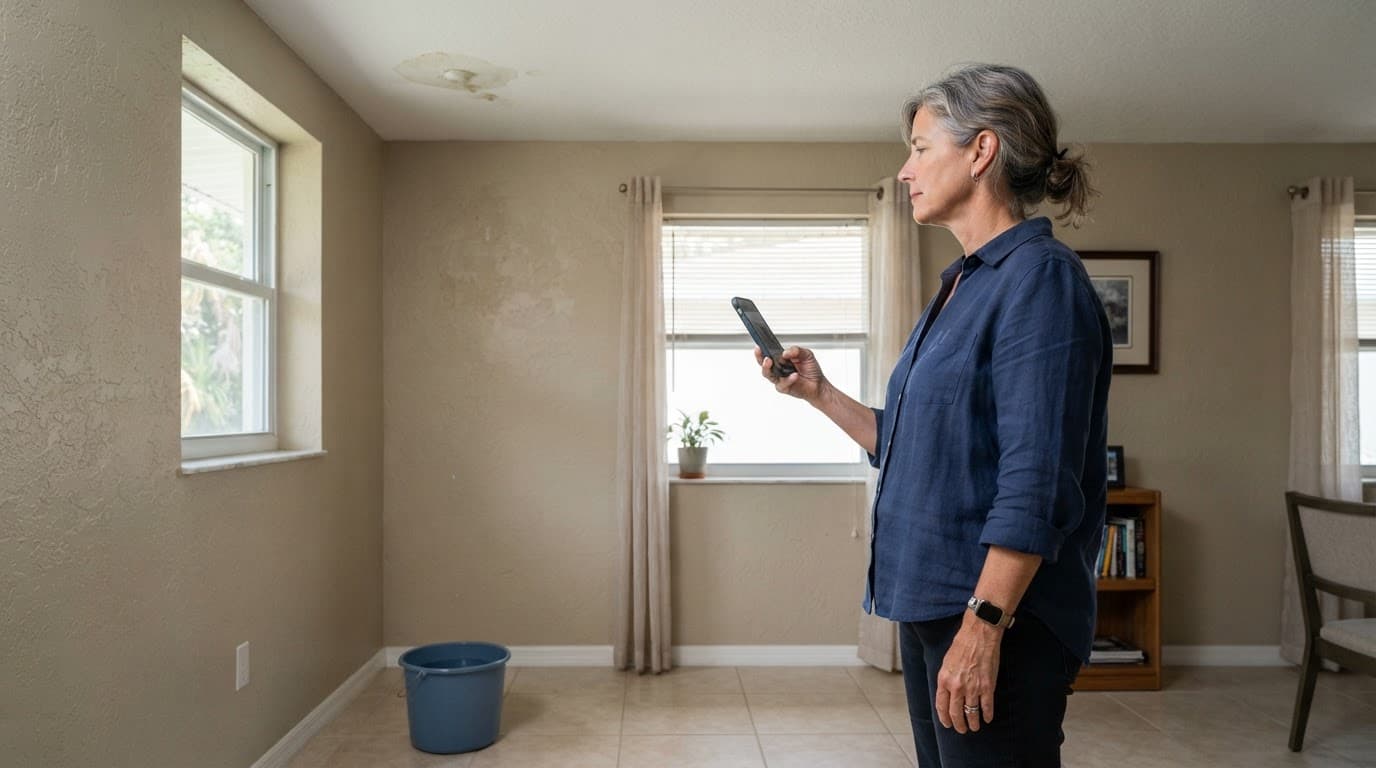
Good documentation helps you explain what happened to your insurance company and roofing contractor. Take photos and video only from safe areas. Start with wide images that show each room or exterior elevation, then capture closer views of the damage.
Photograph the roof from the ground
Record the date and approximate time of the storm if you know them. Photograph missing shingles, exposed underlayment, damaged vents, fallen limbs, broken gutters, detached soffits, and visible punctures from ground level.
Take pictures from several angles without walking beneath unstable materials. If you can safely photograph water stains, ceiling damage, or wet flooring indoors, include those images too. Avoid disturbing debris before documenting it unless it creates an immediate danger.
Keep a simple damage record
Write down when you first noticed the leak, which rooms are affected, and whether the problem changes during rain. Save receipts for emergency supplies, temporary repairs, water removal, and damaged-item replacement. Keep copies of contractor estimates, invoices, inspection reports, and communications with your insurer.
Make a room-by-room list of damaged belongings. Include purchase dates or approximate ages when available, along with photos, receipts, warranties, or other proof of ownership. Contact your insurance company promptly and follow the policy's reporting and documentation requirements.
Don't sign an agreement you haven't read. Ask whether the document covers emergency tarping, permanent roof work, interior repairs, or all three.
How a professional tarp installation works
A qualified roofing professional begins with a visual assessment from a safe position. The inspection should identify the size of the opening, the condition of the surrounding roof, possible structural concerns, and any areas where water may be entering.
The crew may recommend a tarp only when the roof can support temporary protection. If the roof is severely unstable, a different emergency plan may be necessary.
The roof surface comes first
Professionals look beyond the visible hole. They may check the roof deck, underlayment, flashing, vents, valleys, eaves, and connections around the damaged section. Water can travel beneath the roof covering before appearing as a ceiling stain inside.
If a tree struck the roof, the crew may also look for damaged framing or pressure points that a tarp cannot correct. Any unsafe area should remain off-limits until the structure receives a proper evaluation.
Secure coverage must account for weather
The tarp needs adequate coverage and secure attachment. Its edges should direct water away from the opening rather than toward the damaged section. The installation method should match the roof's condition and avoid unnecessary damage to sound materials.
Ask the contractor how long the tarp is expected to remain in place, what to do if it loosens, and whether follow-up inspections are included. Don't assume a tarp will remain secure through changing wind and rain.
Prepare for the roofing inspection
Before the contractor arrives, gather your photos, insurance information, repair history, and any records about the roof's age or previous leaks. Clear access to the attic, exterior walls, garage, and affected rooms when doing so won't expose you to hazards.
Tell the contractor when the leak began and whether it appeared during wind, heavy rain, or after debris struck the roof. Point out every interior stain, even if it looks unrelated. Water can travel along framing and appear far from the original entry point.
Questions to ask during the visit
A clear inspection should leave you with practical answers. Ask:
- Which roof areas show storm damage?
- Is the roof deck or framing affected?
- Does the tarp cover the full exposed area?
- What interior materials need drying or replacement?
- Can the roof receive a repair, or does its condition support replacement?
- What permits or inspections will the permanent work require?
- Which work is emergency protection, and which work is permanent restoration?
Request a written scope that separates temporary tarping from later repairs. It should identify materials, labor, expected timing, cleanup, and any exclusions.
Repair and replacement are different decisions
A repair may be appropriate when damage is limited and the surrounding roof remains serviceable. Replacement may make more sense when the storm affected a large area, the roof has widespread deterioration, or repairs would leave multiple weak points.
The contractor should base that recommendation on the roof's condition, age, construction, and applicable requirements. Avoid making a permanent decision from a tarp quote alone. The full inspection matters.
Choose roofing help carefully after a storm
Storms create urgent demand, and that pressure can make rushed decisions feel necessary. Take enough time to verify the contractor's license, insurance, business identity, and written scope. Ask who will perform the work and who will handle permits when they apply.
A reliable contractor should explain what the crew can do immediately and what requires a later inspection. You should also receive clear communication about arrival times, tarp limitations, follow-up visits, and payment terms.
Watch for pressure and unclear promises
Be careful with anyone who promises that insurance will cover everything or says a full replacement is certain without inspecting the roof. No contractor can guarantee an insurance decision or accurately assess hidden damage from a brief view at the doorway.
Don't allow anyone to enter unsafe areas without your permission. Keep copies of every agreement and ask questions before authorizing permanent work. If you need help locating a qualified team, you can request a roofing inspection and estimate for storm-related damage.
Plan for permanent storm protection
Once the emergency is under control, discuss repairs that address the actual failure point. The work may involve roof covering, flashing, ventilation, roof-deck materials, gutters, soffits, or interior water damage.
For a replacement or major repair, ask how the proposed roof system fits current Southwest Florida requirements. The right materials and installation details matter, but so does the way the roof connects to the rest of the home. Keep the inspection report and permit records with your home documents after the project ends.
Conclusion
Storm damage demands quick action, but rushing onto a roof can make a difficult situation worse. Punta Gorda roof tarping can reduce additional exposure while you document the damage, protect the interior, and arrange a professional inspection.
Keep people away from unstable areas, call emergency services for immediate hazards, and treat every tarp as temporary protection. A careful inspection will show whether your home needs a focused repair, broader restoration, or a complete roof replacement.