Roof Age Home Insurance in Cape Coral: What to Know
Explore Our Services
Contact Us Today!
(239) 322-9295
For Cape Coral homeowners, decisions about home insurance and roof age often depend on more than the number of years since installation. The roof's condition, construction quality, storm exposure, inspection records, and policy terms can all affect coverage and renewal.
Florida doesn't have one universal roof-age cutoff for every insurer. However, older roofs usually receive closer underwriting review, especially after a storm or when a policy renews. Understanding what insurers look for can help you plan repairs, inspections, or replacement before a deadline becomes urgent.
How roof age home insurance decisions work in Cape Coral
Florida protects some newer roofs from age-only decisions
Florida rules generally prevent an insurer from declining or refusing to renew a policy solely because a roof is less than 15 years old. That protection doesn't mean the roof receives automatic approval under every circumstance. An insurer can still review damage, leaks, maintenance, claims history, construction details, and other property risks.
For roofs that are 15 years old or more, an inspection showing sufficient remaining useful life may help prevent age alone from driving a nonrenewal. A licensed inspector evaluates the roof rather than relying only on the installation date.
This distinction matters because a 16-year-old roof in good condition may present less risk than a newer roof with poor installation, storm damage, or missing permits.
Private insurers set different underwriting standards
Insurance companies can apply different rules to shingle, tile, metal, and other roofing systems. One carrier may accept an older roof after an inspection, while another may require replacement, limit roof coverage, or decline the application.
Some insurers begin requesting roof inspections around 15 years for asphalt or shingle roofs. Others apply stricter review as a roof approaches 20 or 25 years. These are common underwriting practices, not universal Florida requirements.
Before replacing a roof solely because of age, ask your agent for the carrier's written requirements. Confirm whether the company needs a roof inspection, four-point inspection, wind mitigation form, permit records, or proof of remaining useful life.
Citizens roof-age requirements in Florida
Citizens uses specific age and roof-type thresholds
Citizens Property Insurance has its own inspection requirements. For Citizens policies, documentation is generally required for soft roofs, such as asphalt shingles, that are more than 25 years old. Hard roofs, including tile, slate, clay, concrete, and metal, generally have a 50-year documentation threshold.
The inspection must show at least five years of remaining useful life. A roof's age by itself doesn't establish whether it meets that standard. The report must address condition, damage, expected performance, and other factors that support the useful-life estimate.
These Citizens thresholds shouldn't be treated as a rule for every private insurer. They apply to Citizens eligibility and may change as underwriting rules change.
Remaining useful life can affect eligibility
If a Citizens-insured roof has less than five years of remaining useful life, the homeowner may need to provide proof of full roof replacement before Citizens writes a policy. Required inspections must come from a Florida-licensed inspector.
Citizens also created a one-time remaining-useful-life exception for certain new and renewal policies effective August 1, 2024. The exception requires acceptable documentation, remains subject to underwriting approval, and can't be used repeatedly. Citizens may send a courtesy notice when nonrenewal is approaching because the roof has one year or less of remaining useful life.
A notice from Citizens shouldn't be ignored. Start by confirming the inspection date, the stated useful-life estimate, and the documents the company will accept. Then get a written repair or replacement assessment from a licensed roofing professional.
What a Cape Coral roof inspection examines
Condition matters as much as the installation date
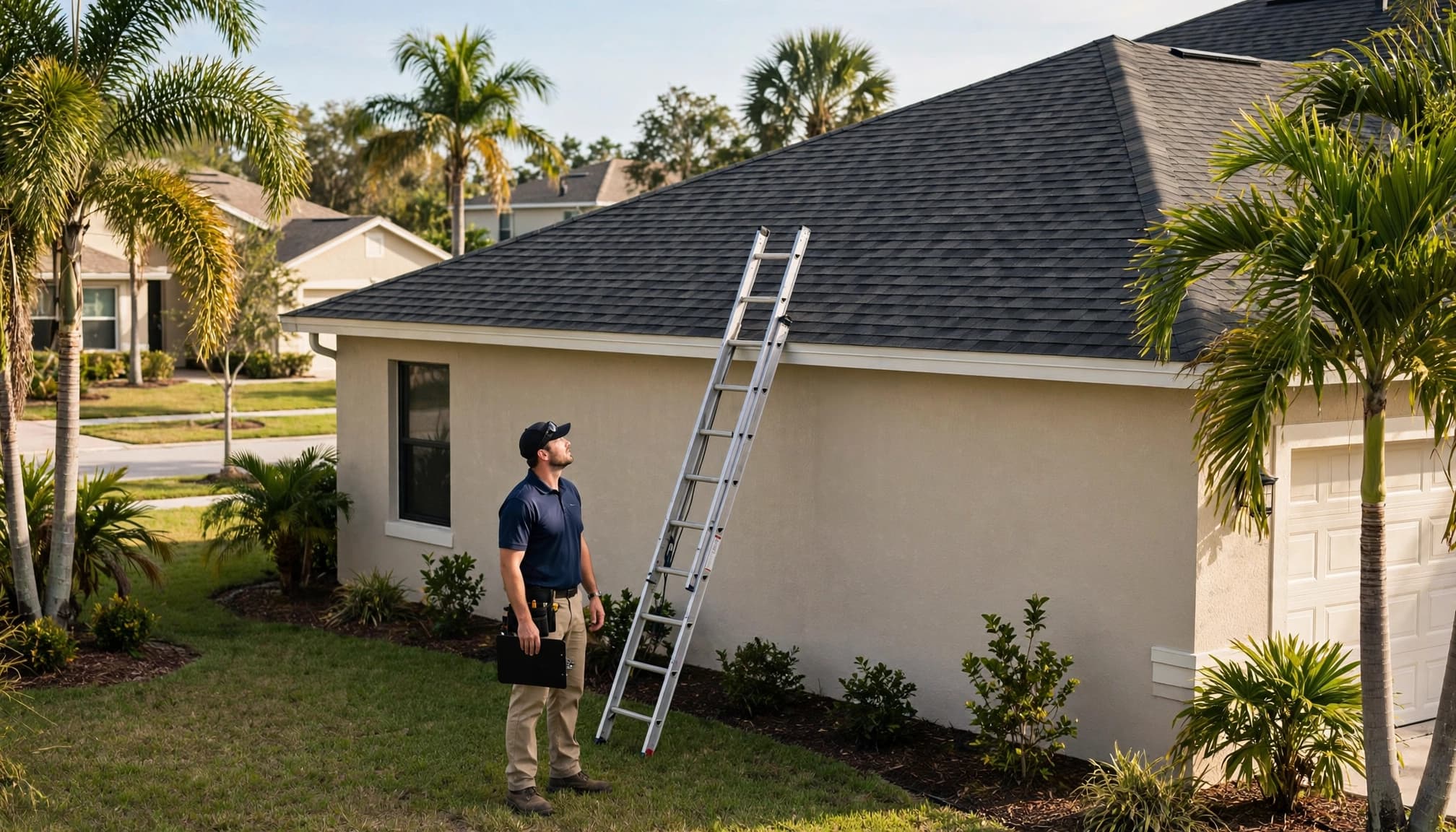
A roof inspection looks for active leaks, missing or damaged materials, curling shingles, exposed fasteners, deteriorated flashing, ponding water, damaged decking, mold, and storm-related problems. The inspector may also examine roof valleys, ridges, vents, penetrations, and areas where wind-driven rain can enter.
The report should identify the roof covering, approximate age, visible defects, repair history, and estimated remaining useful life. Clear photographs and written findings can help an insurer understand why the roof remains serviceable.
Cape Coral homeowners can arrange Cape Coral roof inspection services before applying for coverage or responding to a renewal request. Schedule the inspection early enough to address repairs and obtain updated paperwork.
Wind mitigation documents record construction details
A wind mitigation inspection focuses on how the home resists wind uplift and water intrusion. It can document roof-deck attachment, roof-to-wall connections, roof geometry, sealed roof-deck details, opening protection, and other features.
Florida's revised Uniform Mitigation Verification Inspection Form, OIR-B1-1802, applies to inspections performed on or after April 1, 2026. When the property has no material changes and the information remains accurate, a qualifying form may remain valid for up to five years.
Insurers decide how to apply credits based on their own rating rules. A wind mitigation inspection may support premium savings, but no contractor can promise a specific discount. Homeowners can learn more through Cape Coral wind mitigation inspections.
Construction quality, storm exposure, and the 25% rule
Installation details can influence risk
Roof age doesn't tell the whole story. Underlayment, flashing, ventilation, roof-deck attachment, roof-to-wall connections, and installation quality can affect how a roof performs during Southwest Florida's sun, rain, and high winds.
A newer roof may still raise insurance concerns if it has poor workmanship, unresolved leaks, incomplete sealing, or no permit records. A well-maintained older roof may receive a more favorable review when a licensed inspection documents its condition and useful life.
When replacing a roof, keep the contract, product information, permit, final inspection approval, photographs, and receipts. A detailed Southwest Florida roof installation service should document the complete roofing system, including the layers beneath the visible covering.
The 25% repair rule isn't automatic replacement
Florida's 25% roof rule does not require every homeowner to replace an entire roof after a storm damages 25% of its area. Under Florida Statutes section 553.844(5), a roof built, repaired, or replaced under the 2007 Florida Building Code or a later code may qualify for repair of only the damaged section, even when the affected area reaches 25% within a 12-month period.
Eligibility depends on the roof's construction date, age, code history, and the exact statutory requirements. Older or nonqualifying roofs may face broader code-compliance requirements.
After storm damage, document the affected areas and contact a licensed roofing professional and the applicable building official. Avoid assuming that an insurer's first estimate settles the question. Temporary protection, such as Southwest Florida emergency roof tarps, can help limit additional water damage while the claim and repair scope are reviewed.
How roof age affects coverage, premiums, and deductibles
Coverage may change as a roof gets older
A policy with replacement-cost coverage may pay the cost to replace covered damage, subject to the policy's exclusions, limits, and deductible. However, insurers may apply special roof terms to older materials, including actual cash value coverage.
Actual cash value usually means replacement cost minus depreciation. If a policy settles roof damage on an ACV basis, age can reduce the amount paid for the roof covering. Some policies release withheld depreciation only after the homeowner completes eligible repairs and provides proof of completion.
Read the declarations page and endorsements before assuming a claim will pay for a full replacement. Ask whether the roof is covered at replacement cost or ACV, whether matching materials are addressed, and whether wind or hurricane damage has separate conditions.
Deductibles can change the amount you receive
Cape Coral policies may include a hurricane or wind deductible based on a percentage of the home's Coverage A limit. Some policies may also contain a separate roof deductible. Secondary Florida insurance summaries describe a possible roof-deductible limit of the lesser of 2% of Coverage A or 50% of the roof's replacement cost, but homeowners should verify the current terms in their own policy and with their agent.
For example, a percentage deductible can be much larger than a standard flat deductible. The policy's declarations page should show which deductible applies to a covered loss.
Roof age can affect premiums, but a replacement doesn't guarantee lower insurance costs. The result also depends on the roof type, wind features, insurer pricing, claim history, property location, coverage limits, and deductible choices.
What to do before renewal or a new policy application
Give yourself time to collect documents before the renewal notice arrives. A practical preparation plan includes:
- Confirm the roof's installation date, material, permit history, and prior repair records.
- Ask your insurer whether it requires a roof inspection, four-point inspection, wind mitigation inspection, or specific remaining-useful-life form.
- Schedule a licensed inspection before making major decisions, especially if the roof is approaching 15 years or has visible damage.
- Keep photographs of the roof, flashing, vents, roof edges, and completed repairs.
- Save contracts, invoices, permits, final inspection approvals, product details, and warranty information.
- Review replacement-cost or ACV terms, roof exclusions, wind deductibles, hurricane deductibles, and any roof-specific endorsement.
- If the home is older, consider a Cape Coral four-point inspection, which reviews the roof, electrical system, plumbing, and HVAC equipment.
A four-point inspection can reveal other underwriting concerns unrelated to roof age. Those findings may affect the policy application, so address major defects before requesting a new quote when possible.
Key Takeaways
- Florida doesn't impose one roof-age cutoff for every insurance company.
- A roof under 15 years old generally can't be rejected solely because of age, but other risks still matter.
- Private insurers use different standards for roof age, condition, materials, and documentation.
- Citizens generally requires documentation for soft roofs over 25 years old and hard roofs over 50 years old.
- Citizens documentation generally needs to show at least five years of remaining useful life.
- Wind mitigation records can support underwriting and possible credits, but savings aren't guaranteed.
- Roof replacement doesn't automatically lower premiums.
- Policy terms determine whether a claim uses replacement cost or actual cash value.
- A roof inspection and organized records can make renewal discussions easier.
FAQ about roof age and Cape Coral insurance
Can an insurer cancel my policy when my roof turns 15?
Not solely because the roof reaches 15 years. Florida's age-related protections generally prevent a roof under 15 years old from being rejected solely due to age, while older roofs may receive additional review. An insurer can still act based on damage, condition, claims, underwriting rules, or other property risks.
Is a 20-year-old roof automatically uninsurable?
No. There is no universal private-insurance cutoff that applies to every roof and carrier. The insurer may request an inspection, proof of repairs, or documentation showing remaining useful life. Material, installation quality, storm exposure, and visible condition all matter.
Will replacing my roof guarantee lower premiums?
No. A newer roof may improve insurability and may support better pricing, especially when it includes documented wind-resistant construction. The insurer still considers the entire property, policy limits, deductibles, claims history, and current rates.
Should I replace a roof before filing a storm claim?
Usually, document the damage first and report the claim according to your policy. Emergency protection may be appropriate to prevent further damage, but avoid covering up evidence or beginning major work before the insurer has a chance to inspect, unless immediate safety or water intrusion requires it.
A roof's age is only one part of the insurance decision
Cape Coral homeowners should treat roof age as a prompt for inspection and documentation, not as an automatic verdict. A sound roof with clear records, proper construction, and verified wind-resistant features may receive a different review than a newer roof with damage or missing paperwork.
Start before renewal season. Confirm your policy terms, arrange the right inspection, and keep construction records in one place. That preparation gives you better information when deciding between repair, replacement, or a new insurance application.