
Roof Pipe Boot Replacement for Fort Myers Leak Prevention
Explore Our Services
Contact Us Today!
(239) 322-9295
A roof can look perfect from the driveway while rain enters around a plumbing vent. For Fort Myers homeowners, roof pipe boot replacement can prevent a small roof penetration problem from becoming attic, insulation, or ceiling damage.
Plumbing vent pipes pass through the roof, so each opening needs a properly fitted boot, flashing, and weatherproof seal. Early signs often appear indoors before the roof problem is visible. Knowing what to check from safe locations can help you arrange the right inspection sooner.
What a Roof Pipe Boot Does
A roof pipe boot is part of the waterproofing system around a plumbing vent. It closes the gap where the pipe passes through the roof while allowing the vent to function normally.
The plumbing vent penetration
Plumbing vents release sewer gases and help maintain proper pressure in the drain system. The pipe must extend through the roof, which creates a break in the roof surface.
The boot usually includes a flexible collar around the pipe and a wider flange that fits beneath or over nearby roofing materials, depending on the roofing system. The collar should fit closely without splitting, curling, or pulling away from the pipe. The flange should remain integrated with the surrounding roof layers.
In Southwest Florida, intense sun, humidity, heavy rain, and strong winds place constant stress on exposed roofing components. Rubber or synthetic collars can deteriorate over time. Storm debris or previous roof work can also damage the flange.
How flashing keeps water out
Flashing directs water around the pipe and back onto the roof surface. Each layer should shed water outward, with upper materials overlapping lower materials in the correct direction.
A thick bead of caulk cannot replace sound flashing. Sealant can support an intended joint, but it cannot repair a cracked boot, reverse a water-shedding lap, or correct a loose flange. Compatible products also matter because some sealants and roofing materials can react poorly when paired without approval.
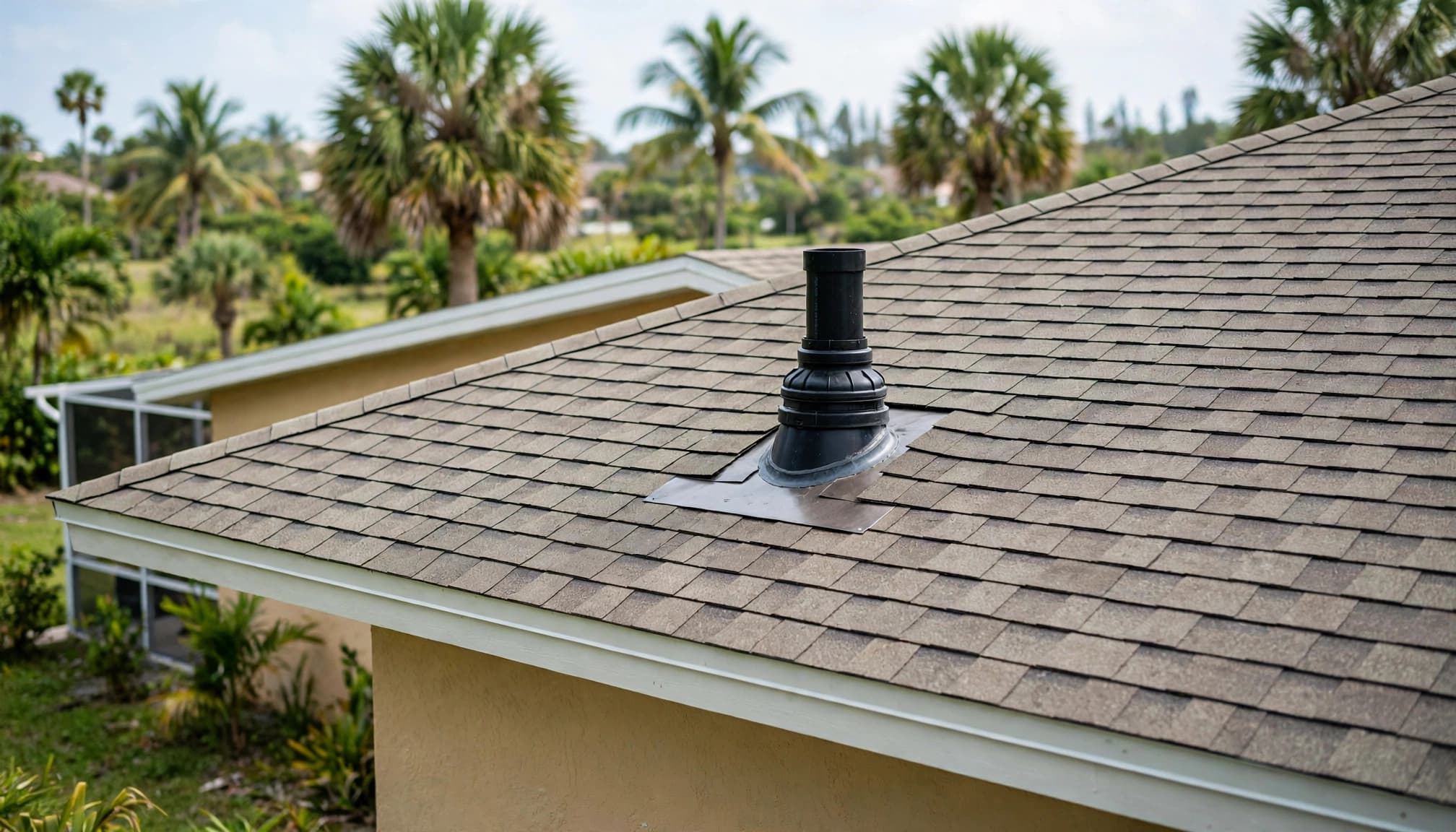
When a roof pipe boot replacement is needed, the work should address the entire penetration detail. Replacing only the visible collar may leave damaged flashing or surrounding roofing materials in place.
How to Spot a Hidden Plumbing Leak
Water from a roof penetration does not always appear directly below the vent. It can travel along roof decking, framing, insulation, or ceiling materials before becoming visible.
Check safe interior areas first
Homeowners can look from the ground and inspect accessible interior areas without climbing onto the roof. In the attic, look for brown or gray staining on roof sheathing near a plumbing vent. Damp insulation, soft wood, musty odors, or darkened framing also deserve attention.
Ceiling discoloration may appear in a bathroom, hallway, or bedroom. Bubbling paint and swollen drywall can indicate moisture, although the source may be several feet away from the visible damage.
Only inspect an attic if the access area is safe and easy to reach. Stay on stable flooring or framing designed for foot traffic. Avoid stepping on drywall, insulation, or unsupported ceiling surfaces. If the attic is hot, cramped, wet, or difficult to access, arrange a professional inspection.

Connect the timing to the weather
A leak that appears only during heavy rain may point toward a roof penetration, flashing issue, or another exterior opening. Water stains that grow after a storm need prompt attention, even if the ceiling dries later.
Fort Myers homes also face wind-driven rain during tropical storms and hurricanes. A roof can resist ordinary rainfall while allowing water through a weakened boot during stronger weather.
A professional roof inspection can assess the roof materials, structure, flashing, penetrations, and signs of weather or wear. Cutting Edge Homes & Renovations provides professional roof inspections for homeowners seeking a clearer assessment before repair decisions are made.
A dry ceiling does not prove the leak has stopped. Moisture can remain inside insulation or roof framing after the surface looks normal.
Roof Pipe Boot Repair Versus Replacement
The correct scope depends on the condition of the boot, flashing, roof covering, and surrounding structure. A contractor should identify the water entry point before recommending work.
Questions to ask during an inspection
Ask whether the collar is cracked, brittle, loose, or separated from the pipe. The inspection should also examine the flange, fasteners, nearby shingles or tiles, underlayment, and roof decking.
Useful questions include:
- Is the boot itself damaged, or is water entering beside the flange?
- Has the surrounding roof covering moved, cracked, or deteriorated?
- Does the flashing overlap in a water-shedding direction?
- Is there staining or moisture inside the attic?
- Does the repair need compatible sealant, replacement flashing, or new roofing materials?
- Could another roof penetration be causing the same interior symptom?
Photos of the roof area and attic findings can help document the condition. A clear explanation should distinguish confirmed damage from possible causes.
When replacement involves more than the boot
A localized repair may be appropriate when the boot and nearby materials remain sound. Replacement may require removing enough surrounding roofing to install the new flashing correctly. The area must then be restored so water flows across the roof without creating a new weak point.
Broader roof repair may be needed if the penetration sits in a damaged section, if multiple boots show similar deterioration, or if storm damage affects nearby materials. Missing shingles, damaged flashing, and roof leaks can allow water into a home and lead to structural damage when repairs are delayed.
If the roof is near the end of its serviceable condition, compare the localized repair with a larger roofing plan. Cutting Edge Homes & Renovations lists asphalt shingle, metal, and tile roofing among its residential roof installation services, along with roof tear-offs and new-construction roofing.
Temporary caulk-only repairs deserve caution. They may hide the symptom briefly while water continues to enter around failed flashing. A lasting repair should restore the roof's drainage path and weatherproof layers.
When to Contact a Fort Myers Roofing Professional
Roof access is dangerous, especially on steep, wet, hot, or storm-damaged surfaces. Homeowners should avoid climbing onto the roof to photograph a boot, apply sealant, or test a suspected leak.
Visible roof problems
Arrange an assessment when you notice a damaged pipe collar from the ground, displaced roofing near a vent, loose flashing, missing shingles, cracked tiles, or sealant that has separated. Do not assume the most visible defect is the only problem.
After strong wind or heavy rain, schedule an inspection if water appears indoors or roof materials look disturbed. A contractor can determine whether the pipe boot, nearby flashing, underlayment, or a different roof area needs attention.
If water is actively entering, protect furniture and flooring from inside the home. Place a container under a drip when safe, move valuables away from the area, and avoid electrical fixtures affected by moisture.
Interior or attic evidence of water intrusion
Contact a professional when stains return, insulation feels damp, wood appears discolored, or a musty smell persists. Hidden moisture can damage framing and support mold growth if it remains undetected.
Roof and plumbing issues can overlap. A qualified contractor can assess the roof penetration, while a licensed plumbing professional may need to evaluate the vent pipe or related plumbing components. Roof access, electrical exposure, structural damage, and wet insulation all create safety concerns.
Cutting Edge Homes & Renovations is a family-owned, fully licensed, and insured contractor based in Fort Myers. Its listed roofing contractor license is CCC1331068. Homeowners should still confirm the proposed scope, materials, flashing method, and any required approvals before work begins.
Key Takeaways for Fort Myers Homeowners
- A roof pipe boot seals the opening around a plumbing vent and works with flashing and surrounding roofing materials.
- Cracked collars, loose flanges, damaged flashing, and failed overlaps can allow hidden water intrusion.
- Check accessible attic areas and ceilings safely, but do not climb onto the roof.
- Stains, damp insulation, musty odors, and recurring leaks justify a professional inspection.
- Caulk alone is not a substitute for correctly installed flashing and a sound drainage path.
- The right repair may involve the boot, flashing, nearby roofing, underlayment, or damaged decking.
- Heavy rain, strong winds, intense sun, and humidity can expose weak roof penetration details in Southwest Florida.
Frequently Asked Questions About Roof Pipe Boot Replacement
How long does a roof pipe boot last?
Service life varies with the boot material, roof exposure, installation quality, and Florida weather. Intense sunlight and heat can age exposed materials faster. A roof inspection is more reliable than a calendar estimate because the condition of the collar and flashing matters most.
Can I replace a roof pipe boot myself?
Roof work is risky, and a pipe boot replacement requires more than applying a product around the pipe. The installer must protect the roof covering, maintain the correct flashing overlap, and seal compatible materials without blocking drainage. Homeowners should limit their checks to safe ground-level views and accessible interior areas.
Is a ceiling stain always caused by the plumbing vent?
No. A ceiling stain may come from another roof penetration, damaged flashing, a roof covering defect, HVAC equipment, or plumbing inside the home. Water can travel before it reaches the visible stain, so the location of the damage does not always identify the source.
Should I use roof cement or caulk until help arrives?
A temporary seal may conceal the problem and make later diagnosis harder. If water is entering, protect the interior, contain drips when safe, and contact a qualified professional. Avoid climbing onto the roof or applying materials in wet conditions.
Does a new roof always require new pipe boots?
Not necessarily. The condition of each existing boot, its compatibility with the new roofing system, and the installation plan determine whether replacement is appropriate. Ask the contractor to document the condition of the penetrations before roofing work begins.
Conclusion
A small plumbing vent opening can become a significant source of hidden water damage when its boot or flashing fails. Early attic checks, safe ground-level observations, and prompt professional assessment help limit damage to insulation, roof decking, framing, and ceilings.
The strongest repair restores the complete water-shedding detail instead of relying on caulk alone. For Fort Myers homeowners, careful roof pipe boot replacement is part of protecting the entire roofing system through Florida's sun, rain, humidity, and high-wind weather.