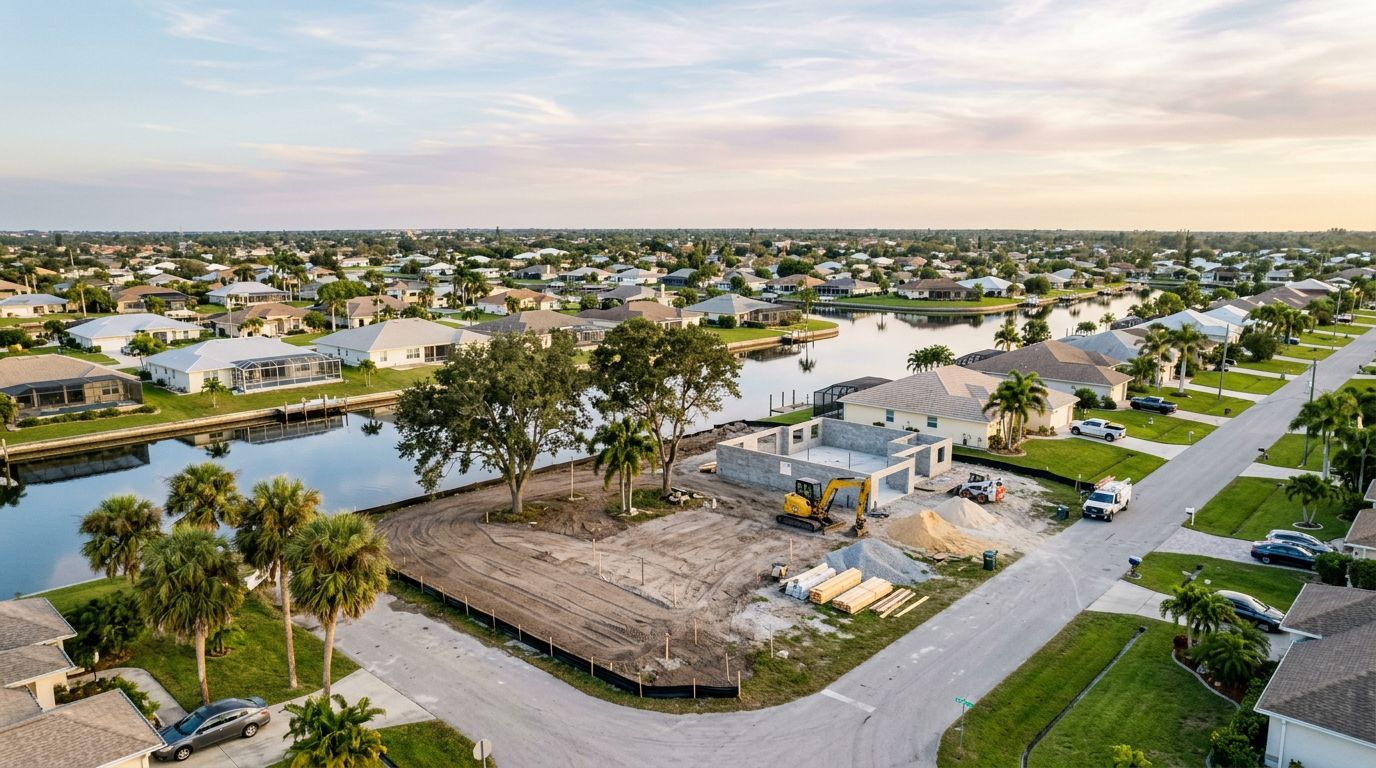



A lot can look ready for a slab and still need thousands in dirt work. That is why undercut backfill costs matter so much in Southwest Florida, where soft spots, low pads, and flood rules can change the bill fast.
Most homeowners hear one number and expect a simple answer. In practice, undercutting and backfilling sit inside sitework, and the final price depends on soil, fill depth, haul distance, and inspection demands. The rest of this article breaks down what those numbers look like in 2026.
What undercutting and backfilling cover on a Florida homesite
Undercutting means removing soil that will not support the house well enough. That can include wet sand, loose fill, organics, or soft pockets that look fine from the surface. Backfilling replaces that material with approved fill, then the crew places it in thin lifts and compacts it layer by layer.
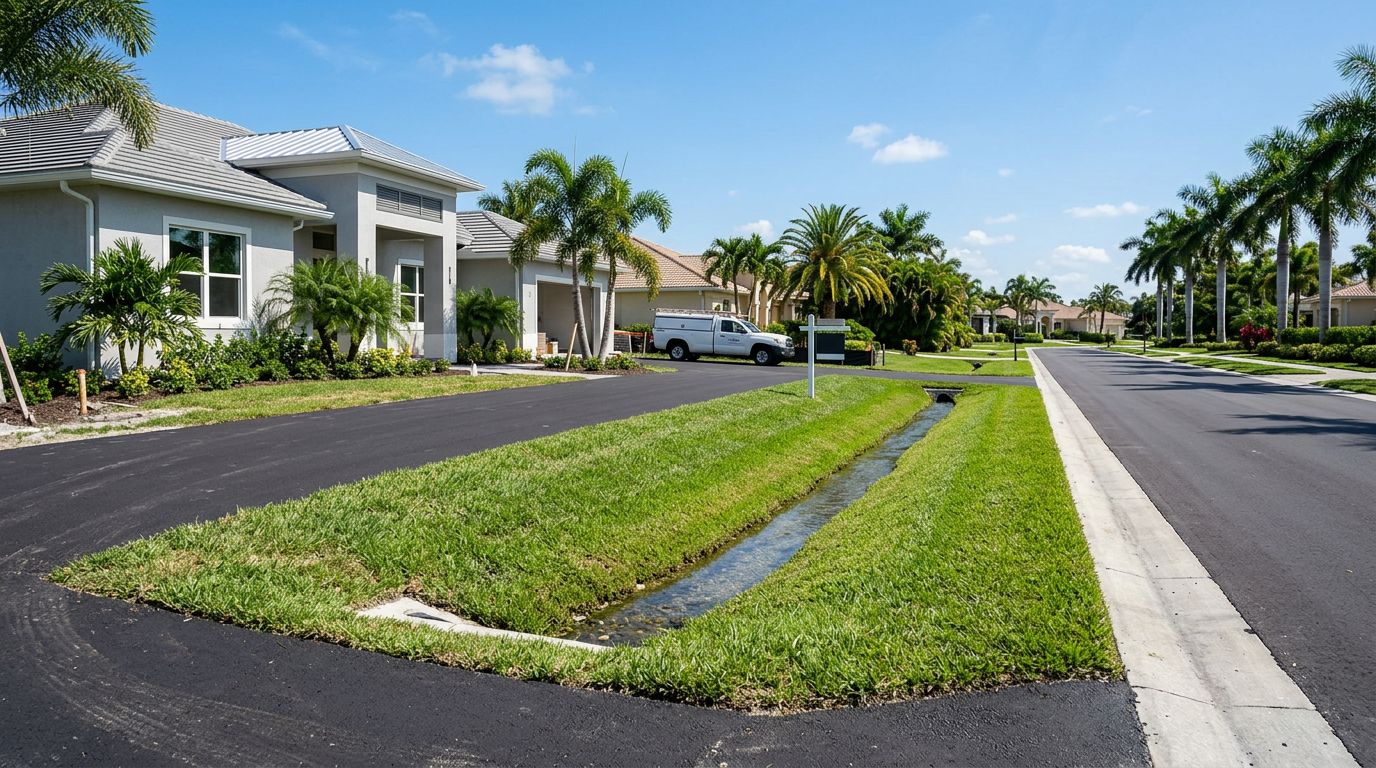
On a Southwest Florida lot, this work protects the slab, garage, driveway, and drainage paths. If the pad sits too low, the builder may need extra fill to reach the planned elevation. If water tends to sit on the lot, the crew may shape swales or rework the grade before the foundation crew arrives.
This part of the job also ties to testing. A geotechnical engineer may want proof that each lift meets compaction specs. If a test fails, the crew has to rework the area, and that adds time and money.
The scope can be small, or it can spread across most of the homesite. A thin soft layer in one corner is one thing. A full pad raise on a low parcel is another.
For homeowners comparing bids, a SWFL lot preparation cost checklist helps you see what should be included before the first truck shows up.
2026 undercut and backfill cost ranges
In 2026, the broader site work package for a typical Southwest Florida new home often lands between $15,000 and $50,000+ . Undercutting and backfilling usually sit inside that number, not apart from it. On easier lots, the dirt correction may only take a few thousand dollars. On low-lying or flood-sensitive lots, it can climb fast.
These are planning ranges, not fixed quotes. A light correction on a clean lot is one thing, while a pad that needs real elevation change is something else.
| Site condition | Planning range | What usually drives the price |
|---|---|---|
| Spot undercut on a mostly clean lot | $3,000 to $8,000 | Shallow cuts, small fill volume, short hauling |
| Moderate fill and re-compaction | $8,000 to $18,000 | More imported fill, lift-by-lift compaction, testing |
| Low lot with pad raise and drainage work | $18,000 to $35,000 | Deeper fill, trucking, swales, inspection needs |
| Difficult coastal or flood-sensitive parcel | $30,000 to $45,000+ | Haul distance, large volume, higher elevation targets |
A low number only helps if it includes hauling, compaction, and the testing you need to pass inspection.
For many homes, site work ends up at 5% to 10% of the total build budget . That share can feel small on paper, but it moves quickly when the lot needs more than a few inches of correction.
Why Southwest Florida lots price so differently
Southwest Florida is hard to price because the dirt changes lot by lot. Some parcels need only a thin correction. Others need imported fill, a higher pad, and better drainage.
Fill availability matters first. If clean fill is nearby, trucks cycle faster and the hauling cost stays lower. If the nearest source is far away, fuel and driver time add up. The same thing happens on the haul out side. A long trip to dump unsuitable material costs more than a short one.
Soil conditions matter just as much. Sandy soil drains well, but pockets of organics or water can still force undercutting. After heavy rain, the ground can stay wet long enough to slow work and affect compaction.
Lot elevation and pad height can change the bill fast. A few extra inches across a whole homesite can mean many more truckloads. Flood zone considerations can push that even further, since some lots need a higher finished floor and stronger drainage planning.
Municipality rules matter too. Cities and counties across Southwest Florida do not ask for the same reports or the same level of proof. Some want more elevation checks, more drainage detail, or more re-inspection before the build moves ahead.
A civil engineering costs for new Florida homes breakdown shows how drainage, excavation, and foundation prep often sit in the same budget bucket.
Where sitework, engineering, and permits add cost
A sitework bid is easier to read when you know which team owns each task. Some contractors include clearing, excavation, fill import, compaction testing, and rough grading in one number. Others break the work into allowances and separate trades.
If you work with a cost-plus home builder , transparent pricing matters here. You want to see the dirt cost, the trucking cost, the dump fees, and the testing cost in plain language. That makes it easier to compare quotes and catch gaps before they become change orders.
Permit and inspection impacts usually do not sound dramatic, but they matter. If the crew has to return for extra elevation checks, test failures, or rework after a plan change, the price moves. Dewatering can also show up on wetter lots, especially when the water table sits high or storms hit during the build window.
The 2026 custom home building cost breakdown shows how sitework fits inside the full project budget, which is where it belongs when you are planning the whole home.
A clean bid should tell you what is included and what is only an allowance. Ask who pays if the lot needs more fill after clearing. Ask who handles failed compaction. Ask whether the quote covers permit revisions if the pad height changes.
How to compare bids and protect your budget
When bids come back, line them up by scope, not by the bottom line alone. A lower number can hide extra charges later.
- Ask how many cubic yards of undercut and fill are included.
- Ask whether hauling, dump fees, and imported fill are in the price.
- Ask who pays for compaction tests, failed tests, and rework.
- Ask whether drainage shaping, pad height changes, and permit revisions are covered.
A fair bid should also explain access. Tight lots, narrow driveways, trees, and staging limits can slow the work and raise the cost. The same goes for weather delays. A rainy week can stall grading and push testing to a later date.
Keep a contingency in the sitework budget if the lot is still being cleared or surveyed. Extra fill, a revised pad height, or a drainage change can show up after the first pass. That is normal in Southwest Florida, especially on lots that looked simple from the street.
The best numbers are itemized. They show the scope, the assumptions, and the parts that can change. That is what makes a quote useful.
Conclusion
Undercut and backfill work can look like a small part of a new home, but it often decides whether the rest of the project stays on track. In Southwest Florida, the price moves with fill volume, haul distance, lot elevation, drainage needs, and the amount of testing required.
If you remember one thing, make it this: the cheapest dirt bid is not always the best one. A clear scope, transparent pricing , and realistic site assumptions matter more than a low opening number.
When the ground work is spelled out well, the rest of the build is easier to budget with confidence.