Variable Speed Pool Pump Sizing for Estero Gunite Pools
Explore Our Services
Contact Us Today!
(239) 322-9295
A pump that's too large can create noisy plumbing, excessive filter pressure, and higher electric bills. A pump that's too small may leave poor circulation, weak skimming, and limited heater performance.
For an Estero gunite pool, the right variable speed pool pump starts with the water you need to move, then accounts for plumbing, equipment, elevation, and water features. Horsepower alone doesn't tell you whether a pump fits the system.
The goal is steady circulation at the lowest practical speed, with higher output available when cleaning, heating, or features call for it.
Measure the Real Water Volume First
Gunite pools rarely match a simple rectangle. Curved walls, tanning ledges, deep ends, raised spas, and freeform outlines all change the amount of water in the system.
An accurate volume estimate gives both homeowners and pool technicians a dependable place to start. It also prevents a pump choice based on a guess made before the pool was finished.
Calculate average water depth
For a rectangular pool, use this planning formula:
Length x width x average water depth x 7.48 = gallons
Use water depth, not the wall height. A pool with a 3-foot shallow end and 6-foot deep end has an average depth near 4.5 feet before accounting for slopes, benches, or ledges.
Freeform gunite pools need a closer look. Divide the shell into smaller shapes, estimate each section's volume, then add them together. The final construction drawings or as-built measurements often provide the most useful starting figures.
Include connected water bodies
A raised spa, sun shelf, grotto, or spillway may add water volume and hydraulic demand. Count the spa volume if it shares the main circulation system, especially if the pump must run in spillover mode.
For new construction, the equipment pad, pipe routes, and feature plumbing should be decided early during custom gunite pool construction. Moving an equipment pad or rerouting undersized plumbing after decking is complete can be expensive.
Size a Variable Speed Pool Pump Around Required Flow
Pool volume helps establish a target flow rate, usually measured in gallons per minute (GPM). Flow rate is the amount of water the system moves through the filter and back to the pool.
A common planning reference uses an eight-hour turnover period. This is a starting point, not a fixed rule for every pool.
Use turnover as a planning number
Divide the pool volume by the desired turnover time in minutes:
Required GPM = pool gallons / turnover minutes
An eight-hour period equals 480 minutes. These examples show the flow to check against a pump performance curve.
| Pool Volume | Eight-Hour Target Flow | Calculation |
|---|---|---|
| 15,000 gallons | 31 GPM | 15,000 / 480 |
| 20,000 gallons | 42 GPM | 20,000 / 480 |
| 25,000 gallons | 52 GPM | 25,000 / 480 |
A longer low-speed schedule can move the same total water with a lower GPM target. However, the pump still needs enough flow for skimming, sanitation circulation, and any equipment operating at that time.
Turnover is a planning reference, not proof that every part of the pool received equal filtration.
A pool with heavy leaf drop, active use, or a long shallow shelf may need more circulation time than a protected pool with modest use.
Map Plumbing and Total Dynamic Head
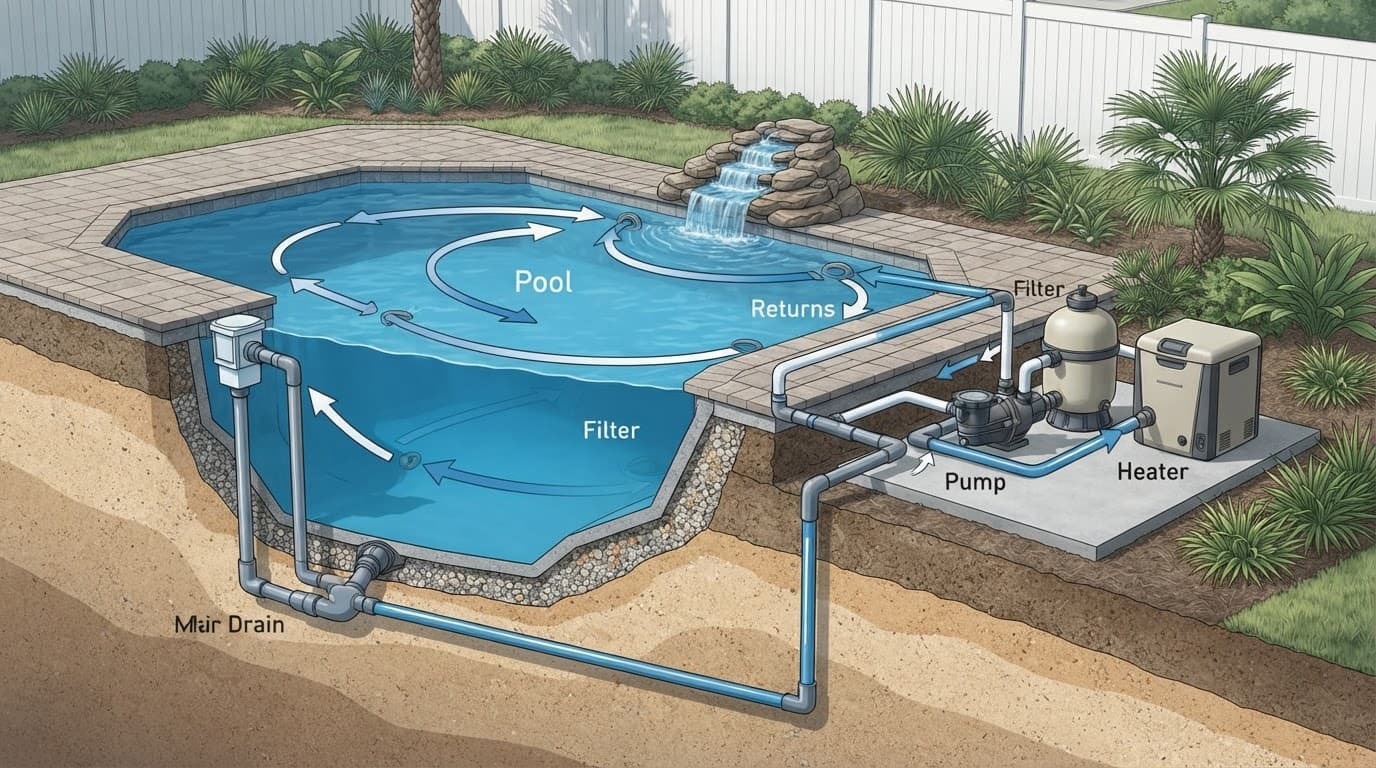
A pump doesn't move water through an empty pipe. It works against resistance created by the entire circulation system. That resistance is called total dynamic head, or TDH.
The pump's published curve shows how much flow it can produce at different head levels. Final sizing depends on where the pool's system curve meets the pump curve.
Check suction and return pipe runs
Long pipe runs, small pipe diameters, tight elbows, valves, check valves, filters, heaters, and fittings all add resistance. The suction side matters most because restrictions there can reduce flow and make priming harder.
Record pipe diameter and estimate actual run length, including fittings. A 2-inch line doesn't perform like a 2.5-inch line, even if both connect to the same pump. Multiple skimmers or drains also need proper balancing through the valve layout.
Account for elevation and equipment-pad limits
An equipment pad above the pool waterline affects priming and the pump's startup load. Raised spas, elevated spillways, and wall features also create lift when they run.
In a closed, water-filled pool loop, the main rise and fall of the plumbing mostly offset each other. Elevation still matters for priming and for water lifted to a spa or feature.
A tight equipment pad can limit pump placement, lid access, valve service, and drainage. Leave room to remove the pump basket lid, clean the filter, service the heater, and follow manufacturer clearance requirements. Don't reduce pipe size merely to make equipment fit a smaller pad.
Match the Pump to the Filter, Heater, and Features
The pump is only one part of the circulation system. Every component has a working range, and the system must operate within all of them.
A variable speed pool pump should deliver the desired flow without exceeding the filter's rated flow limit or the heater's allowed operating range.
Keep filter flow within its rated capacity
Find the filter model and check its maximum design flow in the manufacturer's documentation. A pump that pushes more water than the filter is designed to handle can reduce filtration quality and create unnecessary pressure.
Filter condition also changes the system. A clean filter has less resistance than a dirty one, so flow varies as debris builds. Record clean-filter pressure at a known pump speed after service. That reading gives technicians a useful baseline for future checks.
Verify heater and water-feature demand
Pool heaters have manufacturer-listed flow requirements. Confirm that the selected pump can meet the heater's required range at the actual TDH, rather than at a zero-head catalog number.
Waterfalls, deck jets, laminars, and spa spillovers can need more flow than normal circulation. Some features use a dedicated pump, while others share the filtration loop. Confirm the plumbing arrangement before selecting the main pump.
When an older system gets new equipment, pool renovation services can also address aging valves, restrictive lines, or an equipment pad that no longer has workable access.
Program Low and High Speeds With a Purpose
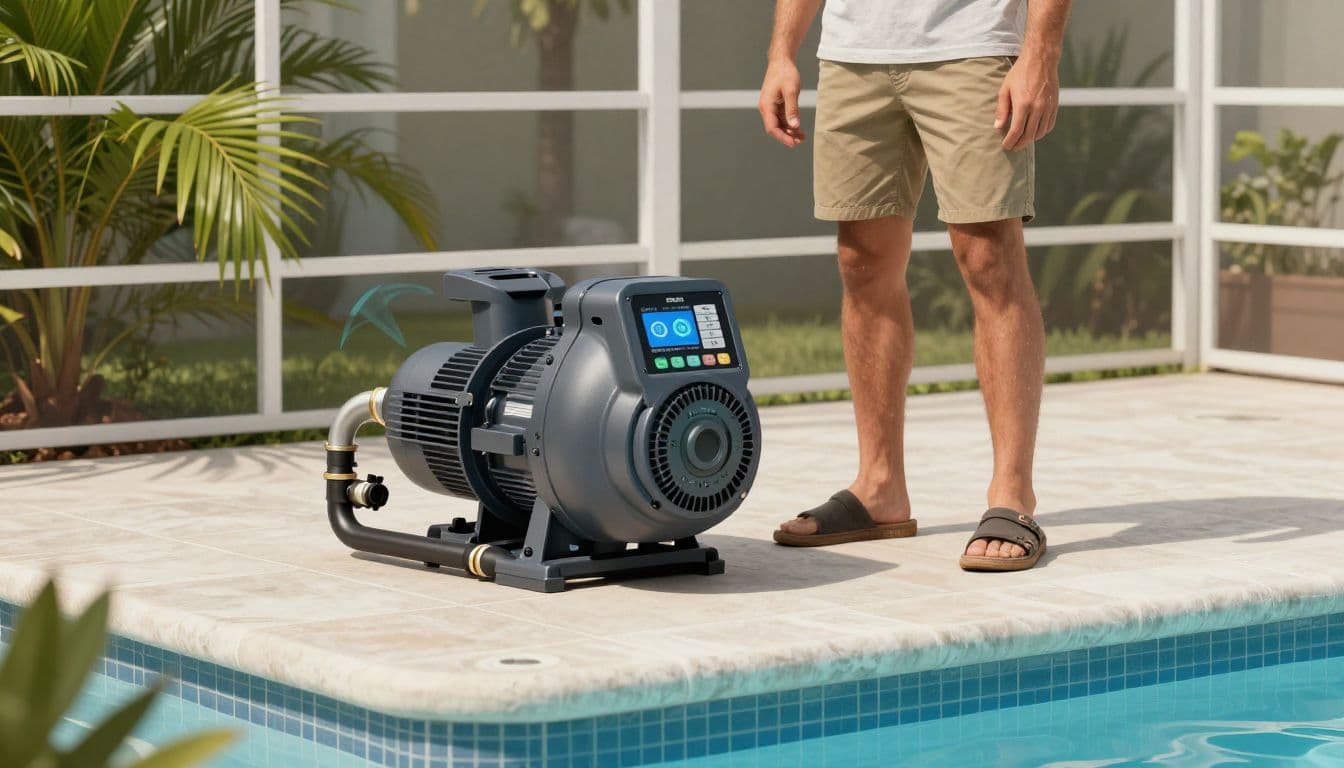
A variable-speed pump earns its value through its schedule. Running at maximum RPM all day wastes power and can create more noise than the pool needs.
Pump controls use RPM, while the system curve determines the resulting GPM. Program settings around what the pool needs at different times, then check actual operation.
Use low speed for daily circulation
Low-speed operation is usually the foundation of an Estero pool schedule. It supports filtration, chemical distribution, and quiet circulation while using far less electricity than a high-speed run.
Run it long enough to maintain clear water and good surface movement. In warm weather, inspect the skimmers, returns, water clarity, and sanitizer readings after changing the schedule. If debris gathers in a dead area, adjust runtime, valve balance, or return direction before raising RPM.
Reserve higher speed for demand periods
Higher settings may be necessary during these conditions:
- Run a heater only at the speed that provides its required flow.
- Increase speed for manual vacuuming, pressure-side cleaning, or strong leaf loads.
- Use the feature setting when a spa spillover, waterfall, or deck jets are active.
- Avoid scheduling high speed for a self-contained robotic cleaner, since it typically doesn't need pool-pump flow.
Pump power changes sharply with speed. Under the affinity laws, a 20 percent speed reduction can reduce power use by about 49 percent under comparable system conditions. That is why a longer low-speed cycle often costs less than a short high-speed cycle.
Avoid Sizing Mistakes and Confirm the Final Selection
The most common mistake is choosing a pump by horsepower alone. A larger motor doesn't correct undersized pipe, a restrictive filter, or poor valve layout.
Another error is treating a clean-filter pressure reading as a flow measurement. Pressure has value, but it can't tell you GPM without the pump curve and system details.
Watch for these warning signs
- The pump loses prime or struggles after a basket cleaning.
- Filter pressure rises unusually fast after the system starts.
- Skimmers pull weakly while a water feature runs.
- The heater shuts down or doesn't maintain flow.
- The pump is noisy at the speed needed for normal circulation.
Service professionals should document pipe sizes, valve positions, clean pressure, pump RPM, heater operation, and feature settings. Homeowners can help by noting when water clarity, skimming, or heating changed.
Use performance curves before purchase
Final selection requires the manufacturer's performance curve for the exact pump model, along with an informed TDH estimate. Compare flow at the intended RPM, not only the pump's maximum output.
A qualified pool professional should also inspect electrical supply, bonding, plumbing condition, filter capacity, heater requirements, and pad access. That field review turns a useful estimate into a pump choice that fits the pool.
A Pump Size That Fits the Whole Pool
A well-sized variable speed pool pump moves enough water for filtration, heating, and features without forcing the system to run hard all day. Pool volume starts the process, but pipe layout, elevation, equipment limits, and feature demand finish it.
For Estero gunite pools, the right answer comes from measured conditions and manufacturer performance curves. A careful setup keeps water moving, equipment operating properly, and energy use under control.