Which Florida Building Code Applies in Late 2026?
Explore Our Services
Contact Us Today!
(239) 322-9295
A Florida permit application filed before the end of 2026 will generally fall under the 8th Edition (2023) Florida Building Code. The 9th Edition (2026) is scheduled to take effect on December 31, 2026.
For your project, the important milestone is generally the application submission, not the date the permit is issued. Local filing cutoffs and the status of the application also matter, so keeping the submission record is a good place to start.
When does the Florida Building Code change?
The 8th Edition (2023) took effect on December 31, 2023. The Florida Building Commission has scheduled the 9th Edition (2026) to take effect on December 31, 2026 , according to its code update workplan.
That makes December 31 a transition date, even though it's the last day of 2026 rather than the first day of 2027. A homeowner planning a new house, remodel, roof or pool near that date should know which edition the permit documents identify.
Does the application date or permit date determine the code?
The application date is generally the starting point. A complete application submitted before the local transition cutoff is generally reviewed under the 8th Edition, even if plan review continues after the new edition takes effect.
Applications submitted before the cutoff
A project doesn't automatically move to the 9th Edition because the building department issues the permit in January 2027. For example, a complete application submitted before the applicable cutoff can continue through review under the earlier edition.
Keep the submission receipt, application number and any notices about missing documents. A draft application that hasn't reached the permitting office is different from a submitted application.
Applications submitted on or after December 31
Applications submitted on or after December 31, 2026, generally fall under the 9th Edition. That applies even if the homeowner signed a construction contract or began design work earlier.
Construction drawings and supporting documents need to match the edition used for review. A set prepared months before filing may need revisions if the submission crosses the transition date.
What if the application expires before permit issuance?
An application in review and an issued permit are different records. An application can expire before the department issues a permit, and that can affect the code used for a new filing.
For example, Flagler County's building department says certain applications expire 180 days after application. If one expires after December 31, 2026, the county says a new application must include plans updated to the 2026 edition.
Flagler also describes extensions of no more than 90 days each when an application is actively pursued and there is justifiable cause. That example shows why the application status matters alongside its original filing date.
Local filing procedures matter in Southwest Florida
The property's permitting jurisdiction matters as much as its mailing address. A home inside Fort Myers city limits follows the city's process. A property in unincorporated Lee County follows the county's process, while a home within Estero's village limits follows Estero's.
Local offices can set submission procedures around the transition. For example, Miami-Dade County's notice treats portal submissions received after 4 p.m. on December 30, 2026, as subject to the new edition. That's Miami-Dade's procedure.
The application receipt and local permit record give you a useful paper trail for your own project.
How the code edition affects your project
The edition determines the code framework for plan review. The details still depend on the work, the property and the approved documents.
New homes and whole-home remodeling
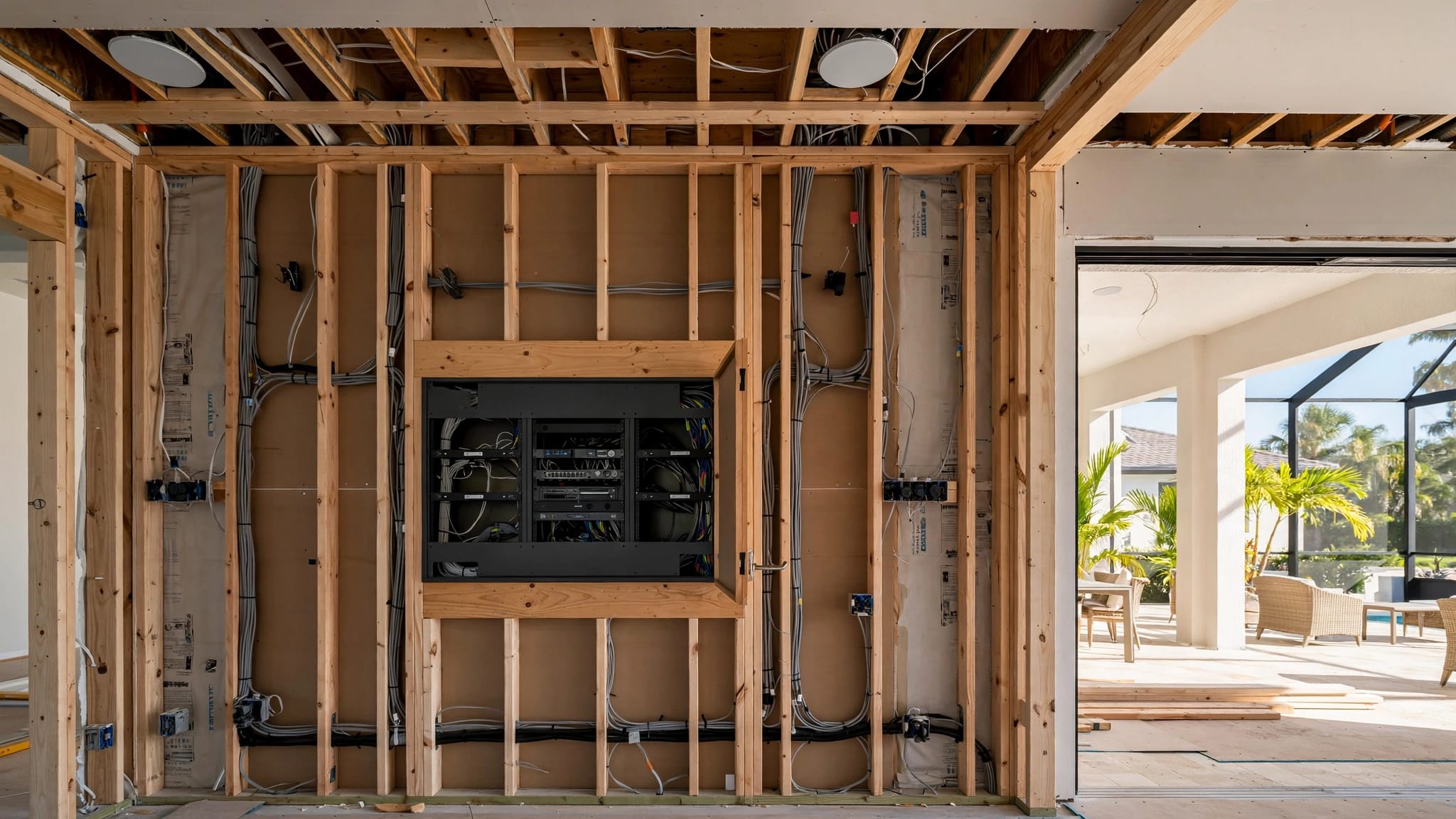
A new-home package can include structural plans, energy information and site-specific wind design. A whole-home remodel may also involve structural, electrical, plumbing or mechanical work. The permit drawings should describe the proposed scope and identify the edition used for design.
For an addition, roof connections and wind criteria are part of the plan. Our guide to Fort Myers addition permits and roof design covers those details.
Roofing and inground pools
Roof documents may address the roof covering, underlayment, fastening and wind pressures. A product approval needs to match the proposed assembly and site conditions. Our Estero roof replacement permit guide explains the local review and inspection process.
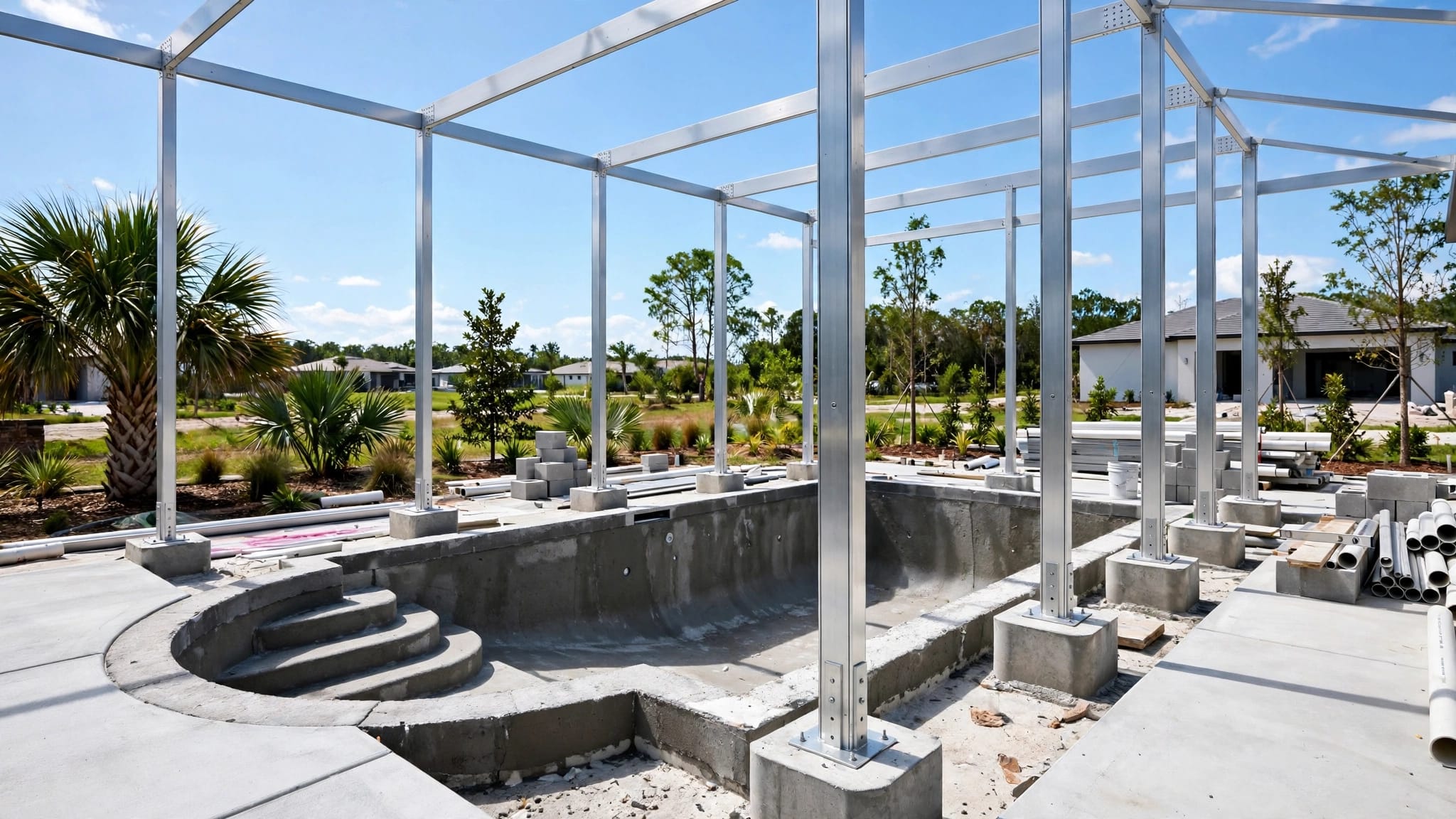
For an inground pool, the plans may include the shell, electrical work and safety barrier. Under the 2023 Florida Residential Code, an outdoor residential pool barrier generally must be at least 48 inches high when measured on its outside face. The approved plans and local inspection requirements govern the project.
How to identify the edition for your permit
Use the project records in this order:
- Find the property address and the agency receiving the application. City and county processes may differ.
- Locate the submission receipt and application number. Record the date the permitting office received the application.
- Read the application status and any requests for missing plans or documents. Keep responses and revised drawings with the original record.
- Look for the code edition on the permit drawings and review documents. Have your contractor or design professional document any revisions needed for the project's scope.
Before ordering windows, doors, roofing or shutters, match the proposed products and approval documents to the plans. A product with Florida approval still needs to fit the project's wind requirements and installation details.
Keep the permit record with your plans
For late-2026 projects, the scheduled changeover is December 31, 2026 . The submission record is the starting point for identifying which edition applies, while application status and local procedures affect the review.
Keep the receipt, approved plans and permit documents together. They give your construction team a common reference as the work moves forward.