
Why Kitchen Cabinet Doors Swell in Florida Humidity
Explore Our Services
Contact Us Today!
(239) 322-9295
Kitchen cabinet doors swell when they absorb moisture, either from humid air or direct contact with water. In Southwest Florida, damp outdoor air, cooking steam, plumbing leaks, and condensation can all play a part.
The location of the damage offers a useful clue . One swollen door beside the sink may point to a leak or repeated splashes, while several sticking doors may call for a closer look at indoor humidity.
Before replacing a door, start by finding out where the moisture is coming from.
Why Cabinet Doors Swell in Southwest Florida
Southwest Florida homes deal with humid air for much of the year. Doors near a lanai, garage entrance, or frequently opened exterior door can be exposed to damp outdoor air. Inside, cooking and dishwashing add moisture of their own.
Cabinet doors have different finishes and cores, so they don't all respond in the same way. Changes may show up as tight gaps, raised edges, or a door that no longer sits flat.
Humidity Can Affect More Than One Door
When indoor air remains damp, several doors may begin to rub or fit differently. A home can feel cool at the thermostat and still have a moisture problem if the air conditioner doesn't run long enough to remove humidity.
This can happen during mild, muggy weather or when a home sits closed for an extended period. Checking indoor humidity helps you distinguish a house-wide condition from damage concentrated in one cabinet.
Direct Water Often Leaves Localized Damage
A dripping supply line, a dishwasher leak, or water left around the sink can reach a cabinet edge repeatedly. That concentrated exposure may cause more obvious damage than humid air alone.
Steam is another concern. A kettle placed beneath an upper cabinet or a dishwasher that releases hot vapor against a door can expose the same finish to moisture again and again.
How to Recognize Swollen Cabinet Doors
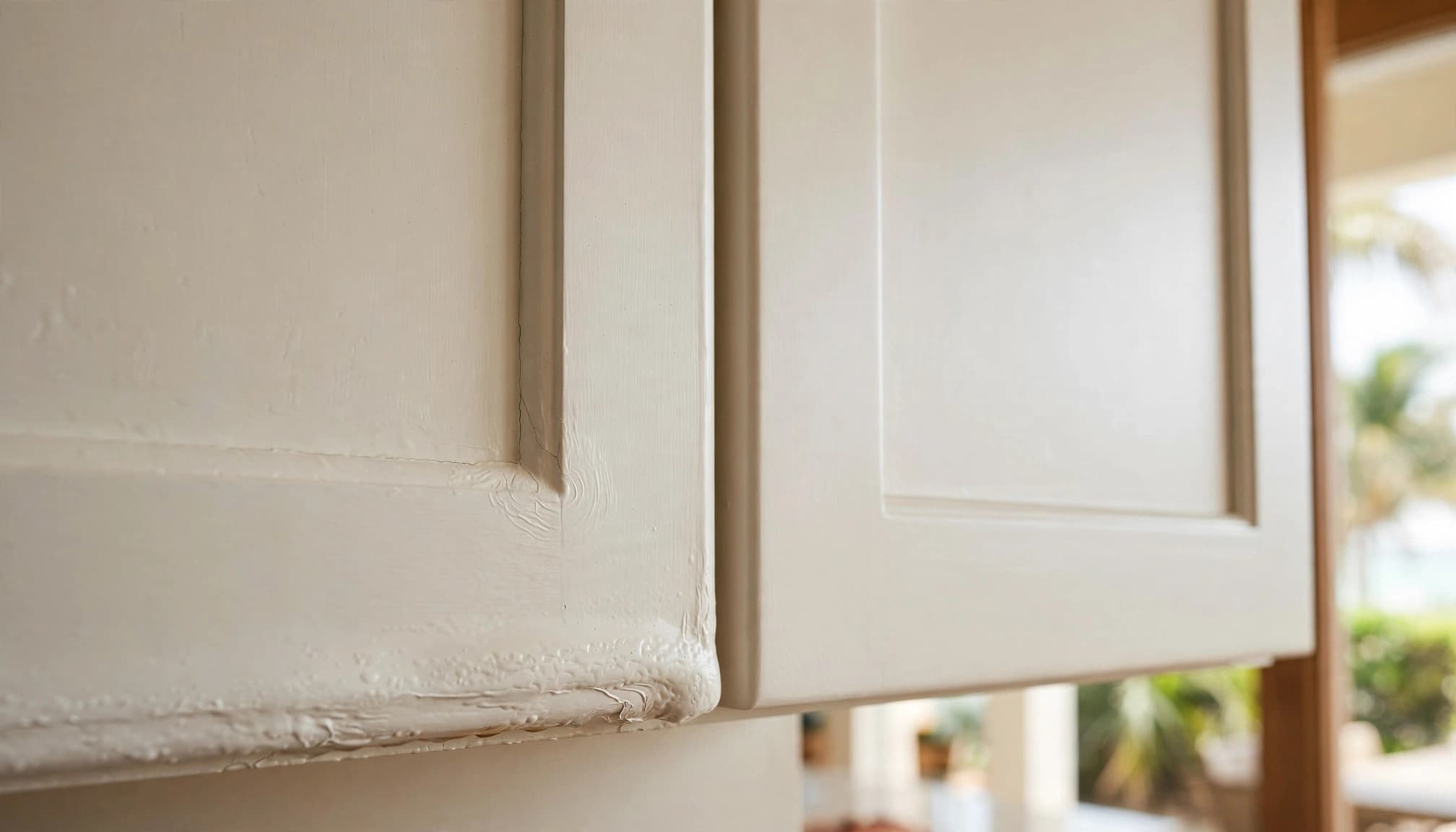
The first sign may be a door that needs a push to close. Look at the surface and the gaps around it before adjusting hardware or sanding the edge.
Look for Changes in Fit and Finish
Swelling can make a door rub against its neighbor or the cabinet frame. You may also notice an uneven gap, a raised seam, bubbling paint, or a corner that feels thicker than the rest of the door.
Check the bottom edge and the area around handles. These spots can collect water from wet hands, cleaning cloths, or splashes. On wrapped or laminated doors, lifting at an edge can expose the material underneath.
Rule Out Loose Hinges
A crooked door isn't always swollen. Loose hinge screws or a misaligned hinge can make a door sag and rub even when its edges are sound.
Compare the rubbing edge with other parts of the door. If the surface remains flat and the gap changes as you move the door, the hardware may need attention. If the edge is raised, soft, or visibly thicker, investigate moisture before making an adjustment.
How Cabinet Materials Respond to Moisture
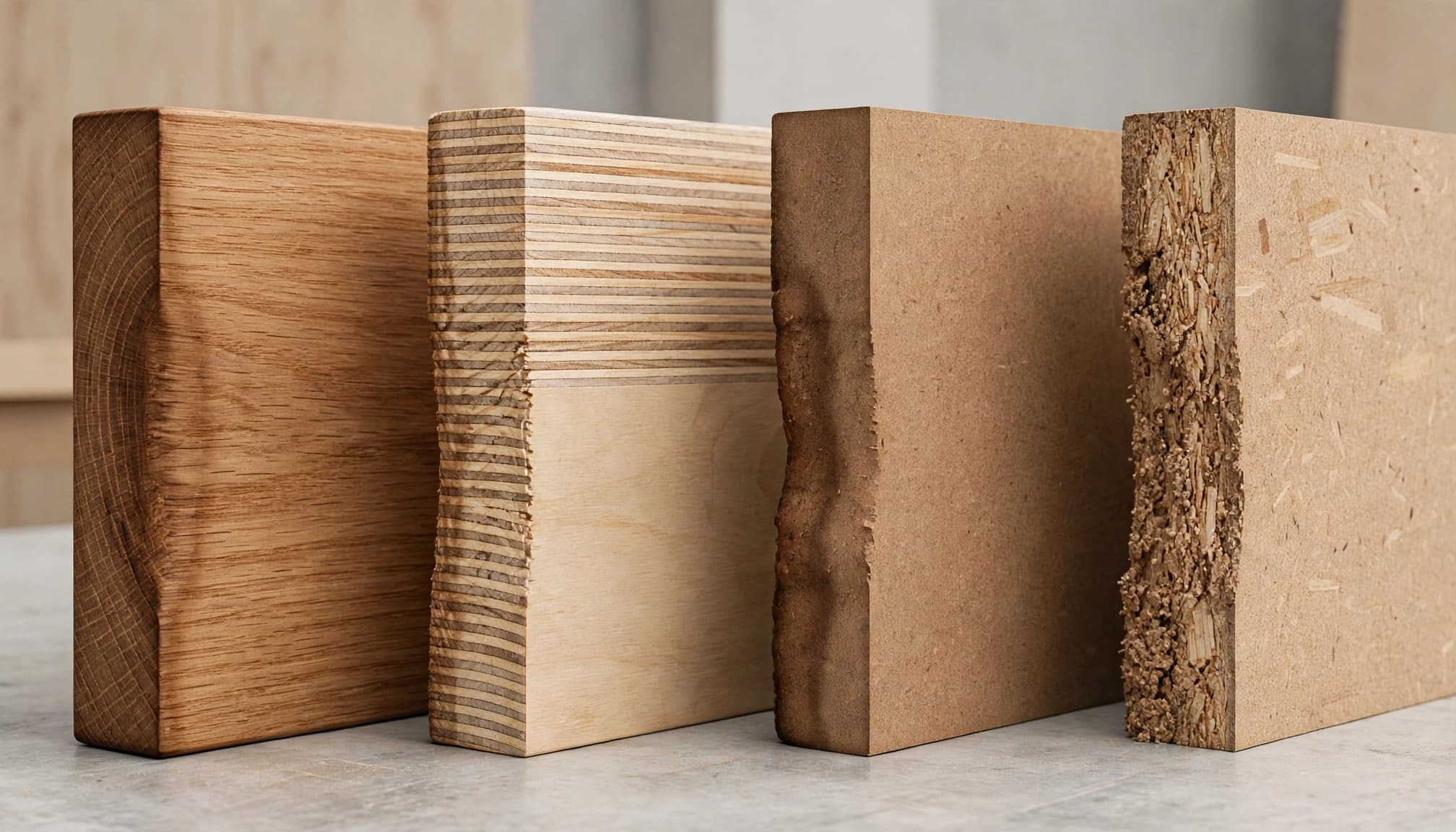
A cabinet door's appearance doesn't always reveal what's beneath its finish. Many painted or wood-look doors combine a core material with a separate surface layer.
Solid Wood
Solid wood doors can change fit as conditions inside the house change. You may notice movement around panels or joints, especially when indoor moisture varies.
A sound finish helps protect the surface from routine splashes, but it won't make the door waterproof. Pay attention to unfinished or damaged edges, as well as areas exposed to standing water.
MDF and Particleboard
Medium-density fiberboard, or MDF, is common in painted doors because it provides a smooth surface. It can work well in a conditioned kitchen when properly sealed. However, damaged or exposed edges deserve attention, particularly near the sink and dishwasher.
Particleboard and fiberboard can swell after repeated wetting. Once an edge has expanded and the surface is peeling, drying may not restore its original shape. The condition of the underlying material matters more than whether the finish can be painted again.
Plywood, Veneer, and Wrapped Surfaces
Plywood is often used for cabinet boxes and generally handles moisture better than particleboard. Plywood doors and veneered surfaces still need protected edges and prompt cleanup after spills.
Some doors have a laminate or thermofoil surface over a composite core. These finishes are easy to wipe, but lifted seams can leave the core exposed. Heat and steam near appliances can also affect thermofoil.
For related material choices, see our guidance on moisture-conscious pantry cabinets.
Find the Moisture Source Before Making Repairs
The position of a swollen door can narrow your search. Look beyond the face of the cabinet, because water may be traveling from an appliance, a wall, or the cabinet interior.
Check Around the Sink and Dishwasher
Open the sink cabinet and look at supply connections, the drain, and the cabinet floor. Dampness, staining, or a musty odor can point to a leak. Water around the faucet or sink rim can also reach the cabinet below.
Beside the dishwasher, examine the door edge and nearby toe kick. Repeated steam exposure or water escaping around the appliance may leave damage in that area. A plumber or appliance professional can help locate a leak that isn't visible.
Consider Roof and Air-Conditioning Problems
If the damage extends beyond one door, check for staining on nearby walls or ceilings. Roof leaks and air-conditioning condensate problems can put water into areas that aren't immediately visible.
Don't cover a damp area with new cabinetry. If you suspect concealed moisture or mold, professional assessment can help identify the scope before demolition. Our guide to finding hidden moisture before a remodel explains why that step matters.
Preventing Cabinet Swelling in Southwest Florida
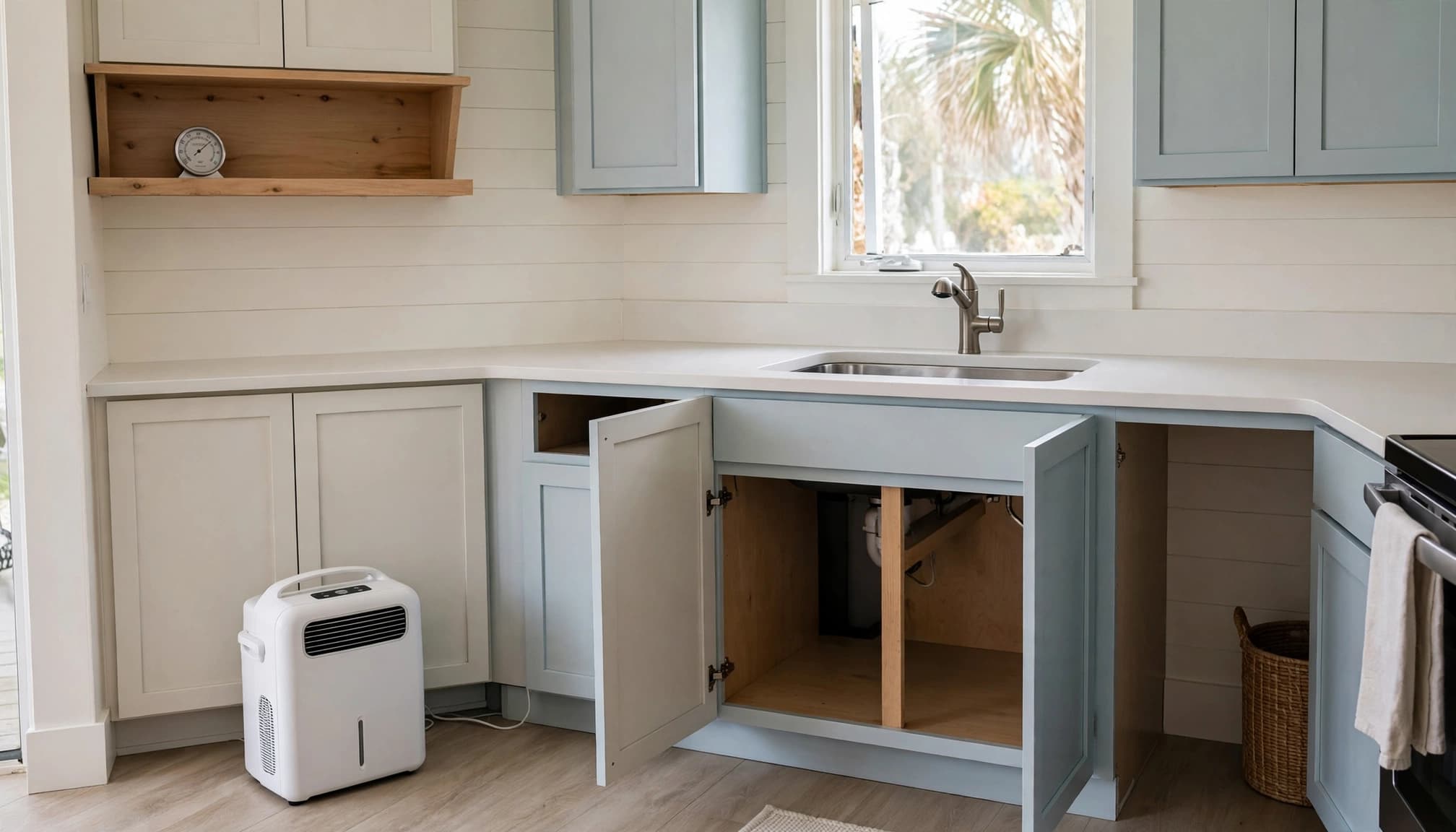
Good cabinet care starts with the whole house. Wiping the doors helps, but it won't solve a leak or indoor air that stays damp.
Manage Humidity and Ventilation
Use a hygrometer to monitor indoor humidity, especially during rainy weather or when the house is unoccupied. Keep the air-conditioning system maintained, including its condensate drain, and leave supply and return openings unobstructed.
If the home feels damp even when it's cool, an HVAC professional can assess airflow, equipment operation, and ventilation. Some homes benefit from a separate dehumidifier. That equipment removes moisture but doesn't replace a planned fresh-air system.
Use a range hood that vents outdoors when cooking, if your kitchen has one. Opening windows isn't a dependable moisture-control strategy during humid Florida weather because outdoor air can add to the indoor moisture load.
Protect Edges During Daily Use
Wipe splashes off doors, counters, and the sink area promptly. Use a damp cloth rather than soaking cabinet surfaces, and dry the finish afterward. Avoid leaving wet towels against doors or allowing water to collect along lower edges.
Keep kettles where their steam won't rise directly against upper cabinets. Also, pay attention to the finish around the dishwasher. If an edge starts lifting, address it before moisture reaches the exposed material underneath.
What to Do When a Door Has Swollen
Start by stopping the water source. If a supply line or drain is leaking, have it repaired before working on the cabinet. For an active leak near electrical equipment, avoid the wet area and get professional help.
Dry the Area Safely
Remove wet items from the cabinet, wipe up standing water, and leave the doors open so accessible surfaces can dry. A fan or dehumidifier may help when it can be used safely away from water.
Don't place a protective mat over a damp cabinet floor. It can hide remaining moisture and make it harder to see whether the leak has returned. Once the area is dry, inspect the door and box for soft spots, raised edges, and peeling finishes.
Avoid Trapping Moisture Under Paint
Painting over a wet or damaged edge won't correct the cause. Wait until the affected surface is dry and sound before considering a finish repair.
A door that has only shifted slightly may fit better once indoor conditions stabilize. However, a composite edge that remains swollen, crumbles, or has separated from its finish may need more than a cosmetic repair. Avoid sanding a door until you know whether the material is stable and the moisture source is resolved.
Repair, Reface, or Replace the Cabinet Doors?
The right choice depends on the condition of both the door and the cabinet box. A swollen door doesn't automatically mean the entire kitchen needs replacement, but a fresh door won't repair a damaged cabinet underneath.
When a Targeted Repair Makes Sense
A sound door with a small area of finish damage may be suitable for repair after drying. Loose hardware can also be adjusted or replaced if the door itself remains flat and intact.
If only one or two doors have permanent damage, replacing those doors may be practical. Matching an existing finish can be a consideration, particularly in an older kitchen.
When to Consider a Larger Project
Refacing can update visible surfaces while retaining the existing boxes. It's most useful when those boxes are sound and the layout still works for your household.
If the cabinet floor is soft, the box has extensive water damage, or moisture has reached the wall behind it, replacement may be the better route. Compare cabinet refacing and replacement before choosing an approach. Repairing the leak and any affected surrounding materials comes first.
Choosing New Cabinets for a Humid Climate
For a remodel or new home, discuss the door core, cabinet box, finish, and edge protection together. A durable-looking surface won't protect an exposed edge that gets wet repeatedly.
Pay particular attention to cabinets near sinks, dishwashers, floors, and exterior doors. Sealed edges and wipeable finishes make routine care easier, while corrosion-resistant hardware is a sensible consideration near the coast.
Cabinet construction also affects installation and access. Our comparison of framed and frameless kitchen cabinets can help you weigh those choices alongside the room's layout.
Keep Moisture From Returning
Swollen cabinet doors are a reason to look for moisture, not just a finish problem to cover. The source may be a local leak or a wider humidity issue, and each calls for a different response.
Once the area is dry and the cause is addressed, choose a repair that matches the condition of the material. Consistent humidity control and prompt attention to splashes can help protect the rest of your kitchen.