Can a Fort Myers Custom Home Use a Private Lift Station?
Explore Our Services
Contact Us Today!
(239) 322-9295
Yes, a Fort Myers custom home can use a private lift station when gravity sewer service is unavailable or impractical and the serving utility approves the connection. The City of Fort Myers publishes a single-family grinder-pump option, while Lee County Utilities has separate requirements for private wastewater systems.
For your home, the deciding factors are site elevations, the approved connection point, and utility requirements . Those decisions belong in early design because they affect plumbing, electrical work, landscaping, and future maintenance.
Key Takeaways
- A private lift station can move household wastewater when the building sewer can't reach an approved connection by gravity.
- A grinder pump is one type of pump that may operate inside a residential lift station.
- City of Fort Myers and Lee County Utilities requirements differ, and utility approval is separate from building permits.
- The complete installation needs accessible equipment, power, alarms, maintenance planning, and coordination with the home's site layout.
When Site Elevations Justify a Private Lift Station
Flat terrain alone doesn't establish that a home needs pumping. The design depends on the relationship between the home's drain outlet and the sewer connection.
The sewer connection may be too high
Gravity drainage needs adequate fall along the pipe route. If the receiving sewer connection is too high relative to the home's building sewer, wastewater can't reach it through a properly sloped gravity line.
A longer run also needs more total fall. Therefore, a house set well back on its lot may face a connection problem that a nearby home doesn't.
A survey and sewer elevation information help the designer evaluate that relationship. Our guide to reading a custom home site plan explains how elevations and utilities fit together.
The route may create additional constraints
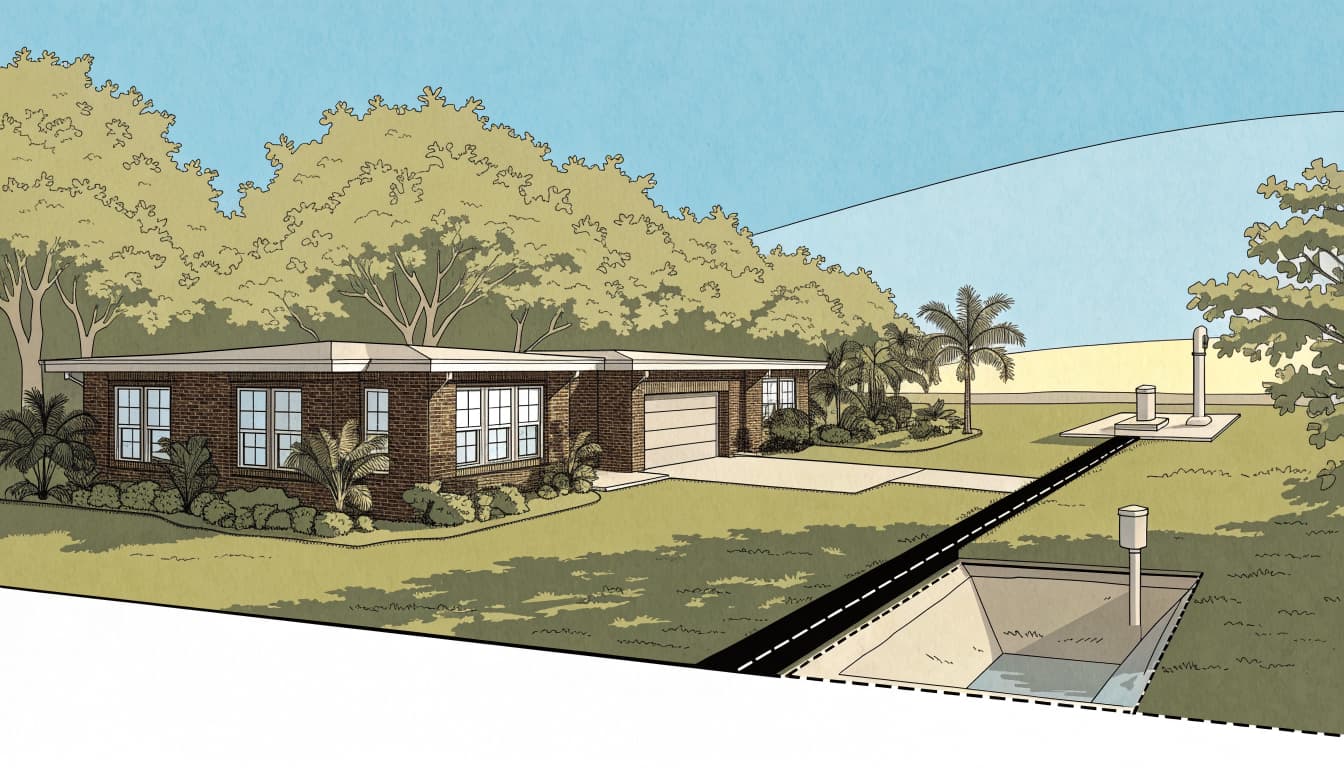
Driveways, recorded easements, drainage swales, and existing utilities can limit the available pipe route. Meanwhile, a future pool or lanai can compete with the space needed for equipment and repairs.
Southwest Florida's shallow groundwater can also complicate excavation. The design must address basin stability, groundwater intrusion, and access without disrupting the property's drainage plan.
A Lift Station and a Grinder Pump Aren't the Same
The terms overlap in residential discussions, but they describe different things. A lift station is the complete pumping installation ; a grinder pump is a particular pump type.
What the station includes
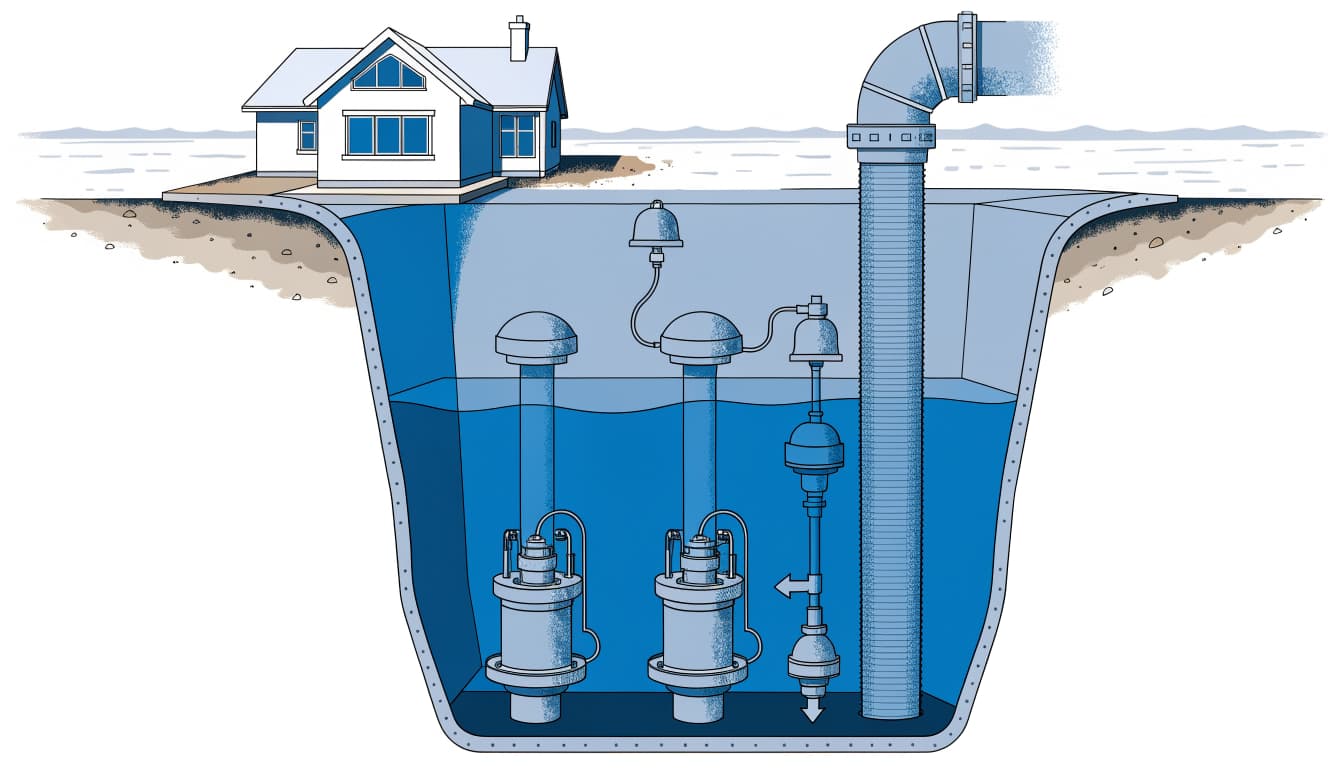
A typical residential installation has a buried collection basin, pump equipment, level controls, discharge piping, valves, and an electrical control arrangement. A high-water alarm warns when wastewater rises above its normal operating range.
Wastewater flows into the basin, and the controls start the pump at a set level. The pump then sends it through a pressurized discharge pipe, commonly called a force main.
Some designs use one pump; others use two. The approved design determines the arrangement, capacity, and controls.
What a grinder pump adds
A grinder pump reduces sewage solids before pumping the wastewater through its discharge line. Other sewage pumps move solids without grinding them.
Pump selection depends on expected flow, pressure, elevation change, pipe length, and the receiving system's requirements. Horsepower alone doesn't establish compatibility.
Also, a grinder doesn't make wipes, grease, or other unsuitable materials safe to flush. Those materials can still damage equipment or obstruct the system.
Fort Myers and Lee County Sewer Requirements Differ
A Fort Myers mailing address doesn't identify either the permitting authority or the sewer provider. Those are separate parts of the project's approval path.
The City's single-family option
The City's single-family private sewage pump guidance describes a grinder-pump arrangement where gravity service is unavailable or impractical. It maintains a preference for gravity conveyance.
The described arrangement pumps to a gravity sewer stub at the property line . The handout specifies 2-inch high-molecular-weight polyethylene discharge pipe rated at 200 psi between the pump and that stub.
It also places the station outside the dwelling and other structures. These details matter when laying out the house, equipment area, and service route.
Lee County Utilities has separate acceptance rules
The Lee County Utilities sanitary sewer manual addresses private wastewater systems seeking connection. It requires transfer of the system to LCU unless LCU approves otherwise, along with inspection and testing before acceptance.
The manual assigns connection costs to the private-system owner. It also excludes substandard systems and systems with excessive inflow or infiltration, as determined by LCU.
That makes ownership, acceptance, and the connection scope part of utility planning. A homeowner's building permit doesn't settle those matters.
Permitting and Construction Need One Coordinated Plan
Plumbing approval, utility acceptance, electrical work, and site construction address different responsibilities. The drawings need to bring them together before excavation or slab work begins.
State and local approvals address different scopes
Properties inside Fort Myers city limits follow City permitting procedures. Properties in unincorporated Lee County follow the County's process.
Florida DEP also regulates wastewater collection and transmission construction. Its collection-system permitting guidance lists exemptions for certain single-building gravity connections and qualifying grinder-pump or STEP connections to already permitted systems.
A DEP exemption doesn't eliminate applicable local utility, plumbing, electrical, or right-of-way approvals. The project's designer and licensed trades should define those scopes within the construction documents.
Resolve equipment locations before rough-in
The coordinated plan should show the basin, discharge route, electrical supply, controls, alarm, cleanouts, and maintenance access. It should also account for flood exposure, drainage, structural elements, and nearby utilities.
Recorded access rights matter too. Our explanation of utility easements on home sites covers why an apparently open area may still restrict construction.
Finally, settle the building sewer elevation before under-slab plumbing advances. Our guidance on new home plumbing layout explains why late changes can affect concrete, finishes, and inspections.
Budget for the Complete Installation and Ongoing Care
The pump purchase is only one part of the cost. Excavation, possible dewatering, piping, electrical work, controls, permits, connection charges, testing, and surface restoration all affect the installed scope.
A useful proposal separates utility charges from construction work. It also identifies responsibility for startup, operating instructions, warranty documentation, and future service.
Maintenance includes attention to level controls, alarms, valves, pump performance, and unwanted groundwater entering the basin. Service frequency should follow the equipment manufacturer's instructions and the installation's operating conditions.
Keep access covers and controls reachable after landscaping. Shrubs, fences, decks, and parked vehicles shouldn't block pump removal or service equipment.
A high-water alarm warns that storage is running out. It doesn't restore pumping or create additional wastewater capacity.
During an outage or alarm, reducing household water use helps limit incoming wastewater. Toilets, showers, washing machines, and dishwashers all add flow to the same collection system.
Any backup-power arrangement needs compatible equipment and professional electrical design. A second pump alone won't solve a loss of power to the station.
Never enter a wastewater basin. Sewage gases, electrical equipment, and confined-space hazards make internal service work a job for qualified professionals.
Compare Alternatives Before Adding Pumping Equipment
Gravity drainage deserves an early comparison because it avoids pump-related power and mechanical maintenance. However, every alternative must fit the lot and approved utility arrangement.
These options address different site constraints.
| Option | When it may help | Main limitation |
|---|---|---|
| Direct gravity sewer | The connection has adequate elevation and capacity. | The route needs sufficient fall. |
| Revised house position or elevation | Design changes can improve gravity drainage. | Flood, structural, access, and grading requirements still apply. |
| Another approved sewer route | A different connection alignment is available. | Easements, access, and utility approval control feasibility. |
| Permitted septic system | Onsite treatment is allowed and suitable. | Soil, groundwater, space, and sewer-connection requirements limit eligibility. |
The strongest comparison includes the entire site cost, not simply the equipment price. Raising a house or extending a sewer route can affect more than plumbing.
These choices matter before purchasing land. Our guide to lot checks before building explains why utility access belongs in early property decisions.
Frequently Asked Questions
Does a private lift station replace a septic system?
A lift station transports wastewater; it doesn't provide the treatment performed by a septic system or wastewater treatment facility. A sewer-connected station sends wastewater toward the utility's collection system.
Some septic designs also use pumps, but those pumps serve the approved onsite treatment arrangement. A septic effluent pump and a residential sewage grinder pump aren't interchangeable simply because both move wastewater.
Can the station sit beneath a lanai or another structure?
The City of Fort Myers single-family handout places the station outside the dwelling and other structures. That requirement affects the layout before a lanai, accessory building, or other improvement occupies the proposed equipment area.
The station also needs practical service access. Equipment placement should account for opening the basin, removing a pump, and reaching controls without dismantling finished construction.
Plan the Sewer Connection Before Finalizing the Home
A private lift station can make a Fort Myers custom home feasible when gravity drainage won't work. Its suitability depends on the approved connection and site-specific design , along with a workable maintenance plan.
We can help coordinate your custom home's construction around its approved site and plumbing plans. Resolve the wastewater approach while the layout is flexible, before the slab, pool, and landscaping make changes harder.