Can You Add a Spa to an Existing Cape Coral Pool?
Explore Our Services
Contact Us Today!
(239) 322-9295
Your existing pool may have room for a spa, but the space beside it is only part of the answer. You can often add a spa to an existing Cape Coral pool, provided the structure, property layout, utilities, and permitting requirements support the work.
A site evaluation should come before choosing finishes or accepting a construction price. Start by determining which spa design fits your pool and what changes it will require.
Yes, an Existing Pool Can Often Accommodate a Spa
Adding a spa can involve constructing an attached basin, modifying the pool edge, or installing a separate spa nearby. However, each approach has different structural and equipment requirements.
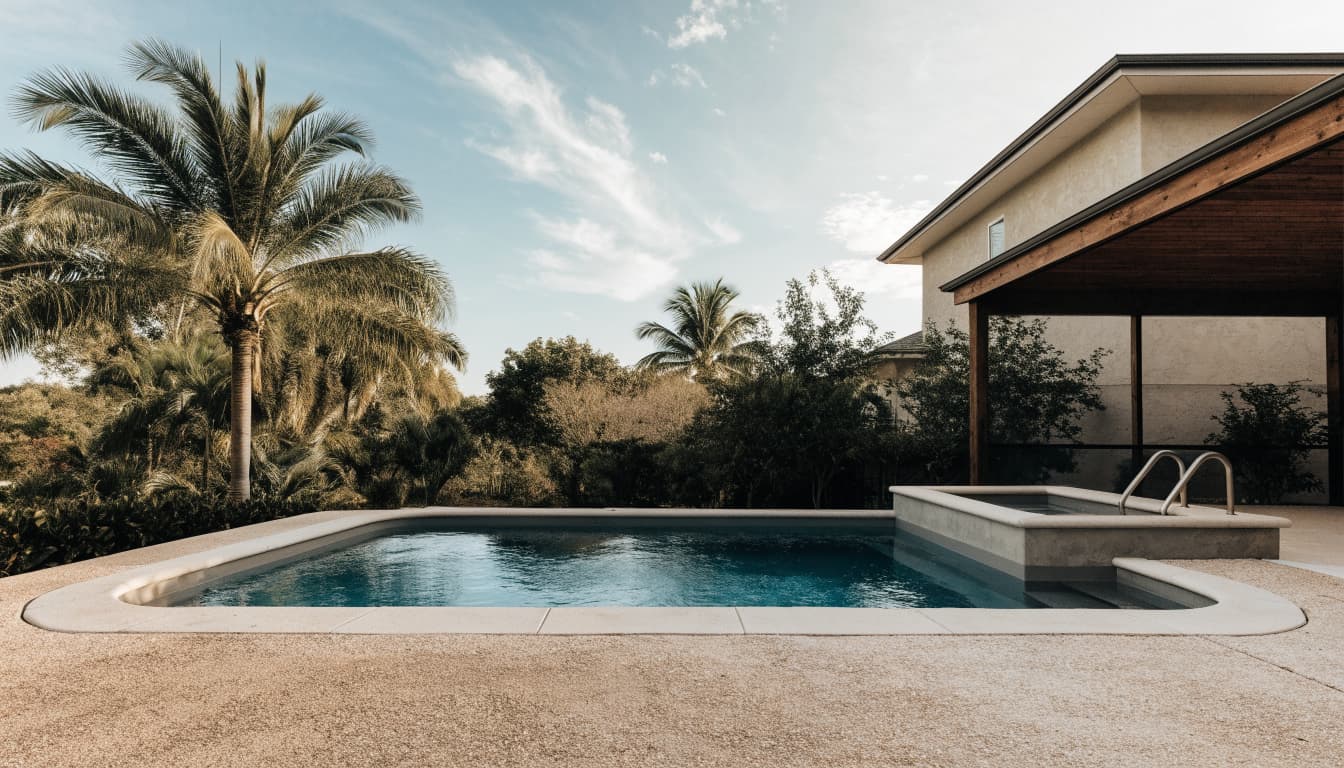
A sound pool shell is a useful starting point. Still, a contractor must evaluate how the proposed addition affects reinforcement, waterproofing, circulation, and surrounding surfaces.
Cutting Edge Homes & Renovations includes spa additions among its Cape Coral pool renovation services. The right starting point is an inspection of your existing pool, followed by a layout and equipment review.
Choose How the Spa Connects to Your Pool
Your choice affects more than appearance. It also determines how much existing construction needs modification and whether the pool and spa share equipment.
An attached spa with a spillover
A raised attached spa can send water into the pool through a spillway. This creates a unified appearance, but the connection needs structural, waterproofing, and hydraulic planning.
The design must control where water travels during circulation, heating, and shutdown. Otherwise, the spa may lose heated water to the pool or drain when equipment stops.
Reviewing shared pool and spa wall planning can help you understand the connection details. For a retrofit, those details must also account for the existing shell and reinforcement.
A separate spa near the pool
A separate site-built spa may avoid modifying a shared pool wall. However, it still needs an approved location, construction access, plumbing, utilities, and safety planning.
A manufactured hot tub is another option, but it has different installation requirements. Its base, electrical supply, service access, and barrier arrangements need review.
Compare these choices against how you'll use the backyard. Seating comfort, entry steps, and access to equipment matter more than a rendering alone.
Check the Shell, Lot, and Construction Access
A contractor needs to inspect the pool and the property together. A workable spa location on paper may create structural or access problems onsite.
Pool structure and existing condition
The evaluation should cover the shell, upper structural beam, coping, tile, finish, and visible cracks. Original plans, previous repair records, and equipment information can help.
Adding a shared wall may require engineered details for reinforcement and connections. Existing construction also determines whether a proposed design is practical.
If the pool already needs resurfacing or coping replacement, coordinating that work with the spa addition may reduce repeated demolition. However, the contractor should separate necessary repairs from optional upgrades.
Survey, easements, and access
Use a current survey to identify property lines, utility easements, drainage features, existing structures, and canal or seawall conditions where applicable.
Permission for certain hardscape features to enter a setback area doesn't automatically permit a spa shell or shared wall there. Ask the contractor and permitting professional to confirm the applicable rules for your parcel.
Also review excavation access, screen-enclosure openings, underground utilities, and debris removal. Limited access can change the construction method and restoration scope.
Match the Plumbing, Heating, and Electrical Work
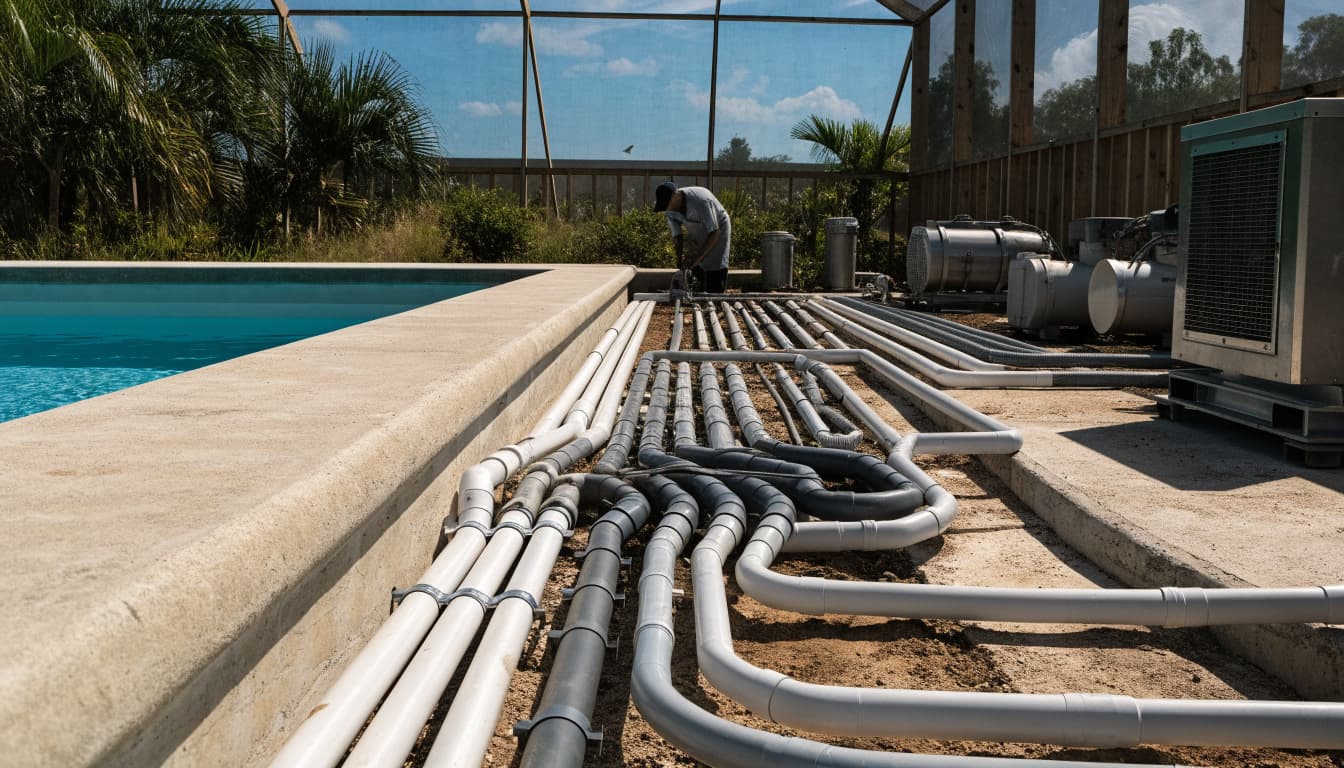
An existing pool system doesn't automatically have enough capacity for a spa. Equipment reuse should follow calculations and inspection, rather than assumptions based on age or horsepower.
Circulation, jets, and temperature control
Spa jets and pool filtration have different operating needs. The designer should check pipe sizes, flow requirements, pump performance, suction safety, and valve arrangements.
A shared circulation system must account for the spa's water volume and spillover demand. However, volume alone doesn't determine whether a pump can deliver suitable jet performance.
Heating also needs a clear operating plan. Ask whether the proposed system can isolate and heat the spa without unnecessarily heating the pool.
Request the heater model, utility requirements, and expected performance under your intended conditions. Your preferred temperature and warm-up expectations should guide equipment selection.
Electrical capacity and bonding
A licensed electrical contractor should evaluate panel capacity, circuits, disconnects, grounding, bonding, and applicable GFCI protection. New lighting, controls, pumps, or heaters can change the electrical scope.
Cape Coral's pool guidance references NEC Article 680 , which addresses pools and similar installations. The electrician must apply the requirements to the actual design.
Bonding work may involve the shell reinforcement, conductive components, equipment, and surrounding deck. Coordinate inspections before construction covers connections.
Equipment that still runs may not meet the proposed spa's flow, heating, or electrical requirements. Confirm compatibility before approving reuse.
Coordinate Cape Coral Permits and Inspections
Use Cape Coral's current requirements for a property within city jurisdiction. A Fort Myers or Lee County checklist shouldn't substitute for the City's application documents.
Pool and barrier applications
Cape Coral directs new permit applications through EnerGov Citizen Self-Service (CSS) . Its combined pool application category includes spas and renovations.
The City requires separate pool and safety-barrier applications. That makes the enclosure plan a separate approval task, even when it forms part of one backyard project.
Have the permitting professional confirm the required survey, structural drawings, equipment specifications, hydraulic calculations, contractor documents, and barrier details. Also ask whether deck, enclosure, electrical, or gas work needs additional authorization.
An existing screen enclosure doesn't automatically settle the barrier requirements for the revised layout. Review its condition and proposed changes with the permit team.
Inspection planning and final approval
Cape Coral's 2026 guidance added a Structural Pool Final Inspection for Pool/Spa permits, following approval of the Pool/Electrical Final. Confirm the current sequence and its application to your renovation before work begins.
The contractor should provide an inspection schedule covering work that will become concealed and the required final approvals. Photographs are helpful records, but they don't replace inspections.
For project-specific questions, Cape Coral's Permitting Services Division lists 239-574-0546 . Ask the permit coordinator to resolve setbacks, easements, barrier requirements, and trade-permit questions before excavation.
Field changes should also reach the appropriate designer and permit reviewer before crews bury plumbing or complete structural work.
Budget for the Complete Spa Addition
A spa-addition quote should cover the finished installation, including the work needed to connect it safely to your existing backyard.
Naples Pool Construction Company publishes a $12,000 to $30,000 estimate for spa and water-feature additions. It separately lists $12,000 to $25,000 for a typical spillover spa.
Those are that provider's published estimates, not a guaranteed Cape Coral retrofit price . The ranges don't establish that every existing-pool project includes the same demolition, engineering, utilities, or restoration.
Your written proposal should identify shell construction, plumbing, equipment, heating, electrical work, finishes, decking, permits, and enclosure changes. Ask which items are fixed prices and which remain allowances.
Also discuss hidden conditions. Undocumented plumbing, structural deterioration, or utility conflicts can affect the scope after demolition.
Finally, compare operating costs alongside construction costs. Heating frequency, equipment selection, spa covers, and maintenance needs affect what you'll spend after installation.
Agree on the Scope Before Construction Starts
A coordinated project needs qualified local pool, electrical, and permitting professionals. Depending on the design, a structural engineer or licensed gas contractor may also be necessary.
Before signing, ask for written answers to these questions:
- Which existing components will remain, and what supports their reuse?
- Who prepares engineering, submits permits, and schedules inspections?
- What deck, landscaping, and screen-enclosure restoration does the price include?
- How will the contractor document unforeseen conditions and obtain approval for changes?
If you're planning other backyard improvements, consider them during the pool renovation planning process. Future outdoor kitchens, covered areas, or seating spaces can affect equipment access and utility routes.
Request a project-specific schedule that accounts for approvals, inspections, material availability, and site conditions. Avoid treating a general installation estimate as a guaranteed completion date.
Key Takeaways
- Adding a spa is often possible, but the pool structure, lot, access, and utilities determine feasibility.
- Cape Coral's pool and safety-barrier approvals require separate coordination, alongside applicable trade work.
- A useful quote covers engineering, equipment, permits, and restoration, with clear allowances for unresolved conditions.
Frequently Asked Questions
Can the spa use my existing pool heater?
Possibly. A qualified pool professional must check the heater's condition, capacity, controls, and plumbing configuration. A shared heater also needs suitable valves and operating controls so the spa can reach its intended temperature without sending unnecessary heat into the pool.
Can I keep swimming during construction?
Ask the contractor before work starts. Structural modifications, drainage, open trenches, and barrier changes can make the pool unavailable. The proposal should explain when access will be restricted and how the crew will secure the work area throughout construction.
Does a portable hot tub avoid the permit process?
Don't assume it does. Confirm its classification with Cape Coral, particularly when installation involves wiring, plumbing, decking, or barrier changes. A manufactured unit may avoid some pool-shell construction, but its electrical supply, supporting surface, and safety arrangements still need professional review.
Start With Feasibility, Then Finalize the Design
You can often add a spa to an existing Cape Coral pool when the structure and property support the plan. A coordinated evaluation gives you a clearer scope before you commit to construction.
Have qualified local professionals review the shell, survey, equipment, electrical work, and permit requirements. Then choose the design that fits both your backyard and how you want to use it.