Can You Drain a Gunite Pool Safely in Southwest Florida?
Explore Our Services
Contact Us Today!
(239) 322-9295
Yes, a gunite pool can be drained safely under suitable conditions, but it requires site-specific professional planning. In Southwest Florida, groundwater can push against an empty shell hard enough to shift it, crack it, or lift it.
Before draining a gunite pool, consult a qualified local pool professional , even if you only intend to lower the water. Your property's drainage, recent rainfall, and pool construction matter more than a neighbor's experience.
Start by understanding what changes beneath the pool when you remove the water.
Key Takeaways
- Removing pool water reduces the weight that helps resist upward groundwater pressure, so an empty concrete shell can move.
- Southwest Florida's wet-season rainfall and variable groundwater make timing a property-specific decision, not a calendar rule.
- A hydrostatic relief valve can help manage pressure, but it doesn't replace professional assessment, drainage planning, or monitoring.
Draining should be part of a defined repair or renovation plan. Green water, stains, or suspected leaks don't automatically justify emptying the pool.
Why Draining a Gunite Pool Can Lift the Shell
Gunite pools have reinforced concrete shells. Although these structures are heavy, their weight alone doesn't guarantee stability against groundwater pressure.
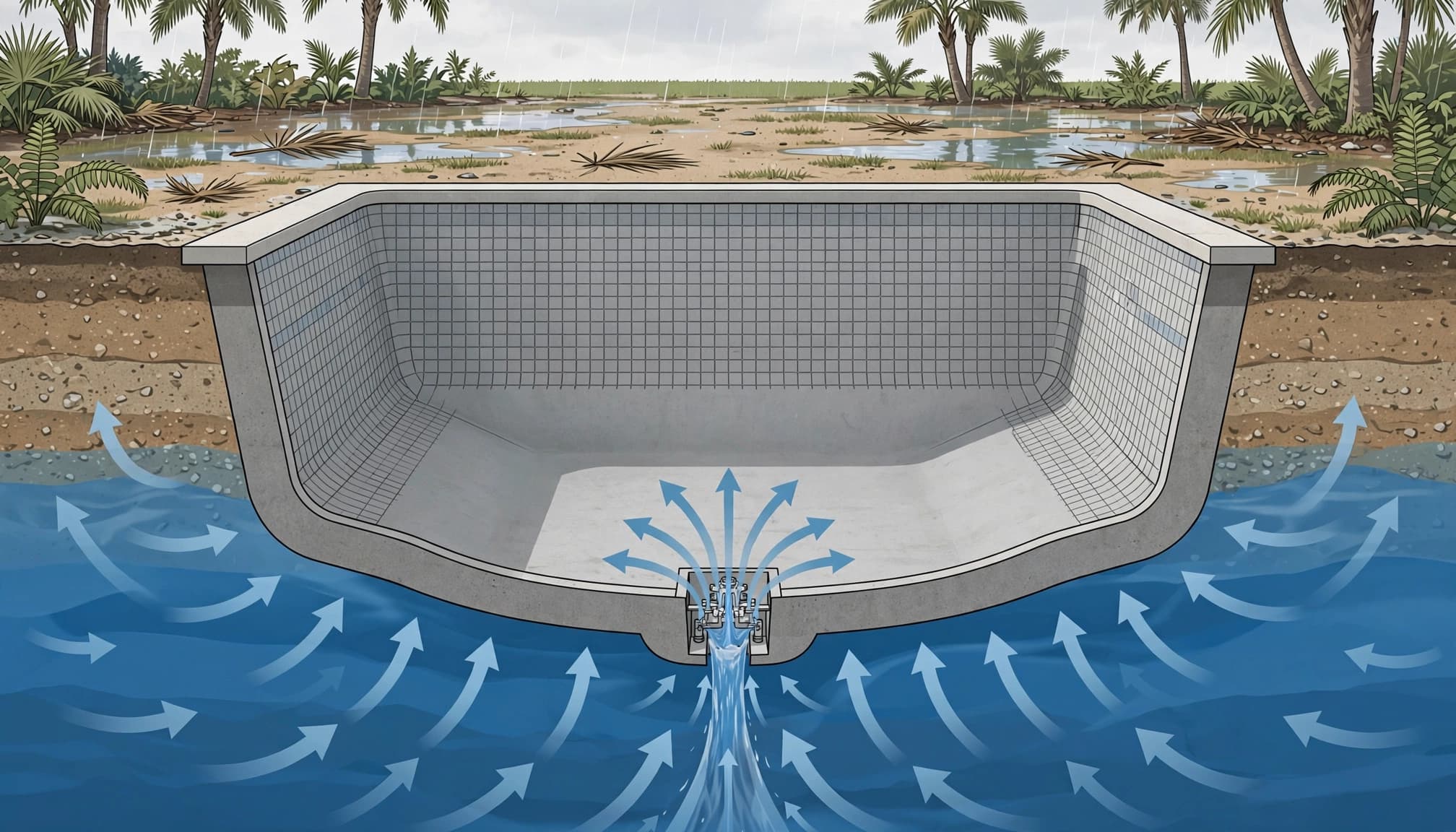
How hydrostatic pressure creates uplift
Groundwater occupies spaces within the soil. When it rises around a pool, it presses against the shell, including upward against the floor.
Water inside the pool adds weight and helps balance outside forces. Draining removes much of that counterweight while groundwater pressure may remain.
If upward force exceeds the forces holding the shell down, the pool can shift or rise. Pool professionals often call this pool pop .
Damage can extend beyond the concrete
Movement can crack the shell and damage connected plumbing. It can also disrupt the relationship between the pool, coping, and surrounding deck.
A shell doesn't need to rise dramatically for repairs to become complicated. Smaller movements can still affect watertightness and connected components.
These concerns explain why pool drainage before gunite excavation deserves attention during construction planning. Existing pools also need groundwater assessment before major water removal.
A dry pool deck doesn't prove that the soil beneath the pool is dry. Groundwater conditions below grade can differ from what you see at the surface.
Why Southwest Florida Conditions and Timing Matter
Fort Myers, Bonita Springs, and surrounding communities share seasonal rainfall patterns. However, individual properties can handle that water differently.
Wet-season weather raises the concern
Southwest Florida's rainy season generally runs roughly June through October. Repeated downpours can raise groundwater and leave the soil saturated.
Late fall through early spring often offers drier, cooler conditions for planned work. However, that seasonal pattern doesn't make every winter draining project safe.
Recent rainfall, the forecast, and conditions beneath the pool still determine the risk. A short stretch of sunshine doesn't establish that groundwater has dropped enough.
Atlantic hurricane season also overlaps much of the wet season. Approaching tropical weather can change both groundwater conditions and the contractor's ability to complete exposed work.
Two nearby yards can behave differently
Soil composition, imported fill, and finished grades influence water movement. Nearby canals or lakes and changes to surrounding drainage can also matter.
A deck drain handles surface water from a limited area. It doesn't establish groundwater conditions beneath the shell or replace whole-yard drainage.
Roof runoff, blocked swales, and landscape changes deserve attention during the assessment. Recent construction may also have altered a drainage route that worked previously.
Because these conditions vary, a neighbor's successful pool draining offers little assurance about your property. The decision belongs to the pool and site being evaluated.
Determine Whether the Pool Needs Draining
The reason for removing water should be clear before anyone selects a pump. Some problems need treatment or testing while the pool remains filled.
Cleaning and water-quality problems
Green water doesn't automatically require an empty pool. Depending on the cause, water treatment, filtration, and cleaning may address the problem without complete draining.
Stains also need diagnosis. A stain, worn finish, and structural crack can require different responses, even when they initially look similar underwater.
A pool professional should identify the problem and recommend the least disruptive suitable treatment. Otherwise, draining may expose the shell without solving the original issue.
Repairs, resurfacing, and suspected leaks
Resurfacing and certain repairs require access to exposed pool surfaces. In those cases, water removal belongs within the contractor's repair plan.
Suspected leaks need a different starting point. Emptying the pool too early can remove clues about water movement or make testing less useful.
Our guidance on pool leak inspection before removal explains why diagnosis should come before demolition decisions. The same principle applies when deciding whether draining is necessary.
Keep records of water loss, previous repairs, resurfacing, and storm damage. These details help the professional distinguish a finish problem from a plumbing or structural issue.
What a Local Pool Professional Should Assess
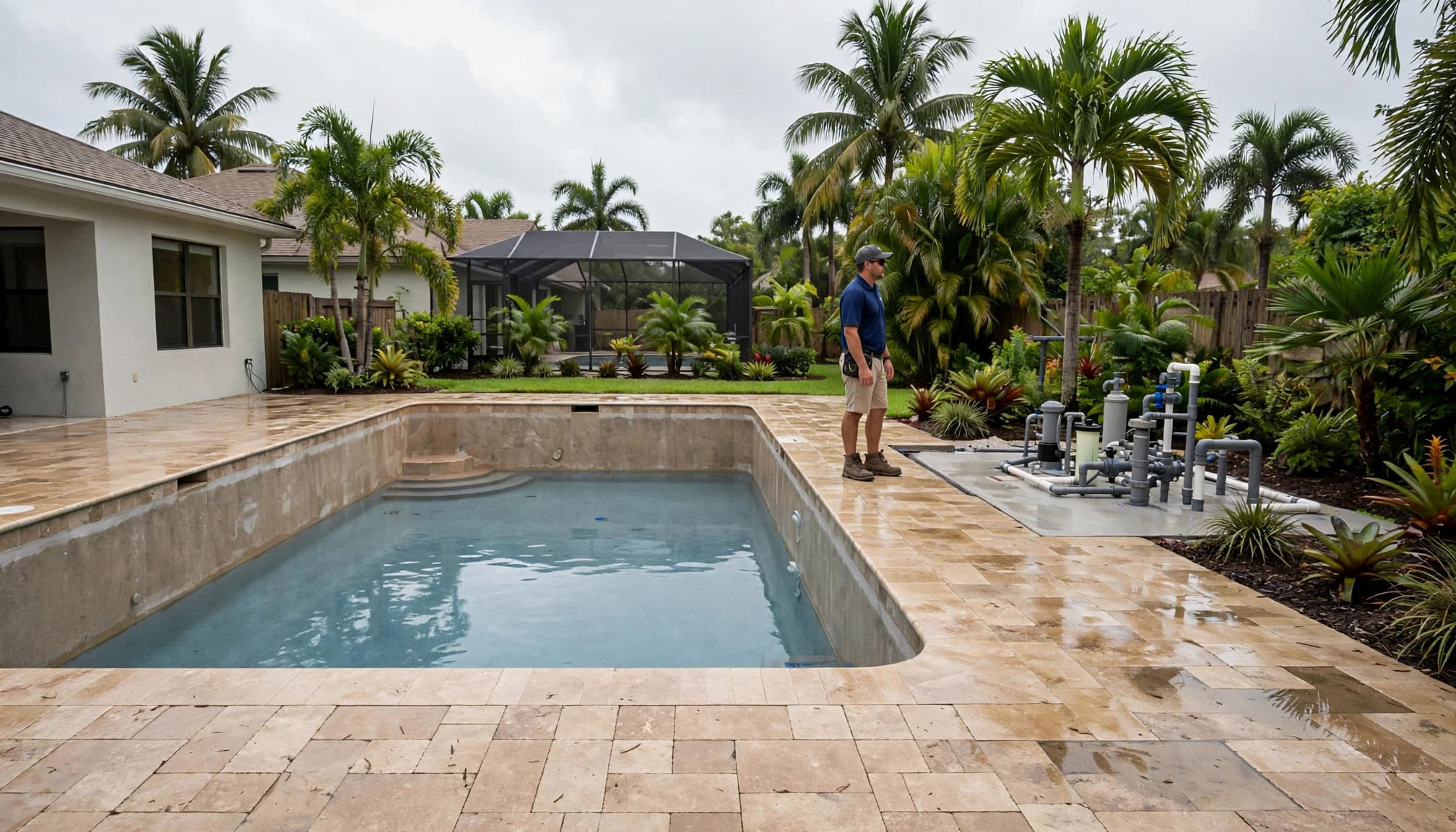
A professional assessment should address both the pool structure and the surrounding property. Looking at the water's appearance alone isn't enough.
The shell and hydrostatic relief system
The assessment should consider visible cracking, prior structural repairs, and available construction information. Existing movement or unexplained damage may require further evaluation before water removal.
The professional should also determine whether the pool has a hydrostatic relief device and assess its condition.
A typical relief valve allows groundwater to enter the pool when pressure conditions require relief. This can reduce the pressure difference across the shell.
However, the valve's presence doesn't establish that draining is safe. Its condition, the pool's construction, and groundwater conditions all matter.
Don't attempt to open, modify, or install a relief device yourself.
Groundwater and water-discharge planning
The contractor should evaluate current groundwater conditions and decide whether professional water-management measures are necessary.
Removing water from inside the pool and managing groundwater outside it are separate tasks. A pump in the basin doesn't automatically relieve pressure beneath the shell.
The plan also needs a suitable destination for discharged pool water. Sending it beside the pool can saturate nearby soil, while poorly directed flow can affect foundations or neighboring property.
This is another reason to avoid treating draining as a simple equipment-rental job.
Plan the Work Before Lowering the Water
A safe project needs more than permission to begin draining. It needs a coordinated sequence for the work, weather interruptions, and refill.
Coordinate repairs and weather protection
The contractor should identify the work that requires an exposed surface and have the crew and materials ready.
Avoid leaving the pool empty while unrelated scheduling problems get resolved. The project should include a response for changing groundwater conditions or an approaching storm.
Water-management equipment, added labor, or drainage changes may also affect the renovation budget. Those items belong in the scope discussion before work starts.
If weather interrupts the project, the contractor should explain how the pool area, materials, and access will remain protected. Pool barriers should remain effective throughout the work.
Protect the finish and plan startup
Exposed interior finishes also need care. Sun, heat, and drying conditions can affect finishes differently, so the contractor should manage exposure according to the material.
After resurfacing or finish repairs, filling and startup need product-specific instructions. New plaster and aggregate finishes may require particular brushing, water-testing, and chemical-adjustment procedures.
The project plan should identify who manages refill and startup water care. Keep the written instructions with your pool records.
For homeowners considering broader updates, our professional pool renovation services cover Southwest Florida projects. Drainage and repair planning should fit the renovation scope rather than become separate decisions made after draining begins.
Frequently Asked Questions About Draining Gunite Pools
Can I partially drain my pool instead?
Partial draining still removes water weight, so it can increase vulnerability to groundwater pressure. It isn't automatically safe because some water remains.
A qualified local pool professional should determine whether lowering is appropriate and establish the water level for the specific pool, site conditions, and work involved.
Does a hydrostatic relief valve make draining safe?
A hydrostatic relief valve can help reduce pressure beneath the shell, but it doesn't provide a blanket guarantee. The professional needs to assess its condition alongside groundwater, drainage, and shell construction.
A valve also doesn't replace a plan for responding to heavy rain or changing site conditions during the work.
Should I empty my pool before a hurricane?
Emptying a gunite pool before a hurricane can increase its exposure to uplift as storm rainfall raises groundwater. Don't drain it to create extra space for rain.
Any proposed water-level adjustment needs guidance from a qualified pool professional. A forecast storm is a reason for added caution, not automatic draining.
What if my pool is already empty after heavy rain?
Contact a qualified local pool professional promptly and explain when the pool emptied and how much rain occurred. Keep people out of the pool and away from any visible movement or damaged areas.
Don't enter it to adjust relief devices or attempt groundwater pumping. The professional should direct the response based on actual conditions.
Make the Draining Decision Before Starting the Pump
Draining a gunite pool safely depends on the relationship between the shell, groundwater, and the planned work. Southwest Florida's rainfall and variable site conditions make professional assessment the right starting point.
Before lowering the water, have a qualified local pool professional establish the reason, timing, pressure-management approach, and refill plan.
The goal is to complete the necessary work without turning water removal into structural damage.