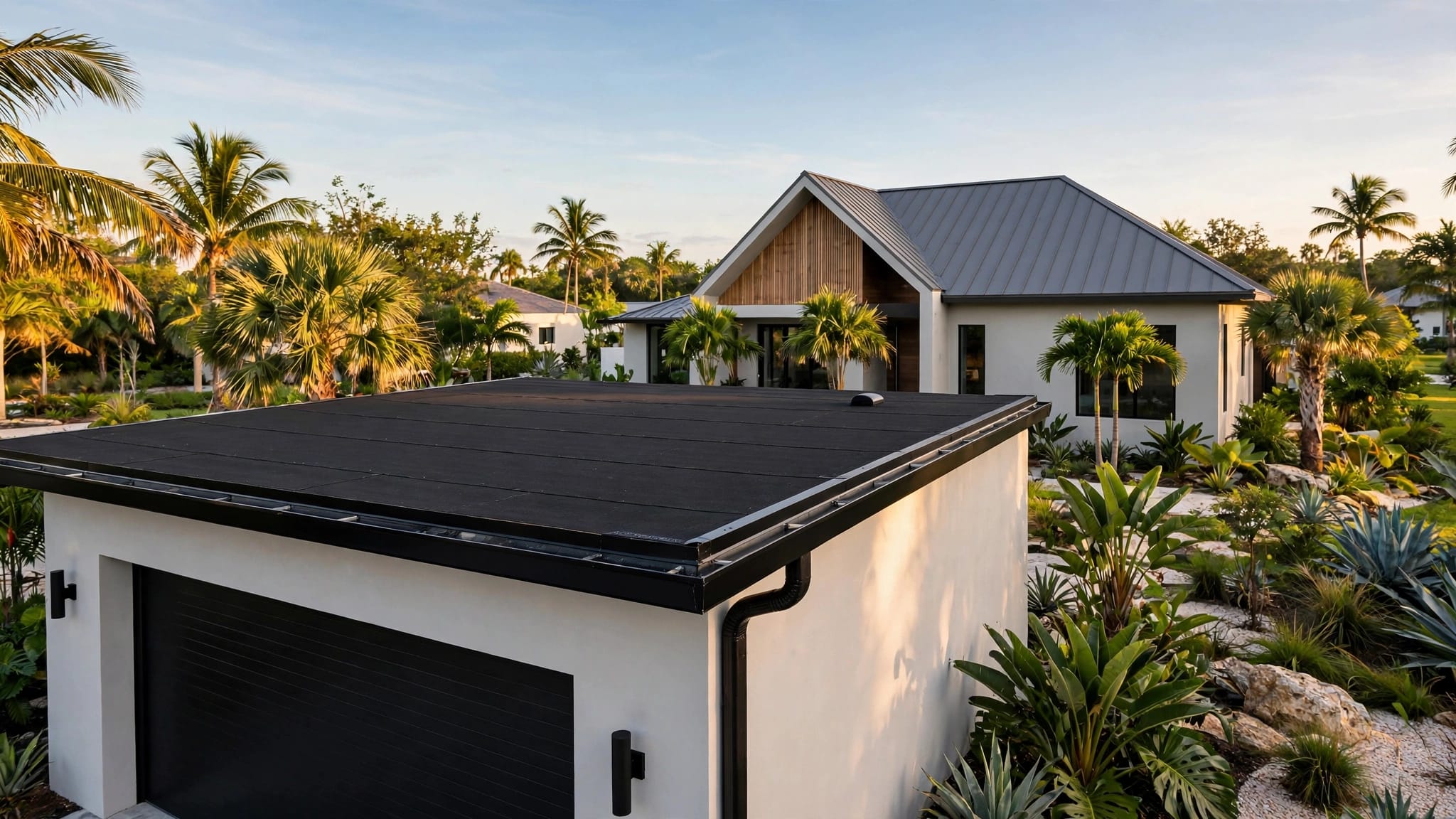
Cape Coral Pool Deck Drainage for Heavy Summer Rain
Explore Our Services
Contact Us Today!
(239) 322-9295
A Cape Coral downpour can expose a deck drainage problem in minutes. Water that sits beside your pool, runs toward the home, or erodes the deck edge needs attention before it damages finishes or creates a slippery surface.
Reliable pool deck drainage gives rainwater a clear route away from the gunite pool, concrete deck, lanai, and home. The right fix depends on where the water starts, where it collects, and where it can legally discharge.
Why Pool Deck Drainage Fails During Cape Coral Summer Storms
A dry deck can hide weak drainage for months. Then summer rain arrives fast, roof runoff joins the flow, and shallow low spots become puddles that linger long after the sky clears.
A deck can look flat while still holding water
Concrete pool decks need positive drainage, which means the finished surface slopes continuously toward a planned collection point. The slope may be subtle, but it must be consistent.
Settling, an older deck addition, cracked concrete, or a previous overlay can interrupt that path. Water then follows the lowest point, often along coping, near a screen enclosure, or against the house wall.
Standing water also leaves behind fine sand, leaf debris, and algae. Over time, those deposits make the surface slick and can hide small cracks that need repair.
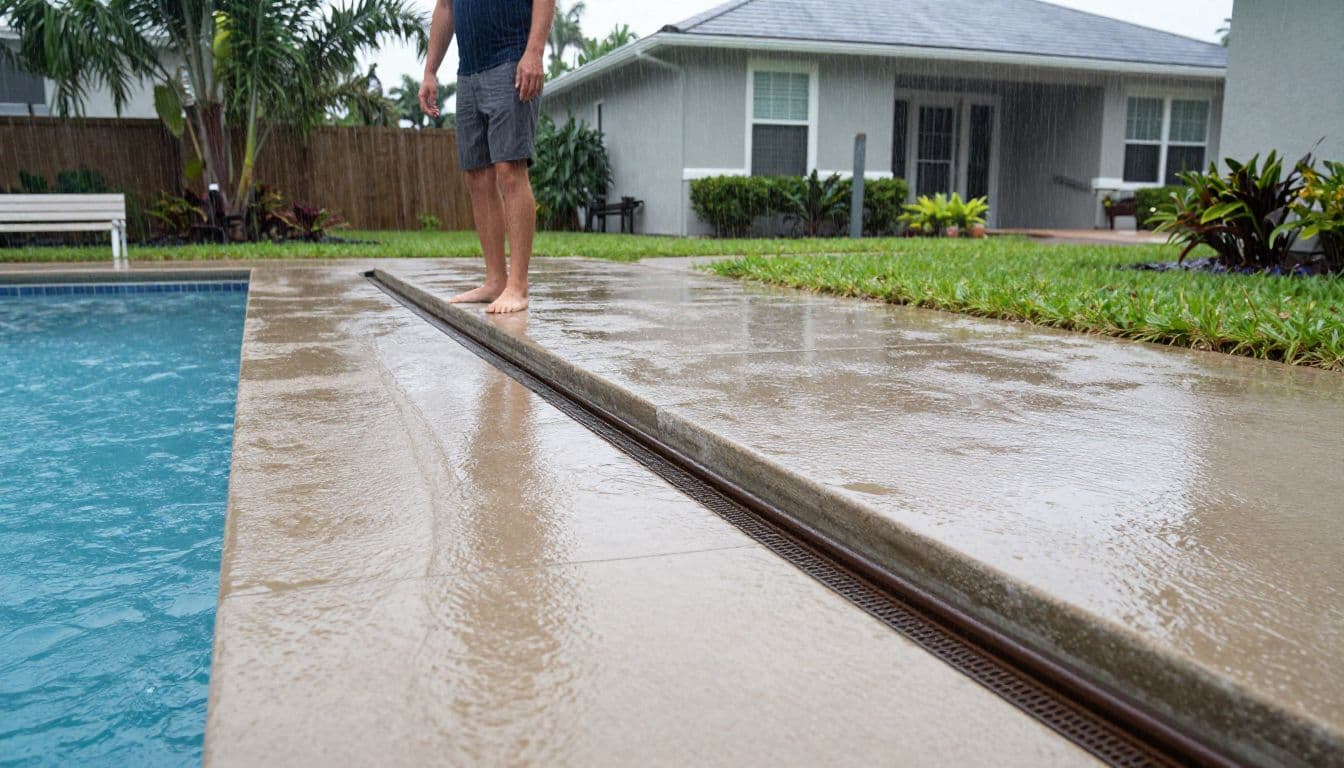
Roof and yard runoff can overwhelm the deck
The pool deck may not be the original source of the water. A downspout that empties onto the deck, a roof valley near the lanai, or a yard that slopes toward the pool can add a surprising amount of runoff.
During a heavy storm, water from several surfaces can meet at the same low spot. A small area drain may handle ordinary rain but fall behind when roof water and deck runoff arrive together. That is why the whole water path matters, not only the puddle you can see.
Start With Positive Drainage, Not a Bigger Drain
A larger drain won't solve a deck that pitches toward the pool or home. Before selecting hardware, determine how water should travel across the property and identify the lowest approved discharge point.
Good pool deck drainage starts with the finished deck elevation, the surrounding yard grade, roof drainage, and the location of the pool shell. Each part needs to work with the others.
Find the intended low point
Walk the deck after rain and note the exact places where water remains after surrounding areas have dried. Check corners near the cage, the base of steps, around outdoor kitchens, beside planters, and along the transition from deck to yard.
A contractor can use levels or laser equipment to confirm the actual grade. Visual inspection helps, but water can move in ways that aren't obvious on a sunny day.
The planned low point should lead water toward a drain, swale, approved outlet, or collection area. It should not direct runoff toward the home's slab, a neighboring lot, or the pool equipment pad.
Separate deck water from roof water when possible
Downspout runoff can carve channels into soil and overload a concrete deck drain. Extensions, buried drain lines, or a revised roof drainage plan can move that water away from the pool area.
Keep the flow deliberate. Water that crosses the deck before reaching a drain leaves dirt behind and raises the chance of slips. If a new lanai, paver area, or outdoor kitchen is part of the project, drainage needs to be planned with those features rather than added afterward.
Pool Deck Drainage Options That Fit the Water Path
Drainage components do different jobs. The best system often uses more than one part, such as a channel drain at the deck edge and a catch basin where several drain lines meet.
Channel drains collect broad sheet flow
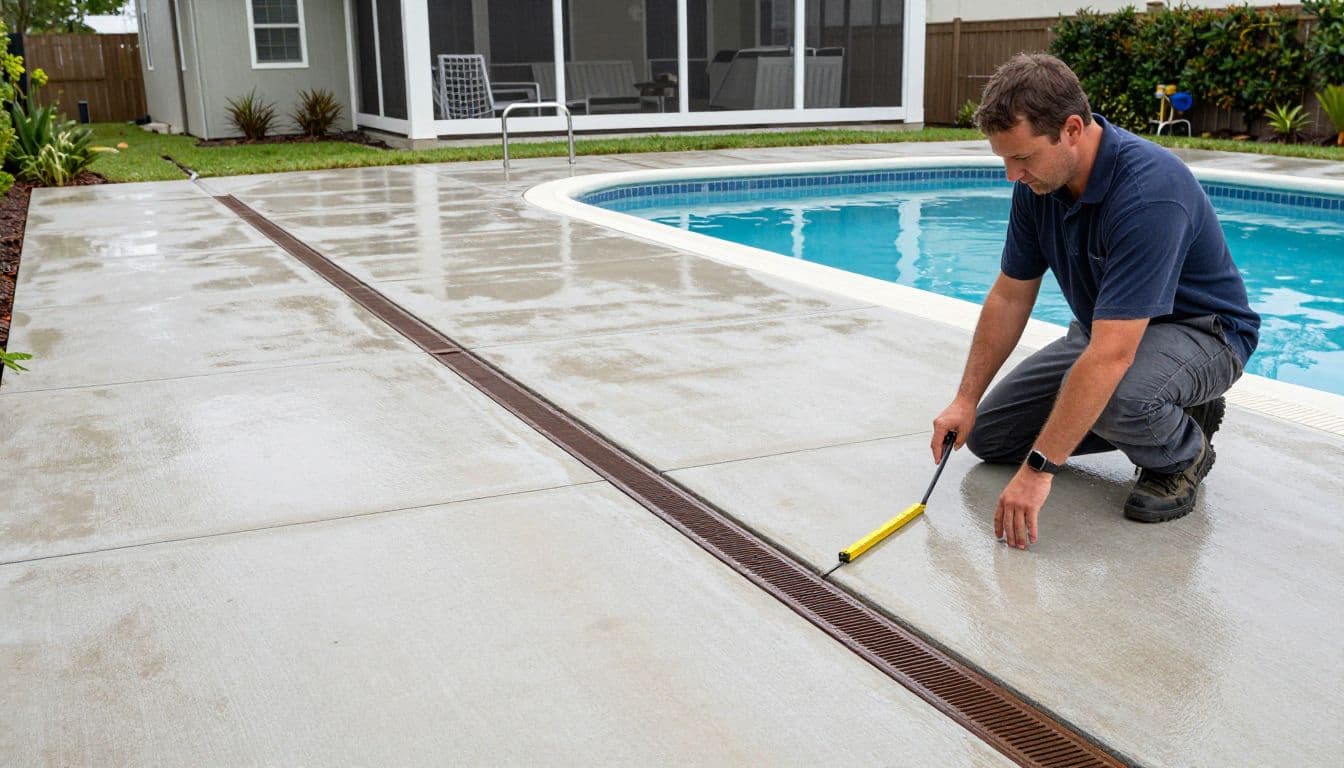
A channel drain is a long, narrow trench drain with a removable grate. It works well at a deck threshold, along a screen enclosure edge, beside a low wall, or where a sloped concrete deck meets another surface.
Because it catches water across a continuous line, a channel drain can control sheet flow better than one small round drain. It still needs the correct elevation, a properly sized outlet line, and a place for water to go.
| Drainage component | Best location | Main job |
|---|---|---|
| Channel drain | Along a low deck edge or threshold | Collects sheet flow across a wide area |
| Catch basin | At a low point where lines meet | Holds debris and directs water into an outlet line |
| Area drain | In a focused low spot | Captures water collecting in one location |
| Swale or graded yard area | Beyond the deck | Moves runoff across the property without ponding |
A drain grate alone is not the system. The outlet pipe, its slope, and its discharge location determine whether collected water leaves the area.
Catch basins make maintenance easier
A catch basin has a grate at the surface and a deeper box below it. It catches leaves, mulch, sand, and roof grit before that debris reaches the drain line.
For pool areas, catch basins work well near deck corners or where downspout lines connect to yard drainage. The basin must remain accessible after landscaping changes. Burying it beneath mulch or placing furniture over the grate defeats its purpose.
When a pool deck renovation includes a new lanai or hardscape, backyard and lanai design services can coordinate the deck elevations, surface transitions, and water routes before concrete or pavers go in.
Protect the Gunite Pool, Deck, and Property Lines
A gunite pool shell is built to hold water and resist soil pressure, but poor drainage around the deck can still create problems. Water can wash soil from deck edges, carry sand beneath loose areas, and enter failed joints around coping or deck penetrations.
Watch for changes near coping and deck joints
Hairline cracks do not always signal a structural problem. However, cracks that widen, uneven deck sections, loose coping, or gaps that collect water deserve an on-site review.
Water should not sit against the pool coping after storms. It can seep into joints and under nearby deck sections, especially when joint sealant has failed. Replacing worn sealant is a small repair that can prevent water from reaching places it shouldn't.
For a new build, drainage should be part of the original pool layout. Experienced custom gunite pool builders plan deck elevations, equipment access, plumbing routes, and runoff before construction reaches the finishing stage.
Utilities and boundaries limit where drains can go
Drainage repairs may involve saw-cutting concrete, trenching, or regrading. Before that work starts, the plan must account for pool plumbing, electrical conduit, gas lines, irrigation, septic components, and buried utility lines.
Property lines matter as much as pipes. Do not direct water across a boundary or toward a neighbor's foundation. Easements, HOA standards, and City of Cape Coral requirements can affect the allowed drainage route. A contractor should verify those details before setting a new outlet or changing finished grades.
Maintain Drains Before the Rainy Season Builds Up
Even well-designed drainage needs regular care. Grates collect leaves, palm seeds, mulch, pet hair, and the fine sand common around Southwest Florida homes.
Clear grates and catch basins on a simple schedule
Check the system at the start of summer, after major storms, and whenever water begins draining more slowly than usual. Keep a hose nearby to test flow after clearing visible debris.
- Remove leaves and mulch from channel drain grates before they compact into the openings.
- Empty catch basin baskets or sediment cups if the system includes them.
- Trim plants that drop leaves directly over drain openings.
- Keep downspout extensions in place and direct them away from the deck.
- Avoid washing heavy amounts of sand, soil, or pool debris into drains.
A grate can look clear while the outlet line or catch basin below it is blocked by compacted debris.
Inspect the deck after the water recedes
After a strong storm, look for new erosion at the deck edge, soil pulled away from the cage footers, and runoff channels in nearby beds. Also check whether the same puddle forms in the same place.
Don't pressure wash debris into a channel drain. Sweep it up first, because a blocked outlet line is harder and more expensive to correct than a clogged surface grate.
When an On-Site Drainage Assessment Makes Sense
Some problems need more than routine cleaning. If water remains on the deck for hours, reaches the home, moves soil, or repeatedly collects near the pool structure, schedule an on-site assessment.
An assessment should trace the entire water route
A thorough review starts at the roof and follows runoff through downspouts, deck surfaces, drains, yard grades, and the intended discharge point. The contractor should inspect concrete condition, coping joints, screen enclosure edges, existing drain lines, and nearby utilities.
Photos and videos from an actual storm are useful. They show how water moves at peak flow, which is often different from what a hose test reveals.
For homeowners planning a new home or major backyard project, the Southwest Florida preconstruction checklist is a helpful reminder to address deck drainage, roof runoff, utilities, and outdoor features before work begins.
Some repairs require a broader redesign
A local patch may not work if the original deck elevation directs water toward the home or pool. The solution may include saw-cutting and re-pouring a section, adding a channel drain, adjusting yard grading, rerouting downspouts, or installing catch basins and new drain lines.
Any work that alters drainage paths should account for local requirements and existing structures. A clear plan prevents a new drain from causing a new problem at the yard edge, property line, or pool equipment area.
A Dry Deck Starts With a Clear Water Path
Cape Coral's summer rain will test every low spot around a gunite pool. Positive drainage protects the concrete deck, limits erosion, and keeps water from collecting where your family walks.
Cleaning grates helps, but lasting pool deck drainage depends on correct grading, properly placed drains, and an approved route for runoff. When water keeps returning to the same place, an on-site assessment can identify the cause before the next storm makes it worse.