
Corner Kitchen Cabinets for a Cape Coral Remodel
Explore Our Services
Contact Us Today!
(239) 322-9295
A kitchen corner can hold plenty of cookware and still make dinner prep frustrating. Choosing corner kitchen cabinets starts with usable storage : what you can comfortably retrieve, replace, and keep organized.
For your Cape Coral remodel, compare the cabinet opening, interior arrangement, and neighboring appliances before choosing a finish. A rotating shelf, pullout, drawer system, or diagonal cabinet deserves a different evaluation.
Start with the items you use every day, then compare how each option fits your planned kitchen.
Compare the Four Main Corner Cabinet Options
Corner storage has two separate parts: the cabinet's shape and the organizer inside it. A diagonal cabinet describes the angled front, while a lazy Susan describes rotating storage. Depending on the cabinet line, those features may appear together.
Use this comparison to organize a showroom visit and quote review.
| Option | Access arrangement | Storage check | Cost and fit questions |
|---|---|---|---|
| Lazy Susan | Shelves rotate inside the cabinet. | Try your cookware on the actual shelf shape. | What organizer is included, and what opening does it need? |
| Blind-corner pullout | Moving shelves connect the accessible opening with the concealed corner. | Compare usable shelf surfaces and item-height limits. | Which mechanism fits the proposed cabinet? |
| Corner drawers | Drawers open at the corner using a specialized cabinet arrangement. | Inspect the interior shape of each drawer. | Is the design available in the selected cabinet line? |
| Diagonal cabinet | An angled door faces outward across the corner. | Compare fixed shelves and compatible organizers. | How does the angled front affect the surrounding layout? |
There isn't a universal winner. Compare the complete cabinet-and-organizer package , because the door style alone doesn't tell you how storage will work.
Bring the cookware you struggle to store, or record its dimensions. A demonstration with your belongings is more useful than an empty display.
Lazy Susans and Diagonal Cabinets
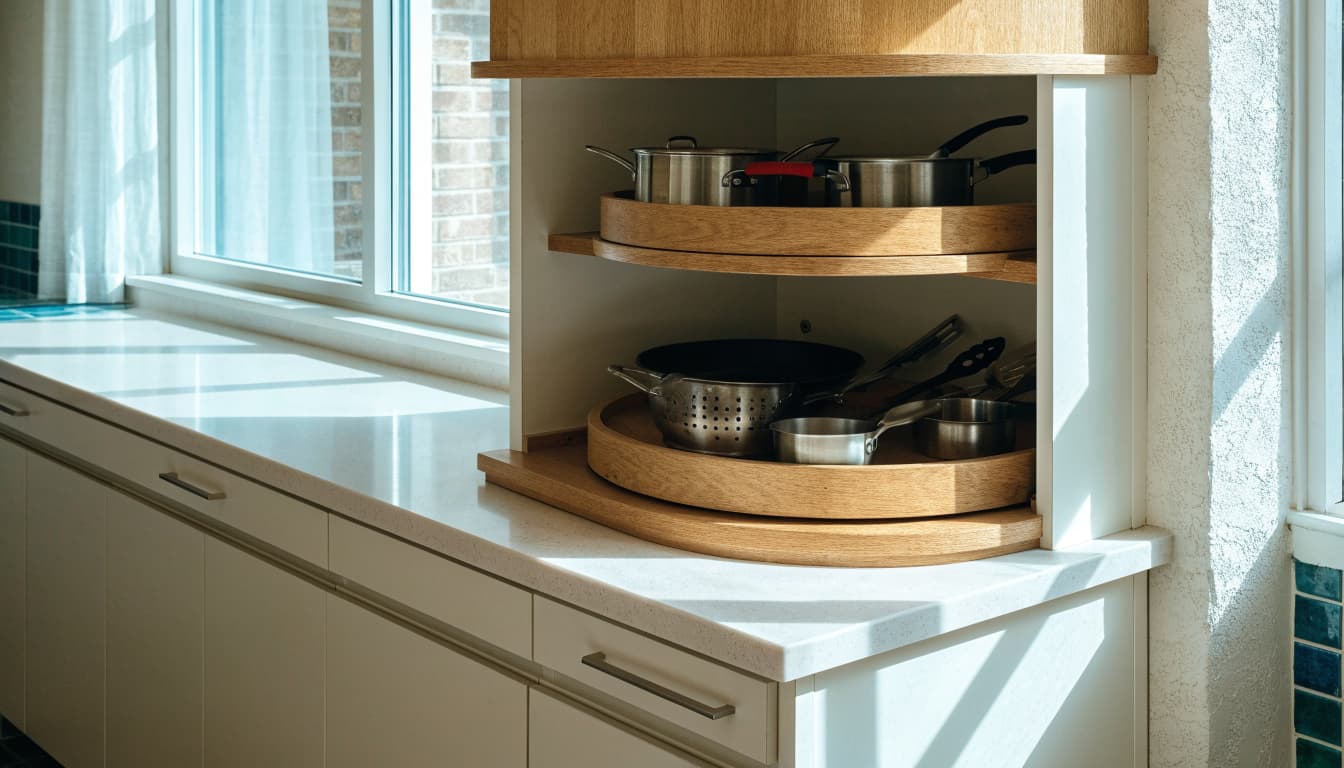
Evaluate a Lazy Susan With Your Cookware
A lazy Susan uses rotating shelves. However, shelf shape, door arrangement, and the relationship between the door and organizer vary by product.
Before selecting one, try placing your everyday pots, mixing bowls, and food containers on a working display. Rotate the shelves and check whether anything interferes with movement. Also, practice removing an item while the surrounding cookware stays in place.
Ask for the selected organizer's load rating, shelf spacing, and cleaning instructions. Don't transfer specifications between models, even when their displays look similar.
A lazy Susan belongs on your shortlist when its tested arrangement matches what you plan to store. Base that decision on actual use rather than the familiar name.
Separate a Diagonal Front From Interior Storage
A diagonal cabinet places its front across the corner at an angle. Its interior may include fixed shelving or a compatible organizer.
Because the exterior shape doesn't define the interior, ask to see both. Inspect the opening and the back of the cabinet, then compare how you would retrieve an everyday pot versus an occasional serving platter.
Review the angled front on your floor plan, too. It needs to make sense beside nearby drawers, appliances, and walking space.
For a visually consistent kitchen, look at the diagonal door alongside the other cabinet fronts. Approve the appearance and storage arrangement separately.
Blind-Corner Pullouts and Corner Drawers
Test the Entire Pullout Movement
A blind-corner cabinet has an accessible opening beside a concealed section. A pullout system uses moving shelves to organize that arrangement.
Different mechanisms follow different paths, so test the exact product under consideration. Watch the full opening sequence, then reverse it. Check where you stand and whether the cabinet door must remain in a particular position.
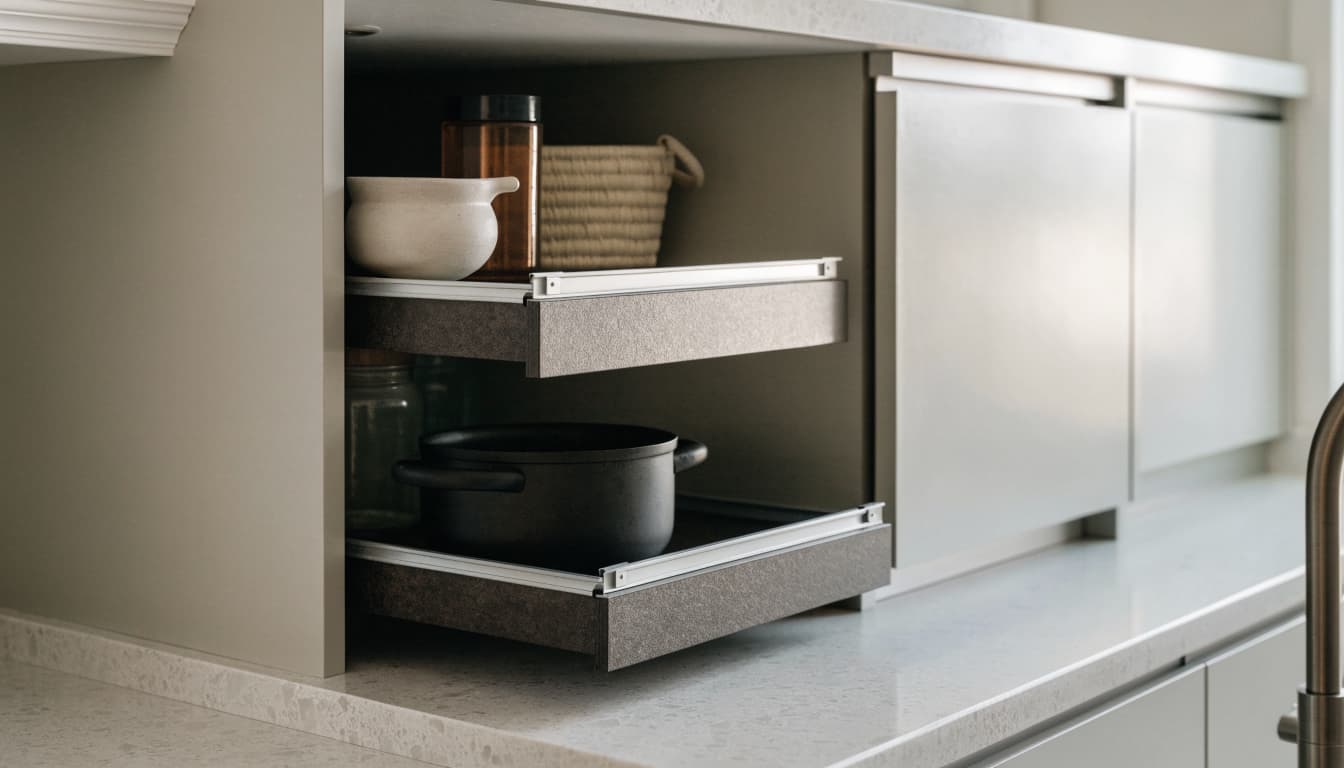
Have your cabinet professional confirm compatibility using the manufacturer's documentation. Ask about usable shelf dimensions, approved loads, replacement parts, and servicing.
For everyday cooking, practice the complete retrieval routine with representative cookware. If you dislike the sequence in a showroom, reconsider before ordering. An attractive mechanism still needs to suit your habits.
Inspect Corner Drawers Inside and Out
Corner drawers use a specialized arrangement rather than a conventional rectangular drawer bank. Their interior shape depends on the cabinet design.
Open every drawer in the proposed system. Check the usable bottom surface, side profiles, and dividers before assigning utensils, lids, or containers to it.
Also, compare the corner design with ordinary drawers elsewhere in the kitchen. If nearby drawers already accommodate your daily cookware, the corner may have a different job.
Ask whether the selected cabinet manufacturer offers the configuration as a standard product or a custom order. Then request a complete quote, including interiors and hardware.
Choose corner drawers only after their actual organization fits your belongings and the overall cabinet plan.
Match Corner Storage to the Kitchen Layout
Plan the Corner With Neighboring Appliances
An L-shaped kitchen has a different corner-storage problem than a U-shaped kitchen or a peninsula junction. However, the floor-plan label alone doesn't settle the choice.
Review the corner beside the dishwasher, range, refrigerator, and adjoining drawers. Have the design show doors and moving parts open, rather than evaluating only closed elevations.
The company's guide to kitchen cabinet depth planning recommends dimensioned plans that identify cabinet depths, appliances, fillers, panels, and countertop overhangs. That level of coordination matters before ordering corner storage.
Keep plumbing decisions connected to the full layout. If the existing sink location works, compare cabinet improvements before assuming relocation is necessary.
Assign Everyday and Occasional Storage
Decide what the corner will hold before selecting its hardware. Daily cookware, baking supplies, and holiday serving pieces create different retrieval routines.
During a demonstration, check whether you can reach comfortably and replace items without awkward bending. If more than one person cooks, let both people test the arrangement.
Consider nearby storage as well. A pantry or island can change what you need from the corner, so evaluate the whole room rather than maximizing one cabinet.
Compare the storage you can use comfortably, not just the apparent size of the cabinet box.
Occasionally, the better layout assigns less storage to the corner and more to adjacent cabinets. Ask your designer to compare both plans before committing.
Keep Cape Coral Conditions in Perspective
For a Cape Coral home, review actual indoor conditions rather than treating a coastal address as a material specification. A conditioned kitchen needs a project-specific evaluation, especially if the renovation follows water intrusion or extended vacancy.
Ask your contractor and cabinet supplier to verify cabinet materials, finishes, and hardware for the home's expected humidity and exposure. Request written product information rather than relying on broad terms such as "coastal-grade."
Also, discuss cleaning products and maintenance with the supplier. The selected finish and organizer should come with care instructions you can follow.
If demolition reveals moisture damage, resolve its source before closing the area with new cabinetry. Keep storm protection and water-intrusion planning separate from choosing an interior organizer.
The company's advice on avoiding kitchen remodeling mistakes reinforces the importance of planning materials and project requirements early. Confirm any permitting obligations for your exact remodeling scope with the appropriate local authority.
Compare Costs Without Losing Track of Scope
A meaningful corner-cabinet quote identifies the cabinet box, fronts, organizer, hardware, delivery, and installation scope. It should also distinguish standard components from custom work.
Ask for comparable alternatives within the same cabinet line and finish. Otherwise, a price difference may reflect cabinetry quality or construction rather than the corner arrangement.
Published remodeling ranges need similar care. Cutting Edge's Cape Coral remodeling planning guide describes $5,000 to $15,000 for minor upgrades. Its kitchen remodel cost guide describes $10,000 to $20,000 for cosmetic updates. These categories describe different project scopes; neither is a corner-cabinet price.
For your selection, request an itemized project quote instead. Also, ask whether choosing an organizer changes the surrounding cabinet package or requires custom fabrication.
Before approving the purchase, get written answers to these points:
- Confirm the exact cabinet and organizer model, including what the price covers.
- Identify who verifies compatibility and final field measurements.
- Record warranty coverage and how replacement components can be obtained.
Spend according to the problem you're solving. Hardware for daily use deserves a different evaluation than storage opened a few times yearly.
Key Takeaways for Your Cabinet Selection
Choose the corner arrangement after deciding what belongs there. Then test the proposed product with items that reflect your cooking habits.
Evaluate access and usable storage together. A cabinet can look generous while its opening or organizer doesn't suit your cookware.
Finally, approve the complete layout and written scope before ordering. Door movement, appliance coordination, product compatibility, and material selection all belong in that review.
The most useful comparison is between actual products in your proposed kitchen, not broad promises attached to an option's name.
Frequently Asked Questions
Can a Lazy Susan Go in a Diagonal Cabinet?
A diagonal front and rotating storage describe different features, so they may appear together. However, compatibility depends on the cabinet and organizer. Ask the supplier to verify the combination against the selected product documentation before ordering.
Should Every Kitchen Corner Have an Organizer?
Evaluate the corner's intended contents and the storage elsewhere in the room. Compare a proposed organizer with other cabinet arrangements. Then choose the configuration that supports your routine and budget after testing the actual products.
Can I Add a Pullout to Existing Cabinets?
Treat this as a compatibility assessment rather than an automatic upgrade. Have a cabinet professional inspect the opening, interior, door arrangement, and condition. Request confirmation for the exact pullout model before purchasing it.
Choose the Corner Around Your Daily Routine
A useful kitchen corner begins with everyday access and a coordinated layout. Test the actual storage arrangement, verify its fit, and compare complete quotes before choosing.
Cutting Edge Homes & Renovations provides kitchen remodeling in Cape Coral, including custom design, cabinetry, islands, and countertops. Bring your storage frustrations to the design conversation so the corner supports how you cook.
The right choice is the one you can comfortably use after the remodel is finished.